Manufacturing
October 07 2026
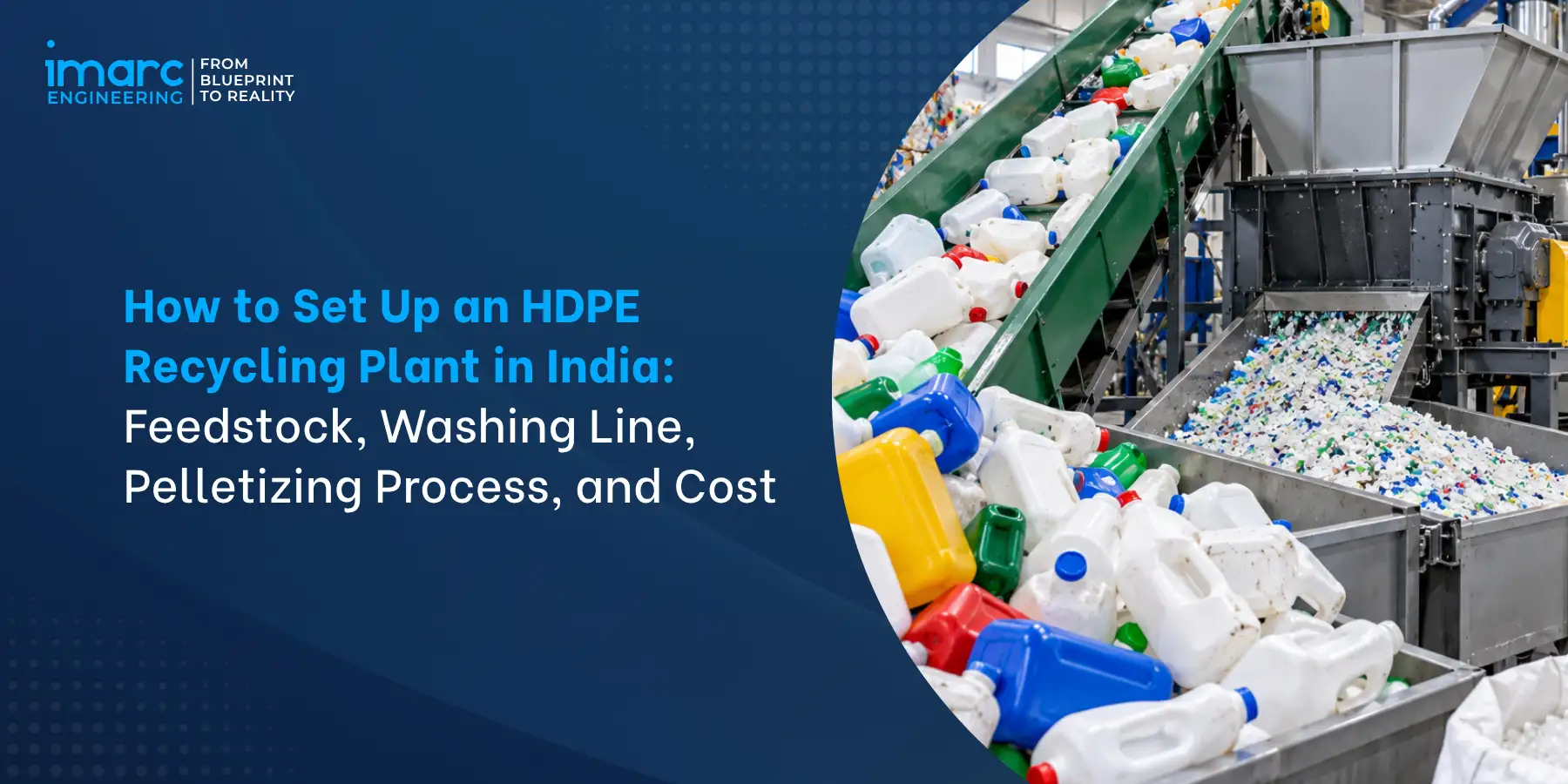
How to Set Up an HDPE Recycling Plant in India: Feedstock, Washing Line, Pelletizing Process, and Cost
Introduction
For investors, project sponsors and manufacturers evaluating an HDPE recycling plant in India, the difference between a durable asset and an underperforming one is decided long before the first bale of post-consumer high-density polyethylene arrives at the gate. It is decided by feedstock contracts, contamination assumptions, washing-line configuration, filtration fineness, and effluent strategy.
HDPE is a polymer-specific mechanical recycling project, not a generic waste-processing venture. A line designed for clean post-industrial blow-moulding regrind behaves very differently from one fed mixed rigid bale waste containing polypropylene caps, PET bottles, PVC fragments and organics.
This guide delivers an engineering-grade planning framework: the feedstock streams available in India, how contamination drives washing and separation design, the machinery and utility envelope, the pelletizing and quality-control route to recycled HDPE pellets, the effluent and licensing obligations, and the indicative CAPEX and OPEX composition a sponsor needs before committing capital.
Scope of this Guide
This guide answers the sponsor's central question directly. How can investors and recycling companies set up an HDPE recycling plant in India by evaluating feedstock availability and contamination, washing and pelletizing technology, machinery, recycled product quality, production capacity, water and utility requirements, environmental compliance and project economics? It walks through the full planning sequence, from bale sourcing and polymer-density separation logic through hot washing, float-sink separation, thermal drying, melt filtration, degassing and die-face pelletizing, and closes with effluent treatment, regulatory approvals and indicative project cost structures. All cost, capacity and consumption figures are indicative in nature and may vary with site, feedstock and configuration.
Table of Contents
- Introduction
- Why HDPE Recycling Plant Investment Matters in India in 2026
- What an HDPE Recycling Plant is and Why It Matters in India
- HDPE Recycling Plant Feedstock Types and Capacity Planning in India
- Raw Materials and Chemicals for an HDPE Recycling Plant in India
- Core Process Steps (Part 1): Sorting, Size Reduction and Washing in an HDPE Recycling Plant in India
- Core Process Steps (Part 2): Drying, Extrusion, Melt Filtration and Pelletizing in an HDPE Recycling Plant in India
- Machinery, Cleanroom and Utilities for an HDPE Recycling Plant in India
- Wastewater, Effluent, Licences and Project Economics for an HDPE Recycling Plant in India
- Conclusion
1. Why HDPE Recycling Plant Investment Matters in India in 2026
An HDPE recycling plant in India sits at the intersection of a policy-driven demand signal and a genuinely under-supplied processing capability. Feedstock is abundant but dispersed; converters want consistent melt flow index, low ash and predictable colour; brand owners carrying recycled-content obligations need traceable, certificate-backed output. Four structural drivers determine whether a project is investable rather than merely compliant.
1.1 Import Dependence and the Case for Domestic rHDPE Supply
India remains a significant net importer of virgin polyethylene, and converter margins move with crude-linked polymer pricing and freight volatility. Recycled HDPE manufacturing offers a domestically sourced substitute for a portion of that demand. The commercial logic is not substitution at parity, but substitution where specification allows: drainage pipes, crates, bins, non-food containers, jerry cans, cable drums, pallets, industrial sheeting and non-contact packaging.
Each of these applications tolerates a defined level of polymer contamination and colour variation, and each is willing to pay for batch-to-batch consistency. Sponsors who treat rHDPE production as a commodity feedstock business, rather than a specification business, consistently under-earn. The project case rests on providing converters a documented melt flow index window, ash ceiling and moisture specification they can run without re-engineering their own process.
1.2 Policy Framework and EPR-Linked Demand
The Plastic Waste Management Rules 2016, as subsequently amended, establish the Extended Producer Responsibility framework for plastic packaging, administered through the CPCB EPR portal. Registered recyclers function as Plastic Waste Processors, and verified processing volumes translate into EPR certificates that producers, importers and brand owners retire against their category-wise obligations. Recycled-content mandates for rigid plastic packaging create a second, structural pull for rHDPE. Alongside this, Swachh Bharat Mission-Urban 2.0 funding supports municipal waste-processing infrastructure, NITI Aayog's circular economy work on plastic packaging shapes policy direction, and state industrial policies offer capital subsidies, SGST reimbursement and power-tariff concessions to registered recycling units in designated industrial estates. Sponsors should verify current-year recycled-content targets and EPR certificate rules directly with CPCB and the relevant State Pollution Control Board before finalising project assumptions, since targets tighten in phases.
1.3 Investment Ecosystem, Incentives and Cluster Proximity
The strongest Indian locations for an HDPE waste recycling plant share three characteristics: dense urban generation of post-consumer rigid plastic, an existing polymer-converting cluster that consumes flakes and pellets locally, and industrial infrastructure with power, water and effluent capacity. Gujarat, Maharashtra, Tamil Nadu, Karnataka, Delhi-NCR, Andhra Pradesh and Telangana all meet these tests in different degrees. Institutional debt through SIDBI and commercial banks, credit guarantees under the CGTMSE framework, MSME capital subsidy schemes and state-level incentives reduce effective project cost. Locating inside or adjacent to an industrial estate with an existing common effluent treatment facility materially reduces both capital and compliance risk, because stand-alone effluent treatment for a wet washing line is a substantial cost centre in its own right.
1.4 The Cost of Poor Planning in HDPE Recycling Plant Setup
Most failed recycling projects fail on three predictable assumptions. First, feedstock purity: bales purchased on visual inspection frequently contain polypropylene caps, PET bottles, PVC labels, metal and 15 to 30 percent inorganic moisture and soil, collapsing realised yield and shredder throughput. Second, water balance: a hot washing line designed without a closed-loop recycling circuit will consume far more make-up water than budgeted and overload an undersized effluent plant. Third, output specification: without melt filtration sized to the contamination level and a vacuum degassing stage, pellets carry odour, gels and black specks, and buyers discount them heavily. Each of these is an engineering decision that can be resolved on paper at negligible cost and expensively on site after commissioning.
2. What an HDPE Recycling Plant is and Why It Matters in India
An HDPE recycling plant is a polymer-specific mechanical recycling facility. It does not depolymerise, crack or chemically convert the polymer; it physically cleans, separates, melts, filters and re-forms high-density polyethylene while preserving the polymer chain. That distinction governs every equipment choice downstream.
2.1 Definition and Operating Principle of an HDPE Recycling Plant
Mechanical recycling of HDPE proceeds through size reduction, aqueous cleaning, density-based separation, drying and melt processing. Because HDPE has a density of approximately 0.94 to 0.96 g/cm3, it floats on water, which allows a simple and robust separation from PET at 1.33 to 1.38 g/cm3, PVC at 1.16 to 1.35 g/cm3 and most metals and glass. The difficulty lies not in removing dense contaminants but in removing polypropylene, which shares HDPE's buoyancy at 0.90 to 0.91 g/cm3 and cannot be separated in a water float-sink tank.
That single limitation is why near-infrared optical sorting upstream is recommended for any plant producing specification-grade recycled HDPE pellets. The plant also differs from chemical recycling in capital intensity, energy demand and output identity: mechanical routes yield rHDPE that converters re-melt directly, while chemical routes yield monomers requiring re-polymerisation.
2.2 Scale Determinants and Configuration Choices
Four variables determine plant scale: contracted feedstock volume in tonnes per month, average contamination level and therefore yield, target output form (flakes versus pellets), and the shift pattern. A single-shift operation at 1,000 kg per hour input processes roughly 200 to 250 tonnes monthly, while a three-shift continuous operation at the same hourly rate exceeds 600 tonnes monthly. Configuration choices cascade from this.
Plants serving local pipe and crate extruders often stop at flakes and avoid extrusion entirely. Plants supplying blow-moulders, injection moulders or brand owners with recycled-content obligations usually integrate pelletizing, filtration and a quality-control laboratory. Indicative throughput bands are 500 kg/h, 1,000 kg/h, 2,000 kg/h and 3,000 kg/h input for washing lines, with pelletizing lines typically sized at 40 to 60 percent of washing throughput.
2.3 Recycled HDPE Flakes Versus Pellets: Choosing the Output Route
Clean HDPE flakes are the lower-capital output: shredding, washing, separation and drying with no melt stage. Flakes sell to processors able to handle residual moisture and variable bulk density, and they carry the lowest price. Recycled HDPE pellets require extrusion, melt filtration, degassing, pelletizing and drying, adding broadly 1.5 to 3 times the washing-line capital, but they deliver a free-flowing, consistent product with controlled melt flow index, lower moisture and far better storage and transport behaviour.
For a project targeting brand owners, FMCG converters or export markets, pelletizing is effectively mandatory because buyers specify MFI windows, ash content ceilings and heavy-metal compliance. A phased strategy, commencing with flakes to validate feedstock supply and then adding a pelletizing line, is a common and defensible risk-reduction path.
2.4 Plant Sections
| Section | Function | Key Equipment |
|---|---|---|
| Raw material reception and yard | Weighing, bale intake, segregation by feedstock type | Weighbridge, bale breaker, forklift, covered yard |
| Pre-sorting and optical sorting | Removal of PP, PET, PVC, metals, inerts and colour rejects | Sorting conveyor, NIR sorter, magnetic and eddy current separators |
| Dry size reduction | Shredding and granulating to 10-20 mm flakes | Single-shaft shredder, wet granulator, screw conveyors |
| Hot washing and friction washing | Removal of labels, adhesives, oils and surface soil | Hot wash tank, friction washer, dosing pumps, defoamer system |
| Float-sink separation and rinsing | Density separation at 1.0 g/cm3, final rinse | Float-sink tank, rinsing drum, hydrocyclone, screw classifier |
| Dewatering and thermal drying | Moisture reduction below 1 percent | Centrifugal dewatering unit, thermal dryer, air classifier |
| Extrusion, filtration and degassing | Melt homogenisation, contaminant removal, odour stripping | Single-screw extruder, melt pump, screen changer, vacuum system |
| Pelletizing and packaging | Pellet formation, cooling, screening, bagging | Water-ring pelletizer, spin dryer, vibratory screener, metal detector, bagging station |
| Quality control laboratory | MFI, density, ash, moisture, color and mechanical testing | MFI tester, densitometer, muffle furnace, UTM, colourimeter, XRF |
| Utilities and effluent treatment | Power, water, steam, air and wastewater recycling | Transformer, boiler, cooling tower, DAF, MBBR or SBR, RO unit |
3. HDPE Recycling Plant Feedstock Types and Capacity Planning in India
Feedstock is the single largest determinant of capital, yield and product quality in an HDPE recycling plant in India. Two plants of identical nominal capacity, one fed clean post-industrial regrind and the other fed mixed municipal rigid bale waste, will have materially different machinery, water demand, effluent load and product mix.
3.1 Post-Consumer HDPE Feedstock Streams
Post-consumer HDPE arrives principally as blow-moulded and injection-moulded rigid articles: milk and dairy bottles, shampoo and personal-care containers, detergent and cleaning-product bottles, edible-oil jerry cans, chemical drums and carboys, injection-moulded crates, bins and pallets, caps and closures, and HDPE pipe lengths recovered from utility replacement work. Streams are usually aggregated through dry-waste collection channels, kabadiwala networks, municipal material recovery facilities, bulk institutional suppliers and industrial estates.
Natural or white streams command the highest value and deliver the best pellet colour; mixed-colour streams require colour sorting or dilution with virgin resin. Bulk institutional and industrial estate waste is generally the most consistent stream, with far lower inorganic content than household collections.
3.2 Post-Industrial and Commercial HDPE Scrap
Post-industrial HDPE scrap is the highest-quality feedstock available and should be contracted first wherever possible. It includes blow-moulding flash and purging, extrusion offcuts, pipe trimming and rejected mouldings, rotational-moulding scrap, and off-spec resin and regrind from converters. It is clean, single-source, colour-consistent and frequently already pelletised or flaked, so it can bypass part of the washing circuit.
Commercial scrap from warehouses, logistics operators, agricultural suppliers and food processors adds drums, crates, trays and industrial containers. The practical planning implication is that a plant anchored on post-industrial scrap can be designed with a lighter washing line and lower effluent load, while retaining the ability to process post-consumer bale waste when pricing favours it.
3.3 Contamination Profile and Its Effect on Plant Design
Contamination drives design more than nominal capacity does. Inorganics such as soil, sand, glass and moisture typically constitute a significant share of baled post-consumer rigid waste and must be removed early by trommels, destoners and air classification to avoid overloading the washing circuit. Polypropylene caps and closures are the most commercially damaging cross-polymer contaminant because they float with HDPE and depress the recycled polymer's mechanical performance. PET, PVC and PS sink and are removed by float-sink separation.
Paper and pressure-sensitive labels with hot-melt or acrylic adhesives require hot washing with caustic and surfactant to peel. Oil, agrochemical and lubricant residues demand a dedicated pre-wash stage and a stronger biological effluent train. A feedstock survey quantifying each contaminant class by weight is the single most valuable pre-investment exercise a sponsor can commission.
3.4 Capacity Planning, Uptime and Yield Assumptions
Capacity planning requires honest assumptions on uptime, yield and mass balance. A well-run washing line typically achieves 65 to 75 percent availability on a three-shift basis, allowing for cleaning, blade changes and breakdowns. Realised yield from baled post-consumer rigid HDPE to clean dry flakes commonly falls in the 60 to 78 percent range (indicative may vary), of which washing and separation losses account for the majority and moisture-driven weighbridge weight accounts for the remainder.
The pelletizing stage adds a further 2 to 5 percent loss. Sponsors should model three scenarios, conservative, base and optimistic, and should size the shredder and granulator for peak seasonal feedstock availability rather than average monthly intake. Oversized size-reduction capacity is far cheaper than stockpiled feedstock decaying in a yard. All figures here are indicative in nature and may vary.
3.5 Product Mix and Cluster Selection for the HDPE Recycling Facility
Product mix decisions, natural flakes, coloured flakes, injection-grade pellets, blow-moulding-grade pellets or black compound, should be made against the local buyer base, not in the abstract. An HDPE recycling facility located near a pipe and conduit cluster can sell high-viscosity blow-moulding and extrusion grades with minimal colour requirements. A facility near a crate and injection-moulding cluster needs higher melt flow index grades with tight colour control.
A facility near packaging converters faces additional specification and compliance requirements. Where recycled HDPE is intended for food-contact applications, the material and recycling process must comply with the applicable Indian food-contact and recycled-plastic regulatory requirements. Suitability should be assessed for the specific end use rather than assumed from routine pellet quality parameters alone. Cluster proximity reduces freight and working capital, and it also shortens the feedback loop on quality complaints, which is decisive during ramp-up.
4. Raw Materials and Chemicals for an HDPE Recycling Plant in India
Beyond feedstock, an HDPE recycling plant consumes a defined and manageable set of chemicals, additives and consumables. Correct specification of these inputs determines cleaning efficiency, pellet stability and, ultimately, the plant's effluent characteristics.
4.1 Base Feedstock Specifications and Grading
Incoming HDPE should be graded at reception against measurable criteria: polymer type confirmed by handheld near-infrared identification, density in the 0.94 to 0.96 g/cm3 band, melt flow index measured at 190 degrees Celsius under 2.16 kg load per ISO 1133 or ASTM D1238, colour class, and estimated contamination.
Blow-moulding feedstock typically exhibits a low melt flow index, in the region of 0.2 to 1.0 g/10 min, while injection-moulding grades range broadly from 8 to 25 g/10 min. Mixing these two families in one blending silo without deliberate homogenisation produces pellets with unstable processability. Grading at reception, with separate yard bays and segregated processing campaigns, is the foundation of consistent recycled HDPE pellets.
4.2 Washing Chemistry and Cleaning Agents
Hot washing chemistry is the core of the wet process. Caustic soda, sodium hydroxide, is dosed at approximately 0.5 to 3 percent by weight of wash water to saponify and lift adhesive residues and to neutralise acidic contaminants. A non-ionic or anionic surfactant, typically in the 0.2 to 0.5 percent range, reduces surface tension and assists label detachment. Defoamers control foam generation in the friction washer and float-sink tank, particularly when detergent bottle residue is present.
A chelating or sequestering agent such as EDTA-type chemistry manages hardness and prevents scale on heating surfaces. Wash temperature is held between 80 and 95 degrees Celsius in the hot wash stage, with a residence time of roughly 15 to 30 minutes, while the friction washer operates between 40 and 70 degrees Celsius for mechanical abrasion.
4.3 Stabilisers, Additives and Compounding Inputs
Recycled HDPE has accumulated thermal history and contains pro-oxidant residues from labels, adhesives and prior processing, so stabilisation matters. Primary hindered-phenolic antioxidants are typically dosed at 0.05 to 0.2 percent, with phosphite secondary stabilisers, and often a metal deactivator or acid scavenger such as calcium stearate at 0.05 to 0.1 percent. For filled or black grades, calcium carbonate at 5 to 20 percent by weight improves stiffness and reduces cost, while talc and carbon black masterbatch control shrinkage and ultraviolet resistance.
Compatibilisers and impact modifiers may be required when polypropylene contamination cannot be economically sorted below the specification threshold. Each additive addition must be reconciled with the end application and with any food-contact or heavy-metal restrictions that apply.
4.4 Chemical Storage, Dosing and Process Safety
Caustic soda should be received and stored as liquid lye in dedicated high-density polyethylene tanks inside a bunded containment area sized to at least 110 percent of the largest tank volume, with level indication, secondary containment and eyewash stations at the dosing point. Dosing is by metering pump with in-line pH control rather than manual addition, because pH drift directly degrades wash performance and increases effluent load.
Powdered additives require a covered, ventilated store with dust extraction at the weigh-out point. Material safety data sheets must be maintained for every chemical, and operator training must cover caustic burns, hot water exposure above 80 degrees Celsius, rotating machinery and dust inhalation. Solvent-based cleaning should be avoided entirely; aqueous chemistry is both safer and compatible with the effluent treatment train.
4.5 Consumables, Spares and Screen Packs
Consumables constitute a modest but frequently underestimated operating cost. Shredder and granulator blades require scheduled replacement or re-sharpening, with blade sets typically renewed or rotated on a defined tonnage basis. Extrusion screen packs, commonly 40 to 120 micron mesh on high-quality lines, are a recurring consumable, and continuous back-flush or laser screen changers reduce downtime compared with manual changers.
Melt pump seals, die-face pelletizer knives, vacuum system filters, baghouse filter bags for dust extraction and filter press cloths round out the spares inventory. A pragmatic policy is to hold at least 90 days of critical spares on site, since imported screen changer components and pelletizer knives carry long lead times that translate directly into lost output.
5. Core Process Steps (Part 1): Sorting, Size Reduction and Washing in an HDPE Recycling Plant in India
The wet side of the plant determines quality. Approximately three-quarters of all downstream pellet defects, gels, black specks, odour, colour drift, originate upstream of the extruder. Process control effort should be concentrated here.
5.1 Receiving, Bale Opening and Pre-Sorting
Feedstock enters over a 40 to 60 tonne weighbridge, is recorded by supplier, grade and net weight, and is stored in segregated covered bays with adequate fire separation. Bales are opened mechanically and fed onto a sorting conveyor, typically 800 to 1,200 mm wide and operating at a belt speed of 0.2 to 0.4 metres per second, paced for manual removal of obvious non-HDPE items such as PET bottles, PVC, metal objects, glass, batteries and textiles.
A trommel or destoner downstream removes the heavy inorganic fraction before it reaches the wet process. Conveyor height, lighting and take-off chute design materially affect picker productivity, and manual sorting efficiency is the practical constraint on how much mixed feedstock a plant can absorb.
5.2 Optical, Magnetic and Density-Based Sorting
Near-infrared optical sorters identify polymer type by spectral signature and are used primarily to eject polypropylene caps and closures, which cannot be removed on density. Belt sorters of 1 to 3 tonnes per hour capacity with compressed-air ejection arrays are typical. Colour sorters based on visible-spectrum camera detection separate natural from coloured fractions where the product mix requires it.
Overband magnetic separators remove ferrous metal, and eddy current separators remove aluminium, both installed immediately after size reduction where liberated materials are most accessible. Handheld near-infrared identification units should be used for incoming batch verification. Consistent operation of the optical sorting stage is what converts a generic HDPE waste recycling plant into a producer of specification-grade recycled HDPE pellets.
5.3 Shredding and Wet Granulating to Flake Size
Pre-sorted material is reduced first by a single-shaft or twin-shaft shredder, typically 90 to 160 kW with a screen aperture of 60 to 120 mm, followed by a granulator that reduces material to the 10 to 20 mm flake size most washing circuits are designed around. Wet granulation, where water is injected at the cutting chamber, reduces knife temperature, prevents plastic smearing and dust generation, and partially pre-washes the flake.
Rotor speed, knife clearance and screen aperture together determine flake size distribution, which in turn affects float-sink separation efficiency and dryer performance. Over-fine grinding produces excessive fines that pass through screens and load the effluent system, while over-coarse flake traps contamination inside unopened bottle bodies.
5.4 Hot Washing and Label, Glue and Oil Removal
Hot washing removes pressure-sensitive labels, hot-melt and acrylic adhesives, residual product and surface soil. Material is conveyed into a heated agitated tank, typically holding 15 to 30 minutes residence at 80 to 95 degrees Celsius with a caustic and surfactant solution, after which it passes through a friction washer where high-speed rotating paddles create intense mechanical abrasion at 40 to 70 degrees Celsius to strip softened adhesives.
Label removal is complete only when temperature, chemistry and mechanical energy act together; any one alone leaves adhesive residue that carbonises in the extruder and generates black specks. Rinsing after hot wash must be thorough, because residual alkalinity carries into the float-sink tank and raises effluent pH beyond consent limits.
5.5 Float-Sink Separation and Final Rinsing
Float-sink separation exploits the density difference between HDPE at approximately 0.94 to 0.96 g/cm3 and denser contaminants. In a water tank at 1.0 g/cm3, HDPE flakes float while PET, PVC, polystyrene, glass, metals and mineral grit sink and are discharged by drag conveyor. Tank residence time, flake size and surface wetting all affect efficiency; fine flakes with trapped air can float incorrectly, and heavily soiled flakes can sink.
Some plants use a slightly higher density brine or a hydrocyclone system, though these add complexity and waste-management obligations. Final counter-current rinsing in a drum or spray section removes residual caustic, followed by centrifugal dewatering to reduce moisture before thermal drying.
6. Core Process Steps (Part 2): Drying, Extrusion, Melt Filtration and Pelletizing in an HDPE Recycling Plant in India
The dry side converts clean flake into a saleable, specification-controlled product. Here, melt processing parameters and filtration strategy determine whether the plant can serve demanding buyers or is confined to low-value applications.
6.1 Mechanical Dewatering and Thermal Drying
After rinsing, flakes pass through a centrifugal dewatering unit or screw press that reduces surface moisture to roughly 5 to 10 percent, followed by a thermal dryer using hot air at 90 to 110 degrees Celsius to bring residual moisture below 1 percent and preferably below 0.5 percent. Excess moisture carried into the extruder can cause steam formation, bubbles, surface defects and melt-processing instability, while also reducing the effectiveness of downstream degassing.
Air classification or a zig-zag separator is often placed after drying to remove residual light fines and dust. Dryer exhaust should be ducted to a dust and odour control system, since heated residual product residues are a common source of odour complaints from neighbouring units.
6.2 Extrusion and Melt Homogenisation
Recycled HDPE pellets are produced by melt compounding, most commonly on a single-screw extruder with a screw diameter of 100 to 160 mm and a length-to-diameter ratio of 25 to 33. Barrel temperatures are typically staged from 180 to 230 degrees Celsius with a melt temperature held between 200 and 240 degrees Celsius, balanced to achieve complete melting without unnecessary thermal degradation.
A grooved feed section improves output stability with low bulk density flake. Counter-rotating or co-rotating twin-screw machines are used where aggressive compounding, filler addition or compatibilisation is required. A gear melt pump downstream of the extruder stabilises pressure and flow into the screen changer, which improves pellet dimensional consistency and reduces die-face freeze-off. All figures are indicative in nature and may vary with equipment make and formulation.
6.3 Melt Filtration, Degassing and Contaminant Removal
Melt filtration is the definitive quality gate. Continuous screen changers with back-flush capability, or laser filtration systems, are used with screen packs sized typically from 40 to 120 micron mesh depending on end application; coarser screens accept higher contamination but leave visible gels and specks. Filtration removes unliberated paper fibre, adhesive agglomerates, sand, metal fines and cross-polymer particles.
Vacuum degassing, usually in a vented barrel zone at roughly minus 0.07 to minus 0.09 megapascals, strips moisture, volatiles, residual odour compounds and printing-ink solvents. Combined filtration and degassing is what allows recycled HDPE pellets to meet melt flow index, ash content and odour specifications demanded by packaging and consumer-goods converters.
6.4 Die-Face Pelletizing, Cooling and Screening
The melt passes through a die plate with typically 2 to 4 mm holes and is cut by rotating knives, most commonly in a water-ring or underwater die-face pelletizer, producing uniform spherical or lenticular pellets. Larger strand pelletizers remain in use for some grades but consume more floor space and labour. Pellets are cooled in a water bath or water ring, then separated and dried in a centrifugal spin dryer to below 0.2 percent surface moisture.
Downstream, a vibratory screener removes fines and oversize pellets, and a metal detector, often combined with a non-ferrous detector, provides the final contamination safeguard before bagging into 25 kg sacks or 500 to 1,000 kg jumbo bags. Typical pelletizing line output ranges from 400 to 1,500 kg per hour.
6.5 Quality Control, Testing and Product Certification
An in-house laboratory is essential for consistent recycled HDPE pellets. Routine testing covers melt flow index per ISO 1133 or ASTM D1238 at 190 degrees Celsius and 2.16 kg, density per ASTM D792 or ISO 1183, moisture by oven or Karl Fischer method, ash content by muffle furnace per ASTM D5630, colour measurement by spectrophotometer, and tensile and impact properties per ASTM D638 and ASTM D256.
For regulated applications, additional testing, conformity assessment and documentation may apply depending on the intended end use. Where recycled HDPE is intended for food-contact applications, applicable food-safety and recycled-plastic requirements should be evaluated separately before the material is supplied for such use. Retained batch samples, certificate of analysis issuance and traceability from feedstock batch to pellet lot underpin both customer confidence and EPR documentation integrity.
7. Machinery, Cleanroom and Utilities for an HDPE Recycling Plant in India
Machinery selection must follow the feedstock and output specification, not the available catalogue. Utilities and layout then follow the machinery. Getting this sequence right prevents the two most common Indian project errors: an undersized effluent system behind an oversized washing line, and a layout that mixes wet and dry zones.
7.1 Plant Layout, Zoning and Material Handling
Layout for an HDPE recycling plant in India should follow a strict unidirectional flow: reception yard, pre-sorting, size reduction, wet processing, drying, extrusion, pelletizing, packaging and dispatch. Wet and dry zones must be physically separated to prevent moisture and contamination ingress into the extrusion area. For a 1,000 kg per hour line, a covered shed in the region of 1,200 to 2,500 square metres is typically required, on a plot of roughly one to two acres including the yard, effluent plant and utilities.
Wet-zone flooring should be acid-resistant epoxy or ceramic, sloped at approximately 1:100 to collection drains, with kerbs around the hot wash and float-sink tank areas. Material handling by forklift, front-end loader and inclined belt conveyors should minimise manual lifting and cross-traffic between incoming bales and finished bags.
7.2 Dust, Odour, Noise and Controlled-Environment Design
HDPE recycling does not require a pharmaceutical-grade cleanroom, but the extrusion and pelletizing hall should be a controlled area with dust extraction, temperature control and positive pressure relative to the wet zone. Baghouse dust collectors with high filtration efficiency should be installed at the shredder, granulator, dryer discharge and bagging station, and odour abatement, typically scrubbing or activated carbon, at the thermal dryer and extruder vent.
Noise control is a genuine compliance issue: shredders and granulators commonly exceed 90 decibels, so acoustic enclosures, vibration isolation and operator hearing protection are required to stay within Factories Act obligations and typical consent conditions of 75 decibels at the boundary. For food-contact grade output, a segregated production area with hygiene controls, documented cleaning and no cross-contact with coloured streams should be established.
7.3 Process Utilities: Power, Water, Steam and Compressed Air
Utility planning should be based on measured equipment loads rather than rule-of-thumb. A three-shift integrated plant of 1,000 kg per hour input typically requires a connected electrical load in the range of 350 to 600 kW, with washing and separation drawing approximately 45 to 70 kWh per tonne of input and extrusion and pelletizing drawing roughly 250 to 400 kWh per tonne of pellets.
Water demand on a closed-loop wash circuit is commonly in the region of 1.5 to 3.0 cubic metres per tonne of washed flake, of which make-up water, the true consumption, is typically 0.3 to 0.8 cubic metres per tonne. Hot wash and drying require steam, commonly from a 1 to 2 tonne per hour boiler, or electrically heated alternatives where a boiler is impractical. Compressed air for optical sorter ejection and pneumatic conveying is typically 3 to 6 normal cubic metres per hour at 6 to 7 bar. All figures are indicative in nature and may vary.
7.4 Automation, Instrumentation and Digital Monitoring
Instrumentation determines whether a plant operates to specification or drifts. Essential controls include weighbridge and batch data logging, in-line moisture measurement on the dryer discharge, melt pressure and melt temperature monitoring on the extruder, screen changer differential pressure trending, gravimetric dosing for additives, and metal detection with automatic reject on the finished product line.
Supervisory control and data acquisition with programmable logic controller architecture allows shift-wise yield, energy and downtime tracking, which is the basis for any credible OEE improvement programme. Barcode or radio-frequency identification lot tracking from feedstock bale to pellet bag supports both customer traceability requirements and EPR certificate verification. Digital documentation aligned with ERP systems reduces the audit burden during pollution-control inspections.
7.5 Key Machinery
| Category | Equipment | Illustrative Scale |
|---|---|---|
| Feedstock handling | Weighbridge, bale breaker, forklift, front-end loader | 40-60 tonne weighbridge; 2-5 tonne per hour bale handling |
| Sorting and separation | Sorting conveyor, NIR optical sorter, magnetic and eddy current separators | 800-1,200 mm belt; 1-3 tonne per hour sorter capacity |
| Size reduction | Single-shaft shredder, wet granulator, screw conveyors | 90-160 kW shredder; 2-4 tonne per hour; 10-20 mm flake |
| Washing | Hot wash tank, friction washer, float-sink tank, rinsing drum | 1-3 tonne per hour line; 80-95 degrees Celsius; 1.0 g/cm3 separation |
| Dewatering and drying | Centrifugal dewatering unit, thermal dryer, air classifier | Discharge moisture below 1 percent; 90-110 degrees Celsius air |
| Extrusion and filtration | Single-screw extruder, melt pump, continuous screen changer, vacuum system | 100-160 mm screw; 250-400 kW; 40-120 micron screens |
| Pelletizing and packaging | Water-ring die-face pelletizer, spin dryer, vibratory screener, metal detector, bagging station | 400-1,500 kg per hour pellets; 25 kg sacks and 1,000 kg jumbo bags |
| Utilities and effluent treatment | Transformer, boiler, cooling tower, air compressor, DAF, MBBR or SBR, RO unit | 350-600 kW connected load; 1-2 tonne per hour boiler; 0.4-1.0 cubic metre per hour effluent |
8. Wastewater, Effluent, Licences and Project Economics for an HDPE Recycling Plant in India
Wet washing lines are wastewater-generating units, and the regulatory and cost consequences of that fact are frequently underestimated at the feasibility stage. Effluent strategy, licensing completeness and realistic cost composition decide bankability.
8.1 Effluent Characterisation and Treatment Train (Indicative Figures, may vary)
Wash water from an HDPE recycling facility carries soil, label fibre, adhesive residue, oils, detergents and caustic. Indicative raw characteristics are pH in the 9 to 12 range after caustic washing, chemical oxygen demand in the order of 800 to 2,500 mg per litre, biochemical oxygen demand of 300 to 900 mg per litre, total suspended solids of 200 to 600 mg per litre, and oil and grease in the 50 to 200 mg per litre range, varying materially with feedstock.
A typical treatment train comprises collection and equalisation to buffer flow and pH, chemical coagulation with polyaluminium chloride and polyelectrolyte, dissolved air flotation for suspended solids and oil removal, secondary biological treatment such as moving bed biofilm reactor or sequential batch reactor for organic load, and tertiary polishing by activated carbon, filtration or reverse osmosis.
Consent conditions commonly require pH between 5.5 and 9.0 and discharge concentrations of biochemical oxygen demand around 30 mg per litre, chemical oxygen demand around 250 mg per litre and suspended solids around 100 mg per litre, with stricter limits where discharge is to inland surface water. All figures are indicative in nature and may vary with feedstock and state conditions.
8.2 Water Recycling and Zero Liquid Discharge Options
Because wash water quality requirements vary by stage, a counter-current cascade is the most cost-effective design: the cleanest rinse water is used for final rinsing, its overflow feeds the float-sink tank, and that water in turn feeds the pre-wash and hot wash stages. With settling, filtration and disinfection, recirculation rates of 70 to 85 percent are achievable, which reduces both make-up water demand and effluent volume.
In water-stressed states and industrial estates where the State Pollution Control Board mandates zero liquid discharge, the treatment train must be extended with reverse osmosis and a multiple-effect evaporator or mechanical vapour recompression crystalliser, pushing capital cost up substantially and generating mixed salt residue that itself requires authorised disposal. Sponsors should determine the applicable discharge regime in writing before finalising design, since ZLD can add a significant share to project capital.
8.3 Hazardous Waste and Solid Residue Management
Solid residues from an HDPE recycling plant include heavy rejects from the float-sink tank, screening fines, baghouse dust, effluent treatment sludge and spent filter media. Where sludge exhibits hazardous characteristics, it is regulated under the Hazardous and Other Wastes (Management and Transboundary Movement) Rules 2016, requiring authorisation from the State Pollution Control Board, storage in a designated secure area with impervious flooring and leachate collection, manifest-based transport by authorised operators, and disposal through a common hazardous waste treatment, storage and disposal facility or co-processing in cement kilns. Non-hazardous rejects such as polypropylene closures, PET and PVC fragments can often be sold to other recyclers or co-processed, converting a disposal cost into a modest revenue line. Segregation at source, rather than at the sludge stage, is the cheapest compliance strategy.
8.4 Regulatory Approvals and Licensing Framework
The approval sequence for an HDPE recycling plant in India begins with Consent to Establish from the State Pollution Control Board under the Water (Prevention and Control of Pollution) Act 1974 and the Air (Prevention and Control of Pollution) Act 1981, followed by Consent to Operate once the plant is commissioned.
Registration as a Plastic Waste Processor on the CPCB EPR portal under the Plastic Waste Management Rules 2016, as amended, is required for recyclers intending to generate EPR certificates, and generally presupposes valid state consent, documented processing capacity and compliance history.
Where hazardous waste is generated, authorisation under the Hazardous and Other Wastes Rules 2016 is required. Mechanical plastic recycling is generally not listed in the schedule of the EIA Notification 2006, but some states impose additional siting or clearance conditions, so applicability must be confirmed locally.
Other approvals include factory licence under the state factory rules, fire clearance, boiler registration under the Boilers Act 2025, electrical inspectorate approval, Udyam registration, GST registration and labour registrations under EPF and ESIC as per the requirements. Permission for groundwater abstraction or a bulk water connection, and a trade effluent connection agreement, are commonly required as well.
8.5 Project Economics
| Configuration | Scale Assumption | Investment (INR) (Indicative, may vary) |
|---|---|---|
| Stand-alone washing line producing clean flakes | 1,000 kg per hour input; 600-700 kg per hour flakes | INR 1.2-2.2 crore |
| Integrated washing and pelletizing plant | 1,000 kg per hour input; 450-550 kg per hour recycled HDPE pellets | INR 3.0-5.5 crore |
| Integrated plant with effluent treatment, laboratory and automation | 2,000 kg per hour input; 900-1,100 kg per hour recycled HDPE pellets | INR 8-14 crore |
| Turnkey greenfield project with land, building, ZLD (if required) and commissioning | 3,000 kg per hour input; 1,400-1,700 kg per hour recycled HDPE pellets | INR 22-35 crore |
Conclusion
Setting up an HDPE recycling plant in India requires a feedstock-first engineering approach. Characterise contamination defines the output as flakes or pellets, design sorting, washing, extrusion and filtration accordingly, and size utilities and effluent treatment to the process. Licensing, EPR compliance and financing should align with the engineering plan.
Three priorities drive success: secure consistent feedstock before investing, build adequate filtration and quality-control capability for specification-driven markets, and confirm water and effluent requirements before design. Treating these as core engineering decisions helps improve yield, product quality and long-term project value.
PURSUING AN HDPE RECYCLING PLANT IN INDIA?
IMARC Engineering supports investors, project sponsors and recycling companies with feedstock assessment and capacity planning, site selection, plant layout, washing-line and pelletizing equipment selection, utilities and water-recycling design, effluent treatment planning, regulatory approvals, EPR-linked compliance structuring and capital investment planning. The advisory covers recycled HDPE flakes and rHDPE pellet routes, including sorting, shredding, washing, separation, drying, melt filtration and pelletizing, with project-specific infrastructure and commissioning planning.
→ Schedule a free HDPE recycling plant scoping consultation with an IMARC specialist
Frequently Asked Questions
An HDPE recycling plant mechanically converts post-consumer and post-industrial high-density polyethylene into clean flakes or recycled HDPE pellets through sorting, shredding, hot washing, density separation, drying, melt filtration and pelletizing. No depolymerisation occurs, so the polymer chain stays intact and converters can re-melt the output directly.
Setup follows a fixed sequence: secure feedstock contracts, characterise contamination, choose flakes or pellets, size the washing and pelletizing lines, obtain State Pollution Control Board consent to establish and operate, register as a Plastic Waste Processor on the CPCB EPR portal, then commission with trial runs before ramp-up.
Post-consumer milk and detergent bottles, shampoo containers, jerry cans, drums, crates, caps and recovered pipe, plus post-industrial blow-moulding flash, regrind, extrusion offcuts and rejected mouldings. Rigid, natural-colour, single-source streams give the highest yield and the most consistent pellet quality.
Shredded material is granulated to 10-20 mm flake, hot-washed at 80-95 degrees Celsius with caustic and surfactant, friction-washed to strip adhesives, separated in a float-sink tank at 1.0 g/cm3 that sinks PET, PVC and metals, then rinsed and dewatered before thermal drying.
Bale breakers, sorting conveyors, NIR optical sorters, magnetic and eddy current separators, shredders, wet granulators, hot wash tanks, friction washers, float-sink tanks, rinsing drums, centrifuges, thermal dryers, single-screw extruders with vacuum degassing, screen changers, water-ring pelletizers, spin dryers, screeners, metal detectors and effluent treatment equipment.
Sorting removes polypropylene, PET, PVC, metals and inerts; shredding and granulating reduce size; hot washing lifts labels, adhesives and oils; float-sink separation removes dense contaminants; counter-current rinsing and centrifugal dewatering follow, then thermal drying to below one percent moisture produces clean flakes.
Dried flakes are melt-compounded in a single-screw extruder, filtered through 40-120 micron screens, vacuum-degassed to strip volatiles and odour, then cut by a water-ring die-face pelletizer, cooled, spin-dried, screened and metal-detected before bagging as recycled HDPE pellets.
Feedstock purity, cross-polymer contamination such as polypropylene and PET, residual moisture, label and adhesive residue, extrusion thermal history, filtration fineness, degassing effectiveness and colour sorting. Melt flow index, density, ash content, colour and odour are the controlling output parameters for buyers.
An integrated 1,000 kg per hour washing and pelletizing line typically requires INR 3 to 5.5 crore. A 2,000 kg per hour plant with effluent treatment, laboratory and automation ranges from INR 8 to 14 crore, and turnkey greenfield projects can exceed INR 20 crore. Figures are indicative and vary.
A counter-current closed-loop wash circuit with settling, chemical coagulation, dissolved air flotation, biological treatment such as MBBR or SBR, and reverse osmosis, with zero liquid discharge in water-stressed states. Make-up water demand is typically 0.3 to 0.8 cubic metres per tonne processed.
Applicable requirements may include State Pollution Control Board Consent to Establish and Consent to Operate, registration as a Plastic Waste Processor under the applicable Plastic Waste Management and EPR framework, hazardous-waste authorisation where applicable based on the waste generated, factory-related approvals, fire-safety approvals, boiler-related approvals where applicable, and prescribed environmental monitoring and reporting.
Recent Post

Trusted by Industry Leaders
We partner with global enterprises and ambitious businesses across sectors to deliver operational excellence, strategic insights, and sustainable growth through integrated solutions.









Success in Their Words
Real feedback from clients across industries. Discover how our solutions delivered measurable impact and operational excellence.

I wanted to express my sincere appreciation for your efforts in handling this matter. Your dedication and commitment have been truly commendable, and it is evident that you have put in tremendous hard work and expertise into resolving the issues at hand. We are greatly interested in continuing our collaboration with you in the future, as your professionalism and reliability have made you a trusted partner. Thank you once again for your invaluable contribution. We look forward to strengthening our partnership ahead.

It has been a pleasure working with the IMARC team. The insights provided were structured, clear, and highly valuable, helping us strengthen both our technical and financial planning with confidence. We deeply appreciate the team’s professionalism, responsiveness, and attention to detail throughout the engagement. Every requirement was well understood and effectively incorporated, resulting in a comprehensive and actionable output. Overall, our experience has been excellent, and I would gladly recommend IMARC to organizations seeking a reliable research partner.

Your service is truly exceptional. Working with the IMARC team has been a seamless and professional experience. The clarity of communication, responsiveness to queries, and consistent support at every stage made the entire engagement highly efficient. The insights shared were well-structured, practical, and perfectly aligned with our requirements, helping us make informed decisions with confidence. Overall, the dedication and professionalism demonstrated by your team stand out, and I would be glad to recommend IMARC as a reliable and trustworthy research partner.

IMARC did an outstanding job in preparing our study. They were punctual, precise, and consistently responsive throughout the entire process. The team delivered all the data we required in a clear, well-organized, and highly professional format. Their strong attention to detail, combined with their ability to meet every deadline without compromising quality, truly set them apart. Overall, their reliability and commitment made them an exceptional partner for our project, and we would gladly work with them again in the future.

IMARC made the whole process incredibly easy from start to finish. Everyone I interacted with via email was polite, professional, and straightforward to deal with, always keeping their promises regarding delivery timelines and remaining consistently solutions-focused. From my very first contact, I appreciated the professionalism and support shown by the entire IMARC team. I highly recommend IMARC to anyone seeking timely, affordable, and reliable information or advice. My experience with IMARC was excellent, and I truly cannot fault any aspect of it.

I’d like to express my sincere gratitude for the excellent work you accomplished with the study. Your ability to quickly understand our requirements and deliver high-quality results under tight timelines truly reflects your expertise, exceptional work ethic, and unwavering commitment to your customer’s success. The professionalism and responsiveness you demonstrated throughout the process made a significant difference. Our entire team and company are incredibly thankful for your dedication, reliability, and support. Once again, thank you for your outstanding contribution.