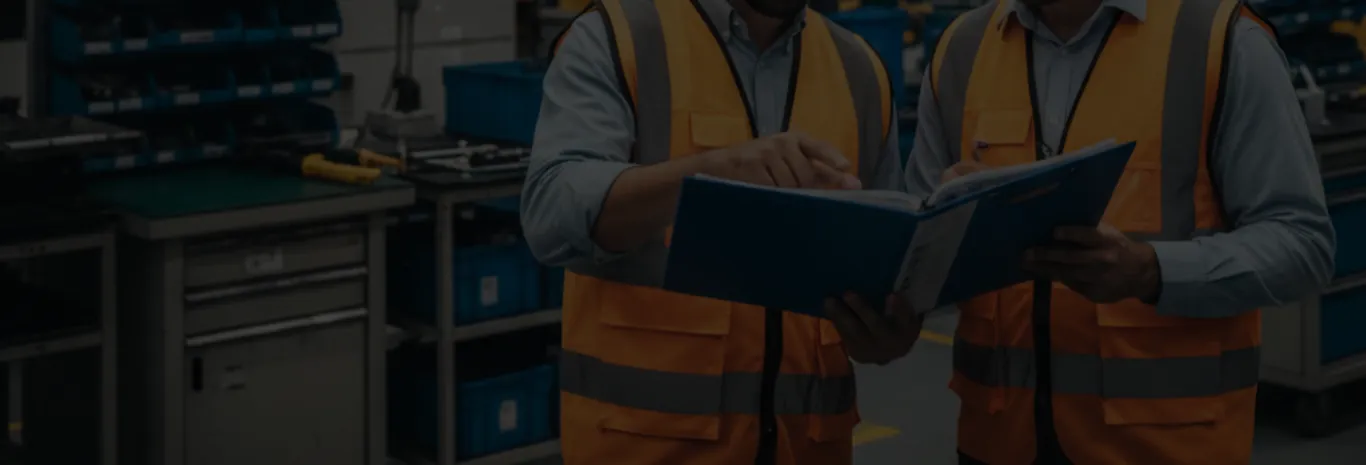
Master Regulatory Readiness Through Disciplined Quality Systems
Build inspection confidence through comprehensive SOP compliance programs and realistic mock inspections that identify vulnerabilities, strengthen documentation systems, and prepare your organization during official audits.


SOP Compliance and Mock Inspections in India
SOP compliance and mock inspections in India are critical for manufacturers operating in highly regulated sectors such as pharmaceuticals, food processing, chemicals, and medical devices. Regulatory authorities, including CDSCO, FSSAI, and BIS evaluate facilities based on adherence to standard operating procedures, documentation integrity, and quality systems during inspections.
Mock inspections are structured simulations of regulatory audits designed to assess an organization’s readiness before actual inspections. These exercises replicate real inspection conditions, covering facility walkthroughs, document reviews, and personnel interviews, to identify compliance gaps, process inefficiencies, and training deficiencies in advance.
IMARC Engineering supports SOP compliance and mock inspection requirements in India through structured gap assessments, documentation reviews, and realistic audit simulations. The approach focuses on identifying compliance risks early, strengthening SOP frameworks, and improving audit preparedness across teams, ensuring that organizations are better equipped to handle regulatory inspections with confidence.
In India’s evolving regulatory environment, where non-compliance can lead to penalties, production delays, or licence risks, proactive inspection readiness is essential. SOP compliance ensures consistency, repeatability, and quality across operations, while mock inspections strengthen audit preparedness and organizational response capability.
Our Systematic Approach to SOP Compliance and Mock Inspections
Our structured compliance methodology combines operational assessments, documentation reviews, and inspection simulations to build robust quality systems. This approach guarantees thorough preparation for regulatory scrutiny while establishing operational practices supporting sustainable compliance and quality excellence.


Compliance Assessment & Gap Identification
Evaluating SOP adherence, documentation practices, training records, and operational discipline through detailed audits identifying gaps, inconsistencies, and improvement opportunities across all quality systems.

Remediation Planning & System Strengthening
Developing prioritized action plans addressing identified deficiencies, strengthening documentation systems, enhancing training programs, and implementing monitoring mechanisms verifying sustained compliance improvements.

Mock Inspection Simulation & Performance Evaluation
Conducting realistic regulatory inspection simulations examining facilities, interviewing personnel, reviewing documentation, and evaluating responses to inspector inquiries identifying readiness gaps requiring attention.

Corrective Action & Continuous Improvement
Implementing targeted improvements addressing mock inspection findings, establishing ongoing monitoring systems, developing response protocols, and building organizational capabilities maintaining regulatory readiness over time.
Why Choose IMARC Engineering for SOP Compliance and Mock Inspections in India?
Our approach combines regulatory expertise, practical audit experience, and inspector perspective delivering inspection readiness programs that transform organizational culture. This approach builds sustainable quality systems where procedural discipline supports both regulatory confidence and operational excellence.

Inspector-Perspective Assessment
SOP compliance gap assessments and mock inspections conducted by consultants without direct knowledge of how CDSCO, FSSAI, and BIS inspectors conduct assessments in India produce findings that are theoretically comprehensive but practically incomplete, identifying technical compliance gaps while missing the behavioural, operational, and documentation deficiencies that Indian regulatory inspectors specifically target. CDSCO inspectors visiting pharmaceutical manufacturing facilities in India consistently focus on a specific set of high-risk areas, including batch record completeness and data integrity, deviation investigation quality and CAPA effectiveness evidence, SOP review currency and training record completeness, and the consistency between what SOPs specify and what production floor observation reveals is actually practiced. IMARC Engineering’s mock inspections are structured from the inspector’s perspective, assessing the specific evidence points that CDSCO, FSSAI, and other Indian regulatory authorities evaluate during actual inspections, identifying the gaps that generate observations rather than those that fail theoretical compliance matrices.

Multi-Framework Assessment
Manufacturers in India who supply both domestic and international markets face simultaneous compliance requirements from CDSCO Schedule M, FSSAI regulations, WHO-GMP, US FDA 21 CFR cGMP, EU GMP, and ISO certification frameworks that each emphasise different aspects of quality system compliance. A pharmaceutical manufacturer targeting WHO prequalification customers must demonstrate compliance beyond CDSCO Schedule M to the additional requirements of WHO-GMP that Indian inspectors do not specifically assess. A food processing company targeting European retail customers must demonstrate FSSC 22000 compliance beyond FSSAI requirements. A medical device manufacturer targeting the US market must demonstrate 21 CFR Part 820 compliance alongside ISO 13485. IMARC Engineering conducts multi-framework mock inspections that simultaneously assess compliance across every applicable regulatory framework, producing a gap analysis that identifies both the Indian regulatory compliance deficiencies that CDSCO or FSSAI inspectors will observe and the international standard gaps that export customer audits or WHO inspections will identify.

Data Integrity Assessment
Data integrity, the completeness, consistency, accuracy, and reliability of GMP-critical manufacturing and quality records has been the most frequently cited category of CDSCO and WHO inspection finding at Indian pharmaceutical manufacturing facilities for several consecutive years, resulting in warning letters, import alerts, and manufacturing licence suspensions that have had severe commercial consequences for affected companies. Data integrity deficiencies in Indian facilities most commonly manifest as ALCOA+ violations, records that are not attributable to the person who performed the activity, are not legible, lack contemporaneous recording, are not original or are copies without controlled justification, or are not accurate. IMARC Engineering’s SOP compliance assessment and mock inspection specifically includes a structured data integrity review, evaluating record management practices, electronic system audit trail configuration, laboratory data integrity, and the behavioural culture around documentation because data integrity findings represent the highest-severity category of Indian pharmaceutical inspection outcome.

Realistic Inspection Simulation
Mock inspections that are conducted as structured document review sessions without unannounced facility walkthrough elements and without pressure-tested personnel interviews fail to replicate the most revealing aspects of actual regulatory inspections because the gaps that cause actual inspection failures are most commonly discovered when a quality manager is asked an unscripted question about a deviation they cannot immediately locate in the quality system, when a production operator demonstrates a practice that deviates from the SOP they claim to follow, or when an inconsistency between a batch record and a related quality document is identified during an inspection-pace document review. IMARC Engineering’s mock inspections include unannounced facility walkthrough elements that observe actual operational practices, structured personnel interviews with production, quality, and management staff using the interview techniques that CDSCO and WHO inspectors apply, and time-pressured document review that tests the accessibility and completeness of the quality record system.

CAPA Quality Assessment
The value of a mock inspection is not fully realised until the corrective and preventive actions it identifies are implemented to a quality level that would withstand re-inspection because a facility that implements superficial CAPA responses to mock inspection findings creates a false confidence that is exposed when actual inspection reveals the same underlying gaps that the mock inspection identified but CAPA failed to substantively address. IMARC Engineering’s mock inspection engagement includes CAPA quality review as a defined follow-up deliverable, assessing whether the corrective actions implemented in response to mock inspection findings have genuinely addressed the root cause of each gap or have addressed the symptom while leaving the underlying compliance weakness intact. This CAPA quality review is conducted within a defined period after the initial mock inspection to verify that the facility is genuinely inspection-ready rather than compliant-appearing.

Sector-Specific Inspection Intelligence
Regulatory inspection standards and focus areas in India evolve continuously as CDSCO, FSSAI, and international agencies update their inspection protocols, issue new guidance documents, and increase enforcement intensity in specific areas based on adverse event trends, international agency findings at Indian facilities, or domestic regulatory policy changes. A mock inspection programme based on inspection standards from two years ago may not adequately prepare a facility for the current inspection environment. IMARC Engineering maintains current intelligence on CDSCO inspection patterns across pharmaceutical, medical device, and cosmetics manufacturing, FSSAI audit focus areas for food processing facilities, BIS product certification assessment standards, and WHO prequalification inspection expectations, updating mock inspection protocols to reflect the current inspection environment rather than historical standards, and briefing facility quality teams on recent inspection findings at comparable facilities before mock inspection execution.
SOP Compliance and Mock Inspections Across Key Sectors in India
IMARC Engineering delivers inspector-perspective gap assessments, data integrity reviews, multi-framework mock inspections, personnel interview simulation, CAPA quality review, and current regulatory intelligence briefings across India’s most active regulated manufacturing sectors.

Mock inspections and SOP compliance assessments for pharmaceutical manufacturing facilities across Hyderabad, Baddi, Ahmedabad, and Aurangabad clusters. CDSCO Schedule M GMP compliance gap assessment, WHO-GMP mock inspection for prequalification preparation, data integrity review across batch manufacturing records and laboratory systems, 21 CFR cGMP and EU GMP mock inspection for regulated market export, and CAPA quality review verifying substantive compliance remediation before actual inspection.
Mock inspections and SOP compliance assessments for FSSAI-licensed food processing facilities across Punjab, Maharashtra, and Karnataka. FSSAI audit gap assessment covering HACCP documentation, CCP monitoring records, and prerequisite programme compliance, FSSC 22000 mock audit for certification preparation, BRC and IFS mock audit for European retail customer compliance, food safety management system SOP completeness review, and personnel interview simulation for FSSAI inspection readiness.
SOP compliance assessment and mock inspection for chemical manufacturing facilities in Gujarat’s Dahej, Ankleshwar, and Vapi corridors. CPCB and state PCB environmental consent compliance review, ISO 9001 quality management system mock audit, Process Safety Management documentation gap assessment for PESO-regulated facilities, MSDS and HAZCHEM documentation compliance review, and safety management SOP gap assessment against Factory Act and BOCW requirements for chemical facility EHS compliance.
Mock inspections and SOP compliance for CDSCO cosmetics manufacturing licence compliance and BIS product certification preparation. CDSCO cosmetics GMP gap assessment against Drugs and Cosmetics Act Schedule M-equivalent requirements, BIS product certification audit readiness assessment, ISO 22716 GMP for cosmetics mock audit, consumer protection regulation compliance review, and labelling claim substantiation documentation assessment for CDSCO and consumer affairs regulatory compliance.
SOP compliance assessment and mock inspection for CIB&RC-licensed agrochemical manufacturing facilities. CIB&RC manufacturing inspection readiness assessment, CPCB and state PCB environmental compliance documentation review, PESO EHS management system gap assessment, export market regulatory compliance mock audit for EU biocide regulation and US EPA registration, and quality management SOP completeness review for agrochemical product quality and regulatory compliance.
Mock inspections and SOP compliance assessments for CDSCO Class B and C device manufacturing facilities. ISO 13485 mock audit covering design control, process validation, CAPA, and post-market surveillance requirements, CDSCO device manufacturing licence compliance gap assessment, CE marking technical documentation review for notified body audit preparation, MDR 2017 compliance assessment for devices subject to the Medical Devices Rules, and data integrity review for quality management system electronic records.
SOP compliance assessment and mock inspection for BIS mandatory certification holders and ISO 9001-certified industrial manufacturers. BIS factory inspection readiness assessment, ISO 9001 surveillance audit gap assessment, Factory Act compliance documentation review, environmental management system SOP compliance assessment for ISO 14001 certification, and quality management system documentation review for export market customer and procurement authority audit compliance.
Explore Related Services

Regulatory Compliance (GMP, ISO, FDA, BIS)
End-to-End GMP, ISO, FDA, and BIS Compliance in India
Learn more


CAPA (Corrective and Preventive Action) Support
Strengthen Quality Systems Through Structured CAPA Implementation
Learn more
SOP Compliance and Mock Inspections in India
Frequently Asked Questions: SOP Compliance and Mock Inspections in India
We have compiled answers to common questions investors and manufacturing leaders ask about SOP compliance and mock inspection services. These insights address program implementation, inspection preparation timelines, organizational impacts, and strategic value of robust compliance systems.
Trusted by Industry Leaders
We partner with global enterprises and ambitious businesses across sectors to deliver operational excellence, strategic insights, and sustainable growth through integrated solutions.




Success in Their Words
Real feedback from clients across industries. Discover how our solutions delivered measurable impact and operational excellence.

I wanted to express my sincere appreciation for your efforts in handling this matter. Your dedication and commitment have been truly commendable, and it is evident that you have put in tremendous hard work and expertise into resolving the issues at hand. We are greatly interested in continuing our collaboration with you in the future, as your professionalism and reliability have made you a trusted partner. Thank you once again for your invaluable contribution. We look forward to strengthening our partnership ahead.
It has been a pleasure working with the IMARC team. The insights provided were structured, clear, and highly valuable, helping us strengthen both our technical and financial planning with confidence. We deeply appreciate the team’s professionalism, responsiveness, and attention to detail throughout the engagement. Every requirement was well understood and effectively incorporated, resulting in a comprehensive and actionable output. Overall, our experience has been excellent, and I would gladly recommend IMARC to organizations seeking a reliable research partner.
Your service is truly exceptional. Working with the IMARC team has been a seamless and professional experience. The clarity of communication, responsiveness to queries, and consistent support at every stage made the entire engagement highly efficient. The insights shared were well-structured, practical, and perfectly aligned with our requirements, helping us make informed decisions with confidence. Overall, the dedication and professionalism demonstrated by your team stand out, and I would be glad to recommend IMARC as a reliable and trustworthy research partner.
IMARC did an outstanding job in preparing our study. They were punctual, precise, and consistently responsive throughout the entire process. The team delivered all the data we required in a clear, well-organized, and highly professional format. Their strong attention to detail, combined with their ability to meet every deadline without compromising quality, truly set them apart. Overall, their reliability and commitment made them an exceptional partner for our project, and we would gladly work with them again in the future.

IMARC made the whole process incredibly easy from start to finish. Everyone I interacted with via email was polite, professional, and straightforward to deal with, always keeping their promises regarding delivery timelines and remaining consistently solutions-focused. From my very first contact, I appreciated the professionalism and support shown by the entire IMARC team. I highly recommend IMARC to anyone seeking timely, affordable, and reliable information or advice. My experience with IMARC was excellent, and I truly cannot fault any aspect of it.
I’d like to express my sincere gratitude for the excellent work you accomplished with the study. Your ability to quickly understand our requirements and deliver high-quality results under tight timelines truly reflects your expertise, exceptional work ethic, and unwavering commitment to your customer’s success. The professionalism and responsiveness you demonstrated throughout the process made a significant difference. Our entire team and company are incredibly thankful for your dedication, reliability, and support. Once again, thank you for your outstanding contribution.
Speak to Our SOP Compliance and Mock Inspection Team
Whether you are a pharmaceutical, food, chemical, FMCG, agrochemical, medical device, or industrial manufacturer, IMARC Engineering provides comprehensive mock inspection and audit readiness support. This includes inspection simulation, gap assessment, CAPA review, and data integrity evaluation aligned with Central Drugs Standard Control Organization, Food Safety and Standards Authority of India, ISO standards, and global regulatory frameworks, ensuring confident, audit-ready performance across all inspections.