
Building Safety Culture Through Comprehensive EHS Excellence
Implement structured EHS training in India to improve workplace safety, ensure regulatory compliance, and equip employees with practical skills for hazard prevention and safe manufacturing operations.

EHS (Environment, Health & Safety) Training in India
EHS (Environment, Health & Safety) training in India is essential for manufacturers to ensure workplace safety, regulatory compliance, and risk reduction across operations. Regulations under the Ministry of Labour and Employment, Directorate General Factory Advice Service and Labour Institutes, and the Central Pollution Control Board require organizations to train employees on safety practices, hazard management, and environmental protection. In India, workplace safety incidents remain a concern, with industrial sectors reporting a significant share of occupational injuries due to inadequate training and unsafe practices. Structured EHS training can reduce workplace incidents by 20% while improving environmental compliance and operational reliability.
IMARC Engineering provides EHS training services in India through customized, industry-specific programs covering hazard identification, emergency response, PPE usage, machine safety, chemical handling, and environmental compliance. Our training combines regulatory requirements with practical, shop-floor scenarios to improve workforce competency and retention. We support frontline workers, supervisors, and management through structured modules, assessments, and certification programs. From onboarding safety training to advanced compliance programs, IMARC Engineering helps organizations build strong safety cultures, reducing risks, ensuring compliance, and improving overall operational performance.
Our Strategic Approach to EHS (Environment, Health & Safety) Training
Our systematic training methodology combines needs assessment, curriculum customization, engaging delivery, and effectiveness validation to develop workforce competencies. This proven four-phase framework addresses every critical dimension affecting training impact and sustainable behavioral transformation.
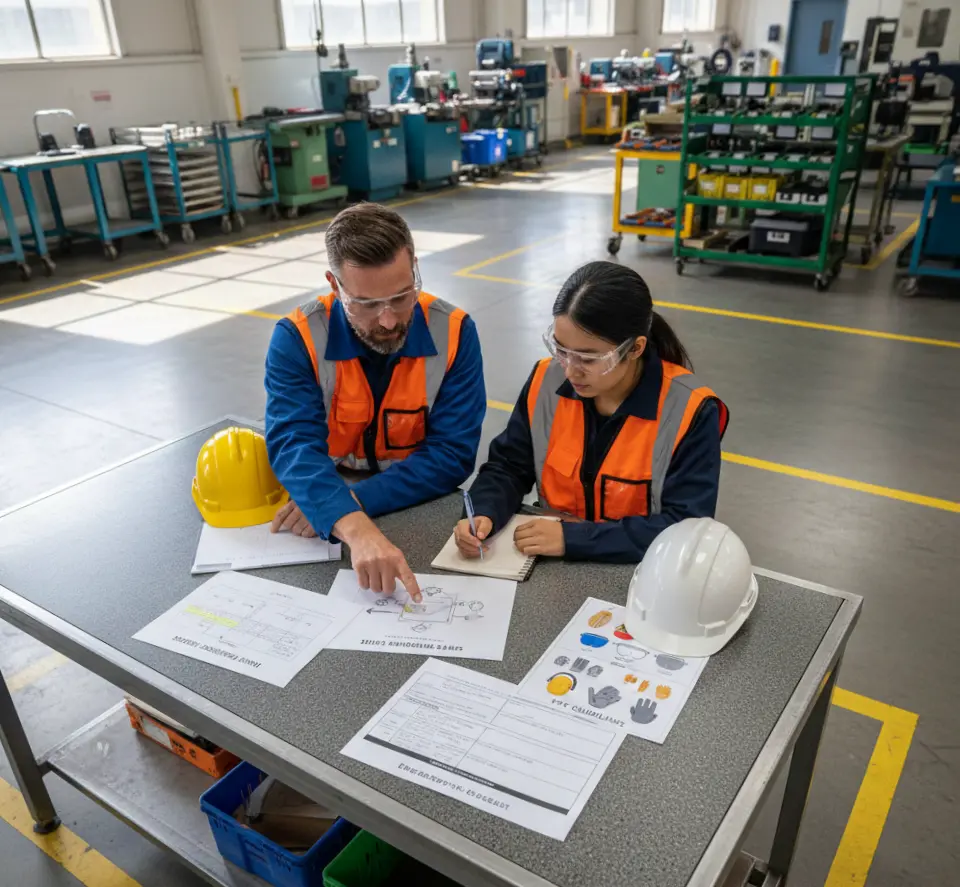

Training Needs Assessment and Gap Analysis
Evaluating workforce competency levels, regulatory obligations, operational hazards, and incident histories to identify training priorities and develop comprehensive development roadmaps aligned with organizational objectives.

Customized Curriculum Development and Material Preparation
Designing tailored training programs incorporating site-specific hazards, operational procedures, regulatory requirements, and industry best practices while developing engaging instructional materials supporting knowledge retention.

Interactive Training Delivery and Skills Development
Conducting engaging training sessions utilizing multiple instructional methods including classroom instruction, hands-on demonstrations, practical exercises, and competency assessments validating skill mastery and behavioral change.

Documentation and Continuous Improvement
Maintaining comprehensive training records, conducting effectiveness evaluations, gathering participant feedback, and implementing continuous curriculum improvements maintaining training relevance and maximizing workplace safety impact.
Why Choose IMARC for EHS (Environment, Health & Safety) Training
Our comprehensive training approach combines regulatory expertise, industry knowledge, and adult learning methodologies to deliver impactful workforce development. This integrated methodology addresses every dimension affecting training effectiveness and sustainable safety culture transformation.

Sector-Specific Training Content
Generic EHS training programmes designed for a broad industrial audience systematically fail to address the specific hazard profiles of individual manufacturing sectors in India, delivering content about hazards that workers in that facility never encounter while omitting the sector-specific risks that generate the actual incidents. A chemical plant worker in Gujarat’s Dahej industrial corridor needs detailed toxic gas exposure training, HAZCHEM response protocols, and PESO-compliant flammable material handling instruction, not a generic PPE module applicable to any construction site. A pharmaceutical cleanroom operator in Hyderabad needs GMP behaviour training, contamination prevention protocols, and Schedule M-aligned documentation practices, not a standard machine guarding module. IMARC Engineering develops EHS training content calibrated to the specific hazard profile, regulatory framework, and operational context of each client’s manufacturing sector and facility, ensuring that every training hour addresses hazards workers face rather than generic content that passes a compliance check without building relevant competency.

Regulatory Compliance Coverage
EHS training compliance in India spans multiple regulatory frameworks whose training mandates differ by sector, workforce category, and hazard type. The Factories Act 1948 and state factory rules mandate safety training for workers engaged in hazardous processes under Schedule 1, with Certifying Surgeons and Factory Inspectors authorised to issue compliance directions. BOCW Act 1996 regulations mandate safety induction and task-specific training for construction workers. PESO regulations require trained personnel for operations involving petroleum, explosives, and liquefied gas handling. CPCB hazardous waste management authorisations require trained personnel for hazardous waste handling, storage, and disposal. IFC Performance Standards require structured EHS management systems with documented training programmes for internationally financed projects. IMARC Engineering designs training programmes that satisfy every applicable regulatory training mandate for the client’s workforce and sector, maintaining training records in the format required for Factory Inspector compliance review, CPCB audit, BOCW inspection, and lender ESG reporting.

Regional Language Delivery
EHS training delivered in English to frontline manufacturing workers across India’s industrial states achieves certificate issuance without competency development because workers who cannot understand the training language attend, sign attendance sheets, and return to their workstations with the same safety behaviours they had before the session. Chemical handling safety training delivered in English to operators whose working language is Gujarati, Tamil, or Hindi generates regulatory training records without the hazard awareness and safe behaviour change that the training is supposed to achieve. IMARC Engineering delivers EHS training in the regional languages of the workforce being trained in Hindi, Gujarati, Marathi, Tamil, Telugu, Kannada, Punjabi, and other applicable languages, using locally relevant examples, shop-floor scenarios, and practical demonstrations that build genuine competency rather than compliance documentation only.

Competency Assessment and Certification Verifying Training Effectiveness
EHS training programmes that deliver content without structured competency assessment provide compliance records without evidence that the training has achieved its safety objective and fail the assessment standards applied by ISO 45001 auditors, IFC Performance Standard 2 reviewers, and CDSCO GMP inspectors who require demonstration that trained personnel have understood and can apply safety procedures. IMARC Engineering incorporates structured pre- and post-training assessment into every training programme, measuring knowledge acquisition through written or oral assessments adapted to literacy levels, verifying practical skill through observed task performance assessments for high-risk activities, and issuing competency certificates that reflect demonstrated competency rather than attendance only. Assessment results are analysed at cohort level to identify training content that requires reinforcement, and individual results are maintained in training records that support regulatory inspection and management review.

Emergency Response Training
Emergency response capability in Indian manufacturing facilities is frequently assessed only at formal emergency drills conducted annually to satisfy regulatory requirements, with the drill scenario, participant actions, and outcome predetermined to avoid the operational disruption that a realistic emergency response exercise would generate. This approach produces drill completion records without genuine emergency response capability, because the realistic chaos, communication failures, and decision-making pressure of actual emergency scenarios are not experienced. IMARC Engineering designs and facilitates emergency response training that includes realistic scenario-based tabletop exercises and practical drills calibrated to the specific emergency scenarios relevant to the facility, toxic gas releases in chemical plants, fire in pharmaceutical cleanrooms, ammonia refrigerant leaks in cold chain facilities, and hazardous material spill response in agrochemical operations, building the practical response capability that produces effective emergency management when a real incident occurs.

Management and Supervisor EHS Leadership Training
Frontline worker EHS training programmes that are not supported by management and supervisor EHS leadership capability consistently fail to achieve lasting safety behaviour change because supervisors who are not trained in safety leadership reinforce production-speed-over-safety behaviours that override the safe working practices frontline workers are trained to follow. A pharmaceutical facility where supervisors instruct operators to skip gowning procedures to meet batch targets, or a chemical plant where shift managers allow hot work without permit completion to avoid schedule delays, negates the investment in frontline EHS training within weeks. IMARC Engineering provides management and supervisor EHS leadership training that develops the safety leadership behaviours, hazard recognition competencies, and permit-to-work management skills required at the supervisory level, ensuring that the management layer of the organisation actively reinforces rather than undermines the safety behaviours that frontline training develops.
EHS Training Across Key Sectors in India
IMARC Engineering delivers sector-specific EHS training programmes, regulatory compliance training, regional language delivery, competency assessment, emergency response drills, and management safety leadership training across India’s most active manufacturing sectors.
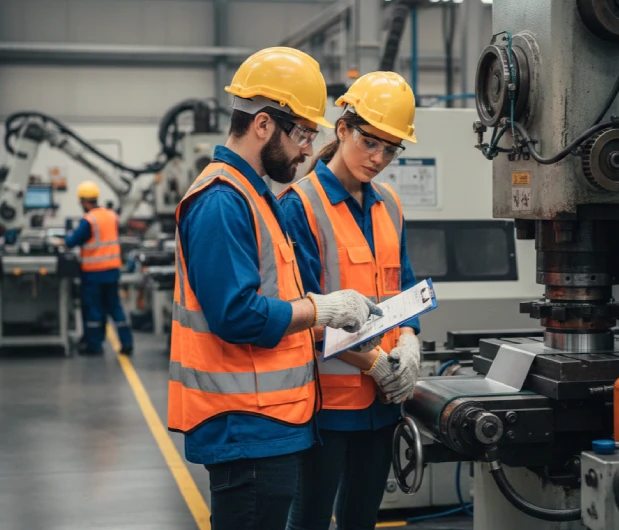
EHS training for pharmaceutical manufacturing facilities across Hyderabad, Baddi, and Ahmedabad clusters. CDSCO Schedule M GMP behaviour and contamination prevention training, solvent handling and fire safety for pharmaceutical operations, cleanroom gowning and hygiene discipline training, chemical spill response for API synthesis areas, Factory Act hazardous process training for Schedule 1 pharmaceutical chemicals, and management EHS leadership training for GMP compliance culture development.
EHS training for food processing facilities across Punjab, Maharashtra, and Karnataka. FSSAI food safety behaviour training integrated with EHS hazard management, ammonia refrigeration system emergency response for cold chain operations, HACCP-linked hygiene and contamination prevention training, machinery and conveyor safety for food processing lines, BOCW-compliant construction worker safety induction for seasonal facility expansion workforces, and confined space entry safety for silo and tank cleaning operations.
EHS training for chemical manufacturing facilities in Gujarat’s Dahej, Ankleshwar, and Vapi industrial corridors. HAZCHEM emergency response training for toxic and flammable chemical releases, PESO-compliant petroleum and flammable liquid handling safety, permit-to-work system training for hot work and confined space entry, IBR pressure system safety and emergency shutdown procedures, CPCB hazardous waste handling and disposal training, and IFC Performance Standards-aligned safety management system training for internationally financed chemical projects.
EHS training for FMCG manufacturing facility workforces. Aerosol propellant and flammable solvent handling safety, high-speed packaging line machinery safety and emergency stop procedures, chemical handling safety for cleaning agents and cosmetic raw materials, BOCW-compliant construction safety for brownfield expansion workforces, fire prevention training for facilities handling flammable packaging materials, and management safety leadership training for production supervisors managing high-speed continuous-operation manufacturing environments.
EHS training for agrochemical manufacturing workforces in PESO-notified chemical zones. Toxic chemical exposure prevention and respiratory protection training for pesticide synthesis and formulation operations, HAZCHEM emergency response for scheduled toxic chemical releases, PESO permit-to-work system training for flammable solvent handling, personal decontamination procedures for workers in contact with scheduled hazardous chemicals, emergency evacuation training calibrated to agrochemical facility toxic release scenarios, and management safety leadership for operations in high-hazard chemical manufacturing environments.
EHS training for medical device manufacturing workforces. Cleanroom behaviour and contamination prevention training aligned with ISO 13485 GMP requirements, chemical handling safety for laboratory and manufacturing chemical usage, sharps and biomedical waste safety for quality testing laboratory personnel under Biomedical Waste Management Rules 2016, ergonomics and manual handling training for precision assembly operations, fire safety training for cleanroom environments, and EHS management system training for ISO 45001 occupational health and safety certification programmes.
EHS training for heavy industrial manufacturing workforces in MIDC, GIDC, SIDCO, and RIICO industrial areas. Crane and lifting equipment operator safety training with Factory Act competency certification requirements, working at height safety for large-span industrial roof structure construction and maintenance, welding fume and surface treatment chemical exposure prevention, machine guarding and lockout/tagout safety for CNC and fabrication equipment, factory fire safety and emergency evacuation training, and BOCW construction safety training for greenfield industrial facility construction workforces.
Explore Related Services

Documentation and Technical File Preparation
Transforming Technical Complexity into Regulatory Compliance Excellence
Learn more

On-Site Troubleshooting and Technical Support
Minimize Downtime with On-Site Technical Support in India
Learn more

Technology Transfer
Scale Innovation into Commercial Manufacturing with Structured Technology Transfer
Learn more
Frequently Asked Questions: EHS Training in India
We’ve compiled answers to the most common questions investors, facility managers, and safety leaders ask about EHS training. These insights address critical concerns around regulatory requirements, program effectiveness, investment considerations, and sustainable safety culture development.
Trusted by Industry Leaders
We partner with global enterprises and ambitious businesses across sectors to deliver operational excellence, strategic insights, and sustainable growth through integrated solutions.




Success in Their Words
Real feedback from clients across industries. Discover how our solutions delivered measurable impact and operational excellence.

I wanted to express my sincere appreciation for your efforts in handling this matter. Your dedication and commitment have been truly commendable, and it is evident that you have put in tremendous hard work and expertise into resolving the issues at hand. We are greatly interested in continuing our collaboration with you in the future, as your professionalism and reliability have made you a trusted partner. Thank you once again for your invaluable contribution. We look forward to strengthening our partnership ahead.

It has been a pleasure working with the IMARC team. The insights provided were structured, clear, and highly valuable, helping us strengthen both our technical and financial planning with confidence. We deeply appreciate the team’s professionalism, responsiveness, and attention to detail throughout the engagement. Every requirement was well understood and effectively incorporated, resulting in a comprehensive and actionable output. Overall, our experience has been excellent, and I would gladly recommend IMARC to organizations seeking a reliable research partner.

Your service is truly exceptional. Working with the IMARC team has been a seamless and professional experience. The clarity of communication, responsiveness to queries, and consistent support at every stage made the entire engagement highly efficient. The insights shared were well-structured, practical, and perfectly aligned with our requirements, helping us make informed decisions with confidence. Overall, the dedication and professionalism demonstrated by your team stand out, and I would be glad to recommend IMARC as a reliable and trustworthy research partner.

IMARC did an outstanding job in preparing our study. They were punctual, precise, and consistently responsive throughout the entire process. The team delivered all the data we required in a clear, well-organized, and highly professional format. Their strong attention to detail, combined with their ability to meet every deadline without compromising quality, truly set them apart. Overall, their reliability and commitment made them an exceptional partner for our project, and we would gladly work with them again in the future.

IMARC made the whole process incredibly easy from start to finish. Everyone I interacted with via email was polite, professional, and straightforward to deal with, always keeping their promises regarding delivery timelines and remaining consistently solutions-focused. From my very first contact, I appreciated the professionalism and support shown by the entire IMARC team. I highly recommend IMARC to anyone seeking timely, affordable, and reliable information or advice. My experience with IMARC was excellent, and I truly cannot fault any aspect of it.

I’d like to express my sincere gratitude for the excellent work you accomplished with the study. Your ability to quickly understand our requirements and deliver high-quality results under tight timelines truly reflects your expertise, exceptional work ethic, and unwavering commitment to your customer’s success. The professionalism and responsiveness you demonstrated throughout the process made a significant difference. Our entire team and company are incredibly thankful for your dedication, reliability, and support. Once again, thank you for your outstanding contribution.
Speak to Our EHS Training Team
Whether you are a pharmaceutical, food, chemical, FMCG, agrochemical, medical device, or industrial manufacturer or an investor, IMARC Engineering delivers end-to-end EHS training and safety programme support. This includes behaviour-based safety training, hazardous process and emergency response programmes, and compliance aligned with Central Drugs Standard Control Organization, Food Safety and Standards Authority of India, Factory Act, and IFC standards, ensuring a strong safety culture, regulatory compliance, and ESG alignment across operations.