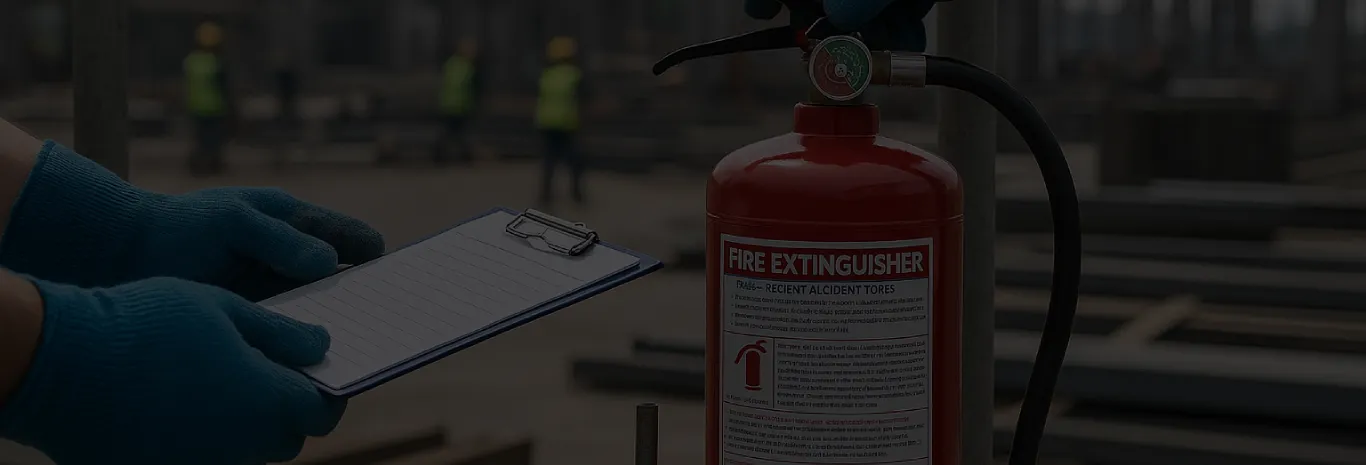
Comprehensive Safety Management and Regulatory Compliance Services
Transform construction sites into safe work environments through comprehensive fire prevention and safety compliance programs that protect workers, maintain regulatory standards, and deliver facilities ready for immediate occupancy.

Construction Site Fire and Safety Compliance in India
Construction fire and safety compliance in India ensures that project sites adhere to regulatory standards, safety protocols, and risk mitigation practices throughout the construction lifecycle. Governed by the Building and Other Construction Workers (BOCW) Act, 1996 and the National Building Code (NBC), construction projects are required to implement strict measures for fire prevention, emergency preparedness, worker safety, and hazard control. These regulations apply across industrial, manufacturing, pharmaceutical, and infrastructure projects, where safety lapses can lead to operational disruptions, legal penalties, and significant financial risks.
Fire & Safety Compliance Services at IMARC Engineering ensure the completion of projects within the guidelines of BOCW, NBC, and State Fire Safety Codes for project developers/owners/contractors. Compliance auditing, hazard identification/risk assessment, fire protection systems analysis, emergency preparedness plans, safety training programs, and documentation are the main offerings of this service.
Safety management systems are becoming increasingly necessary with the stringent involvement of labor departments, ESG funders, and insurance companies. IMARC Engineering ensures that your projects are audited and comply with safety regulations and allow unhindered completion of projects.
Our Structured Fire and Safety Compliance During Construction Methodology
Our comprehensive approach integrates hazard assessment, systematic controls, and continuous monitoring. This proven methodology maintains safe work environments through coordinated fire prevention, safety protocol enforcement, and regulatory compliance management.
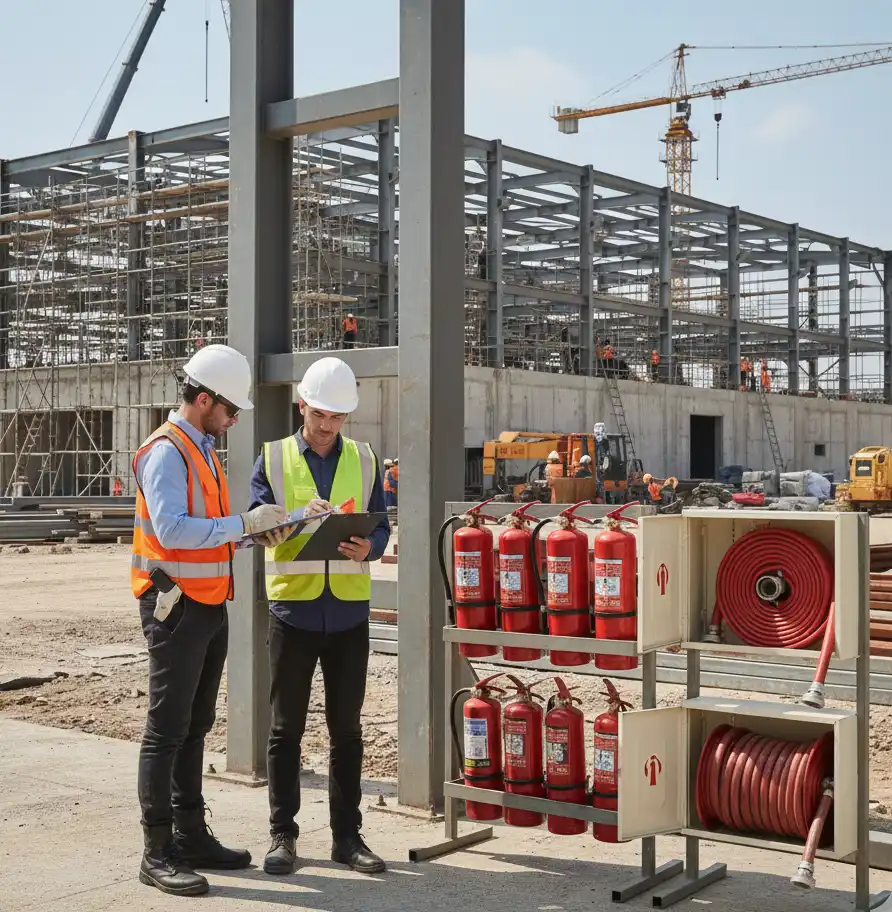

Pre-Construction Planning and Hazard Assessment
Evaluating site conditions, identifying potential hazards, developing safety plans, and establishing emergency protocols before construction mobilization.

Fire Prevention and Hot Work Management
Implementing fire watch protocols, managing hot work permits, monitoring ignition sources, and maintaining fire suppression equipment throughout construction activities.

Safety Inspections and Compliance Verification
Conducting systematic site inspections, verifying protective equipment usage, documenting observations, and addressing deficiencies through corrective action programs.

Training Delivery and Emergency Response Planning
Providing workforce safety training, conducting emergency drills, coordinating first responder relationships, and maintaining preparedness throughout construction phases.
Why Choose IMARC Engineering for Construction Site Fire and Safety Compliance in India?
Our professional safety management delivers protected work environments through systematic hazard control, rigorous compliance, and expert oversight. This comprehensive methodology addresses fire prevention, regulatory adherence, workforce protection, and emergency preparedness throughout construction operations.

Structured Compliance Framework
Construction site fire and safety compliance in India operates under a multi-layered regulatory framework, varying by project type, state, and workforce scale. Non-compliance with any layer can lead to enforcement actions, including stop-work orders. The BOCW Act governs worker safety and welfare, NBC 2016 sets fire and structural safety standards, state fire NOCs apply in active zones, and Factory Act provisions cover construction within licensed premises. IMARC Engineering manages compliance across all frameworks through a project-specific compliance register, assigning responsibilities and maintaining audit-ready documentation for inspections by authorities, lenders, and insurers.

Hazard Identification and Risk Assessment
Safety risks associated with the construction process differ considerably from one industry to another in India, hence the need for customized approaches instead of generalized control measures. Chemical factories in areas such as Dahej and Ankleshwar need safety controls in hazardous areas; pharmaceutical plants require stringent controls against contamination and personal protective equipment (PPE); food manufacturing companies face increased risks of fire incidents; while heavy industrial projects in regions such as MIDC or GIDC face risks associated with crane lifting and working at height activities.

Hot Work Permit and Fire Prevention Management
Hot Work, which includes activities such as welding, gas cutting, and grinding, is among the principal sources of fire accidents in construction sites in India, particularly in industrial plants where combustible materials are kept close to the location of hot work. Although both the BOCW Act and fire laws require that the permit-to-work system be put in place, its success lies in ensuring its proper enforcement on the ground through activities like fire watch, availability of extinguishers, clearance of materials, and follow-up after hot work operations.

Emergency Response Planning and Evacuation Management
Emergency response on multi-contractor construction sites in India requires a unified, site-level plan rather than fragmented contractor-specific procedures. Without coordinated muster points, communication protocols, and fire warden structures, emergency situations can lead to confusion, incomplete headcounts, and delayed response. IMARC Engineering develops integrated emergency response plans with common muster points, site-wide communication systems, coordinated fire warden coverage, regular drill programmes, and alignment with local emergency services, ensuring effective, organised response even in remote industrial locations.

ESG-Aligned Safety Documentation
Financial institutions and infrastructure investors in India that have an ESG mandate now demand structured safety management systems to be put in place as a prerequisite for lending and adherence to compliance rules. International standards such as the IFC Performance Standards and Equator Principles necessitate having a safety plan, accident reporting process, audit report, and corrective actions log that prove the existence of a systematic effort towards employee safety. Simultaneously, insurance firms demand the assessment of risks, fire safety measures, and contingency planning before providing insurance coverage. IMARC Engineering designs and implements safety documentation consistent with international guidelines, adhering to both Indian norms and financial institution demands.

Continuous Safety Monitoring and Corrective Action Management
Site safety compliance within the Indian construction sector is a perpetual management activity, not a one-off audit process. Due to the dynamic nature of construction sites where work practices change every day, and site conditions change every day as well, any static audit becomes outdated almost instantly. Compliance with safety requirements at IMARC Engineering construction sites is ensured by conducting site safety checks; making observations of hazards on a daily basis for high-risk tasks; issuing non-compliance reports with corrective actions; and monthly safety performance reports issued to owners and lenders.
Construction Site Fire and Safety Compliance Across Key Sectors in India
IMARC Engineering delivers BOCW compliance management, hazard identification, hot work permit systems, emergency response planning, ESG safety documentation, and continuous site safety monitoring across India’s most active manufacturing construction sectors
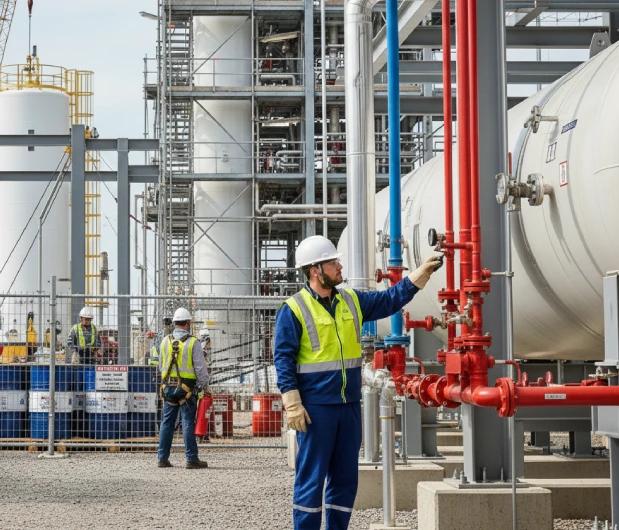
Safety compliance for pharmaceutical facility construction in clusters including Hyderabad, Baddi, Ahmedabad, and Aurangabad. BOCW welfare compliance for cleanroom construction workforces, solvent and chemical material handling hazard management, dust exposure controls for potent compound construction zones, fire NOC construction compliance documentation, and CDSCO GMP facility construction safety records aligned with Schedule M requirements.
Safety compliance for food processing facility construction in agricultural processing zones across Punjab, Maharashtra, and Karnataka. Combustible agricultural material fire risk management, ammonia refrigeration system construction safety protocols, FSSAI hygiene-controlled construction zone safety management, BOCW compliance for seasonal construction workforces, and fire suppression system installation inspection records for Factory Act and fire NOC submissions.
Safety compliance for chemical manufacturing facility construction in Gujarat’s Dahej, Ankleshwar, and Vapi industrial corridors. PESO-adjacent hazardous area construction safety exclusion zone management, toxic chemical construction material handling protocols, hot work permit systems for welding and cutting in classified zones, CPCB consent condition construction compliance records, and IBR pressure system construction safety inspection coordination.
Safety compliance for multi-product FMCG manufacturing facility construction. Aerosol propellant and flammable solvent construction material storage fire safety management, high-speed packaging line installation safety coordination, BOCW compliance for accelerated construction programme workforces, emergency response planning for multi-contractor concurrent construction activities, and ESG safety documentation for project finance lender reporting.
Safety compliance for agrochemical facility construction in PESO-notified chemical manufacturing zones. Toxic intermediate and flammable solvent construction zone exclusion management, explosion risk hot work permit controls in classified construction areas, and respiratory protection programmes for workers in toxic process area construction zones.
Safety compliance for medical device manufacturing facility construction in state medical device parks in Andhra Pradesh, Telangana, Tamil Nadu, and Uttar Pradesh. Cleanroom construction zone dust and particle control safety management, precision equipment installation safety supervision, fire NOC construction compliance documentation, and ISO 13485-aligned facility construction safety records for CDSCO manufacturing licence applications.
Safety compliance for heavy industrial manufacturing facility construction in MIDC, GIDC, SIDCO, and RIICO industrial areas. Crane lift safety management for heavy equipment installation, working-at-height safety systems for large-span roof structures, confined space entry permit management for underground utility construction, Factory Act safety inspection documentation, fire NOC compliance records, and IFC Performance Standards-aligned ESG safety reporting for international project finance lenders.
Explore Related Services

Site Supervision and Civil Execution Oversight
Expert Construction Oversight and Quality Assurance Management
Learn more


Installation Supervision and Equipment Commissioning
Expert Equipment Integration and Performance Verification Services
Learn more
Frequently Asked Questions: Construction Site Fire and Safety Compliance in India
We have compiled answers to the most common questions project owners, construction managers, and safety directors ask about fire and safety compliance during construction. These insights address critical concerns around regulatory requirements, program implementation, hazard management, and accountability.
Trusted by Industry Leaders
We partner with global enterprises and ambitious businesses across sectors to deliver operational excellence, strategic insights, and sustainable growth through integrated solutions.









Success in Their Words
Real feedback from clients across industries. Discover how our solutions delivered measurable impact and operational excellence.

I wanted to express my sincere appreciation for your efforts in handling this matter. Your dedication and commitment have been truly commendable, and it is evident that you have put in tremendous hard work and expertise into resolving the issues at hand. We are greatly interested in continuing our collaboration with you in the future, as your professionalism and reliability have made you a trusted partner. Thank you once again for your invaluable contribution. We look forward to strengthening our partnership ahead.

It has been a pleasure working with the IMARC team. The insights provided were structured, clear, and highly valuable, helping us strengthen both our technical and financial planning with confidence. We deeply appreciate the team’s professionalism, responsiveness, and attention to detail throughout the engagement. Every requirement was well understood and effectively incorporated, resulting in a comprehensive and actionable output. Overall, our experience has been excellent, and I would gladly recommend IMARC to organizations seeking a reliable research partner.

Your service is truly exceptional. Working with the IMARC team has been a seamless and professional experience. The clarity of communication, responsiveness to queries, and consistent support at every stage made the entire engagement highly efficient. The insights shared were well-structured, practical, and perfectly aligned with our requirements, helping us make informed decisions with confidence. Overall, the dedication and professionalism demonstrated by your team stand out, and I would be glad to recommend IMARC as a reliable and trustworthy research partner.

IMARC did an outstanding job in preparing our study. They were punctual, precise, and consistently responsive throughout the entire process. The team delivered all the data we required in a clear, well-organized, and highly professional format. Their strong attention to detail, combined with their ability to meet every deadline without compromising quality, truly set them apart. Overall, their reliability and commitment made them an exceptional partner for our project, and we would gladly work with them again in the future.

IMARC made the whole process incredibly easy from start to finish. Everyone I interacted with via email was polite, professional, and straightforward to deal with, always keeping their promises regarding delivery timelines and remaining consistently solutions-focused. From my very first contact, I appreciated the professionalism and support shown by the entire IMARC team. I highly recommend IMARC to anyone seeking timely, affordable, and reliable information or advice. My experience with IMARC was excellent, and I truly cannot fault any aspect of it.

I’d like to express my sincere gratitude for the excellent work you accomplished with the study. Your ability to quickly understand our requirements and deliver high-quality results under tight timelines truly reflects your expertise, exceptional work ethic, and unwavering commitment to your customer’s success. The professionalism and responsiveness you demonstrated throughout the process made a significant difference. Our entire team and company are incredibly thankful for your dedication, reliability, and support. Once again, thank you for your outstanding contribution.
Speak to Our Construction Site Fire and Safety Compliance Team
Whether you are a pharmaceutical, food, chemical, FMCG, medical device, or industrial manufacturer, or a project owner, EPC contractor, or lender, IMARC Engineering delivers construction safety management aligned with BOCW, Food Safety and Standards Authority of India, Central Drugs Standard Control Organization, PESO, CPCB, and IFC standards. We combine sector-specific hazard control, continuous site monitoring, and audit-ready documentation to ensure worker safety, regulatory compliance, and uninterrupted project execution.