
Bridging Operational Excellence with Enterprise Intelligence
Implement digital documentation and ERP integration in India to connect shop-floor data with enterprise systems, improve traceability, reduce manual errors, and enable real-time operational visibility across manufacturing functions.
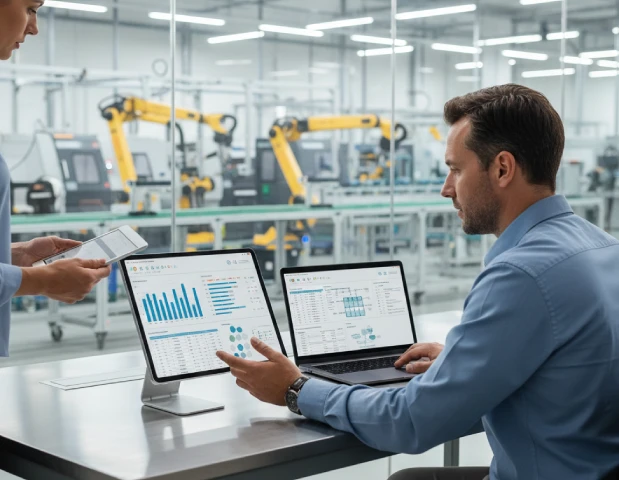
Digital Documentation & ERP Integration in India
Digital documentation and ERP integration in India are critical for manufacturers aiming to improve data accuracy, regulatory compliance, and real-time operational visibility. With increasing adoption of Industry 4.0 and digital manufacturing, platforms such as SAP ERP, Oracle ERP, and Microsoft Dynamics 365 are widely used to integrate production, quality, inventory, and financial systems. In India, manual and paper-based documentation can lead to significant data inefficiencies, delayed reporting, and compliance risks, especially in regulated sectors. As manufacturers scale under Make in India and PLI schemes, digital integration is becoming essential for traceability, audit readiness, and operational control.
IMARC Engineering provides digital documentation and ERP integration services in India through a structured, engineering-led approach. We convert paper-based records into digital workflows, implement document management systems, and integrate shop-floor data with ERP platforms. Our services cover batch record digitisation, system integration, data architecture design, and change management support. From implementation to optimisation, IMARC Engineering enables paperless operations, helping manufacturers reduce manual errors, improve decision-making, and achieve seamless enterprise-wide data visibility.
Our Strategic Approach to Digital Documentation & ERP Integration
Our systematic integration methodology combines business process analysis, technology architecture design, and change management to deliver successful digital transformation. This proven four-phase framework addresses every critical dimension affecting your digitalization journey and operational effectiveness.


Current State Assessment and Requirements Definition
Evaluating existing documentation workflows, system landscapes, and operational processes to identify integration opportunities, define functional requirements, and establish transformation roadmaps aligned with business objectives.

Solution Design and Architecture Development
Designing comprehensive integration architectures specifying system interfaces, data flows, document repositories, and workflow automation while selecting appropriate technologies supporting scalability and regulatory compliance.

Implementation and System Configuration
Executing technical implementation including ERP configuration, interface development, document digitization, workflow programming, and testing protocols validating functionality, data accuracy, and performance under operational conditions.

Training and Ongoing Optimization Support
Delivering comprehensive user training, managing change adoption, providing post-implementation support, and conducting continuous improvement initiatives optimizing system utilization and identifying enhancement opportunities throughout operational maturity.
Why Choose IMARC Engineering for Digital Documentation & ERP Integration in India?
Our integrated digital transformation approach combines technical expertise, operational understanding, and change management excellence to deliver successful outcomes. This comprehensive methodology addresses every dimension affecting your digitalization success and long-term value realization.

Manufacturing Operations-Informed Integration Design
ERP and digital documentation implementations that are designed and executed by IT consultants without manufacturing operations expertise consistently produce systems that are technically functional but operationally rejected by production teams because the data entry workflows, batch record structures, and production reporting formats do not reflect how manufacturing actually works on the shop floor. A pharmaceutical batch record digitisation that requires operators to navigate twelve screen transitions to complete a single in-process test entry, or an ERP production order structure that does not match the facility’s actual process sequence, generates workaround practices and parallel paper systems that eliminate the compliance and efficiency benefits of digitisation within months. IMARC Engineering designs digital documentation and ERP integration with manufacturing process knowledge at the centre, ensuring that digital workflows match actual production sequences, batch record structures reflect GMP documentation requirements, and user interfaces are designed for production floor operators rather than office-based system administrators.

Regulatory Compliance Architecture Embedded in Digital Systems
Digital documentation and ERP systems in Indian regulated manufacturing must satisfy CDSCO Schedule M electronic record and audit trail requirements, FSSAI traceability obligations under the Food Safety and Standards Act, and 21 CFR Part 11 electronic records compliance for manufacturers targeting US FDA-regulated market export. Systems implemented without regulatory compliance architecture built in from the design stage require costly retrofitting, adding audit trail functionality, electronic signature workflows, and data integrity controls to systems that were not designed for them. IMARC Engineering designs digital documentation systems with regulatory compliance architecture as a primary design requirement, specifying audit trail configuration, electronic signature workflows, access control hierarchies, and data integrity controls in the system design specification before implementation commences, ensuring that regulatory compliance is a designed-in feature rather than a post-implementation remediation project.

GST and Indian Tax Compliance Integration
ERP implementations in India that do not correctly configure GST compliance functionality generate tax reporting errors, reconciliation failures, and GSTN portal filing discrepancies that create regulatory exposure and accounting remediation costs far exceeding the integration project budget. India’s GST framework imposes specific ERP configuration requirements including HSN/SAC code mapping to every product and service transaction, GST rate determination logic for intra-state and inter-state supplies, input tax credit accumulation and utilisation workflows, E-way bill generation integration for goods movement above ₹50,000, and GSTN portal reconciliation for GSTR-1, GSTR-3B, and annual return filing. IMARC Engineering configures GST compliance modules as an integral component of every ERP implementation, with HSN code mapping verified against applicable GST rate schedules, E-way bill integration tested for all goods movement transaction types, and GSTN reconciliation workflows validated before go-live.

Shop-Floor to Enterprise Integration
The primary operational value of ERP integration for Indian manufacturing facilities is not the replacement of paper records with digital records but the connection of production floor data, batch outputs, equipment downtime, quality test results, material consumption, and inventory movements, with the enterprise-level management information that enables informed decisions on production scheduling, procurement, quality escalation, and cost management. Without this integration, production managers make scheduling decisions from memory and experience rather than real-time inventory and WIP data. Procurement managers order raw materials based on periodic physical counts rather than real-time consumption tracking. Quality managers identify trends from manually compiled batch records rather than automated statistical process control. IMARC Engineering designs shop-floor to enterprise integration that delivers real-time production visibility to management decision-makers, connecting machine-level data collection, batch record systems, and quality management systems to ERP production, inventory, and financial modules.

PLI Scheme Production and Investment Reporting
PLI scheme compliance requires annual production and investment performance reporting to DPIIT or sector ministries in prescribed formats, with data traceability from individual production batches and asset purchases through to the aggregate performance figures submitted in annual claims. Manufacturing facilities without integrated digital documentation and ERP systems must compile PLI performance reports from fragmented sources, manually aggregating production records, consolidating investment vouchers, and reconciling production quantities with financial accounts, with the data quality and audit trail limitations that manual compilation creates. IMARC Engineering configures PLI-specific reporting modules within ERP implementations that automatically aggregate production quantity data from batch records, investment data from asset accounting, and export data from sales modules into the performance reporting formats required for PLI annual claim submissions, reducing PLI reporting effort and improving the audit trail supporting submitted claims.

Change Management and User Adoption Support
ERP and digital documentation implementations in Indian manufacturing that are technically delivered on schedule and within budget but fail to achieve user adoption generate costs without benefits, maintaining the ERP system licence, server infrastructure, and IT support overhead while production teams continue using parallel paper systems that provide the usability and familiarity that the new system lacks. User adoption failure in Indian manufacturing is most commonly driven by insufficient operator training in regional languages, digital workflows that are more burdensome than the paper processes they replace, and management enforcement mechanisms that are insufficiently consistent to overcome initial resistance. IMARC Engineering structures every digital implementation with a change management programme that designs operator-friendly interfaces, delivers training in the relevant regional languages for shop-floor teams, establishes management adoption tracking metrics, and provides post-go-live support that resolves usability issues before parallel paper systems re-establish themselves as the de facto operational norm.
Digital Documentation & ERP Integration Across Key Sectors in India
IMARC Engineering delivers manufacturing-informed system design, regulatory compliance architecture, GST integration, shop-floor to enterprise connectivity, PLI reporting configuration, and change management across India’s most active manufacturing sectors.

Electronic Batch Manufacturing Record digitisation with CDSCO Schedule M audit trail and electronic signature compliance, SAP or Oracle ERP integration for pharmaceutical production, quality, and inventory management, LIMS integration for quality laboratory data management, 21 CFR Part 11-compliant system validation documentation, PLI pharmaceutical production reporting module configuration, and document management system implementation for SOP and validation document control across Hyderabad, Baddi, and Ahmedabad clusters.
FSSAI traceability system implementation connecting raw material intake to finished goods distribution, HACCP digital monitoring record systems with real-time CCP data capture, ERP integration for seasonal agricultural commodity procurement and production planning, cold chain temperature monitoring data integration with quality management systems, PLI food processing scheme production reporting configuration, and FSSC 22000 document management system implementation.
ERP integration for batch chemical manufacturing with process parameter data capture and yield tracking, GST compliance configuration for chemical raw material procurement and inter-state distribution, CPCB online effluent monitoring system data integration with environmental management reporting, IBR inspection record digital management, safety interlock and DCS data integration with production ERP, and inventory management system configuration for hazardous material storage compliance in Gujarat’s industrial corridors.
High-speed packaging line production data integration with ERP for real-time OEE and output tracking, multi-SKU inventory management ERP configuration with GST-compliant inter-state distribution management, CDSCO cosmetics batch record digitisation, E-way bill generation integration for national distribution network, promotional stock planning module configuration, and digital document management for multi-product SOP libraries and product specification records.
CIB&RC-compliant batch manufacturing record digitisation for technical grade and formulation production, ERP integration for seasonal agrochemical production and distribution planning, GST compliance configuration for complex agrochemical product and state-wise distribution tax structures, CPCB environmental monitoring data integration, hazardous material inventory management with PESO compliance tracking, and export documentation digital workflow for CIB&RC and DGFT compliance.
ISO 13485-compliant quality management system digital implementation with design history file and change control workflows, CDSCO Class B and C device batch record digitisation with audit trail and electronic signature compliance, ERP integration for device component inventory and production order management, NABL laboratory data management system implementation, PLI medical devices scheme production and investment reporting configuration, and CE marking technical file digital management.
ERP integration for discrete manufacturing production order management with shop-floor work order tracking, BIS certification document management and renewal tracking system, Factory Act statutory inspection record digital management, GST-compliant procurement and sales transaction configuration for industrial product distribution, machine tool production data integration for OEE and quality yield tracking, and energy management system data integration with ERP for BEE PAT scheme reporting across MIDC, GIDC, and SIDCO facilities.
Explore Related Services

Documentation and Technical File Preparation
Transforming Technical Complexity into Regulatory Compliance Excellence
Learn more

Equipment Lifecycle Assessment
Maximizing Asset Value Through Strategic Equipment Management
Learn more

Utility Cost and Energy Efficiency Audits
Transform Energy Expenses into Competitive Advantages
Learn more
Frequently Asked Questions: Digital Documentation & ERP Integration in India
We’ve compiled answers to the most common questions investors, facility managers, and business leaders ask about digital documentation and ERP integration. These insights address critical concerns around implementation approaches, investment requirements, operational benefits, etc.
Trusted by Industry Leaders
We partner with global enterprises and ambitious businesses across sectors to deliver operational excellence, strategic insights, and sustainable growth through integrated solutions.







Success in Their Words
Real feedback from clients across industries. Discover how our solutions delivered measurable impact and operational excellence.

I wanted to express my sincere appreciation for your efforts in handling this matter. Your dedication and commitment have been truly commendable, and it is evident that you have put in tremendous hard work and expertise into resolving the issues at hand. We are greatly interested in continuing our collaboration with you in the future, as your professionalism and reliability have made you a trusted partner. Thank you once again for your invaluable contribution. We look forward to strengthening our partnership ahead.

It has been a pleasure working with the IMARC team. The insights provided were structured, clear, and highly valuable, helping us strengthen both our technical and financial planning with confidence. We deeply appreciate the team’s professionalism, responsiveness, and attention to detail throughout the engagement. Every requirement was well understood and effectively incorporated, resulting in a comprehensive and actionable output. Overall, our experience has been excellent, and I would gladly recommend IMARC to organizations seeking a reliable research partner.
Your service is truly exceptional. Working with the IMARC team has been a seamless and professional experience. The clarity of communication, responsiveness to queries, and consistent support at every stage made the entire engagement highly efficient. The insights shared were well-structured, practical, and perfectly aligned with our requirements, helping us make informed decisions with confidence. Overall, the dedication and professionalism demonstrated by your team stand out, and I would be glad to recommend IMARC as a reliable and trustworthy research partner.

IMARC did an outstanding job in preparing our study. They were punctual, precise, and consistently responsive throughout the entire process. The team delivered all the data we required in a clear, well-organized, and highly professional format. Their strong attention to detail, combined with their ability to meet every deadline without compromising quality, truly set them apart. Overall, their reliability and commitment made them an exceptional partner for our project, and we would gladly work with them again in the future.

IMARC made the whole process incredibly easy from start to finish. Everyone I interacted with via email was polite, professional, and straightforward to deal with, always keeping their promises regarding delivery timelines and remaining consistently solutions-focused. From my very first contact, I appreciated the professionalism and support shown by the entire IMARC team. I highly recommend IMARC to anyone seeking timely, affordable, and reliable information or advice. My experience with IMARC was excellent, and I truly cannot fault any aspect of it.

I’d like to express my sincere gratitude for the excellent work you accomplished with the study. Your ability to quickly understand our requirements and deliver high-quality results under tight timelines truly reflects your expertise, exceptional work ethic, and unwavering commitment to your customer’s success. The professionalism and responsiveness you demonstrated throughout the process made a significant difference. Our entire team and company are incredibly thankful for your dedication, reliability, and support. Once again, thank you for your outstanding contribution.
Speak to Our Digital Documentation & ERP Integration Team
Whether you are a pharmaceutical, food, chemical, FMCG, agrochemical, medical device, or industrial manufacturer, IMARC Engineering provides end-to-end regulatory documentation support. This includes preparation, gap assessment, and remediation aligned with Central Drugs Standard Control Organization, Food Safety and Standards Authority of India, BIS, ISO, and other frameworks, ensuring audit-ready, first-submission quality documentation for approvals, certifications, and inspections across India.