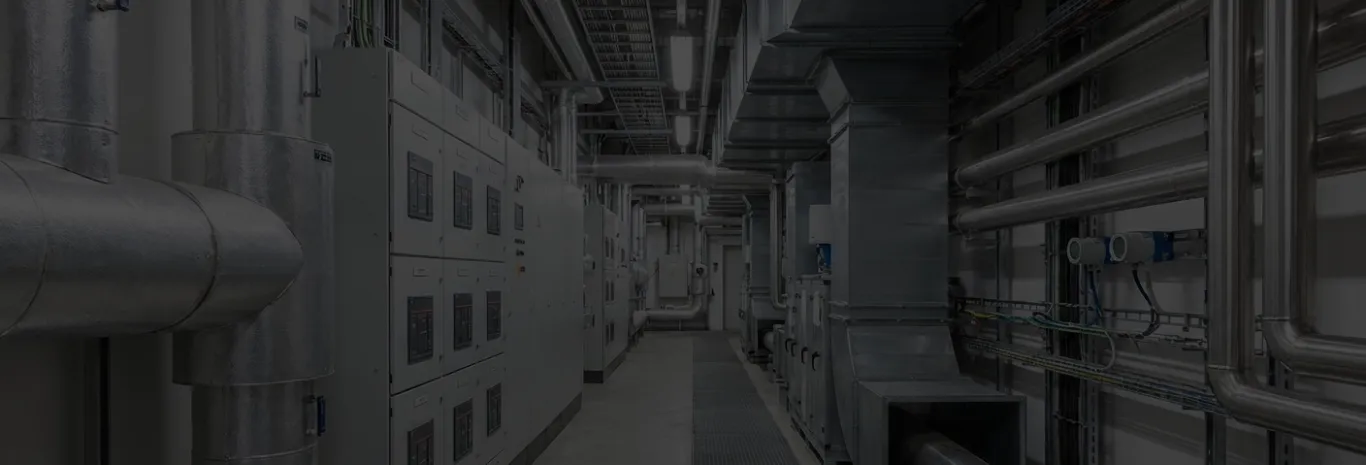
Engineering Efficient Utility Systems for Manufacturing Facility in India
Optimize operational efficiency and reduce costs with integrated utilities planning that ensures a reliable water supply, uninterrupted power, climate control, and steam generation tailored to your manufacturing requirements.


Utilities Planning (Water, Power, HVAC, Steam) Services in India
Utilities planning is the engineering process of sizing, designing, and integrating the water, power, HVAC, and steam systems that a manufacturing facility requires to operate reliably, efficiently, and in regulatory compliance. Utility system failures are among the leading causes of production downtime in Indian manufacturing, with power supply interruptions, water quality non-compliance, and steam system breakdowns directly affecting product quality, batch yields, and regulatory standing.
IMARC Engineering’s utilities planning services in India cover water treatment and distribution systems, electrical power infrastructure and DG backup sizing, HVAC and process cooling systems, steam generation and distribution, and effluent treatment, designed to meet BEE energy efficiency norms, CEA electrical standards, Indian Boilers Regulations, and CPCB effluent discharge requirements from the outset.
India’s utility landscape varies significantly by state, power tariff structures, water availability, and grid reliability differ considerably across Maharashtra, Gujarat, Tamil Nadu, and Rajasthan. IMARC Engineering incorporates state-specific utility conditions into every facility design, ensuring capital and operating cost projections reflect real infrastructure realities rather than national averages.
Our Utilities Planning Methodology
Our systematic utilities planning approach integrates load assessment, equipment selection, distribution design, and efficiency optimization. This proven four-phase methodology ensures comprehensive utility infrastructure that meets operational requirements while maximizing energy efficiency and regulatory compliance.
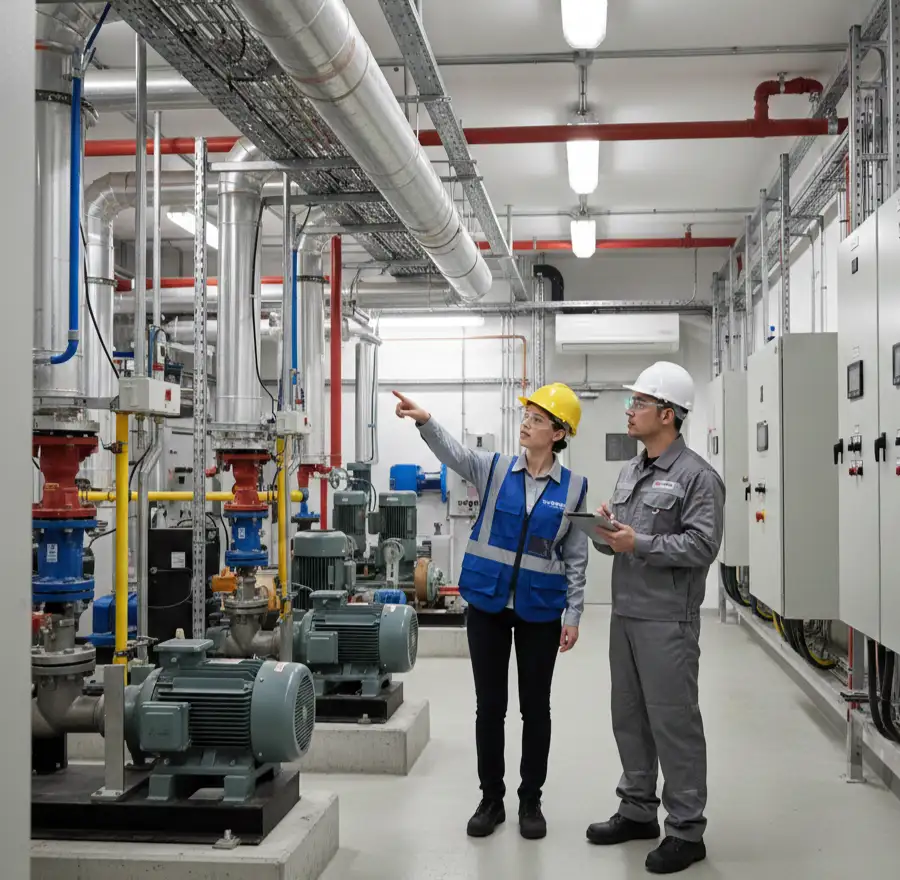

Load Assessment & Requirement Analysis
Calculating precise utility demands across manufacturing processes, analyzing peak and average loads, seasonal variations, and future expansion needs to establish comprehensive system specifications.

System Design & Equipment Selection
Designing distribution networks, selecting optimal equipment, planning redundancy systems, and ensuring regulatory compliance while maximizing energy efficiency and operational reliability.

Integration & Optimization Planning
Integrating utility systems with manufacturing processes, incorporating automation controls, energy recovery systems, and monitoring infrastructure to optimize performance and reduce costs.

Documentation & Implementation Support
Delivering detailed engineering drawings, equipment specifications, installation guidelines, commissioning procedures, and maintenance protocols, ensuring successful system implementation and long-term reliability.
Why Choose IMARC Engineering for Utilities Planning Services in India?
Our utilities planning expertise combines technical depth, industry insight, and cost discipline to deliver reliable and efficient infrastructure. We design utility systems that support manufacturing performance while controlling capital investment and operating costs.

Integrated Multi-Utility Design
Manufacturing facility utility systems are interdependent in ways that isolated discipline-by-discipline design does not capture. A steam system sized without reference to the facility’s process heat load profile will produce a boiler that cycles inefficiently and fails to maintain stable steam pressure during peak demand. An HVAC system designed without accounting for the heat rejection load it imposes on the cooling water circuit will drive chiller sizing errors that cascade into production area temperature instability. A water treatment system designed without reference to the facility’s purified water and water for injection demand profile will produce a system that oscillates between over-capacity and supply shortfall as production schedules vary. IMARC Engineering designs all utility systems as an integrated engineering framework, with load profiles for each utility system cross-referenced against the others, and system sizing decisions made in the context of their interaction effects.

State-Specific Utility Infrastructure Intelligence
India’s utility infrastructure conditions vary substantially across states in ways that directly affect manufacturing facility design and operating economics. Grid power reliability in Gujarat’s industrial corridors differs materially from grid conditions in Uttar Pradesh or Odisha, affecting the sizing and configuration of DG backup systems and the economic case for captive solar power. Municipal and industrial water supply availability and quality differ across Maharashtra, Rajasthan, and Tamil Nadu in ways that affect water treatment system design complexity and capital cost. IMARC Engineering incorporates current state-specific utility infrastructure data, sourced from grid operator reliability statistics, state electricity regulatory commission tariff orders, groundwater authority availability assessments, and CPCB consent conditions, into every utility design, ensuring that the facility’s utility infrastructure is designed for the actual conditions it will operate in rather than national infrastructure averages.

Regulatory Compliance Engineered into Utility Systems
Manufacturing facility utility systems in India are subject to a multi-layered regulatory framework whose requirements must be designed into the systems from the outset rather than retrofitted after construction. Electrical infrastructure must comply with Central Electricity Authority safety regulations and state electricity board connection standards. Boiler systems must comply with Indian Boilers Regulations governing design, materials, construction, inspection, and operation. Water treatment systems for pharmaceutical manufacturing must produce Purified Water and Water for Injection meeting pharmacopoeial standards under CDSCO and WHO-GMP requirements. HVAC systems for pharmaceutical and food processing facilities must meet Schedule M and FSSAI regulatory requirements. IMARC Engineering’s utilities planning begins with a regulatory mapping exercise that identifies every applicable standard and approval requirement for each utility system before design parameters are established, ensuring that compliance is a design input, not a post-design verification exercise.

Lifecycle Cost Optimisation Across CapEx and OpEx
Utility system design decisions made at the project planning stage have consequences that extend across the entire operating life of a manufacturing facility. An undersized water treatment system that requires a capacity expansion after two years of operation imposes a capital cost significantly higher than the incremental cost of designing for the correct capacity from the outset. An HVAC system selected for low capital cost, but high energy consumption generates operating cost penalties over a fifteen-year facility life that dwarf the initial capital saving. A steam system without heat recovery generates avoidable fuel costs and carbon liabilities that accumulate over decades of operation. IMARC Engineering’s utilities planning incorporates lifecycle cost analysis across capital expenditure and operating expenditure for all major utility system design decisions, evaluating alternative configurations, equipment selections, and energy recovery options against their total cost of ownership over the facility’s projected operating life.

Deep Sector-Specific Utility Design Knowledge
Utility system requirements differ fundamentally across manufacturing sectors. Pharmaceutical manufacturing requires purified water and water for injection systems whose design and validation meet CDSCO and international pharmacopoeial standards, clean steam systems free from pyrogenic contamination for sterilisation applications, and HVAC systems engineered to ISO classification and Schedule M compliance. Food processing requires potable water systems complying with BIS 10500 standards, steam systems whose design prevents product contact contamination, and refrigeration and cold chain systems meeting FSSAI and HACCP requirements. Chemical manufacturing requires process water and cooling water systems designed for the corrosive and hazardous material handling conditions of chemical processes, and steam systems engineered for the specific temperature and pressure profiles of reaction and distillation operations.

End-to-End Support from Utility Demand Assessment
IMARC Engineering supports manufacturing utility projects from initial utility demand assessment through detailed engineering, procurement support, construction supervision, commissioning, and operational handover. At the demand assessment stage, IMARC Engineering develops utility load profiles for each utility system based on the facility’s process flow, production schedule, and regulatory requirements, establishing the sizing basis for all utility infrastructure. During detailed engineering, IMARC Engineering develops full equipment specifications, system design calculations, piping and instrumentation diagrams, electrical single line diagrams, and utility layout drawings. During procurement, IMARC Engineering provides technical bid evaluation support for major utility equipment including boilers, water treatment systems, chillers, cooling towers, and electrical switchgear. During construction and commissioning, IMARC Engineering provides construction conformance review, commissioning protocol development, and performance acceptance testing.
Utilities Planning Services Across Key Sectors in India
IMARC Engineering delivers integrated water, power, HVAC, steam, and effluent treatment system design across India’s most active manufacturing sectors
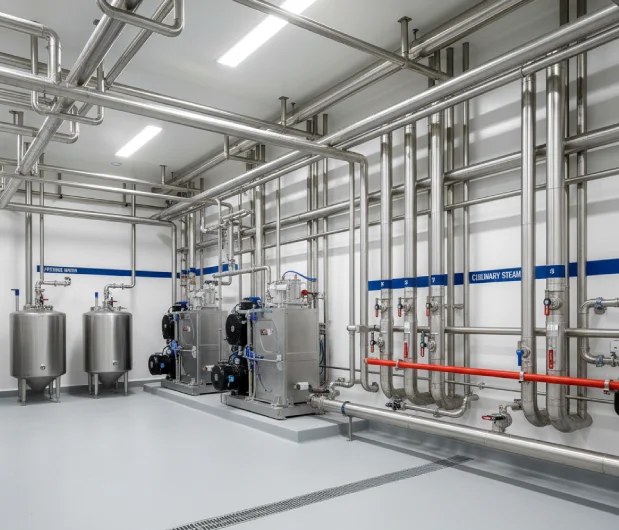
Purified Water and Water for Injection system design meeting Indian Pharmacopoeia and WHO-GMP standards, including multi-effect distillation and reverse osmosis system sizing, storage and distribution loop design with continuous sanitisation capability, and validation documentation supporting CDSCO and international GMP inspection requirements. Clean steam system design for sterilisation-in-place operations. HVAC system design for ISO-classified cleanrooms meeting Schedule M requirements, including air handling unit sizing, HEPA filtration specifications, and pressure cascade design. Boiler and steam distribution system design to Indian Boilers Regulations. Power infrastructure design including HT and LT substation sizing, DG backup sizing for critical utility systems, and UPS design for environmental monitoring and process control systems.
Potable water treatment and distribution system design meeting BIS 10500 standards and FSSAI food safety requirements for food contact water. Process water and Clean-in-Place system design for food processing equipment sanitation. Steam system design for pasteurisation, sterilisation, and heating operations with hygienic design requirements preventing product contamination. Refrigeration and cold chain system design for chilled and frozen processing and storage areas meeting FSSAI and export market cold chain standards. HVAC design for high-care and high-risk food processing zones. Effluent treatment system design for high organic load and fat-oil-grease containing dairy and food processing effluents meeting CPCB and state pollution control board discharge standards.
Process water and cooling water system design for chemical manufacturing including corrosion-resistant materials selection for aggressive process environments. High-pressure steam and thermal fluid system design for reaction heating, distillation, and evaporation operations. Electrical infrastructure design including hazardous area classification and intrinsically safe electrical system design for flammable solvent handling areas under PESO and IS standards. DG and UPS backup design for safety-critical process control and emergency shutdown systems. Effluent treatment system design for complex chemical wastewater streams including neutralisation, chemical precipitation, biological treatment, and zero liquid discharge systems where required by CPCB and state PCB consent conditions.
Utility system design for multi-product manufacturing facilities including flexible utility distribution systems that support product changeover without cross-contamination. Water treatment system design for cosmetic-grade purified water meeting CDSCO and international pharmacopoeial standards for personal care product manufacture. HVAC system design for temperature and humidity-controlled production areas for moisture-sensitive product categories. Steam system design for heating and sterilisation operations. Power infrastructure design for high-speed filling and packaging line electrical loads. Effluent treatment system design for surfactant and fragrance-containing wastewater streams meeting CPCB discharge standards.
Utility system design for agrochemical manufacturing facilities incorporating hazardous area classification across flammable solvent and toxic chemical handling zones. Corrosion-resistant water and process fluid distribution system design for acid and alkali handling environments. High-pressure steam system design for technical grade synthesis and formulation heating operations. Exhaust ventilation and scrubbing system design for toxic fume and dust capture meeting CPCB and state PCB atmospheric emission standards. Effluent treatment system design for pesticide-containing wastewater including advanced oxidation process selection for persistent organic pollutant destruction meeting CPCB zero liquid discharge standards applicable to agrochemical manufacturing.
Purified water system design for medical device cleaning and manufacturing processes requiring water quality meeting ISO 13485 and pharmacopoeial standards. Compressed air and process gas distribution system design for medical device assembly and packaging operations. HVAC system design for ISO 13485-compliant cleanroom environments including particulate and microbial contamination control for Class B and C device manufacturing. Electrical infrastructure design including validated power quality monitoring for sensitive device manufacturing and testing equipment. Utility system documentation structured to support CDSCO manufacturing licence applications, ISO 13485 quality management system audits, and CE marking technical file requirements.
Power infrastructure design for high-load manufacturing facilities including heavy electrical machinery, heat treatment furnaces, and electrostatic finishing systems. Compressed air system design for pneumatic tooling, conveying, and surface treatment operations. Process cooling water system design for machine tool, welding, and heat treatment cooling applications. Steam system design for industrial cleaning, heating, and surface preparation operations. Water treatment system design for boiler feedwater, cooling tower makeup, and metal finishing process water. Effluent treatment system design for metal finishing, painting, and industrial wastewater streams containing heavy metals and organic solvents meeting CPCB and state PCB discharge standards.
Frequently Asked Questions: Utilities Planning Services in India
We have compiled answers to critical questions that investors and business owners ask about utilities planning for manufacturing facilities. These insights address capital requirements, operating costs, system reliability, and return on investment considerations.
Trusted by Industry Leaders
We partner with global enterprises and ambitious businesses across sectors to deliver operational excellence, strategic insights, and sustainable growth through integrated solutions.











Success in Their Words
Real feedback from clients across industries. Discover how our solutions delivered measurable impact and operational excellence.

I wanted to express my sincere appreciation for your efforts in handling this matter. Your dedication and commitment have been truly commendable, and it is evident that you have put in tremendous hard work and expertise into resolving the issues at hand. We are greatly interested in continuing our collaboration with you in the future, as your professionalism and reliability have made you a trusted partner. Thank you once again for your invaluable contribution. We look forward to strengthening our partnership ahead.

It has been a pleasure working with the IMARC team. The insights provided were structured, clear, and highly valuable, helping us strengthen both our technical and financial planning with confidence. We deeply appreciate the team’s professionalism, responsiveness, and attention to detail throughout the engagement. Every requirement was well understood and effectively incorporated, resulting in a comprehensive and actionable output. Overall, our experience has been excellent, and I would gladly recommend IMARC to organizations seeking a reliable research partner.

Your service is truly exceptional. Working with the IMARC team has been a seamless and professional experience. The clarity of communication, responsiveness to queries, and consistent support at every stage made the entire engagement highly efficient. The insights shared were well-structured, practical, and perfectly aligned with our requirements, helping us make informed decisions with confidence. Overall, the dedication and professionalism demonstrated by your team stand out, and I would be glad to recommend IMARC as a reliable and trustworthy research partner.

IMARC did an outstanding job in preparing our study. They were punctual, precise, and consistently responsive throughout the entire process. The team delivered all the data we required in a clear, well-organized, and highly professional format. Their strong attention to detail, combined with their ability to meet every deadline without compromising quality, truly set them apart. Overall, their reliability and commitment made them an exceptional partner for our project, and we would gladly work with them again in the future.

IMARC made the whole process incredibly easy from start to finish. Everyone I interacted with via email was polite, professional, and straightforward to deal with, always keeping their promises regarding delivery timelines and remaining consistently solutions-focused. From my very first contact, I appreciated the professionalism and support shown by the entire IMARC team. I highly recommend IMARC to anyone seeking timely, affordable, and reliable information or advice. My experience with IMARC was excellent, and I truly cannot fault any aspect of it.

I’d like to express my sincere gratitude for the excellent work you accomplished with the study. Your ability to quickly understand our requirements and deliver high-quality results under tight timelines truly reflects your expertise, exceptional work ethic, and unwavering commitment to your customer’s success. The professionalism and responsiveness you demonstrated throughout the process made a significant difference. Our entire team and company are incredibly thankful for your dedication, reliability, and support. Once again, thank you for your outstanding contribution.
Speak to Our Utilities Planning Team
Whether you are a pharmaceutical, food, chemical, FMCG, medical device, agrochemical, or industrial manufacturer, IMARC Engineering delivers integrated utility system design, including water, HVAC, steam, power, and effluent treatment, aligned with standards from Central Drugs Standard Control Organization, Food Safety and Standards Authority of India, and Central Pollution Control Board. Our approach combines engineering precision, state-specific infrastructure insight, and regulatory expertise. We ensure reliable, efficient, and fully compliant utility systems across the facility lifecycle.
Heading
Description