Minimize Downtime with On-Site Technical Support in India
Address equipment failures, process inefficiencies, and system issues through on-site troubleshooting and technical support in India, enabling rapid diagnostics, minimized downtime, and reliable industrial operations.

On-Site Troubleshooting and Technical Support in India
On-site troubleshooting and technical support in India plays a critical role in ensuring uninterrupted industrial operations, especially as manufacturing systems become more complex and automation-driven. With the global industrial automation services market reaching USD 250.8 billion in 2025, the need for real-time technical support and rapid fault resolution is increasing across sectors.
Industrial facilities often face equipment failures, process inefficiencies, and system integration issues that cannot be resolved remotely. On-site technical support addresses these challenges by deploying skilled engineers directly to the facility for real-time diagnostics, repair, and optimization. This approach helps minimize downtime, restore system performance, and maintain production continuity.
IMARC Engineering provides on-site troubleshooting and technical support services in India through rapid-response engineering teams, advanced diagnostic tools, and industry-specific expertise. We support manufacturing, utilities, pharmaceuticals, and industrial operations in identifying root causes, resolving breakdowns, and implementing preventive actions, helping organizations improve equipment reliability, reduce operational losses, and transition toward proactive maintenance strategies.
Our Strategic Approach to On-Site Troubleshooting and Technical Support
Our systematic troubleshooting methodology combines rapid assessment, root cause analysis, and effective intervention to restore operations quickly. This proven four-phase framework addresses every critical dimension affecting problem resolution and prevents recurring failures.
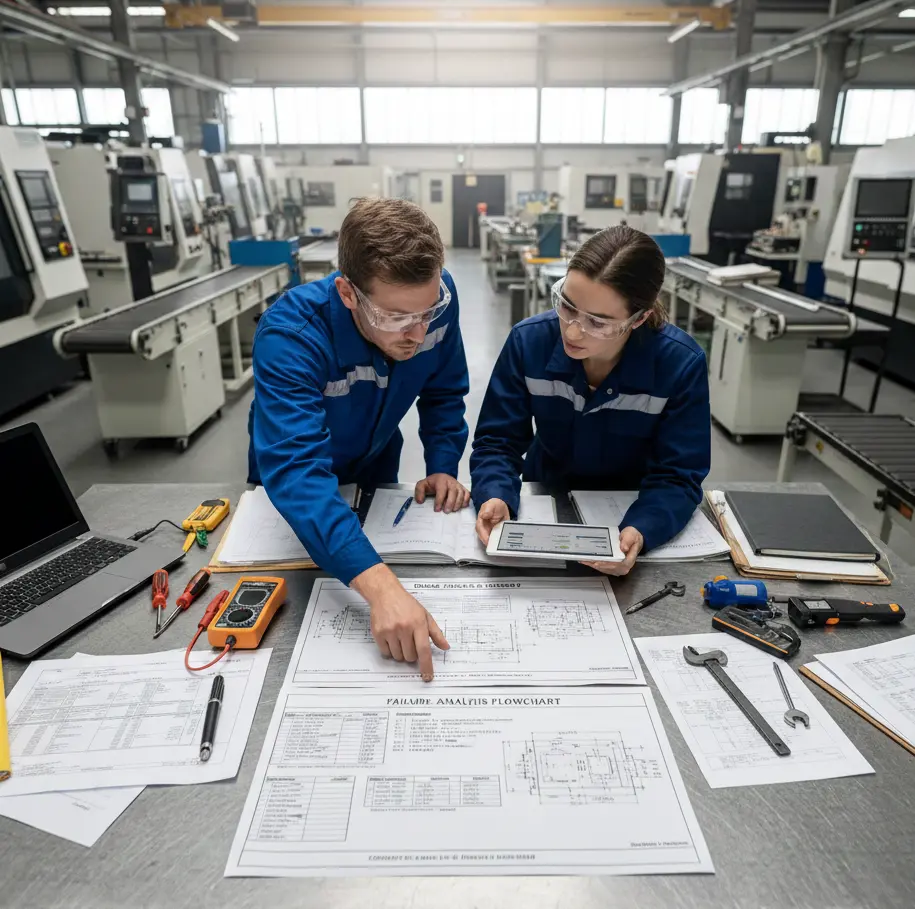

Rapid Response and Situation Assessment
Deploying experienced engineers quickly to assess situations, understand operational contexts, gather critical information, and prioritize immediate actions stabilizing operations.

Diagnostic Investigation and Root Cause Analysis
Conducting systematic investigations utilizing diagnostic tools, process data analysis, equipment inspection, and analytical techniques identifying underlying failure mechanisms and contributing factors.

Solution Implementation and Verification
Implementing corrective actions addressing root causes, coordinating repair activities, verifying solution effectiveness, and confirming stable operations before demobilization from site.

Documentation and Preventive Recommendations
Documenting findings, corrective actions, and lessons learned while providing preventive maintenance recommendations and operational guidance preventing similar failures.
Why Choose IMARC Engineering for On-Site Troubleshooting and Technical Support in India?
Our comprehensive troubleshooting approach combines technical expertise, practical experience, and systematic methodologies to resolve complex operational challenges. This integrated framework addresses every dimension affecting problem resolution and long-term operational reliability.

Sector-Specific Engineering Expertise
On-site troubleshooting in absence of process and equipment expertise in respective sectors invariably results in misdiagnosis of the cause of malfunctioning in manufacturing processes by merely changing the visibly faulty part rather than diagnosing the cause of the malfunction. For instance, in case of a tablet press in a pharmaceutical manufacturing plant where there are failures of tablet weight measurements, the apparent problem could be wear and tear of punches used in the machinery, but the real problem might be moisture content variation in the granulation mixture leading to inconsistent powder flow and hence continuous punch wear and resulting tablet weight variations even after repeated replacement of the punches. Similarly, in case of a chemical reactor where there are frequent trips due to motor overload, the apparent problem might be a failing motor bearing, while the real problem could be increased process fluid viscosity due to raw materials of inferior quality, thereby increasing torque required for agitation.

Regulatory Compliance Protection
The technical intervention carried out at a pharmaceutical manufacturing plant, food processing plant, or medical device manufacturing facility must be done in accordance with the regulatory compliance guidelines for that specific manufacturing facility since any unplanned technical intervention that impacts the equipment under GMP guidelines, changes a process parameter that is validated under GMP guidelines, or results in contamination is going to create a situation where there are regulatory compliance ramifications that go beyond the immediate technical issue that needs to be addressed. For example, when a pharmaceutical manufacturing facility allows a technical expert from outside the company to fix a malfunctioning tablet press without recording a GMP change control document or resets the HVAC parameters to their original value without creating an exception, the regulatory implications will far outweigh the initial cost of equipment malfunction. IMARC Engineering performs all its technical interventions under GMP guidelines in terms of change control and deviations.

Advanced Diagnostic Capability Beyond Visual Inspection
The common cause for repetitive and continuous breakdowns in most Indian manufacturing plants is not fixed even by their own maintenance team since their method of diagnostics through visual inspection, multimeter testing, and maintenance records are not enough to diagnose the underlying problem. A repetitive bearing problem that is detected as lack of lubrication through visual inspection and replaced every month may just be caused by misaligned shaft or vibration resonance that can only be identified using vibration spectrum analysis. A repetitive quality defect in the production process that is identified as caused by human error by observation may just be caused by instrument calibration problems that can only be seen through precision measurement. IMARC Engineering uses advanced instrumentation like vibration analyzers, thermal imaging cameras, ultrasonic fault detectors, power quality analyzers, and precision measurement instruments when doing diagnostics at any manufacturing plant in India.

Rapid-Response Deployment
The cost incurred due to manufacturing downtime in India is not only influenced by the technical complexity of the problem but also by the time it takes to have an experienced engineer, with proper diagnostic equipment and knowledge of the industry, reach the site of the problem. Downtime of eight hours in a pharmaceutical sterile manufacturing plant in Hyderabad, a filling line breakage in an FMCG plant in Pune during peak production season, or the breaking down of the agitator in a reactor in a chemical plant in Dahej would result in production value losses that keep building up per hour until the problem gets resolved. IMARC Engineering has the ability to send its engineering team to these Indian industrial clusters, which include Hyderabad, Ahmedabad, Pune, Mumbai, Chennai, Bengaluru, and Gujarat’s chemical zones, within hours after receiving a call for assistance instead of days later.

Root Cause Analysis Documentation
On-site troubleshooting that addresses only the current problem and does not include analysis to find the root cause, along with corrective actions, results in the repetitive occurrence of problems, and each of these problems needs its own on-site trouble shooting, adding up significantly more total downtime costs and costs of on-site service than the cost of conducting one root cause analysis. IMARC Engineering on-site trouble shootings lead to preparation of a detailed report on root causes employing a Five-Why or Fault Tree Analysis method which includes not only finding out what caused the failure but also determining the conditions under which this failure is possible and may happen again, such as deficiencies in maintenance procedures, variations from normal operating parameters, alterations in the quality of the material being processed or any design restrictions. These findings help us to rank corrective actions according to cost and likelihood of recurrence.

PLI Scheme Production Continuity Protection
Manufacturing plants with PLI scheme performance obligations are impacted financially if their plant production time falls below the PLI scheme’s performance threshold due to any production downtime, with each day of the production disruption being a risk factor that could prevent the plant from meeting their first year or second year PLI scheme production commitment. Production downtime in a manufacturing plant under a PLI scheme involves an impact that goes beyond the value of products lost due to production disruption but also affects the PLI scheme entitlement in case the plant fails to meet the performance threshold due to the overall production downtime in the year. IMARC Engineering offers priority rapid-response on-site engineering assistance for manufacturing plants with PLI scheme performance obligations, with fast mobilisation, multi-discipline engineering support, and production recovery emphasis to minimise production loss impacts on PLI scheme commitment performance.
On-Site Troubleshooting and Technical Support Across Key Sectors in India
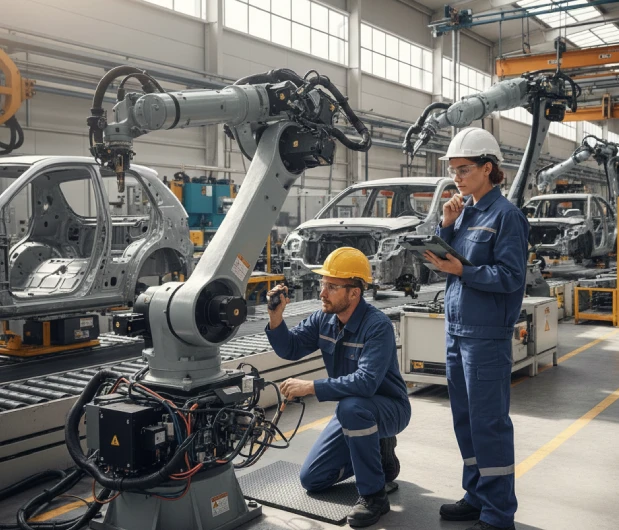
IMARC Engineering delivers rapid-response on-site deployment, advanced diagnostic assessment, GMP-compliant intervention management, structured root cause analysis, preventive action implementation, and PLI production continuity protection across India’s most active manufacturing sectors.
On-site troubleshooting for pharmaceutical manufacturing equipment across Hyderabad, Baddi, Ahmedabad, and Aurangabad clusters. CDSCO Schedule M GMP change control-managed technical interventions, process quality deviation root cause investigation for batch disposition support, HVAC system performance troubleshooting for cleanroom compliance restoration, tablet press and granulator process parameter root cause analysis, and PLI pharmaceutical scheme production continuity priority support during performance period production campaigns.
On-site troubleshooting for food processing equipment across Punjab, Maharashtra, and Karnataka agricultural processing zones. FSSAI-compliant technical intervention documentation for food safety management system records, filling and packaging line breakdown root cause analysis, cold chain refrigeration fault diagnosis and FSSAI temperature compliance restoration, CIP system performance troubleshooting, and seasonal peak production period priority support for food processors with PLI food processing scheme production commitments.
On-site troubleshooting for chemical manufacturing equipment in Gujarat’s Dahej, Ankleshwar, and Vapi industrial corridors. HAZOP-informed process safety assessment during fault conditions, rotating equipment vibration and alignment diagnostics for reactors and distillation columns, IBR pressure system fault investigation with statutory compliance protection, DCS and process control system fault diagnosis, and CPCB effluent system performance troubleshooting during process upsets.
On-site troubleshooting for high-speed FMCG filling and packaging lines. Filling accuracy and reject rate deviation root cause investigation, high-speed machinery mechanical and control system fault diagnosis, CDSCO cosmetics facility GMP deviation management for personal care product manufacturing interruptions, multi-vendor packaging line integration fault investigation, and priority rapid-response support for FMCG facilities during peak season production and new product launch periods.
On-site troubleshooting for agrochemical manufacturing equipment in PESO-notified chemical zones. HAZCHEM-aware fault diagnosis and safe intervention protocols for toxic and flammable process equipment, PESO safety system performance investigation and restoration, agitator, pump, and seal fault diagnosis for aggressive chemical service equipment, CPCB effluent treatment system troubleshooting, and process yield and purity deviation root cause investigation for CIB&RC-registered product quality compliance restoration.
On-site troubleshooting for medical device manufacturing equipment. ISO 13485 change control-managed technical interventions for GMP-critical manufacturing equipment, cleanroom HVAC performance fault diagnosis and ISO classification compliance restoration, precision manufacturing dimensional deviation root cause investigation, calibration system failure investigation and instrument requalification support, and CDSCO Class B and C device manufacturing facility technical support with regulatory documentation management.
On-site troubleshooting for heavy manufacturing equipment in MIDC, GIDC, SIDCO, and RIICO industrial areas. CNC machine tool accuracy deviation root cause analysis, heat treatment furnace temperature uniformity fault investigation, crane and materials handling equipment breakdown with Factory Act compliance management, electrical power quality fault diagnosis for sensitive manufacturing and measurement equipment, and IBR pressure vessel fault investigation with statutory compliance documentation.
Explore Related Services

Documentation and Technical File Preparation
Transforming Technical Complexity into Regulatory Compliance Excellence
Learn more

Equipment Lifecycle Assessment
Maximizing Asset Value Through Strategic Equipment Management
Learn more

EHS (Environment, Health & Safety) Training
Building Safety Culture Through Comprehensive EHS Excellence
Learn more
Frequently Asked Questions: On-Site Troubleshooting and Technical Support in India
We’ve compiled answers to the most common questions investors, facility managers, and operations leaders ask about on-site troubleshooting and technical support. These insights address critical concerns around response capabilities, engagement approaches, cost considerations, etc.
Trusted by Industry Leaders
We partner with global enterprises and ambitious businesses across sectors to deliver operational excellence, strategic insights, and sustainable growth through integrated solutions.







Success in Their Words
Real feedback from clients across industries. Discover how our solutions delivered measurable impact and operational excellence.

I wanted to express my sincere appreciation for your efforts in handling this matter. Your dedication and commitment have been truly commendable, and it is evident that you have put in tremendous hard work and expertise into resolving the issues at hand. We are greatly interested in continuing our collaboration with you in the future, as your professionalism and reliability have made you a trusted partner. Thank you once again for your invaluable contribution. We look forward to strengthening our partnership ahead.

It has been a pleasure working with the IMARC team. The insights provided were structured, clear, and highly valuable, helping us strengthen both our technical and financial planning with confidence. We deeply appreciate the team’s professionalism, responsiveness, and attention to detail throughout the engagement. Every requirement was well understood and effectively incorporated, resulting in a comprehensive and actionable output. Overall, our experience has been excellent, and I would gladly recommend IMARC to organizations seeking a reliable research partner.
Your service is truly exceptional. Working with the IMARC team has been a seamless and professional experience. The clarity of communication, responsiveness to queries, and consistent support at every stage made the entire engagement highly efficient. The insights shared were well-structured, practical, and perfectly aligned with our requirements, helping us make informed decisions with confidence. Overall, the dedication and professionalism demonstrated by your team stand out, and I would be glad to recommend IMARC as a reliable and trustworthy research partner.

IMARC did an outstanding job in preparing our study. They were punctual, precise, and consistently responsive throughout the entire process. The team delivered all the data we required in a clear, well-organized, and highly professional format. Their strong attention to detail, combined with their ability to meet every deadline without compromising quality, truly set them apart. Overall, their reliability and commitment made them an exceptional partner for our project, and we would gladly work with them again in the future.

IMARC made the whole process incredibly easy from start to finish. Everyone I interacted with via email was polite, professional, and straightforward to deal with, always keeping their promises regarding delivery timelines and remaining consistently solutions-focused. From my very first contact, I appreciated the professionalism and support shown by the entire IMARC team. I highly recommend IMARC to anyone seeking timely, affordable, and reliable information or advice. My experience with IMARC was excellent, and I truly cannot fault any aspect of it.
I’d like to express my sincere gratitude for the excellent work you accomplished with the study. Your ability to quickly understand our requirements and deliver high-quality results under tight timelines truly reflects your expertise, exceptional work ethic, and unwavering commitment to your customer’s success. The professionalism and responsiveness you demonstrated throughout the process made a significant difference. Our entire team and company are incredibly thankful for your dedication, reliability, and support. Once again, thank you for your outstanding contribution.
Speak to Our On-Site Troubleshooting and Technical Support Team
Whether you are a manufacturer facing critical equipment failures or recurring technical issues, IMARC Engineering provides rapid-response troubleshooting and root cause resolution support across sectors. This includes process diagnostics, failure investigation, and corrective action implementation aligned with regulatory bodies, and safety frameworks such as PESO, ensuring fast, compliant, and permanent resolution of production disruptions.