
Accelerate Market Access Through Strategic Certification
Achieve product and facility certifications in India through structured planning, documentation, and compliance alignment that supports regulatory approvals, reduces delays, and enables market access across domestic and global markets.

Product and Facility Certification Support in India
Product and facility certification support in India is critical for manufacturers seeking regulatory approvals, market access, and compliance with national and international standards. Certifications governed by authorities such as the Bureau of Indian Standards, Central Drugs Standard Control Organization, and Food Safety and Standards Authority of India, along with global frameworks like the International Organization for Standardization, are essential across sectors including pharmaceuticals, food processing, electronics, and industrial manufacturing. In India's regulated environment, non-compliance can delay product launches, restrict market entry, and lead to penalties or recalls. With India's manufacturing sector contributing ~17% to GDP and targeting 25% by 2030, structured certification planning is becoming essential for both domestic competitiveness and global market access.
The IMARC Engineering offers facilities and products certification services in India via a systematic approach involving an engineering methodology for providing certification service that encompasses aspects such as certification strategy, identification of gaps, documentation, coordination of testing, and approval management. Manufacturers can benefit from our services as we will ensure that their products and facilities are compliant with standards through alignment with the standards in terms of design, systems, and quality processes. This entails technical documentation, readiness assessment, audit preparation, coordination with certification bodies, and post-certification compliance management services.
Our Strategic Approach to Product and Facility Certification Support
Our systematic certification methodology combines regulatory expertise, technical knowledge, and project management to guide successful certification achievement. This approach guarantees comprehensive preparation across documentation, facility requirements, and organizational readiness while accelerating timelines and minimizing risks.


Certification Strategy & Gap Assessment
Identifying applicable certifications for target markets, evaluating current capabilities against requirements, determining gaps requiring remediation, and developing prioritized certification roadmaps aligned with business objectives.

Documentation Development & System Implementation
Creating required technical files, developing quality management documentation, implementing necessary operational systems, conducting required testing and validation, and preparing comprehensive certification application packages.

Certification Body Coordination & Audit Support
Selecting appropriate certification bodies, coordinating evaluation schedules, facilitating auditor interactions, addressing audit observations, and managing certification approval processes through successful conclusion and certificate issuance.

Maintenance Support & Portfolio Management
Establishing surveillance audit preparation procedures, managing certification renewals, maintaining documentation systems, tracking regulatory changes affecting certifications, and expanding certification portfolios supporting market growth.
Why Choose IMARC Engineering for Product and Facility Certification Support in India?
Our comprehensive certification support approach combines regulatory knowledge, technical expertise, and practical implementation experience, delivering successful certifications. This proven methodology accelerates approval timelines while building organizational capabilities for sustained certification maintenance supporting long-term market success.

Integrated Certification Strategy Across Domestic and Export Requirements
The manufacturers that operate both domestically within India and internationally need to comply with the requirements of several regulatory authorities at the same time, such as BIS mandatory certification for compliance in the domestic market, CDSCO for pharmaceutical and medical devices, FSSAI for food products, and certifications for export destinations such as CE for the European Union, US FDA for the United States, and GCSO for Middle Eastern exports. Running certification programs individually causes redundancies in the process and conflicting deadlines as well as discrepancies between documents that result in extended certification process durations and higher costs. IMARC Engineering provides a certification process strategy that optimizes certification processes by sequencing domestic and export certifications for maximum compatibility, taking advantage of commonalities between requirements and documentation wherever possible.

Pre-Certification Gap Assessment Aligned to Actual Authority Criteria
Gap Assessments conducted based on facility and product compliance evaluation against quality system templates rather than the certification criteria of the target authority will yield erroneous findings, where there is identification of non-compliance gaps that do not fall under the scope of the assessment criteria of the target certification process while overlooking some non-compliance gaps which will yield findings during the actual certification. IMARC Engineering performs GAP Assessment before Certification using the criteria set out by the target authority such as the factory inspection criteria for obtaining the ISI mark from the Bureau of Indian Standards, CDSCO factory inspection criteria for a licence in pharmaceutical manufacture, WHO GMP criteria for export market certification, and certification body audit criteria for ISO certification.

Technical Documentation Development
Certification requests turned down or delayed due to documentation gaps such as lack of adequate technical files, improperly filed test reports, incomplete quality system files, and insufficient evidence of conformity to the standard are some of the more easily avoided causes for certification delays in India. IMARC Engineering prepares documentation for certifications in accordance with the format, content, and substantiation specifications demanded by the certification bodies being sought. Documentation for products seeking certification from BIS would be in keeping with the respective IS specification and requirements of BIS; those seeking license from CDSCO to manufacture would be prepared according to Schedule M and Form 27/28 requirements; CE marking technical files are in accordance with the European Directive/Regulation; and ISO certifications' audit documents conform to the certification body pre-certification requirements.

Testing Programme Management Through NABL-Accredited Laboratories
Product certifications in BIS, CE mark, CDSCO, and export markets would entail product testing at laboratories with the right scope of accreditation and any product testing done outside the laboratories meeting these criteria would not be considered even if technically valid, leading to the need to retest which leads to added expenses and delayed certifications. The managed testing services offered by IMARC Engineering would involve the coordination of testing procedures in laboratories that are accredited by NABL and other international bodies according to the scope of their accreditations for each type of certification and also considering the lead times for testing and geographic convenience in laboratory locations, while analysing reports for both technical accuracy and acceptability by the relevant certifying body and dealing with failures that involve redesigning or additional testing.

Certification Body Relationship Management and Query Response
Technical questions from certification bodies may emanate from BIS product certification officials, CDSCO licensing officials, WHO GMP assessors, and ISO certification body auditors. It is critical to provide technically sound responses on time which should provide an answer to the technical questions raised based on documentary evidence and not on the initial stand in the application. Technical questions that do not show evidence of the initial compliance position taken results in further rounds of assessment, thus delaying certification process. IMARC Engineering will take care of all correspondence from certification bodies from application stage up to the point of awarding the certificate. This entails providing technical responses backed up with evidence and following up to obtain certification.

Certification Renewal and Ongoing Compliance Maintenance
Product and facility certifications that have been successfully achieved without proper ongoing maintenance in the form of renewal, scope management for additions, notifying the certification body of changes to the certified product or facility, and compliance monitoring will lapse, become suspended due to non-compliance, or become voided due to unreported changes which result in scope violation of the certification. The IMARC Engineering team oversees ongoing certification maintenance with regards to keeping track of renewal dates, compiling and submitting renewal documents, applying for scope extensions as new products or facilities are added to the certified portfolio, submitting notifications regarding product and process changes to the certification body, and conducting periodic compliance reviews to prevent any compliance drift.
Product and Facility Certification Support Across Manufacturing Sectors in India
IMARC Engineering delivers product and facility certification support across all major manufacturing sectors and certification frameworks in India.
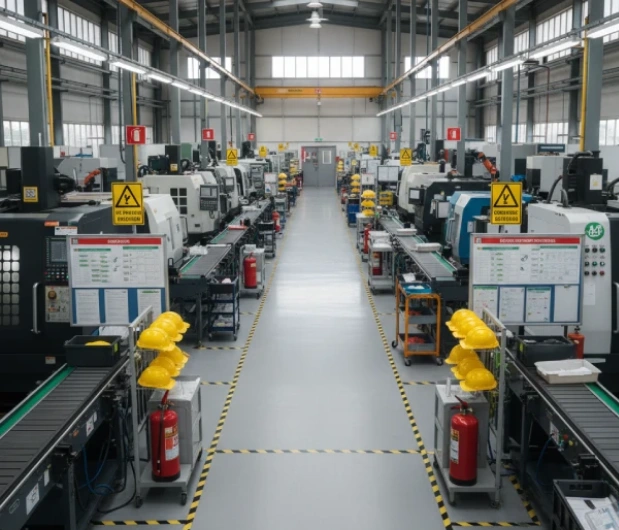
CDSCO manufacturing licence documentation; Schedule M and WHO-GMP facility certification; US FDA establishment registration and cGMP compliance preparation; EU GMP site certification support; APEDA certification for pharmaceutical exports; and CDSCO new drug and generic drug registration dossier compilation support.
FSSAI licence application and renewal management; HACCP and FSSC 22000 certification preparation; APEDA registration for export food categories; AGMARK certification for agricultural commodities; BIS certification for packaged food products under mandatory Quality Control Orders; and destination market food safety certification for EU, US FDA FSMA, and GCC export compliance.
CPCB and SPCB environmental compliance certification; PESO licensing for explosive and petroleum products; REACH registration documentation for European market export; ISO 14001 environmental management system certification; Safety Data Sheet compliance certification; and export chemical product registration for US EPA TSCA and EU REACH frameworks.
BIS Compulsory Registration Scheme (CRS) documentation for electronics and IT products; ISI mark certification for mandatory electrical product categories; CE marking technical file preparation for European export; BIS hallmarking for jewellery products; WPC type approval for wireless devices; and TEC certification for telecommunications equipment.
CDSCO MDR 2017 device registration and licence documentation; ISO 13485 quality system certification preparation; CE marking for Class I, IIa, IIb, and III medical devices; US FDA 510(k) and 513(f)(2) submission support; BIS certification for medical device categories under mandatory IS standards; and TGA, Health Canada, and ANVISA registration support for international market access.
BIS ISI mark certification for mandatory product categories; CE marking for machinery, pressure equipment, and industrial safety products; NABL accreditation support for in-house testing laboratories; ISO 9001 quality management system certification; IATF 16949 automotive quality system certification; and IBR approval for pressure vessels and boiler components.
Explore Related Services

Regulatory Compliance (GMP, ISO, FDA, BIS)
End-to-End GMP, ISO, FDA, and BIS Compliance in India
Learn more


Frequently Asked Questions: Product and Facility Certification Support in India
We have compiled answers to common questions investors and business leaders ask about product and facility certification support services. These insights address certification strategy, investment requirements, timeline expectations, market implications, etc.
Trusted by Industry Leaders
We partner with global enterprises and ambitious businesses across sectors to deliver operational excellence, strategic insights, and sustainable growth through integrated solutions.






Success in Their Words
Real feedback from clients across industries. Discover how our solutions delivered measurable impact and operational excellence.

I wanted to express my sincere appreciation for your efforts in handling this matter. Your dedication and commitment have been truly commendable, and it is evident that you have put in tremendous hard work and expertise into resolving the issues at hand. We are greatly interested in continuing our collaboration with you in the future, as your professionalism and reliability have made you a trusted partner. Thank you once again for your invaluable contribution. We look forward to strengthening our partnership ahead.

It has been a pleasure working with the IMARC team. The insights provided were structured, clear, and highly valuable, helping us strengthen both our technical and financial planning with confidence. We deeply appreciate the team’s professionalism, responsiveness, and attention to detail throughout the engagement. Every requirement was well understood and effectively incorporated, resulting in a comprehensive and actionable output. Overall, our experience has been excellent, and I would gladly recommend IMARC to organizations seeking a reliable research partner.
Your service is truly exceptional. Working with the IMARC team has been a seamless and professional experience. The clarity of communication, responsiveness to queries, and consistent support at every stage made the entire engagement highly efficient. The insights shared were well-structured, practical, and perfectly aligned with our requirements, helping us make informed decisions with confidence. Overall, the dedication and professionalism demonstrated by your team stand out, and I would be glad to recommend IMARC as a reliable and trustworthy research partner.

IMARC did an outstanding job in preparing our study. They were punctual, precise, and consistently responsive throughout the entire process. The team delivered all the data we required in a clear, well-organized, and highly professional format. Their strong attention to detail, combined with their ability to meet every deadline without compromising quality, truly set them apart. Overall, their reliability and commitment made them an exceptional partner for our project, and we would gladly work with them again in the future.

IMARC made the whole process incredibly easy from start to finish. Everyone I interacted with via email was polite, professional, and straightforward to deal with, always keeping their promises regarding delivery timelines and remaining consistently solutions-focused. From my very first contact, I appreciated the professionalism and support shown by the entire IMARC team. I highly recommend IMARC to anyone seeking timely, affordable, and reliable information or advice. My experience with IMARC was excellent, and I truly cannot fault any aspect of it.

I’d like to express my sincere gratitude for the excellent work you accomplished with the study. Your ability to quickly understand our requirements and deliver high-quality results under tight timelines truly reflects your expertise, exceptional work ethic, and unwavering commitment to your customer’s success. The professionalism and responsiveness you demonstrated throughout the process made a significant difference. Our entire team and company are incredibly thankful for your dedication, reliability, and support. Once again, thank you for your outstanding contribution.
Speak to Our Product and Facility Certification Support Team
Whether you are a pharmaceutical, food, electronics, medical device, chemical, or industrial manufacturer, IMARC Engineering provides end-to-end certification and regulatory support. This includes gap assessment, documentation, testing coordination, and audit readiness aligned with Central Drugs Standard Control Organization, Food Safety and Standards Authority of India, BIS, ISO, REACH, and global standards, ensuring efficient approval and sustained compliance across domestic and export markets.