Comprehensive Performance Optimization and Workflow Efficiency Services
Enhance productivity through advanced time and motion study programs that evaluate task performance, optimize resource utilization, and eliminate inefficiencies across manufacturing, service, and industrial operations to deliver measurable process improvements and sustained cost efficiency.


Time and Motion Studies
IMARC Engineering offers comprehensive time and motion study services designed to increase productivity, streamline operations, and improve workforce efficiency. Our industrial engineering expertise enables us to assess workflows, evaluate labor utilization, and develop process enhancements that minimize waste while maximizing output.
Our consultants analyze each operational sequence using detailed timing observations, motion recording, and work measurement techniques. This structured evaluation identifies redundant steps, defines standard times, and establishes optimized task procedures that balance workloads and elevate performance consistency across departments and production areas.
We partner with clients across diverse industries to deliver measurable efficiency improvements and sustainable productivity growth. Through precise data collection, advanced analytics, and tailored recommendations, IMARC Engineering ensures each engagement generates lasting value by shortening cycle times, improving equipment effectiveness, strengthening decision making, and embedding continuous improvement practices across operational and organizational processes for scalable, resilient business performance and growth.
Our Structured Time and Motion Study Methodology
Our structured time and motion study framework combines direct observation, data collection, and statistical analysis to deliver comprehensive workflow insights. This proven four-phase methodology ensures thorough examination of work processes, productivity metrics, and improvement opportunities.
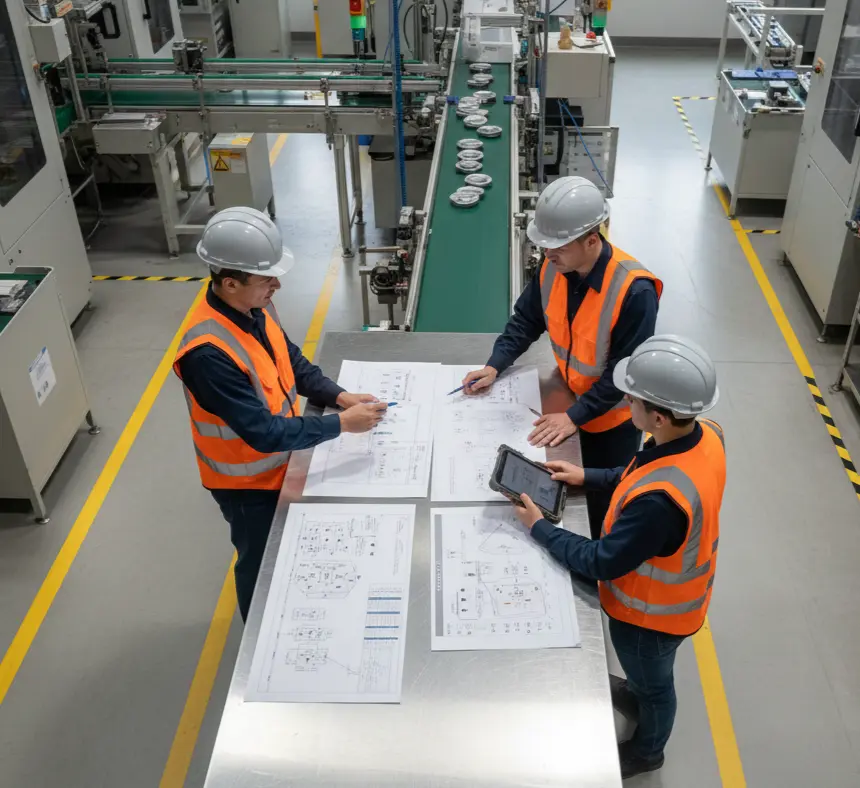

Preliminary Assessment and Objective Definition
We identify project objectives, select representative tasks, define measurable parameters, and prepare observation plans ensuring accurate, unbiased evaluation of operational performance and work distribution efficiency.

Data Collection and Observation
Trained analysts record time cycles, motions, and workstation conditions using modern measurement tools and observation software, capturing essential information that supports statistical reliability and comparative benchmarking.

Analysis and Method Optimization
Collected data is reviewed to eliminate redundant actions, refine task flow, and establish standardized best practices that enhance operational stability and productivity outcomes across varied production scenarios.

Implementation and Validation
We apply optimized procedures, train workforce teams, monitor initial performance trends, and validate sustained efficiency improvements through post-implementation analysis and continuous feedback mechanisms.
Why Choose IMARC for Time and Motion Studies
Our evidence-based work analysis methodology combines systematic observation, precise measurement, and statistical rigor to identify productivity improvements. This proven approach ensures comprehensive assessment of operational efficiency and sustainable performance enhancement.

Data-Driven Evaluation
We apply structured methodologies that convert raw observations into quantifiable insights, enabling management to make informed operational decisions that directly improve efficiency and productivity.

Tailored Study Programs
Every engagement is customized to align with client-specific workflows, ensuring recommendations address industry conditions, workforce characteristics, and production system complexities effectively.

Cost and Productivity Improvement
Our studies uncover hidden inefficiencies, streamline task sequences, and reduce resource wastage, producing measurable cost savings while increasing throughput and performance reliability.

Ergonomic and Safety Enhancement
By analyzing human motion, equipment positioning, and workplace design, we reduce fatigue, improve comfort, and enhance operational safety, supporting sustainable employee performance.

Transparent Reporting Structure
Comprehensive reports, data visualizations, and implementation tracking provide clarity, accountability, and measurable evidence of improvement for management and stakeholders across programs and initiatives.

Long-Term Continuous Improvement
Our follow-up evaluations, recalibration sessions, and progress audits sustain performance advancement and support an enduring culture of operational excellence across organizations globally.
Specialized Time and Motion Studies Across Industries
IMARC Engineering delivers specialized time and motion studies backed by deep sector knowledge and operational expertise. Our understanding of industry-specific workflows, production requirements, and regulatory considerations ensures accurate, relevant assessments for your operational improvement initiatives.
Specialized time studies for pharmaceutical production, API manufacturing, tablet compression, capsule filling, sterile product processing, and packaging operations. We evaluate cleanroom workflows, gowning procedures, material transfer protocols, in-process quality control, batch documentation, and GMP compliance activities. Our analysis optimizes manufacturing sequences while ensuring adherence to stringent regulatory requirements, quality standards, and validation protocols critical for pharmaceutical operations.
Specialized time and motion studies for food processing lines, beverage bottling, bakery operations, dairy processing, meat processing, and packaging activities. We analyze cleaning procedures, sanitation protocols, changeover activities, quality inspection, and food safety compliance workflows. Our methodology balances productivity improvement with stringent food safety standards, HACCP requirements, and quality assurance procedures. Studies address seasonal variations, batch processing, continuous operations, and cold chain management supporting efficient food production.
Technical work analysis for chemical batch processing, continuous production operations, reactor operations, distillation procedures, blending activities, and chemical packaging. We evaluate safety protocols, material handling procedures, sampling activities, quality testing workflows, and hazardous material management. Our studies balance productivity improvement with stringent safety requirements, environmental compliance, and process safety management ensuring efficient operations without compromising safety standards or regulatory adherence.
Precision-focused time studies for electronics assembly, PCB manufacturing, semiconductor production, testing procedures, and quality control operations. We analyze pick-and-place operations, soldering processes, automated testing sequences, manual inspection activities, and packaging workflows.Our methodology addresses high-mix, low-volume challenges, rapid product transitions, clean room protocols, and quality assurance procedures, ensuring optimal productivity in technology-driven manufacturing environments with constantly evolving product specifications.
Detailed workflow analysis for power plant operations, maintenance procedures, turbine overhaul activities, solar panel installation, wind turbine servicing, and energy infrastructure projects. We examine preventive maintenance routines, equipment inspection cycles, emergency response procedures, and shutdown/startup sequences. Our studies optimize maintenance planning, reduce downtime, improve safety protocols, and enhance operational reliability across energy generation and distribution facilities supporting consistent power delivery.
Specialized workflow analysis for agricultural processing operations including sorting, grading, washing, cutting, packaging, and cold storage handling. We evaluate seasonal labor utilization, harvest processing workflows, post-harvest handling, quality control procedures, and warehouse operations. Our studies optimize processing capacity, reduce post-harvest losses, improve throughput during peak seasons, and enhance labor productivity across agro-processing facilities, supporting efficient agricultural value chains and minimal product wastage.
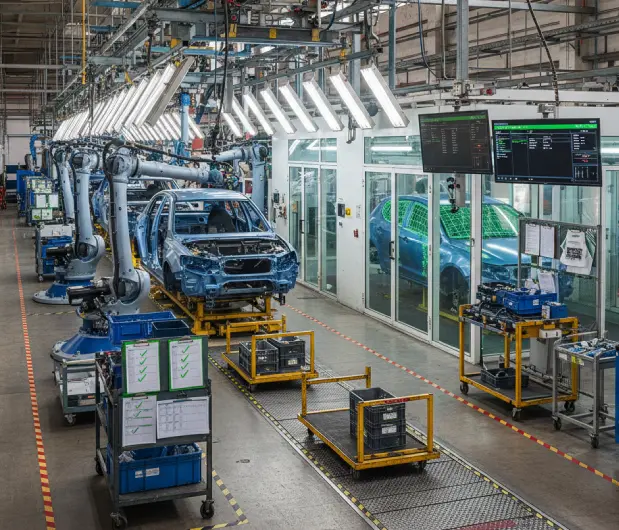
Comprehensive time studies for automotive assembly lines, component manufacturing, welding operations, painting processes, final assembly, and quality inspection procedures. We analyze takt time optimization, line balancing, material replenishment, just-in-time logistics, changeover reduction, and ergonomic improvements. Our methodology supports lean manufacturing implementation, production leveling, and continuous flow principles essential for automotive manufacturing efficiency, quality consistency, and just-in-time delivery performance to OEM customers.
Detailed work analysis for cement production, concrete batching, steel fabrication, construction material processing, and logistics operations. We evaluate crushing operations, material screening, mixing procedures, quality testing, loading activities, and dispatch operations. Our studies optimize production scheduling, equipment utilization, maintenance planning, and logistics coordination ensuring consistent material supply, reduced production costs, and improved delivery reliability supporting construction industry requirements and project timelines.
Comprehensive work analysis for assembly operations, machining processes, fabrication workflows, and material handling across general manufacturing. We analyze production line efficiency, machine utilization, setup time reduction, changeover optimization, and batch processing workflows. Our studies address work-in-progress management, quality inspection procedures, packaging operations, and warehouse logistics ensuring maximum productivity across diverse manufacturing environments while supporting lean manufacturing and continuous improvement initiatives.
Frequently Asked Questions
We have compiled answers to the most common questions investors, manufacturers, and operations managers ask about time and motion studies. These insights address critical concerns around productivity improvement, implementation, costs, and operational benefits.
Trusted by Industry Leaders
We partner with global enterprises and ambitious businesses across sectors to deliver operational excellence, strategic insights, and sustainable growth through integrated solutions.





Success in Their Words
Real feedback from clients across industries. Discover how our solutions delivered measurable impact and operational excellence.

I wanted to express my sincere appreciation for your efforts in handling this matter. Your dedication and commitment have been truly commendable, and it is evident that you have put in tremendous hard work and expertise into resolving the issues at hand. We are greatly interested in continuing our collaboration with you in the future, as your professionalism and reliability have made you a trusted partner. Thank you once again for your invaluable contribution. We look forward to strengthening our partnership ahead.
It has been a pleasure working with the IMARC team. The insights provided were structured, clear, and highly valuable, helping us strengthen both our technical and financial planning with confidence. We deeply appreciate the team’s professionalism, responsiveness, and attention to detail throughout the engagement. Every requirement was well understood and effectively incorporated, resulting in a comprehensive and actionable output. Overall, our experience has been excellent, and I would gladly recommend IMARC to organizations seeking a reliable research partner.
Your service is truly exceptional. Working with the IMARC team has been a seamless and professional experience. The clarity of communication, responsiveness to queries, and consistent support at every stage made the entire engagement highly efficient. The insights shared were well-structured, practical, and perfectly aligned with our requirements, helping us make informed decisions with confidence. Overall, the dedication and professionalism demonstrated by your team stand out, and I would be glad to recommend IMARC as a reliable and trustworthy research partner.

IMARC did an outstanding job in preparing our study. They were punctual, precise, and consistently responsive throughout the entire process. The team delivered all the data we required in a clear, well-organized, and highly professional format. Their strong attention to detail, combined with their ability to meet every deadline without compromising quality, truly set them apart. Overall, their reliability and commitment made them an exceptional partner for our project, and we would gladly work with them again in the future.

IMARC made the whole process incredibly easy from start to finish. Everyone I interacted with via email was polite, professional, and straightforward to deal with, always keeping their promises regarding delivery timelines and remaining consistently solutions-focused. From my very first contact, I appreciated the professionalism and support shown by the entire IMARC team. I highly recommend IMARC to anyone seeking timely, affordable, and reliable information or advice. My experience with IMARC was excellent, and I truly cannot fault any aspect of it.
I’d like to express my sincere gratitude for the excellent work you accomplished with the study. Your ability to quickly understand our requirements and deliver high-quality results under tight timelines truly reflects your expertise, exceptional work ethic, and unwavering commitment to your customer’s success. The professionalism and responsiveness you demonstrated throughout the process made a significant difference. Our entire team and company are incredibly thankful for your dedication, reliability, and support. Once again, thank you for your outstanding contribution.
Ready to Transform Your Operations?
Contact IMARC Engineering today to discuss how our time and motion study specialists can optimize your workflows, improve performance, and deliver measurable efficiency across all operational levels.