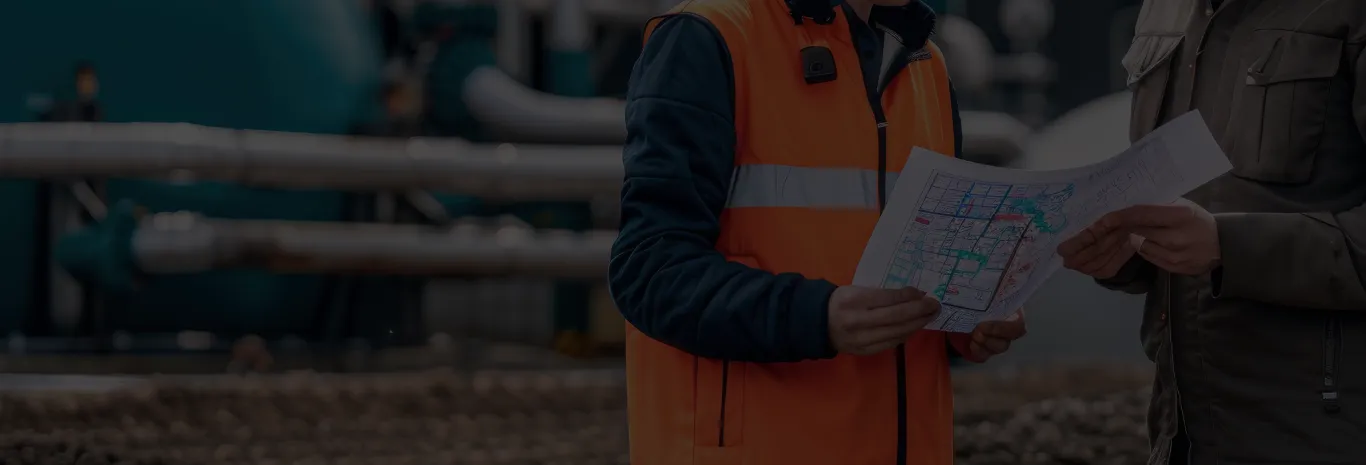
Transforming Industrial Waste into Environmental Compliance
Design comprehensive waste management systems that reduce environmental impact, ensure regulatory compliance, minimize disposal costs, and support sustainability goals for manufacturing facilities in India across pharmaceuticals, chemicals, food processing, and industrial sectors.


Industrial Waste Management System Planning in India
Waste management system planning is the engineering process of designing and sizing the systems of treatment and disposal of industrial waste, liquid effluent treatment, hazardous materials, and air emissions so that manufacturing facilities comply with the regulatory guidelines and avoid production shutdowns, penalties, and license cancellations. India produces around 7.9 million tonnes of hazardous wastes every year, and the CPCB and various pollution control boards are strictly implementing the Zero Liquid Discharge norms in the pharmaceuticals, textile, and chemical industries.
Our IMARC Engineering waste management system planning service in India includes effluent treatment plant design, zero liquid discharge system planning and engineering, handling and storage of hazardous wastes as per the Hazardous Waste Management Rules 2016, solid waste management system planning and design as per the Solid Waste Management Rules 2016, and air emission treatment systems as per CPCB ambient air quality standards. Our client industries include pharmaceuticals, food processing industries, chemical industries, and FMCG industries with a need for waste management system planning and design to comply with the Consent to Establish and Consent to Operate conditions and pass the CPCB and pollution control board inspections and audits.
Our Approach to Waste Management System Planning
Our systematic planning methodology combines comprehensive waste assessment, treatment technology evaluation, and regulatory compliance engineering to deliver sustainable waste management solutions. This proven four-phase approach ensures thorough coverage of waste streams, treatment requirements, and environmental protection objectives.


Waste Characterization & Regulatory Assessment
Conducting comprehensive waste audits, identifying waste generation sources, characterizing waste streams, evaluating regulatory requirements, and establishing treatment priorities based on environmental impact.

Treatment Technology Selection & System Design
Engineering integrated treatment systems including primary, secondary, and tertiary treatment stages, selecting appropriate technologies, designing collection infrastructure, and optimizing resource recovery opportunities.

Compliance Documentation & Permit Planning
Developing environmental impact assessments, preparing consent applications, creating standard operating procedures, and producing comprehensive documentation supporting environmental clearance and operational permits.

Implementation Planning & Operational Readiness
Providing detailed engineering specifications, vendor evaluation support, commissioning guidance, operator training programs, and performance monitoring protocols ensuring long-term regulatory compliance.
Why Choose IMARC Engineering for Waste Management System Planning in India?
Our integrated planning approach combines environmental engineering expertise with regulatory knowledge to deliver sustainable waste management solutions. This comprehensive methodology ensures seamless coordination between waste treatment systems, compliance requirements, and operational efficiency.

Integrated Waste System Design
Manufacturing facilities generate waste across multiple streams simultaneously, and the interactions between those streams have significant consequences for treatment system design and regulatory compliance. An effluent treatment plant sized without accounting for the chemical oxygen demand contribution of periodic equipment cleaning events will be chronically overloaded during production changeovers. A hazardous waste storage facility designed without reference to the facility’s liquid effluent management approach may create secondary contamination risks that trigger additional consent conditions. IMARC Engineering designs waste management systems as an integrated framework, mapping every waste stream, quantifying its generation rate and composition, and designing each treatment component in the context of its interactions with adjacent systems. This integrated approach eliminates the compliance gaps and treatment performance failures that arise when liquid, solid, hazardous, and air emission systems are designed independently by separate specialists without cross-stream coordination.

Current CPCB and State PCB Regulatory Intelligence
India’s environmental regulatory framework for industrial waste is evolving rapidly, with CPCB issuing revised discharge standards, new ZLD mandates, and updated hazardous waste classification schedules that alter compliance requirements for manufacturing facilities on a continuous basis. State pollution control boards impose consent conditions that go beyond national CPCB standards in states with significant industrial pollution loads, including more stringent effluent discharge limits, mandatory online effluent monitoring system installation, and additional reporting obligations. A waste management system designed to regulations from two years ago may be non-compliant by the time it is commissioned. IMARC Engineering maintains current regulatory intelligence across CPCB national standards and state PCB consent condition practices in every major industrial state, ensuring that every waste management system design is built to the current and anticipated regulatory standards applicable at the project’s location, not to superseded standards that generate compliance risks before operations commence.

Technology Selection Based on Performance Evidence
Effluent treatment and waste management technology vendors in India actively promote their proprietary systems to project developers and engineering consultants, creating a structural bias in technology selection towards marketed solutions rather than the most appropriate treatment technology for the specific wastewater characteristics and discharge requirements of the project. A vendor promoting membrane bioreactor technology for a pharmaceutical ETP where conventional activated sludge with tertiary polishing is technically sufficient is proposing a capital cost that is significantly higher than necessary for the same compliance outcome. IMARC Engineering selects waste treatment technologies based on a structured technical evaluation of wastewater characterisation data, discharge standard requirements, site constraints, capital cost, and lifecycle operating cost, with no commercial relationships with any equipment or technology vendor. This independence ensures that technology recommendations reflect the most cost-effective path to compliance rather than vendor margin optimisation.

Environmental Clearance Documentation
Environmental clearance applications under the Environment Impact Assessment Notification require detailed waste management plans as a mandatory component of the project documentation submitted to State Expert Appraisal Committees and the Central Expert Appraisal Committee. The quality and technical credibility of the waste management plan submitted with an EIA directly affects the appraisal committee’s assessment of the project’s environmental risk and the conditions attached to the environmental clearance granted. CPCB and state PCB inspections of manufacturing facilities evaluate waste management system performance against the consent conditions issued at the time of Consent to Establish/Consent to Operate, with observations and directions issued for systems that fail to meet discharge limits, hazardous waste storage standards, or monitoring and reporting requirements. IMARC Engineering prepares waste management plans structured for EIA submission requirements and designs waste management systems documented to meet CPCB inspection standards, reducing environmental clearance application processing time and minimising the risk of adverse inspection outcomes.

Zero Liquid Discharge Engineering Expertise
Zero Liquid Discharge system engineering represents the most technically demanding category of industrial effluent treatment, requiring a sequence of concentration and evaporation technologies that eliminate liquid effluent discharge by recovering all process water for reuse and generating only solid waste residues for disposal. ZLD system design for complex industrial wastewater including pharmaceutical, chemical, and textile effluents containing high dissolved solids, recalcitrant organics, and variable composition, requires detailed characterisation of the wastewater’s physical and chemical properties across all production scenarios, and selection of a treatment train that achieves ZLD compliance under worst-case composition conditions without generating treatment residues that create secondary disposal problems. IMARC Engineering’s ZLD design capability covers the full treatment train from primary and secondary biological treatment through membrane concentration using nanofiltration and reverse osmosis, thermal evaporation using multiple-effect evaporators or mechanical vapour recompression, and crystallisation for salt recovery, with system selection based on the specific economics and wastewater characteristics of each project.

End-to-End Support from Waste Characterisation
IMARC Engineering supports waste management projects from initial waste stream characterisation through detailed engineering, procurement support, construction supervision, commissioning, and ongoing regulatory compliance monitoring. At the project inception stage, IMARC Engineering conducts waste characterisation studies that establish the design basis for every treatment system. During detailed engineering, IMARC Engineering develops complete P&ID documentation, equipment specifications, civil and structural design inputs, and electrical and instrumentation design for the waste management system. During construction, IMARC Engineering provides installation conformance review ensuring that the built system matches approved design parameters. At commissioning, IMARC Engineering develops performance acceptance test protocols and reviews effluent quality data against consent condition discharge limits before the system is handed over for independent operation. Post-commissioning, IMARC Engineering provides regulatory compliance monitoring support, including preparation of compliance reports for CPCB and state PCB submission and advisory on consent condition renewal and upgrade requirements as regulatory standards evolve.
Waste Management System Planning Across Key Sectors in India
IMARC Engineering delivers integrated effluent treatment, ZLD engineering, hazardous waste management, solid waste planning, and air emission control design across India’s most active manufacturing sectors
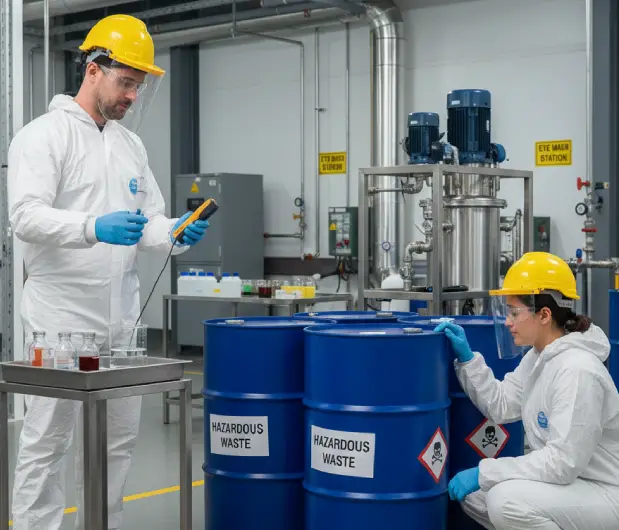
ETP design for high organic load pharmaceutical wastewater including API synthesis effluents containing recalcitrant organic compounds, solvent recovery system design for organic solvent waste streams, ZLD system engineering for facilities in CPCB-notified pharmaceutical clusters, hazardous waste categorisation and storage design under HWM Rules 2016, and air emission control systems for solvent vapour and process exhaust streams. Compliance documentation structured for CDSCO manufacturing licence, CPCB consent, and WHO-GMP inspection requirements.
ETP design for high BOD and high fat-oil-grease food processing wastewater including anaerobic pre-treatment for high-strength dairy and slaughterhouse effluents, biogas recovery system integration for energy recovery from organic waste treatment, solid food waste segregation and composting or biogas conversion frameworks meeting Solid Waste Management Rules 2016, and effluent reuse system design for irrigation-grade treated effluent meeting CPCB reuse standards. FSSAI and export market food safety compliance documentation integration.
ETP design for complex chemical wastewater streams containing heavy metals, toxic organics, and high dissolved solids requiring advanced treatment including Fenton oxidation, activated carbon adsorption, and chemical precipitation. ZLD system design for chemical manufacturing facilities subject to CPCB ZLD mandates, hazardous waste storage and disposal systems for Schedule I and II hazardous wastes under HWM Rules 2016, and scrubber system design for toxic gas and acid mist emission control meeting CPCB ambient air quality standards.
ETP design for surfactant and fragrance-containing personal care product wastewater, solid waste segregation frameworks for packaging waste meeting Extended Producer Responsibility obligations under Plastic Waste Management Rules 2016, hazardous waste management for solvent and chemical waste streams from cosmetic manufacturing, and air emission control for spray drying and powder handling operations. Consent to Establish and Consent to Operate documentation support for state PCB applications.
ETP and ZLD system design for highly toxic agrochemical wastewater containing persistent organic pollutants requiring advanced oxidation processes including ozonation and UV-Fenton treatment for complete pesticide destruction. Hazardous waste management systems for pesticide-contaminated solid waste, contaminated packaging disposal, and off-specification product destruction meeting HWM Rules 2016 and CPCB guidance. Scrubber and thermal oxidiser design for chlorine, hydrogen chloride, and toxic organic vapour emission control from agrochemical synthesis operations.
Biomedical waste management system design for manufacturing and quality testing operations generating infectious and sharps waste under the Biomedical Waste Management Rules 2016, ETP design for chemical laboratory and cleaning wastewater streams, solid waste segregation and disposal frameworks for packaging and manufacturing scrap, and solvent waste recovery and disposal systems for chemical-using manufacturing processes. Compliance documentation structured for CDSCO manufacturing licence and ISO 13485 environmental management requirements.
ETP design for metal finishing, electroplating, and surface treatment wastewater containing chromium, nickel, zinc, and cyanide requiring chemical precipitation and ion exchange treatment to meet CPCB metal discharge standards. Solid waste management frameworks for metal swarf, spent cutting fluids, and painting booth waste. Air emission control for paint spray booths, welding fume extraction, and abrasive blasting dust collection meeting CPCB ambient air quality standards. Hazardous waste storage and disposal systems for spent solvents, lubricants, and metal-containing sludges under HWM Rules 2016.
Frequently Asked Questions: Waste Management System Planning in India
We've compiled answers to common questions investors, manufacturers, and facility operators ask about waste management system planning. These insights address regulatory requirements, technology selection, operational considerations, and compliance strategies.
Trusted by Industry Leaders
We partner with global enterprises and ambitious businesses across sectors to deliver operational excellence, strategic insights, and sustainable growth through integrated solutions.


Success in Their Words
Real feedback from clients across industries. Discover how our solutions delivered measurable impact and operational excellence.

I wanted to express my sincere appreciation for your efforts in handling this matter. Your dedication and commitment have been truly commendable, and it is evident that you have put in tremendous hard work and expertise into resolving the issues at hand. We are greatly interested in continuing our collaboration with you in the future, as your professionalism and reliability have made you a trusted partner. Thank you once again for your invaluable contribution. We look forward to strengthening our partnership ahead.

It has been a pleasure working with the IMARC team. The insights provided were structured, clear, and highly valuable, helping us strengthen both our technical and financial planning with confidence. We deeply appreciate the team’s professionalism, responsiveness, and attention to detail throughout the engagement. Every requirement was well understood and effectively incorporated, resulting in a comprehensive and actionable output. Overall, our experience has been excellent, and I would gladly recommend IMARC to organizations seeking a reliable research partner.
Your service is truly exceptional. Working with the IMARC team has been a seamless and professional experience. The clarity of communication, responsiveness to queries, and consistent support at every stage made the entire engagement highly efficient. The insights shared were well-structured, practical, and perfectly aligned with our requirements, helping us make informed decisions with confidence. Overall, the dedication and professionalism demonstrated by your team stand out, and I would be glad to recommend IMARC as a reliable and trustworthy research partner.

IMARC did an outstanding job in preparing our study. They were punctual, precise, and consistently responsive throughout the entire process. The team delivered all the data we required in a clear, well-organized, and highly professional format. Their strong attention to detail, combined with their ability to meet every deadline without compromising quality, truly set them apart. Overall, their reliability and commitment made them an exceptional partner for our project, and we would gladly work with them again in the future.

IMARC made the whole process incredibly easy from start to finish. Everyone I interacted with via email was polite, professional, and straightforward to deal with, always keeping their promises regarding delivery timelines and remaining consistently solutions-focused. From my very first contact, I appreciated the professionalism and support shown by the entire IMARC team. I highly recommend IMARC to anyone seeking timely, affordable, and reliable information or advice. My experience with IMARC was excellent, and I truly cannot fault any aspect of it.
I’d like to express my sincere gratitude for the excellent work you accomplished with the study. Your ability to quickly understand our requirements and deliver high-quality results under tight timelines truly reflects your expertise, exceptional work ethic, and unwavering commitment to your customer’s success. The professionalism and responsiveness you demonstrated throughout the process made a significant difference. Our entire team and company are incredibly thankful for your dedication, reliability, and support. Once again, thank you for your outstanding contribution.
Speak to Our Waste Management System Planning Team
Whether you are a pharmaceutical, food, chemical, FMCG, agrochemical, medical device, or industrial manufacturer, IMARC Engineering delivers integrated ETP, ZLD, and waste management system design aligned with regulatory requirements from Central Pollution Control Board and state authorities. Our expertise covers advanced treatment technologies, hazardous waste management, and compliance frameworks across sectors. We ensure environmentally compliant systems that minimise regulatory risk and support long-term operational sustainability.