Expert Equipment Integration and Performance Verification Services
Transform equipment installations into production-ready systems through comprehensive supervision and commissioning services in India that verify performance, validate specifications, and deliver operational machinery ready for immediate manufacturing use.
Installation Supervision and Equipment Commissioning in India
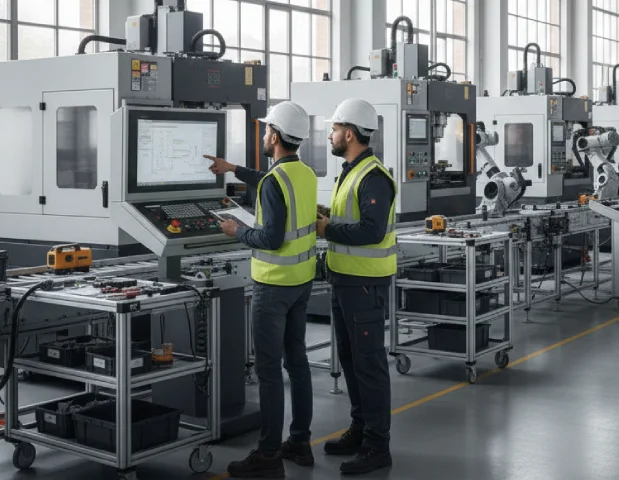
Equipment commissioning is the process by which installed machinery is verified to be correctly positioned, mechanically assembled, connected to utilities, and functioning within design parameters before production use begins. For regulated industries in India including pharmaceuticals, food processing, and chemicals, commissioning is also a formal qualification process. Installation Qualification (IQ), Operational Qualification (OQ), and Performance Qualification (PQ) are required under Schedule M and WHO-GMP guidelines before equipment can be used in production. For pressure systems, the Indian Boiler Regulations (IBR) mandate statutory inspections at installation stage, and PESO approval is required for certain flammable or explosive process equipment.
IMARC Engineering offers installation supervision and commissioning services for industries such as manufacturing, pharmaceuticals, food processing, chemicals, and others throughout India. The commissioning process includes activities like pre-installation readiness, supervision of rigging and mechanical installations, utility check, functional testing as per OEM specifications, performance testing, safety interlock testing, and document preparation for commissioning. IMARC Engineering collaborates with equipment manufacturers, civil construction firms, electrical engineering consultants, and statutory authorities to ensure that the installation meets the intended design.
We collaborate with project owners, EPC contractors, and facility management companies who commission newly installed production facilities, imported machinery, or expanded capacity projects requiring documented commissioning reports.
Our Structured Installation Supervision and Equipment Commissioning Methodology
Our comprehensive approach integrates installation oversight, systematic testing, and performance verification. This proven methodology validates equipment readiness through coordinated supervision, functional testing protocols, and operational qualification activities, supporting successful manufacturing integration.


Pre-Installation Planning and Site Readiness Verification
Reviewing installation requirements, verifying site preparations, coordinating logistics, and establishing safety protocols before equipment arrival and rigging operations.

Installation Monitoring and Quality Verification
Supervising rigging activities, verifying anchor bolt installations, checking alignment specifications, and documenting installation quality throughout mechanical placement and connection phases.

Functional Testing and Performance Validation
Conducting equipment trials, testing operational sequences, measuring performance parameters, and validating specifications against purchase requirements through systematic commissioning protocols.

Startup Assistance and Operational Handover
Supporting initial production runs, training operations personnel, completing documentation packages, and facilitating transitions from commissioning teams to production management.
Why Choose IMARC Engineering for Installation Supervision and Equipment Commissioning in India?
Our professional oversight delivers operational equipment through systematic supervision, rigorous testing, and expert validation. This comprehensive methodology addresses installation quality, performance verification, documentation integrity, and operational readiness throughout equipment integration programs.

Client-Side Commissioning Authority
Commissioning managed solely by OEMs or EPC contractors creates a structural conflict of interest, as vendors are incentivised to declare completion quickly, even if performance falls short of client requirements. OEM engineers typically focus on meeting warranty conditions rather than validating performance under actual operating conditions. IMARC Engineering acts as an independent commissioning authority, reviewing test procedures, witnessing trials, and evaluating results against client-defined specifications, not vendor datasheets. Commissioning sign-off is withheld until all acceptance criteria are met, protecting the client’s interests at the critical stage of payment release and warranty activation.

Regulatory Qualification Expertise
Commissioning in Indian pharmaceutical, food, and chemical facilities is not just a technical activity but a regulatory process that directly affects approvals from Central Drugs Standard Control Organization, Food Safety and Standards Authority of India, and IBR authorities. IQ, OQ, and PQ documentation that does not meet Schedule M or WHO-GMP standards can lead to inspection deficiencies and delays in production start-up. Similarly, incomplete documentation during IBR inspections can delay boiler registration, while inadequate hazardous area verification during commissioning can result in restrictions from Petroleum and Explosives Safety Organisation, limiting plant operations.

Multi-Vendor Commissioning Coordination
Manufacturing facility commissioning in India typically involves multiple interdependent equipment systems rather than a single unit, requiring careful sequencing and coordination. When equipment such as sterilisers, fillers, and capping units are commissioned independently by different OEMs without central oversight, integration failures often arise with no clear ownership. IMARC Engineering acts as the project-level commissioning coordinator, managing OEM sequencing, verifying utility handovers from civil and MEP contractors, coordinating statutory inspections with IBR authorities and Petroleum and Explosives Safety Organisation, and ensuring system-level performance testing is conducted only after all equipment is fully operational.

Imported Equipment Commissioning Management
Imported equipment commissioning in India involves additional logistical, regulatory, and technical risks compared to domestic procurement. OEM engineers travelling from overseas are often incentivised to complete commissioning quickly due to high on-site costs, regardless of actual performance validation. Customs clearance issues, if not addressed in advance, can delay installation, while improper installation against OEM manuals such as deviations in foundation tolerances, anchoring, or utility connections, can lead to warranty voidance discovered only during claims. IMARC Engineering manages this process end-to-end, ensuring pre-installation readiness, supervising installation to OEM standards, and independently witnessing commissioning trials with documented performance verification against client specifications rather than vendor declarations.

Punch List Management and Defect Resolution
Commissioning activities in Indian manufacturing projects often reveal equipment deficiencies, utility issues, and documentation gaps that can impact performance and compliance if not properly addressed. Without a structured punch list process, these issues are inconsistently tracked, leading to production starting with unresolved items that may trigger quality failures, safety risks, or adverse observations during inspections by Central Drugs Standard Control Organization or Food Safety and Standards Authority of India. IMARC Engineering manages a formal punch list from pre-commissioning through completion, classifying items by severity, assigning ownership and timelines, verifying closure through re-inspection, and withholding final sign-off until all critical safety and regulatory items are resolved.

Commissioning Documentation Structured for Regulatory Submission
Commissioning documentation in Indian manufacturing projects serves both regulatory and lender requirements, each needing structured management from the outset. Regulatory documentation including IQ, OQ, and PQ records, IBR inspection certificates, and PESO approvals must be prepared in formats accepted by Central Drugs Standard Control Organization, Food Safety and Standards Authority of India, IBR authorities, and Petroleum and Explosives Safety Organisation. In parallel, lender documentation such as commissioning progress reports, performance certificates, and production readiness assessments is required for project finance drawdowns. IMARC Engineering manages both streams simultaneously, ensuring regulatory compliance and timely fund release through audit-ready documentation.
Installation Supervision and Equipment Commissioning Across Key Sectors in India
IMARC Engineering delivers pre-installation readiness verification, installation supervision, performance commissioning, IQ/OQ/PQ qualification, statutory inspection coordination, and commissioning documentation across India’s most active manufacturing sectors.
Commissioning and IQ/OQ/PQ qualification for tablet compression, granulation, coating, capsule filling, and sterile fill-finish equipment under Schedule M and WHO-GMP requirements. IBR inspection coordination for autoclave and clean steam systems. GMP commissioning documentation structured for CDSCO manufacturing licence applications, with performance qualification protocols verifying equipment meets the critical quality attribute requirements of the registered product formulation.
Commissioning for pasteurisation, homogenisation, UHT, filling, and packaging equipment with FSSAI hygienic design installation verification. Utility connection verification against BIS 10500 potable water quality for food-contact systems. HACCP critical control point equipment performance validation and CIP system commissioning verification. Factory Act and fire NOC commissioning documentation for food processing facility statutory inspections.
Commissioning supervision for reactors, distillation columns, centrifuges, and dryers with IBR statutory inspection coordination for pressure vessels and steam systems. PESO commissioning verification for equipment in classified hazardous areas, safety interlock and emergency shutdown system functional testing, and CPCB consent condition compliance verification for effluent treatment and air emission control systems at commissioning stage.
Commissioning for high-speed filling, capping, labelling, and packaging line equipment with multi-vendor integration performance testing. CDSCO cosmetics manufacturing facility commissioning documentation for personal care product licence applications. Speed, accuracy, and reject rate performance acceptance testing against client-side technical specification, with punch list management ensuring all packaging line integration deficiencies are resolved before production launch.
Commissioning supervision for agrochemical synthesis, formulation, and packaging equipment with PESO compliance verification for flammable solvent and toxic chemical handling systems. Safety interlock and toxic gas detection system functional testing before process fluid introduction. IBR inspection for steam-heated reactor and dryer systems, and CPCB effluent treatment system commissioning verification against state PCB consent discharge standards.
Commissioning and IQ/OQ/PQ qualification for medical device manufacturing equipment including precision machining, injection moulding, assembly, and sterilisation systems under ISO 13485 process validation requirements. Calibration certificate and measurement traceability verification for metrology equipment. CDSCO Class B and C device manufacturing licence commissioning documentation and CE marking technical file installation records structured for notified body review.
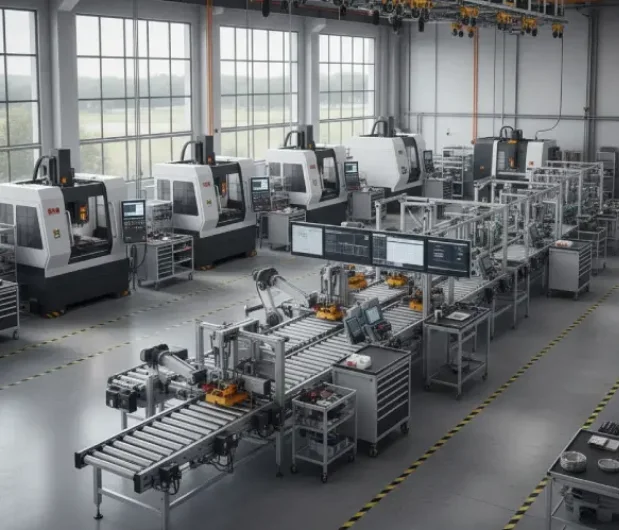
Commissioning supervision for CNC machine tools, heat treatment furnaces, surface finishing systems, and material handling equipment with performance acceptance testing against client technical specification. IBR inspection coordination for pressure vessels and compressed air receivers. Factory Act commissioning inspection documentation for industrial facility statutory approvals, with punch list management ensuring heavy equipment installation deficiencies are resolved before production operations commence in MIDC, GIDC, and SIDCO industrial zones.
Explore Related Services

Site Supervision and Civil Execution Oversight
Expert Construction Oversight and Quality Assurance Management
Learn more

Multi-Vendor Coordination and Integration
Seamless Supplier Management and Interface Coordination
Learn more

Fire and Safety Compliance During Construction
Comprehensive Safety Management and Regulatory Compliance Services
Learn more
Frequently Asked Questions: Installation Supervision and Equipment Commissioning in India
We have compiled answers to the most common questions manufacturers, investors, and facility managers ask about installation supervision and equipment commissioning. These insights address critical concerns around oversight scope, testing protocols, performance validation, and operational readiness.
Trusted by Industry Leaders
We partner with global enterprises and ambitious businesses across sectors to deliver operational excellence, strategic insights, and sustainable growth through integrated solutions.









Success in Their Words
Real feedback from clients across industries. Discover how our solutions delivered measurable impact and operational excellence.

I wanted to express my sincere appreciation for your efforts in handling this matter. Your dedication and commitment have been truly commendable, and it is evident that you have put in tremendous hard work and expertise into resolving the issues at hand. We are greatly interested in continuing our collaboration with you in the future, as your professionalism and reliability have made you a trusted partner. Thank you once again for your invaluable contribution. We look forward to strengthening our partnership ahead.

It has been a pleasure working with the IMARC team. The insights provided were structured, clear, and highly valuable, helping us strengthen both our technical and financial planning with confidence. We deeply appreciate the team’s professionalism, responsiveness, and attention to detail throughout the engagement. Every requirement was well understood and effectively incorporated, resulting in a comprehensive and actionable output. Overall, our experience has been excellent, and I would gladly recommend IMARC to organizations seeking a reliable research partner.
Your service is truly exceptional. Working with the IMARC team has been a seamless and professional experience. The clarity of communication, responsiveness to queries, and consistent support at every stage made the entire engagement highly efficient. The insights shared were well-structured, practical, and perfectly aligned with our requirements, helping us make informed decisions with confidence. Overall, the dedication and professionalism demonstrated by your team stand out, and I would be glad to recommend IMARC as a reliable and trustworthy research partner.

IMARC did an outstanding job in preparing our study. They were punctual, precise, and consistently responsive throughout the entire process. The team delivered all the data we required in a clear, well-organized, and highly professional format. Their strong attention to detail, combined with their ability to meet every deadline without compromising quality, truly set them apart. Overall, their reliability and commitment made them an exceptional partner for our project, and we would gladly work with them again in the future.

IMARC made the whole process incredibly easy from start to finish. Everyone I interacted with via email was polite, professional, and straightforward to deal with, always keeping their promises regarding delivery timelines and remaining consistently solutions-focused. From my very first contact, I appreciated the professionalism and support shown by the entire IMARC team. I highly recommend IMARC to anyone seeking timely, affordable, and reliable information or advice. My experience with IMARC was excellent, and I truly cannot fault any aspect of it.

I’d like to express my sincere gratitude for the excellent work you accomplished with the study. Your ability to quickly understand our requirements and deliver high-quality results under tight timelines truly reflects your expertise, exceptional work ethic, and unwavering commitment to your customer’s success. The professionalism and responsiveness you demonstrated throughout the process made a significant difference. Our entire team and company are incredibly thankful for your dedication, reliability, and support. Once again, thank you for your outstanding contribution.
Speak to Our Installation Supervision and Equipment Commissioning Team
Whether you are a pharmaceutical, food, chemical, FMCG, medical device, or industrial manufacturer, or an EPC contractor or investor, IMARC Engineering provides independent commissioning and qualification services aligned with Schedule M, WHO-GMP, Central Drugs Standard Control Organization, Food Safety and Standards Authority of India, PESO, and IBR requirements. We combine IQ/OQ/PQ expertise, multi-vendor coordination, and audit-ready documentation to ensure equipment is fully verified, compliant, and production-ready from day one.