
Turning Plant Closures into Compliant and Value-Optimized Transitions
Execute compliant facility decommissioning and site closure in India with structured support for environmental remediation, regulatory approvals, safe dismantling, and asset recovery, ensuring risk-controlled shutdowns, workforce transition, and redevelopment-ready sites.

Decommissioning and Site Closure Support in India
Decommissioning a manufacturing facility in India is a highly regulated process with environmental, legal, and financial implications extending well beyond physical shutdown. With tightening norms under the Environment Protection Act 1986, Central Pollution Control Board guidelines, and State SPCB approvals, improper closure can result in significant liabilities and compliance risks.
IMARC Engineering offers complete decommissioning and closure services in India, combining environmental due diligence, hazardous waste management, controlled decommissioning, asset recovery, regulatory coordination, and closure reporting that is ready for audits. Our services help ensure that shutdowns occur safely, comply with pollution control standards, and restore the site efficiently by mitigating risks of soil contamination, waste management, and environmental monitoring.
In view of India’s industrial restructuring, brownfield redevelopment, and environmentally sustainable closure activities driven by ESG factors, there is a need for planned decommissioning services.
Our Structured Decommissioning and Site Closure Support Methodology
Our systematic closure framework addresses environmental, regulatory, financial, and social dimensions comprehensively. This proven four-phase methodology minimizes liabilities, maximizes asset recovery, and delivers compliant, responsible facility decommissioning aligned with stakeholder expectations and regulatory requirements.
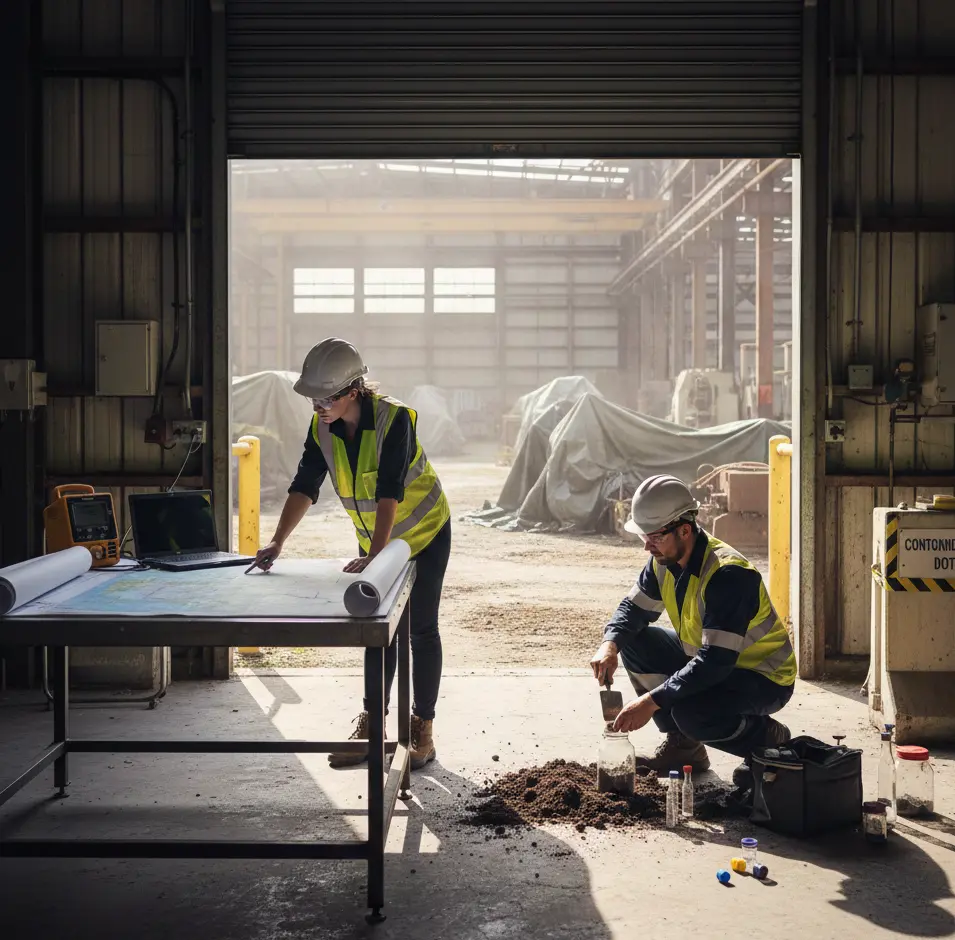

Closure Planning & Environmental Assessment
Developing comprehensive closure plans, conducting environmental audits, identifying contamination risks, and establishing remediation strategies addressing all regulatory and stakeholder requirements.

Asset Disposition & Equipment Dismantling
Inventorying assets, conducting valuations, coordinating equipment sales or transfers, managing dismantling activities, and maximizing recovery value through strategic disposition approaches.

Environmental Remediation & Hazardous Material Management
Removing hazardous substances, decontaminating facilities, treating contaminated soil or groundwater, disposing waste properly, and restoring sites to acceptable environmental standards.

Regulatory Compliance & Final Closure Documentation
Coordinating regulatory approvals, preparing closure reports, obtaining final certifications, managing stakeholder communications, and delivering complete documentation satisfying all closure obligations comprehensively.
Why Choose IMARC Engineering for Decommissioning and Site Closure Support in India?
Our comprehensive decommissioning services combine environmental expertise, regulatory knowledge, and project management capabilities to execute responsible facility closures. This integrated approach addresses liability mitigation, asset recovery optimization, compliance assurance, and stakeholder management.

Integrated Regulatory Closure Management
Manufacturing facility closure in India requires coordinated compliance across multiple authorities with interdependent requirements. CPCB and state PCB consent surrender depends on environmental assessments, hazardous waste disposal, and decommissioning records. Factory licence cancellation requires plan amendments and safety clearances, while IBR deregistration involves inspection and documentation for pressure systems. Pharmaceutical closures additionally require licence surrender with Central Drugs Standard Control Organization, including GMP closure documentation. IMARC Engineering manages these as parallel workstreams, coordinating submissions, inspections, and documentation to achieve efficient, compliant closure across all authorities.

Environmental Due Diligence and Soil Contamination Assessment
The most significant hidden risk in Indian manufacturing facility closure is post-closure environmental liability from unassessed soil and groundwater contamination. Under the Environment Protection Act, 1986 and NGT jurisprudence, liability remains with the former operator even after closure. Facilities with long operating histories, especially in chemicals, agrochemicals, and pharmaceuticals, often carry contamination risks from past leaks and effluent handling practices. IMARC Engineering conducts Phase I and Phase II environmental site assessments to identify and quantify these risks, enabling remediation planning and post-closure monitoring that protects operators from long-term liability exposure.

Hazardous Waste Closure Management Under HWM Rules 2016
Hazardous waste management during facility closure in India is governed by the Hazardous Waste Rules 2016 and CPCB guidelines, which require strict compliance. All hazardous waste must be disposed of through authorised Treatment, Storage, and Disposal Facilities before closure approvals can be obtained. Improper handling such as abandoning waste or using unauthorised channels, can trigger liability under the Environment Protection Act. IMARC Engineering manages the full process, including waste categorisation, packaging, transport through licensed carriers, TSDF disposal, and complete documentation to satisfy state PCB closure inspections.

Asset Valuation and Recovery Maximising Residual Value
Managing decommissioning purely as a compliance and dismantling exercise destroys significant residual asset value. In India, there is strong demand for used pharmaceutical, food, chemical, and industrial equipment among SMEs and contract manufacturers. Unstructured disposal through scrap channels captures only metal value, far below market potential. IMARC Engineering conducts condition assessment and market valuation, identifies optimal disposition routes, direct sale, auction, OEM trade-in, or scrap, and manages the recovery process to maximise value while maintaining compliant dismantling sequencing.

Workforce Transition and Retrenchment Compliance Management
Manufacturing facility closure in India triggers mandatory workforce retrenchment obligations under the Industrial Disputes Act, 1947, which must be carefully managed to avoid disputes and legal exposure. Establishments with 100+ workers require prior state government approval under Chapter V-B, with detailed applications and extended review timelines. Statutory compensation, typically 15 days’ average pay per year of service, must be paid before retrenchment takes effect, along with compliance with notice periods under applicable labour laws. IMARC Engineering supports workforce transition by managing approval applications, compensation calculations, communication planning, and legal coordination to ensure fully compliant and dispute-minimised closure.

Brownfield Redevelopment Readiness Documentation
Decommissioned manufacturing sites in India’s industrial corridors such as MIDC, GIDC, and SIDCO zones, can realise strong redevelopment value only if handed over with complete regulatory and environmental closure. Sites lacking contamination assessment, hazardous waste documentation, or formal licence surrender from CPCB, state PCBs, and factory authorities create due diligence risks that significantly reduce buyer interest and valuation. IMARC Engineering delivers decommissioning programmes that include regulatory closure certificates, environmental assessments, waste disposal records, and building condition surveys, ensuring the site is redevelopment-ready and value is maximised.
Decommissioning and Site Closure Support Across Key Sectors in India
IMARC Engineering delivers regulatory closure management, environmental due diligence, hazardous waste disposal, controlled dismantling, asset recovery, and brownfield handover documentation across India’s most active manufacturing sectors.
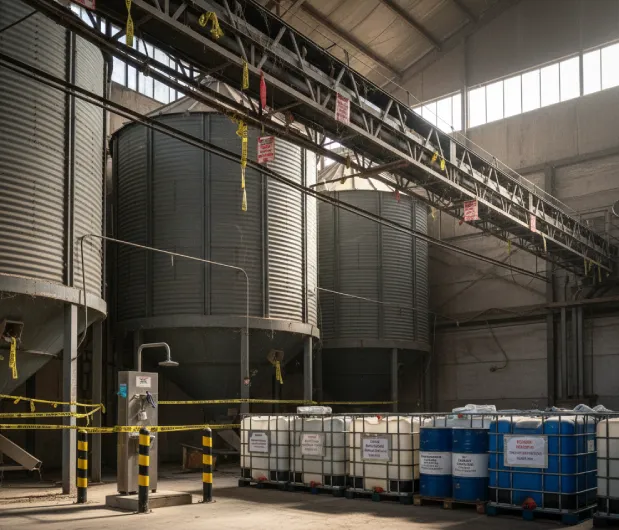
Decommissioning support for pharmaceutical manufacturing facilities in clusters including Hyderabad, Baddi, and Ahmedabad. CDSCO and state drug authority manufacturing licence surrender, Schedule M GMP closure documentation and batch record archival, controlled dismantling of cleanroom and sterile manufacturing infrastructure, pharmaceutical hazardous waste disposal under HWM Rules 2016, and environmental site assessment for solvent storage and API synthesis contamination risk.
Decommissioning support for food processing facility closure across agricultural processing zones in Punjab, Maharashtra, and Karnataka. FSSAI licence surrender documentation, refrigerant recovery and safe disposal from cold chain systems under CPCB guidelines, food processing equipment asset valuation and recovery, BOCW Act workforce retrenchment compliance, and Factory Act licence cancellation with state factory inspectorate in food processing states.
Decommissioning support for chemical manufacturing facility closure in Gujarat’s Dahej, Ankleshwar, and Vapi industrial corridors. CPCB and state PCB Consent to Operate surrender, Phase I and Phase II environmental site assessment for chemical contamination in soil and groundwater, scheduled hazardous waste disposal through authorised TSDFs, IBR boiler and pressure vessel deregistration, PESO installation decommissioning, and regulatory closure certification for chemical cluster brownfield redevelopment.
Decommissioning support for FMCG manufacturing facility closure. CDSCO cosmetics manufacturing licence surrender, aerosol propellant and solvent waste disposal under HWM Rules 2016, high-speed packaging line and filling equipment asset recovery through targeted end-use buyer marketing, BOCW Act retrenchment compliance for FMCG manufacturing workforces, and Factory Act licence cancellation with brownfield handover documentation for site redevelopment.
Decommissioning support for agrochemical manufacturing facility closure in PESO-notified chemical zones. CIB&RC registration surrender for product authorisations, Phase II soil contamination assessment for pesticide-contaminated areas requiring advanced remediation, scheduled toxic and persistent organic pollutant waste disposal through CPCB-authorised high-temperature incineration facilities, PESO installation decommissioning, and CPCB environmental compliance closure certification for agrochemical site redevelopment.
Decommissioning support for medical device manufacturing facility closure. CDSCO Class B and C device manufacturing licence surrender, ISO 13485 quality management system formal closure documentation, cleanroom infrastructure controlled dismantling, biomedical waste management closure under Biomedical Waste Management Rules 2016 for facilities with quality testing laboratory operations, and precision manufacturing equipment asset recovery through medical device sector end-use buyer networks.
Decommissioning support for heavy industrial manufacturing facility closure in MIDC, GIDC, SIDCO, and RIICO industrial areas. Environmental site assessment for metal finishing, surface treatment, and lubricant contamination in soil and groundwater, IBR deregistration for pressure vessels and compressed air receivers, Factory Act licence cancellation with state factory inspectorate, industrial equipment asset recovery, and brownfield redevelopment handover documentation for industrial plot reallocation by state industrial development corporations.
Explore Related Services

Regulatory Compliance (GMP, ISO, FDA, BIS)
End-to-End GMP, ISO, FDA, and BIS Compliance in India
Learn more

Health and Safety Compliance Audits
Protect Your Workforce Through Proactive Safety Excellence
Learn more

Risk Assessment and Mitigation Planning
Protecting Your Manufacturing Investments from Risks
Learn more

ESG (Environmental, Social, and Governance) Compliance
Building Sustainable Value Through ESG Excellence
Learn more
Frequently Asked Questions: Decommissioning and Site Closure Support in India
We have compiled answers to the most common questions investors, business owners, and facility managers ask about manufacturing decommissioning and site closure. These insights address critical concerns around costs, timelines, environmental liabilities, regulatory compliance, and asset recovery strategies.
Trusted by Industry Leaders
We partner with global enterprises and ambitious businesses across sectors to deliver operational excellence, strategic insights, and sustainable growth through integrated solutions.





Success in Their Words
Real feedback from clients across industries. Discover how our solutions delivered measurable impact and operational excellence.

I wanted to express my sincere appreciation for your efforts in handling this matter. Your dedication and commitment have been truly commendable, and it is evident that you have put in tremendous hard work and expertise into resolving the issues at hand. We are greatly interested in continuing our collaboration with you in the future, as your professionalism and reliability have made you a trusted partner. Thank you once again for your invaluable contribution. We look forward to strengthening our partnership ahead.

It has been a pleasure working with the IMARC team. The insights provided were structured, clear, and highly valuable, helping us strengthen both our technical and financial planning with confidence. We deeply appreciate the team’s professionalism, responsiveness, and attention to detail throughout the engagement. Every requirement was well understood and effectively incorporated, resulting in a comprehensive and actionable output. Overall, our experience has been excellent, and I would gladly recommend IMARC to organizations seeking a reliable research partner.
Your service is truly exceptional. Working with the IMARC team has been a seamless and professional experience. The clarity of communication, responsiveness to queries, and consistent support at every stage made the entire engagement highly efficient. The insights shared were well-structured, practical, and perfectly aligned with our requirements, helping us make informed decisions with confidence. Overall, the dedication and professionalism demonstrated by your team stand out, and I would be glad to recommend IMARC as a reliable and trustworthy research partner.

IMARC did an outstanding job in preparing our study. They were punctual, precise, and consistently responsive throughout the entire process. The team delivered all the data we required in a clear, well-organized, and highly professional format. Their strong attention to detail, combined with their ability to meet every deadline without compromising quality, truly set them apart. Overall, their reliability and commitment made them an exceptional partner for our project, and we would gladly work with them again in the future.

IMARC made the whole process incredibly easy from start to finish. Everyone I interacted with via email was polite, professional, and straightforward to deal with, always keeping their promises regarding delivery timelines and remaining consistently solutions-focused. From my very first contact, I appreciated the professionalism and support shown by the entire IMARC team. I highly recommend IMARC to anyone seeking timely, affordable, and reliable information or advice. My experience with IMARC was excellent, and I truly cannot fault any aspect of it.

I’d like to express my sincere gratitude for the excellent work you accomplished with the study. Your ability to quickly understand our requirements and deliver high-quality results under tight timelines truly reflects your expertise, exceptional work ethic, and unwavering commitment to your customer’s success. The professionalism and responsiveness you demonstrated throughout the process made a significant difference. Our entire team and company are incredibly thankful for your dedication, reliability, and support. Once again, thank you for your outstanding contribution.
Speak to Our Decommissioning and Site Closure Support Team
Whether you are a pharmaceutical, food, chemical, FMCG, medical device, or industrial manufacturer, or an investor or insolvency professional, IMARC Engineering delivers end-to-end facility closure support in India. We manage licence surrender with Central Drugs Standard Control Organization and Food Safety and Standards Authority of India, environmental compliance, hazardous waste disposal, asset recovery, and workforce transition. Our integrated approach ensures regulatory-compliant, risk-managed, and value-optimised facility closure.