Manufacturing
September 01 2026
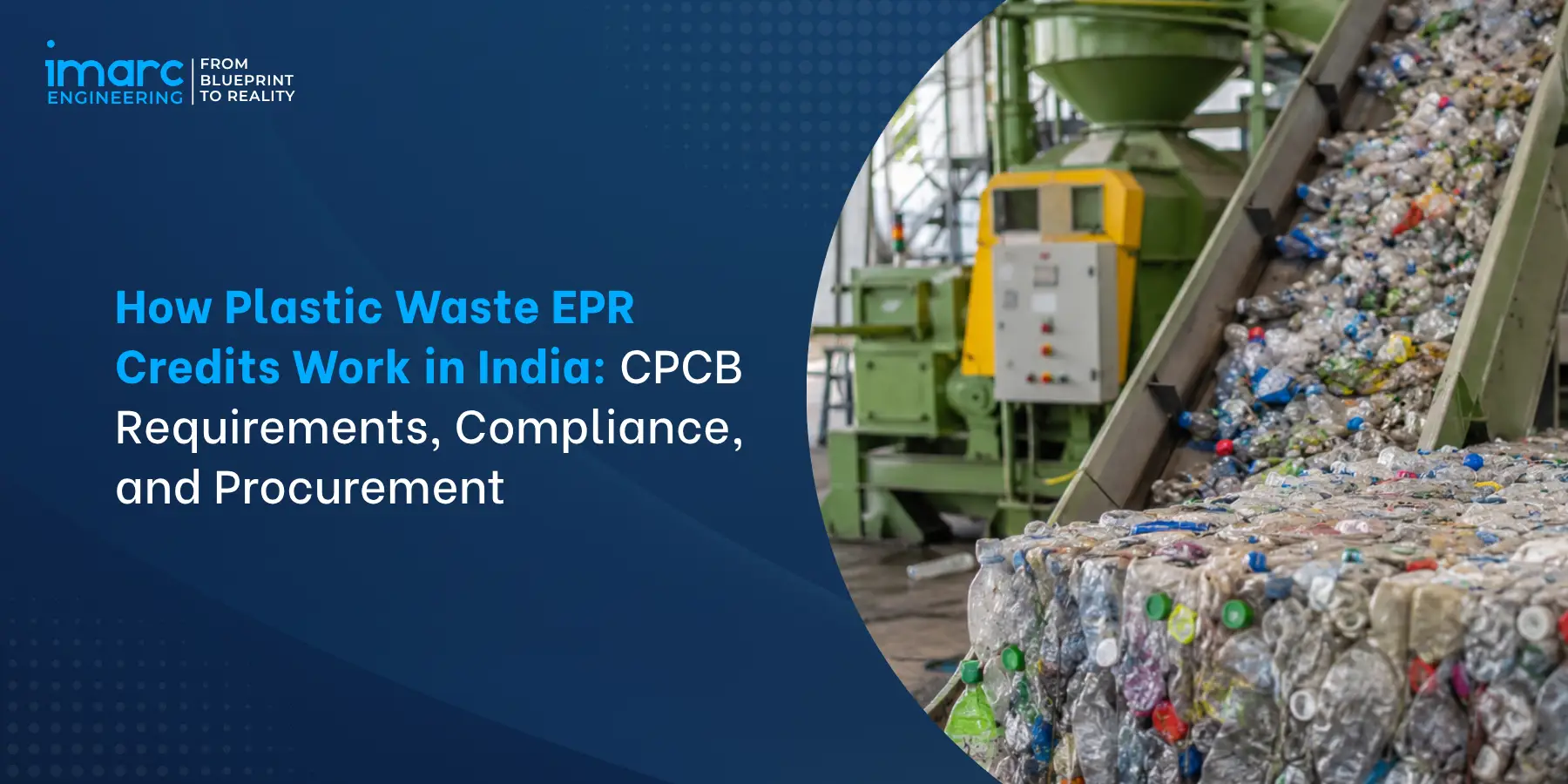
How Plastic Waste EPR Credits Work in India: CPCB Requirements, Compliance, and Procurement
Introduction
For producers, importers, and brand owners handling plastic packaging in India in 2026, disciplined understanding of plastic waste EPR credits in India (officially termed EPR certificates) determines compliance outcomes and business continuity. The Plastic Waste Management (Amendment) Rules 2022 dated 16 February 2022 introduced Guidelines on Extended Producer Responsibility for Plastic Packaging in Schedule II, subsequently refined through 2024 and 2026 amendments including PWM (Amendment) Rules 2026.
Scope of This Guide
This guide answers the sponsor's question directly. How do plastic waste EPR credits and certificates work in India, and what should producers, importers, and brand owners understand when using them to meet plastic packaging EPR obligations? It walks through the complete compliance journey from PIBO obligation calculation, PWP registration and certificate generation, portal-based transfer, verification requirements, to compliance risks under Central Pollution Control Board (CPCB) and Environment Protection Act 1986 framework. EPR certificates for plastic waste are digital instruments generated on CPCB portal rather than freely tradable commodities.
Table of Contents
- Introduction
- Why Plastic Waste EPR Compliance Matters for Businesses in India
- What Plastic Waste EPR Credits Are and Why They Matter in India
- Who Has Plastic Packaging EPR Obligations as Producers Importers and Brand Owners in India
- How EPR Obligations Are Calculated and Assessed for Plastic Packaging in India
- How Registered Plastic Waste Processors Generate EPR Certificates in India
- How PIBOs Procure and Transfer EPR Certificates on the CPCB Portal in India
- What to Verify Before Procuring EPR Certificates from Plastic Waste Recyclers in India
- Compliance Risks and Environmental Compensation for Plastic Waste EPR in India
- Conclusion
1. Why Plastic Waste EPR Compliance Matters for Businesses in India
Four drivers make disciplined EPR compliance a strategic priority for Indian businesses handling plastic packaging in 2026.
1.1 Mandatory Regulatory Framework
Plastic Waste Management (PWM) Rules 2016 notified under Environment Protection Act 1986 with subsequent amendments (2022, 2024, and PWM Amendment Rules 2026 dated 31 March 2026) establishes mandatory EPR framework for plastic packaging. Plastic waste EPR compliance is legally mandated rather than voluntary. All Producers, Importers, and Brand Owners (PIBOs) handling plastic packaging must register on CPCB EPR portal.
Non-registration blocks lawful business operations. Environmental Compensation under Section 15 of Environment Protection Act 1986 for non-compliance ranges up to INR 1 lakh per day. Penalties per violation range INR 10,000 to INR 15 lakh. Compliance is non-negotiable operational requirement.
1.2 Import and Customs Clearance
Importers face additional customs enforcement layer. CBIC Instruction No. 21/2025-Customs effective July 2025 mandates that importers must present proof of EPR portal registration before customs clearance is granted for plastic raw materials and plastic-packaged goods. Non-registered importers face shipment holds at ports, delivery delays, demurrage charges, and business disruption.
Import supply chains depend on advance EPR compliance rather than reactive post-import registration. Import-dependent businesses face immediate operational impact from EPR non-compliance beyond monetary penalties.
1.3 Progressive Target Tightening
EPR obligations progressively tighten across financial years. Recycling targets by plastic packaging category increase year-over-year per Schedule II. Reuse obligations for rigid plastic packaging (Category I in 0.9-4.9 L/kg range) require minimum 10 percent reuse in FY 2025-26 rising to 25 percent from FY 2028-29 onwards.
Recycled content mandates for rigid plastic packaging require 40 percent recycled content for FY 2026-27, rising progressively to 60 percent by FY 2028-29. Businesses that defer EPR planning face progressively harder compliance environment with less time for supply chain adaptation.
1.4 ESG Compliance and Reputational Impact
Environmental, Social, and Governance (ESG) reporting for listed companies under SEBI Business Responsibility and Sustainability Reporting (BRSR) framework includes plastic waste management disclosures. Non-compliant EPR fulfilment surfaces in disclosures affecting investor perception. Consumer-facing brands face additional reputational exposure from EPR non-compliance publicity.
Global buyers and multinational parent companies increasingly require documented EPR compliance from Indian supply chain partners. EPR compliance affects business relationships, capital access, and brand equity beyond direct regulatory penalties.
2. What Plastic Waste EPR Credits Are and Why They Matter in India
Understanding what plastic waste EPR credits are and why they matter in India begins with terminology clarification. The commonly searched term "EPR credits" refers to the official instrument termed "EPR certificates" under PWM Rules 2016 as amended. Both terms describe the same digital compliance instruments on the CPCB EPR portal.
2.1 Official Terminology and Framework Basis
EPR certificates for plastic waste are digital instruments issued on the centralized CPCB EPR portal (https://epr.cpcb.gov.in/home) under Schedule II of PWM Rules 2016 as amended. Certificates represent verified quantities of plastic waste processed by registered Plastic Waste Processors (PWPs) in specified categories and processing types. PIBOs use certificates to demonstrate fulfilment of category-wise EPR obligations. Certificates are portal-linked digital records rather than physical documents or freely tradable commodities, with generation, transfer, and retirement traceable on CPCB portal.
2.2 Four Certificate Types
| Certificate Type | Generated Against | Fulfils Obligation For |
|---|---|---|
| Recycling Certificate | Verified plastic waste recycled | Category-wise recycling target |
| End-of-Life Disposal | Co-processing/waste-to-energy | End-of-life disposal target |
| Reuse Certificate | Verified reused plastic packaging | Rigid packaging reuse target |
| Recycled Content | Recycled plastic in new packaging | Use of recycled plastic mandate |
2.3 Four Plastic Packaging Categories
- Category I: Rigid plastic packaging (bottles, containers, jars)
- Category II: Flexible plastic packaging (single or multi-layer with plastic layers)
- Category III: Multi-layered plastic packaging (at least one non-plastic layer)
- Category IV: Plastic sheet, carry bags, and compostable plastic packaging (per current CPCB categorization)
- Category-specific EPR targets apply separately without cross-category substitution
- PIBOs must match certificates to obligation categories for portal validation
2.4 Difference From Freely Tradable Commodities
EPR certificates differ from freely tradable commodities in several respects. Certificates are portal-issued digital records rather than negotiable instruments. Generation, transfer, and retirement occur on CPCB EPR portal with full audit trail. Transfer follows regulatory framework with trading windows at specific periods. Certificate validity depends on continued PWP registration and CPCB verification.
Pricing is market-driven with no statutory floor or ceiling under PWM Rules unlike banded e-waste and battery certificate markets. Businesses should treat plastic EPR credits as regulatory compliance instruments rather than commodity trading opportunities.
3. Who Has Plastic Packaging EPR Obligations as Producers Importers and Brand Owners in India
Understanding who has plastic packaging EPR obligations as producers, importers, and brand owners in India determines organisational EPR strategy. PWM Rules 2016 as amended defines Producer Importer Brand Owner (PIBO) with specific obligations for each category. PIBO EPR compliance covers all three roles distinctly.
3.1 Producer Definition
Producer means a person engaged in manufacturing or generation of plastic packaging materials, including plastic sheets used for packaging and multilayered packaging. Producer covers domestic plastic packaging manufacturers supplying to brand owners, converters, or direct end-users. EPR compliance for producers requires registration on CPCB EPR portal declaring plastic packaging quantities produced and category-wise breakdowns.
Producer EPR obligation covers plastic packaging produced and supplied within India. Producers manufacturing for export markets receive relief for exported quantities subject to documentation compliance.
3.2 Importer Definition
Importer means a person who imports plastic packaging or plastic-packaged commodities. The 2024 amendment expanded importer coverage to include importers of plastic resin and pellets used for downstream packaging manufacturing. EPR compliance for importers faces CBIC Instruction No. 21/2025-Customs effective July 2025 requirement to present proof of EPR portal registration before customs clearance.
Import-dependent supply chains require EPR registration completion before customs clearance activities. Importer EPR obligation covers plastic packaging quantities imported based on declared customs and portal data reconciliation.
3.3 Brand Owner Definition
Brand Owner means a person or company who sells any commodity under a registered brand label. Brand Owner category is often the most misunderstood - any business selling goods in plastic packaging under their brand name has brand owner EPR obligations, even if they do not manufacture the plastic packaging themselves.
FMCG companies, e-commerce sellers, private label retailers, food and beverage companies, personal care brands, and pharmaceutical brands all typically qualify as brand owners. EPR compliance for brand owners is triggered by brand ownership rather than physical packaging manufacturing.
3.4 Threshold and Coverage
- PIBO registration is mandatory regardless of business size for plastic packaging handling
- Multi-state operations may consolidate under single registration or state-wise depending on structure
- Micro and small enterprises may qualify for simplified compliance but registration remains mandatory
- Contract manufacturers producing on behalf of brand owners: brand owner typically bears EPR obligation
- Third-party logistics or distribution: PIBO status determined by supply chain position and brand ownership
- E-commerce platforms selling private labels versus third-party seller marketplaces have distinct treatment
4. How EPR Obligations Are Calculated and Assessed for Plastic Packaging in India
How EPR obligations are calculated and assessed for plastic packaging in India follows Schedule II framework with category-wise targets applied to declared plastic packaging quantities. Understanding calculation methodology supports accurate obligation planning and certificate procurement.
4.1 Obligation Calculation Framework
Plastic packaging EPR target calculation follows a defined sequence. PIBO declares plastic packaging quantities placed in market for the obligation year, category-wise (Category I, II, III, IV). Baseline quantities may reference average of preceding two financial years for established PIBOs. Category-wise recycling target percentages per Schedule II apply to declared quantities.
Category-wise end-of-life disposal, reuse (Category I), and recycled content targets apply separately. Total EPR obligation aggregates all applicable target categories. Portal calculates obligation based on self-declared quantities and applicable percentages.
4.2 Target Types by Category
| Obligation Type | Applicable Categories | Fulfilment Mechanism |
|---|---|---|
| Recycling Target | All Categories I to IV | Recycling Certificate from PWP |
| End-of-Life Disposal | As applicable per Schedule II | End-of-Life Disposal Certificate |
| Reuse Target (Rigid) | Category I (0.9-4.9 L/kg) | Reuse Certificate for rigid packaging |
| Recycled Content | Applicable categories per Schedule II | Recycled Content Certificate |
4.3 Progressive Target Tightening
- Recycling targets by category increase year-over-year per Schedule II progressive framework
- Reuse target Category I (rigid 0.9-4.9 L/kg): 10 percent in FY 2025-26 rising to 25 percent from FY 2028-29
- Recycled content mandate rigid packaging: 40 percent for FY 2026-27 with continued tightening
- Recycled plastic must conform to IS 14534:2023 specification
- FSSAI marking required where recycled plastic contacts food
- Imported plastic packaging recycled content not counted toward obligations
- Importers must procure certificates from surplus PIBOs for imported packaging quantities
4.4 Carry-Forward and Shortfall Provisions
PWM (Amendment) Rules 2026 introduced carry-forward mechanism for select obligations. Unfulfilled recycled content targets for food-contact packaging from FY 2025-26 may be carried forward for up to three years starting FY 2026-27 with at least one-third shortfall met each year until fully achieved. Shortfall in any obligation year triggers Environmental Compensation calculated on unmet quantities. EPR obligation assessment should include shortfall scenarios and carry-forward provisions for realistic compliance planning rather than reactive year-end procurement.
5. How Registered Plastic Waste Processors Generate EPR Certificates in India
How registered plastic waste processors generate EPR certificates in India defines the supply side of the EPR certificate ecosystem. Understanding PWP registration, verification, and certificate generation supports informed procurement decisions.
5.1 Plastic Waste Processor Categories
- Registered plastic waste processor (PWP) covers three categories under Schedule II framework
- Mechanical recyclers: physical processing of plastic waste into recycled granules or products
- Chemical recyclers: chemical processing including depolymerisation and solvent recovery
- Co-processors: cement kilns using plastic waste as alternative fuel and raw material
- Waste-to-energy plants: incineration with energy recovery from plastic waste
- Plastic-to-oil and plastic-to-road units: alternative processing pathways
5.2 PWP Registration Requirements
CPCB registered recycler or other Plastic Waste Processor (PWP) registration on CPCB EPR portal requires SPCB consent to operate (CTO), processing capacity documentation, waste handling authorisation, ISO or equivalent quality certifications where applicable, financial statements and business documentation, previous compliance history, and site inspection clearance. Registration once granted permits certificate generation subject to continuing compliance. CPCB may audit registered PWPs periodically. Registration lapse or suspension invalidates future certificate generation from that PWP.
5.3 Certificate Generation Process
- EPR certificate generation requires PWP to record verified plastic waste quantities processed
- Waste source documentation including collection agencies and quantity records
- Processing documentation with input-output balances and quality checks
- Certificate request submitted on CPCB EPR portal with category and type
- CPCB verification of documented quantities against processing capacity
- Certificate issuance on portal with unique identifier and quantity
- Certificate remains in PWP account until transfer to PIBO
5.4 Verification and Audit
CPCB and State Monitoring Committees may verify plastic waste recycling certificate generation through site audits, documentation review, and processing capacity assessment. PWM (Amendment) Rules 2026 strengthened audit and shortfall handling framework. Certificates generated without verifiable underlying processing face invalidation. PIBOs receiving invalidated certificates cannot demonstrate obligation fulfilment. Verification robustness protects legitimate PWPs and compliant PIBOs against fraudulent certificate circulation.
6. How PIBOs Procure and Transfer EPR Certificates on the CPCB Portal in India
Understanding how PIBOs procure and transfer EPR certificates on the CPCB portal in India covers the demand-side compliance journey. Transfer follows the regulatory framework rather than open commodity market mechanics.
6.1 Procurement Sequence
PIBO assesses total category-wise and type-wise EPR obligation based on declared plastic packaging quantities and applicable Schedule II targets. Identifies obligation shortfall requiring certificate procurement. Identifies registered PWPs holding relevant category and type certificates through CPCB portal directory.
Conducts due diligence on shortlisted PWPs including registration verification, capacity assessment, and prior audit history. Negotiates commercial terms directly with PWPs including quantity, pricing, delivery timeline, and documentation. Executes commercial agreement documenting transaction. Initiates transfer request on CPCB EPR portal.
6.2 Portal Transfer Mechanism
- EPR certificate transfer occurs through CPCB EPR portal during specified trading windows
- EPR certificate procurement requires matching category (I-IV) and type (recycling, EOL, reuse, recycled content)
- PWP initiates transfer request from PWP account to PIBO account
- PIBO accepts transfer on portal completing the two-party transaction
- Certificate moves from PWP holdings to PIBO holdings on portal
- Transaction recorded with full audit trail: generation → transfer → holding
- Portal validates PWP registration and PIBO obligation category alignment
6.3 Certificate Retirement Against Obligation
PIBOs retire procured certificates against obligations through CPCB EPR portal. Retirement matches category-wise and type-wise certificates to the corresponding obligation shortfall. Portal validates retirement adequacy for the obligation year. EPR target fulfilment requires certificate retirement covering full obligation quantities before annual returns filing deadline of 30 June following obligation year. Partial retirement leaves residual obligation subject to Environmental Compensation. Certificates retired against one obligation year cannot be re-used for subsequent years.
6.4 Documentation and Reporting
Documentation supporting EPR certificate procurement includes commercial agreements between PIBO and PWP, PWP registration certificates and validity documentation, category-wise and type-wise certificate details with unique identifiers, portal transaction records with timestamps, payment records supporting commercial transactions, quality documentation for recycled content certificates (IS 14534:2023 compliance where applicable, FSSAI marking for food-contact applications), and supporting waste source documentation. Complete documentation supports both current compliance and future audit defence. Missing or incomplete documentation risks certificate invalidation during CPCB audit.
7. What to Verify Before Procuring EPR Certificates from Plastic Waste Recyclers in India
Understanding what to verify before procuring EPR certificates from plastic waste recyclers in India protects PIBOs from certificate invalidation risks. Due diligence should occur before commercial commitment rather than post-transfer discovery.
7.1 PWP Registration Due Diligence
- Verify CPCB registration status through portal (active, not suspended or expired)
- Verify SPCB Consent to Operate (CTO) validity for the PWP facility
- Verify processing category alignment (mechanical recycling, chemical, co-processing, waste-to-energy)
- Verify processing capacity documentation matches certificate volumes
- Check prior CPCB or SPCB audit history for compliance track record
- Verify quality certifications where applicable (ISO 9001, ISO 14001)
- Verify PWP legal entity documentation and financial standing
7.2 Certificate-Level Verification
Certificate verification covers category-type matching against PIBO obligation, portal-linked certificate validity (not invalidated or under investigation), generation date and obligation year alignment, certificate quantity and unique identifier verification on CPCB portal, price benchmarking against market range for the category and type, and plastic waste recycler EPR certificates audit trail from waste source through processing to certificate generation. Portal verification should be conducted independently rather than relying on PWP-provided documentation alone.
7.3 Underlying Processing Verification
- Physical site visit to PWP facility for larger transactions
- Processing input-output balance review supporting certificate quantities
- Waste source documentation showing legitimate collection channels
- Quality documentation for recycled content certificates per IS 14534:2023
- FSSAI marking documentation for food-contact recycled content applications
- Machinery and processing capacity assessment matching certificate volumes
7.4 Commercial and Legal Documentation
Commercial documentation supporting certificate procurement should include comprehensive Master Purchase Agreement covering quantity, category, type, pricing, delivery timelines, warranty and indemnity, dispute resolution, and termination provisions. Purchase Orders for specific transactions. Invoices matching PO terms. Payment records through banking channels supporting audit trail. Certificate transfer confirmation from CPCB portal.
Legal documentation supporting future audit defence including PWP undertakings on certificate validity and warranty against invalidation. Insurance coverage where available for certificate invalidation risks. Robust commercial documentation supports both current compliance and dispute resolution.
8. Compliance Risks and Environmental Compensation for Plastic Waste EPR in India
Compliance risks and environmental compensation for plastic waste EPR in India affect both direct financial exposure and business continuity. Risk understanding supports proactive compliance rather than reactive damage control.
8.1 Environmental Compensation Framework
Environmental Compensation (EC) under Section 15 of Environment Protection Act 1986 applies to EPR non-compliance including non-registration, non-filing of annual returns, target shortfalls, and use of invalidated certificates. EC calculations follow CPCB formulas considering category-wise unmet quantities, applicable target percentages, and category-specific reference amounts.
Daily EC penalties can reach up to INR 1 lakh per day for continuing violations. Cumulative EC exposure for large PIBOs with significant plastic packaging volumes can reach substantial amounts. EC payment does not exempt from continued compliance requirements.
8.2 Certificate Invalidation Risks
- PWP registration suspension or cancellation invalidating certificates
- CPCB audit findings invalidating certificates generated without verifiable processing
- Category or type mismatch between procured certificates and PIBO obligations
- Documentation gaps preventing certificate validation during audit
- Duplicate certificate claims across multiple PIBOs from same PWP
- Fraudulent certificate circulation from unregistered or de-registered entities
8.3 Business Continuity Risks
Beyond direct financial penalties, EPR non-compliance creates business continuity risks. Importers face customs clearance denial under CBIC Instruction 21/2025-Customs disrupting import supply chains. Producers face SPCB action affecting manufacturing operations. Brand owners face channel partner compliance requests affecting distribution. Listed companies face SEBI BRSR disclosure impact affecting investor perception.
Consumer-facing brands face reputational impact from EPR non-compliance publicity. Multinational Indian subsidiaries face parent company compliance escalation. Business continuity risk aggregate typically exceeds direct financial penalty exposure.
8.4 Risk Mitigation Framework
Effective risk mitigation combines multiple layers. Early EPR registration and periodic renewal maintaining continuous compliance. Accurate baseline quantity declaration avoiding under-declaration audit findings. Certificate procurement well before annual returns deadline avoiding last-minute distress buying. Diversified PWP sourcing avoiding single-source dependency. Documentation discipline supporting audit defence. Periodic internal audits identifying compliance gaps before regulatory audits.
External advisory engagement for complex compliance scenarios. Compliance calendar covering all EPR filing and target milestones. Insurance where available for certificate invalidation risks. Layered mitigation prevents cascading failures from single compliance gaps.
Conclusion
Effective use of plastic waste EPR certificates in India requires accurate PIBO categorisation, packaging declarations, category-wise obligation calculation, compliant portal transfers, and appropriate certificate procurement. Compliance also requires proper documentation, audit trails, and monitoring of applicable recycling, end-of-life, reuse, and recycled-content requirements.
Three priorities matter for EPR sponsors. First, EPR certificates are regulated compliance instruments requiring proper electronic transfer and records. Second, PIBO registration and applicable obligations must be fulfilled. Third, PWP due diligence and certificate verification help reduce invalidation, audit, and compliance risks.
PURSUING PLASTIC WASTE EPR COMPLIANCE STRATEGY?
IMARC Engineering’s plastic waste EPR advisory team supports Producers, Importers, and Brand Owners with PIBO categorisation, plastic packaging assessment, EPR obligation and recycled-content calculations, CPCB portal registration, EPR certificate procurement, PWP due diligence, documentation, filings, annual returns, compliance tracking, and Environmental Compensation risk assessment. The team also supports commercial documentation, certificate transfers, customs compliance, ESG/BRSR alignment, and integrated EPR compliance calendar management.
Frequently Asked Questions
Plastic waste EPR credits in India, officially termed EPR certificates, are digital instruments generated by registered Plastic Waste Processors on the CPCB EPR portal based on verified plastic waste recycled, disposed, reused, or used as recycled content, transferred to PIBOs fulfilling plastic packaging EPR obligations.
Producers, Importers, and Brand Owners (PIBOs) handling plastic packaging in India need EPR certificates. Producers manufacture plastic packaging; Importers bring plastic packaging or plastic-packaged goods into India; Brand Owners sell goods in plastic packaging. All three PIBO categories must register on CPCB EPR portal.
EPR obligations for plastic packaging are calculated as category-wise percentages (I-IV) of plastic packaging quantities placed in the market. PIBOs file self-declared packaging quantities on CPCB EPR portal. Recycling, end-of-life disposal, reuse, and recycled content targets apply progressively per Schedule II of PWM Rules 2016.
Registered Plastic Waste Processors (recyclers, co-processors, waste-to-energy plants) generate EPR certificates on the CPCB EPR portal by reporting verified plastic waste quantities processed. Certificates are issued category-wise (I-IV) and type-wise (recycling, end-of-life disposal, reuse, recycled content) subject to CPCB verification, audit, and portal validation.
Companies procure EPR certificates through the CPCB EPR portal transfer mechanism. Registered PIBOs identify matching category-wise certificates from registered PWPs, negotiate commercial terms directly, and complete transfer through the portal during trading windows. Pricing is market-driven with no statutory floor or ceiling under PWM Rules.
PIBOs use procured EPR certificates on the CPCB EPR portal by matching them to category-wise and type-wise obligations declared. Portal validates certificate authenticity, category alignment, and PIBO obligation shortfall. Certificates are retired against obligations. Annual returns are filed by 30 June following obligation year.
Before procuring EPR certificates, companies should verify PWP CPCB registration status, certificate category matching PIBO obligations, valid generation traceability against actual plastic waste processed, portal-linked certificate validity, compliance with IS 14534:2023 for recycled content where applicable, and transaction documentation supporting audit trails.
Compliance risks include procuring invalid/fraudulent certificates, category mismatch, insufficient PWP registration, missing portal documentation, environmental compensation under Section 15 of Environment Protection Act (up to INR 1 lakh per day), customs clearance restrictions for importers, target shortfall penalties, and reputational risks from non-compliant EPR fulfilment.
Recent Post


Trusted by Industry Leaders
We partner with global enterprises and ambitious businesses across sectors to deliver operational excellence, strategic insights, and sustainable growth through integrated solutions.











Success in Their Words
Real feedback from clients across industries. Discover how our solutions delivered measurable impact and operational excellence.

I wanted to express my sincere appreciation for your efforts in handling this matter. Your dedication and commitment have been truly commendable, and it is evident that you have put in tremendous hard work and expertise into resolving the issues at hand. We are greatly interested in continuing our collaboration with you in the future, as your professionalism and reliability have made you a trusted partner. Thank you once again for your invaluable contribution. We look forward to strengthening our partnership ahead.

It has been a pleasure working with the IMARC team. The insights provided were structured, clear, and highly valuable, helping us strengthen both our technical and financial planning with confidence. We deeply appreciate the team’s professionalism, responsiveness, and attention to detail throughout the engagement. Every requirement was well understood and effectively incorporated, resulting in a comprehensive and actionable output. Overall, our experience has been excellent, and I would gladly recommend IMARC to organizations seeking a reliable research partner.

Your service is truly exceptional. Working with the IMARC team has been a seamless and professional experience. The clarity of communication, responsiveness to queries, and consistent support at every stage made the entire engagement highly efficient. The insights shared were well-structured, practical, and perfectly aligned with our requirements, helping us make informed decisions with confidence. Overall, the dedication and professionalism demonstrated by your team stand out, and I would be glad to recommend IMARC as a reliable and trustworthy research partner.

IMARC did an outstanding job in preparing our study. They were punctual, precise, and consistently responsive throughout the entire process. The team delivered all the data we required in a clear, well-organized, and highly professional format. Their strong attention to detail, combined with their ability to meet every deadline without compromising quality, truly set them apart. Overall, their reliability and commitment made them an exceptional partner for our project, and we would gladly work with them again in the future.

IMARC made the whole process incredibly easy from start to finish. Everyone I interacted with via email was polite, professional, and straightforward to deal with, always keeping their promises regarding delivery timelines and remaining consistently solutions-focused. From my very first contact, I appreciated the professionalism and support shown by the entire IMARC team. I highly recommend IMARC to anyone seeking timely, affordable, and reliable information or advice. My experience with IMARC was excellent, and I truly cannot fault any aspect of it.

I’d like to express my sincere gratitude for the excellent work you accomplished with the study. Your ability to quickly understand our requirements and deliver high-quality results under tight timelines truly reflects your expertise, exceptional work ethic, and unwavering commitment to your customer’s success. The professionalism and responsiveness you demonstrated throughout the process made a significant difference. Our entire team and company are incredibly thankful for your dedication, reliability, and support. Once again, thank you for your outstanding contribution.