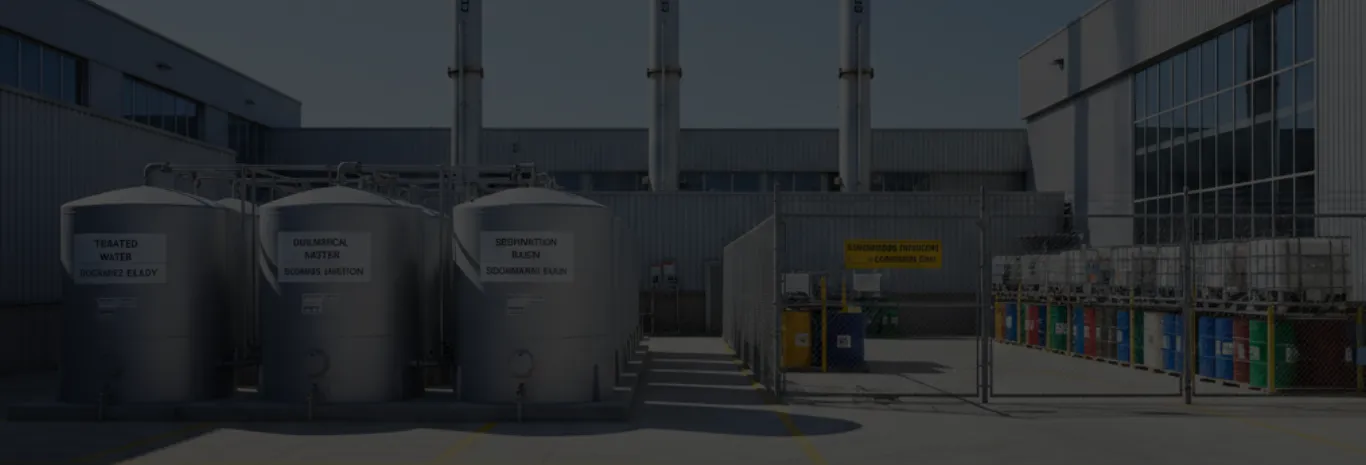
Safeguard Operations Through Proactive Environmental Stewardship
Protect your environmental standing through compliance audits that identify regulatory gaps and establish sustainable practices meeting environmental obligations while supporting operational continuity and stakeholder confidence.

Environmental Compliance Audits in India
Environmental compliance audits in India are increasingly critical as regulatory enforcement tightens across air emissions, water discharge, and hazardous waste management. Government data indicates that around 18% of highly polluting industries have not fully complied with environmental standards, while industrial sources contribute nearly half of urban pollution. Regulatory frameworks, including the Environment Protection Act, 1986, Water Act, 1974, Air Act, 1981, and Hazardous Waste Management Rules, create multi-layered compliance obligations enforced by CPCB, State Pollution Control Boards, and the National Green Tribunal. Non-compliance can lead to penalties, consent cancellation, plant shutdowns, and legal liabilities for occupiers and directors.
IMARC Engineering provides environmental compliance audit services for manufacturing, chemical, pharmaceutical, food processing, and industrial facilities across India. Services cover air emission compliance against consent conditions, effluent quality monitoring as per CPCB/SPCB discharge norms, hazardous waste management and manifest verification, CEMS data integrity review, environmental clearance condition tracking, and ESG reporting alignment for BRSR requirements, helping organizations ensure compliance, avoid enforcement risks, and strengthen environmental governance.
Our Comprehensive Approach to Environmental Compliance Audits
Our audit methodology brings together regulatory expertise, facility assessments, and documentation reviews to evaluate environmental compliance. This approach ensures we identify regulatory gaps, operational risks, and improvement opportunities while strengthening your organization’s capabilities.


Regulatory Applicability & Permit Review
We identify applicable environmental regulations, review permit requirements, evaluate authorization status, assess compliance obligations, and determine gaps that need attention or permit modifications.

Facility Inspection & Operational Assessment
We conduct detailed facility walkthroughs, examine air emission sources, evaluate wastewater discharge practices, assess waste management procedures, and review hazardous material handling compliance

Documentation Review & Record Verification
We evaluate monitoring records, review compliance reports, verify recordkeeping practices, assess training documentation, and examine environmental management system documentation against regulatory requirements.

Gap Analysis & Improvement Roadmap Development
We identify compliance deficiencies, prioritize remediation based on regulatory risk, develop corrective action plans, provide implementation guidance, and establish monitoring systems to prevent future violations.
Why Choose IMARC Engineering for Environmental Compliance Audits in India?
Our approach combines regulatory knowledge, technical expertise, and practical implementation experience to deliver actionable compliance improvements. We balance regulatory requirements with operational realities while building environmental management capabilities that support both compliance obligations and sustainability objectives.

Multi-Regulation Compliance Assessment
Environmental compliance for Indian manufacturing facilities involves simultaneous obligations under the Environment Protection Act 1986, the Water (Prevention and Control of Pollution) Act 1974, the Air (Prevention and Control of Pollution) Act 1981, the Hazardous Waste (Management and Transboundary Movement) Rules 2016, the Solid Waste Management Rules 2016, the EIA Notification 2006, and the conditions attached to the facility’s specific Consent to Establish and Consent to Operate, each administered by CPCB and state PCBs with different documentation requirements, inspection protocols, and enforcement mechanisms. A compliance gap under any single framework can trigger enforcement action regardless of compliance status under others. IMARC Engineering’s environmental compliance audits assess adherence to every applicable regulatory framework simultaneously, producing a consolidated compliance status that maps every gap to its specific regulatory obligation and enforcement consequence rather than assessing each framework in isolation.

Consent Condition-Specific Assessment
Environmental compliance standards for Indian manufacturing facilities are not defined by general national norms alone but by the specific conditions of the facility’s Consent to Establish and Consent to Operate issued by the state PCB, which may impose stricter discharge limits, additional monitoring requirements, ZLD obligations, or specific pollution control equipment standards than the national CPCB baseline. A facility that monitors its environmental performance against general CPCB discharge norms without verifying its specific consent conditions may be non-compliant with stricter state PCB conditions that it is not aware of, creating enforcement exposure it does not know it carries. IMARC Engineering’s environmental compliance audit begins with a consent condition analysis that maps every specific obligation in the facility’s current CTE and CTO against the facility’s actual environmental management practices, ensuring that compliance is assessed against the facility’s actual legal obligations rather than general national standards.

CEMS Data Integrity and Online Monitoring Compliance Assessment
Continuous Emission Monitoring Systems are mandatory for specified categories of highly polluting industries under CPCB’s online monitoring requirements, with CEMS data transmitted directly to the CPCB’s Central Pollution Control Board portal and state PCB servers in real time. Facilities with CEMS installations face a specific compliance risk that arises not only from actual emission exceedances but from CEMS data integrity failures, calibration lapses, instrument malfunctions, data transmission gaps, and data substitution practices that create non-compliance findings in CPCB’s data analysis even when actual emissions are within consent limits. IMARC Engineering’s environmental audit includes a dedicated CEMS data integrity assessment, reviewing calibration frequency against CPCB CEMS guidelines, instrument performance records, data capture rates against the minimum requirement, and data substitution practices, identifying CEMS compliance risks before they generate CPCB enforcement notices based on data quality rather than actual emission performance.

NGT Compliance Risk Assessment
The National Green Tribunal’s environmental enforcement jurisprudence in India has progressively expanded the personal liability of company directors, manufacturing occupiers, and senior management for environmental violations, with NGT orders directing personal financial penalties against responsible officers and, in serious cases, recommending criminal prosecution under the Environment Protection Act. The financial penalties imposed by NGT orders on non-compliant facilities have increased substantially over recent PAT cycles, with compensation for environmental damage ordered against polluting industries in addition to corrective action requirements. Environmental compliance audits that proactively identify and address violations before they reach the NGT’s attention through CPCB or citizen complaints protect not only the company’s operational continuity but its directors’ and officers’ personal financial and legal position. IMARC Engineering assesses compliance risk from an NGT enforcement perspective, identifying the violations most likely to attract NGT attention and prioritising remediation accordingly.

ESG Environmental Disclosure Documentation
Indian listed companies are required under SEBI’s Business Responsibility and Sustainability Report framework to disclose environmental performance data including air and water emissions, waste generation, water consumption, and environmental compliance status. Manufacturing subsidiaries and facilities of internationally listed or financed companies face additional environmental disclosure requirements under GRI Standards, CDP Climate and Water questionnaires, and IFC Performance Standard 3 environmental assessment obligations. Environmental compliance audit findings directly affect the accuracy and credibility of BRSR and international ESG disclosures because a manufacturing facility that self-reports environmental compliance without independent audit verification creates disclosure risk if undisclosed violations are subsequently identified by regulators or third parties. IMARC Engineering structures environmental compliance audit outputs to support BRSR environmental data preparation, IFC PS3 compliance documentation, and GRI-standard environmental performance reporting simultaneously with statutory compliance verification.

Hazardous Waste Audit and Manifest Verification
Hazardous waste management has emerged as the highest enforcement-intensity category of Indian environmental compliance, with CPCB and state PCB inspectors specifically auditing hazardous waste generation records, authorisation currency, storage facility compliance with HWM Rules 2016 design standards, manifest issuance and reconciliation for each consignment, TSDF disposal certificate collection, and annual return filing completeness. The combination of criminal liability exposure under the Environment Protection Act for illegal hazardous waste dumping, NGT’s demonstrated willingness to order facility closure for hazardous waste violations, and CPCB’s online hazardous waste tracking system that creates a verifiable compliance record makes hazardous waste management one of the highest-consequence environmental compliance categories for Indian manufacturers. IMARC Engineering’s environmental audit includes a comprehensive hazardous waste compliance assessment covering every element of HWM Rules 2016 obligations, from waste categorisation and authorisation through storage, manifest, transport, and disposal documentation.
Environmental Compliance Audits Across Key Sectors in India
IMARC Engineering delivers multi-regulation environmental compliance assessment, consent condition gap analysis, CEMS data integrity review, NGT risk assessment, ESG disclosure documentation, and hazardous waste audit across India’s most active manufacturing sectors.
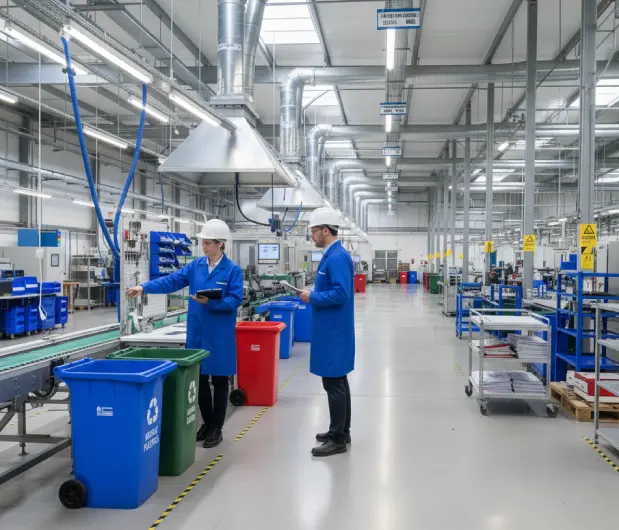
Environmental compliance audits for pharmaceutical manufacturing facilities across Hyderabad, Baddi, Ahmedabad, and Aurangabad clusters. CPCB and state PCB consent condition compliance assessment, ZLD system performance verification for CPCB-notified pharmaceutical clusters, HWM Rules 2016 hazardous waste audit including solvent waste and API process residue management, air emission compliance for solvent vapour and process exhaust, CEMS data integrity review, and BRSR environmental disclosure documentation.
Environmental compliance audits for food processing facilities across Punjab, Maharashtra, and Karnataka. State PCB effluent discharge consent condition compliance for high-BOD dairy and food processing wastewater, SWM Rules 2016 organic waste management compliance, FSSAI-linked environmental hygiene compliance integration, air emission compliance for boiler stacks and spray dryer exhaust, annual environmental return filing verification, and ESG environmental performance documentation for food sector BRSR reporting.
Environmental compliance audits for chemical manufacturing facilities in Gujarat’s Dahej, Ankleshwar, and Vapi industrial corridors. CPCB and state PCB CTO condition compliance for multi-pollutant chemical wastewater, air emission compliance for process exhaust, acid mist, and toxic vapour stacks, CEMS data integrity review for highly polluting industry category installations, HWM Rules 2016 scheduled chemical waste audit, ZLD compliance verification, NGT order compliance assessment, and IFC Performance Standard 3 environmental compliance documentation.
Environmental compliance audits for FMCG manufacturing facilities. State PCB effluent discharge compliance for surfactant and fragrance-containing wastewater, air emission compliance for boiler stacks and spray drying operations, HWM Rules 2016 audit for solvent and chemical waste streams, Plastic Waste Management Rules EPR compliance status assessment, SWM Rules 2016 packaging waste management compliance, and BRSR environmental disclosure documentation for FMCG manufacturers listed or supplying listed entities.
Environmental compliance audits for agrochemical manufacturing facilities in PESO-notified chemical zones. CPCB ZLD mandate compliance for pesticide manufacturing wastewater with persistent organic pollutants, air emission compliance for chlorine, HCl, and toxic organic vapour stacks, HWM Rules 2016 audit for pesticide-contaminated waste streams requiring high-temperature incineration disposal, CEMS data integrity for online monitoring-mandated agrochemical facilities, NGT order compliance assessment for pesticide manufacturing category, and IFC PS3 environmental compliance for internationally financed facilities.
Environmental compliance audits for medical device manufacturing facilities. State PCB consent condition compliance for chemical laboratory and cleaning wastewater, Biomedical Waste Management Rules 2016 compliance for manufacturing quality testing laboratory infectious waste, HWM Rules 2016 solvent waste audit, air emission compliance for sterilisation gas exhaust, SWM Rules 2016 manufacturing waste management, and ESG environmental compliance documentation for PLI medical devices scheme sustainability reporting.
Environmental compliance audits for heavy manufacturing facilities in MIDC, GIDC, SIDCO, and RIICO industrial areas. State PCB consent condition compliance for metal finishing, painting, and industrial process wastewater, HWM Rules 2016 audit for heavy metal sludge, spent cutting fluids, and electroplating waste, air emission compliance for paint spray booth and welding fume exhaust, CEMS data integrity for designated consumer industrial facilities, SWM Rules 2016 industrial waste management compliance, and BRSR environmental disclosure for listed industrial manufacturers.
Explore Related Services

Environmental Impact and Sustainability Studies
From Environmental Impact to Sustainable Operations in India
Learn more

Green Building Certification Support (LEED & IGBC)
Building Sustainable Facilities Through Green Certification
Learn more

CAPA (Corrective and Preventive Action) Support
Strengthen Quality Systems Through Structured CAPA Implementation
Learn more
Frequently Asked Questions: Environmental Compliance Audits in India
We have compiled answers to common questions investors and manufacturing leaders ask about environmental compliance audits. These insights address audit scope, investment requirements, liability implications, regulatory expectations, and strategic value of proactive environmental management.
Trusted by Industry Leaders
We partner with global enterprises and ambitious businesses across sectors to deliver operational excellence, strategic insights, and sustainable growth through integrated solutions.








Success in Their Words
Real feedback from clients across industries. Discover how our solutions delivered measurable impact and operational excellence.

I wanted to express my sincere appreciation for your efforts in handling this matter. Your dedication and commitment have been truly commendable, and it is evident that you have put in tremendous hard work and expertise into resolving the issues at hand. We are greatly interested in continuing our collaboration with you in the future, as your professionalism and reliability have made you a trusted partner. Thank you once again for your invaluable contribution. We look forward to strengthening our partnership ahead.

It has been a pleasure working with the IMARC team. The insights provided were structured, clear, and highly valuable, helping us strengthen both our technical and financial planning with confidence. We deeply appreciate the team’s professionalism, responsiveness, and attention to detail throughout the engagement. Every requirement was well understood and effectively incorporated, resulting in a comprehensive and actionable output. Overall, our experience has been excellent, and I would gladly recommend IMARC to organizations seeking a reliable research partner.

Your service is truly exceptional. Working with the IMARC team has been a seamless and professional experience. The clarity of communication, responsiveness to queries, and consistent support at every stage made the entire engagement highly efficient. The insights shared were well-structured, practical, and perfectly aligned with our requirements, helping us make informed decisions with confidence. Overall, the dedication and professionalism demonstrated by your team stand out, and I would be glad to recommend IMARC as a reliable and trustworthy research partner.

IMARC did an outstanding job in preparing our study. They were punctual, precise, and consistently responsive throughout the entire process. The team delivered all the data we required in a clear, well-organized, and highly professional format. Their strong attention to detail, combined with their ability to meet every deadline without compromising quality, truly set them apart. Overall, their reliability and commitment made them an exceptional partner for our project, and we would gladly work with them again in the future.

IMARC made the whole process incredibly easy from start to finish. Everyone I interacted with via email was polite, professional, and straightforward to deal with, always keeping their promises regarding delivery timelines and remaining consistently solutions-focused. From my very first contact, I appreciated the professionalism and support shown by the entire IMARC team. I highly recommend IMARC to anyone seeking timely, affordable, and reliable information or advice. My experience with IMARC was excellent, and I truly cannot fault any aspect of it.

I’d like to express my sincere gratitude for the excellent work you accomplished with the study. Your ability to quickly understand our requirements and deliver high-quality results under tight timelines truly reflects your expertise, exceptional work ethic, and unwavering commitment to your customer’s success. The professionalism and responsiveness you demonstrated throughout the process made a significant difference. Our entire team and company are incredibly thankful for your dedication, reliability, and support. Once again, thank you for your outstanding contribution.
Speak to Our Environmental Compliance Audit Team
Whether you are a pharmaceutical, food, chemical, FMCG, agrochemical, medical device, or industrial manufacturer, IMARC Engineering provides end-to-end environmental compliance and audit support. This includes consent condition assessment, hazardous and solid waste audits, CEMS data integrity review, and ESG disclosure aligned with Central Pollution Control Board, state PCBs, and applicable rules, ensuring regulatory compliance, risk mitigation, and sustained operational continuity across your manufacturing operations in India.