
Maximizing Asset Value Through Strategic Equipment Management
Optimize capital investments through comprehensive equipment lifecycle assessments that inform replacement timing, maintenance strategies, and capacity planning decisions supporting asset management excellence, operational reliability, and financial optimization.

Equipment Lifecycle Assessment in India
Equipment lifecycle assessment in India is becoming essential as manufacturers aim to improve asset reliability, control maintenance costs, and optimize capital investments. Industrial equipment typically accounts for a significant share of total project CapEx, and industry benchmarks indicate that unplanned downtime can reduce plant productivity by 5–20% while increasing maintenance costs by significantly In India, where manufacturing efficiency and cost competitiveness are critical under initiatives like Make in India and PLI schemes, structured asset lifecycle planning is gaining importance.
An equipment lifecycle assessment evaluates asset condition, performance trends, maintenance history, and remaining useful life across all lifecycle stages, from installation and operation to refurbishment or replacement. Without this visibility, companies often face premature failures, inefficient maintenance spending, and unplanned capital expenditure.
IMARC Engineering provides equipment lifecycle assessment services in India through engineering-led diagnostics, reliability analysis, and lifecycle cost modelling. We assess mechanical, electrical, and process assets to identify performance gaps, extend asset life, and enable predictive maintenance strategies, helping organizations transition from reactive operations to data-driven asset management while improving uptime and long-term return on investment.
Our Strategic Approach to Equipment Lifecycle Assessment
Our systematic assessment methodology combines condition evaluation, performance analysis, and financial modeling to inform equipment management decisions. This proven four-phase framework addresses every critical dimension affecting asset lifecycle optimization and investment planning.

Equipment Inventory and Data Collection
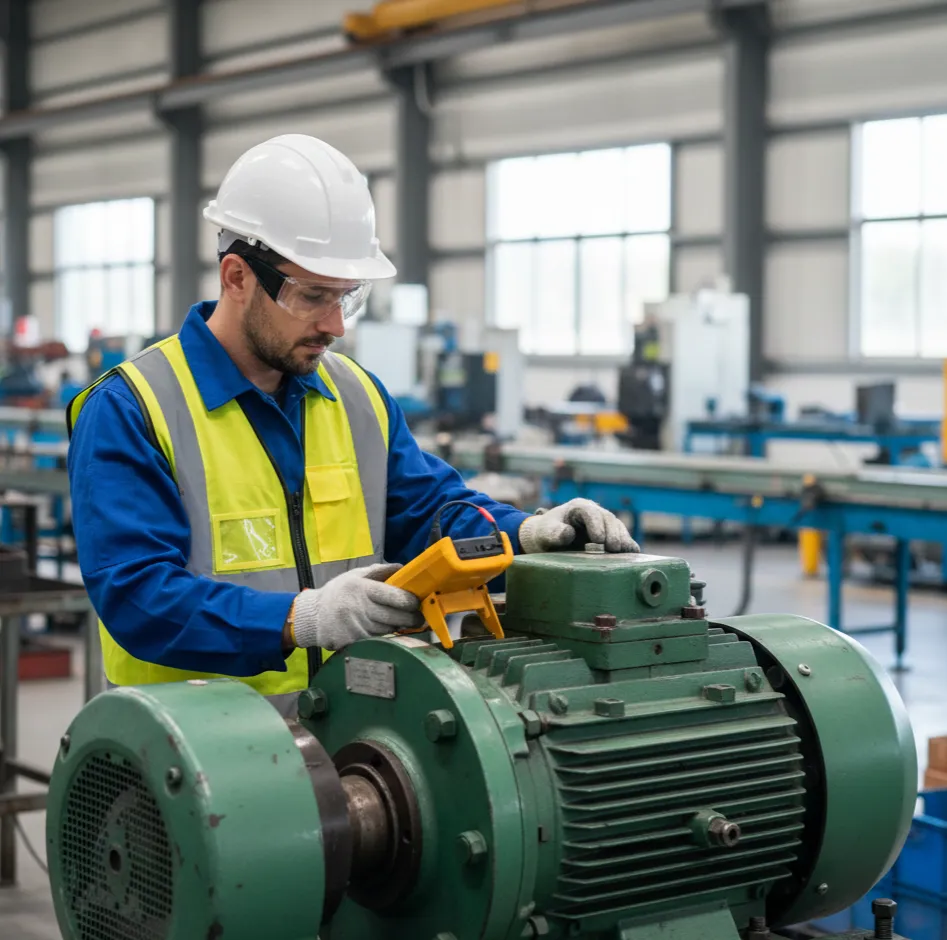
Cataloging critical equipment, gathering asset information including age and specifications, reviewing maintenance histories, and collecting performance data establishing assessment baselines.

Condition Assessment and Performance Evaluation
Conducting physical inspections, performing diagnostic testing, analyzing operational performance, and evaluating maintenance effectiveness determining current equipment health and identifying deterioration patterns.

Remaining Life Projection and Risk Analysis
Estimating remaining useful life, projecting failure probabilities, quantifying operational risks, and evaluating consequence severity supporting prioritized capital planning and maintenance investment decisions.

Recommendations and Strategic Planning Support
Delivering comprehensive assessment reports with replacement recommendations, maintenance optimization strategies, capital planning roadmaps, and total cost analysis supporting informed asset management decisions.
Why Choose IMARC Engineering for Equipment Lifecycle Assessment in India?
Our comprehensive assessment approach combines technical evaluation, reliability analysis, and financial modeling to optimize asset management. This integrated methodology addresses every dimension affecting equipment lifecycle decisions and long-term value maximization.

Engineering-Led Condition Assessment
Equipment lifecycle assessments conducted from maintenance records alone, without physical inspection and engineering analysis of the specific operating conditions the equipment has experienced, produce remaining useful life estimates that are systematically inaccurate in India’s manufacturing environment. Indian ambient conditions including summer temperatures exceeding 45°C in Gujarat, Rajasthan, and Maharashtra, high humidity in coastal manufacturing zones, and dust exposure in industrial corridors accelerate equipment degradation at rates that standard international lifecycle benchmarks do not reflect. Indian grid power quality with voltage sags and harmonic distortion creates insulation degradation and bearing failure patterns in electrical equipment that European lifecycle models do not predict. IMARC Engineering conducts lifecycle assessments with direct physical inspection, condition monitoring measurement, and engineering analysis calibrated to the actual operating conditions the equipment has experienced in India, producing remaining useful life estimates and replacement timing recommendations that reflect Indian operating reality rather than imported benchmark assumptions.

Financial Lifecycle Cost Modelling
Equipment replacement or refurbishment decisions made without lifecycle cost modelling consistently produce financially suboptimal outcomes, either retaining equipment beyond the economic point of replacement where escalating maintenance cost exceeds the capital cost of replacement, or replacing equipment prematurely before its economic service life is exhausted. A manufacturing manager who decides to replace ageing equipment based on increasing breakdown frequency without modelling the total lifecycle cost comparison between continued maintenance and replacement may invest capital in new equipment that delivers negligible reliability improvement over a thoroughly refurbished existing asset at half the cost. IMARC Engineering’s lifecycle assessment includes quantitative lifecycle cost modelling that calculates the net present value of continued operation against replacement for each assessed asset, providing the financial basis for CapEx timing decisions that maximises return on manufacturing asset investment over the facility’s planning horizon.

Statutory Compliance Assessment
Manufacturing equipment in India faces statutory inspection and certification obligations under multiple regulatory frameworks whose lapse creates both production and legal risk. The Indian Boilers Regulations require periodic inspection and renewal of IBR certificates for registered boilers and pressure vessels, with lapsed certificates preventing legal steam system operation. The Factories Act 1948 and state factory rules impose periodic inspection certification requirements for hoists, lifts, pressure receivers, and electrical installations. PESO regulations require periodic inspection of petroleum storage and hazardous gas handling installations. Lifting equipment including cranes and materials handling equipment requires periodic load testing and certification. IMARC Engineering’s equipment lifecycle assessment maps every statutory inspection obligation for the assessed equipment inventory, identifies lapsed or approaching-expiry certifications, and provides a compliance remediation plan that prevents statutory inspection failures from creating regulatory exposure and production interruptions.

Remaining Useful Life Assessment Enabling Proactive Replacement Planning
Remaining useful life assessment quantifies how much productive service life an equipment item has left before its reliability, performance, or maintenance cost profile makes continued operation economically or operationally unviable, enabling planned replacement to be budgeted, scheduled, and executed before the equipment fails in service and creates an unplanned production stoppage. In Indian manufacturing facilities with equipment inventories that span a wide age range, from recently installed equipment to assets operating twenty or more years beyond their original design life, remaining useful life assessment provides the asset intelligence required for capital budgeting that anticipates replacement requirements across a five to ten year horizon rather than reacting to individual equipment failures as they occur. IMARC Engineering’s remaining useful life assessment combines physical condition inspection, performance trend analysis from operating data, and reliability engineering methodology to estimate remaining life for each asset with engineering justification rather than rule-of-thumb age-based assumptions.

Refurbishment Versus Replacement Decision Support
One of the highest-value outputs of equipment lifecycle assessment is the refurbishment versus replacement analysis that provides manufacturing investors and plant managers with an objective, engineering-based evaluation of whether aged equipment warrants capital investment in major overhaul or should be replaced with new equipment. This decision is frequently made on the basis of incomplete information, either a maintenance team’s attachment to familiar equipment drives a refurbishment recommendation that does not account for the full refurbishment cost and post-refurbishment reliability improvement, or a capital equipment salesperson’s presentation of new technology capabilities drives a replacement decision that does not account for the residual productive value in the existing asset. IMARC Engineering’s refurbishment versus replacement analysis quantifies the technical scope and capital cost of refurbishment required to restore specified performance, models the post-refurbishment reliability improvement and remaining life extension, and compares the total cost of each option over the decision horizon against the production value at risk during each option’s execution.

PLI Scheme and Lender Investment Documentation
Equipment lifecycle assessments generate asset condition and performance data that directly supports two financial documentation requirements common in Indian manufacturing investment contexts. For manufacturing facilities with PLI scheme investment commitments, lifecycle assessment reports provide the asset condition evidence base for investment planning, demonstrating whether existing equipment meets the PLI scheme’s effective manufacturing capacity requirements or requires capital investment to achieve committed production thresholds, and documenting the basis for CapEx requirements included in PLI investment plans. For manufacturing facilities seeking working capital or term loan financing from Indian commercial banks or development finance institutions, lender technical advisors require asset condition assessments that verify the productive value of manufacturing equipment proposed as security or included in project financials. IMARC Engineering prepares lifecycle assessment reports structured to meet both PLI scheme investment documentation requirements and lender technical advisor assessment standards.
Equipment Lifecycle Assessment Across Key Sectors in India
IMARC Engineering delivers engineering-led condition assessment, lifecycle cost modelling, statutory compliance mapping, remaining useful life analysis, refurbishment versus replacement evaluation, and PLI and lender investment documentation across India’s most active manufacturing sectors.

Lifecycle assessment for pharmaceutical manufacturing equipment including tablet presses, granulators, coating equipment, autoclave and clean steam systems, and HVAC infrastructure across Hyderabad, Baddi, and Ahmedabad clusters. CDSCO Schedule M qualification status assessment, IBR compliance status for autoclave and pressure systems, remaining useful life and refurbishment versus replacement analysis for GMP-critical equipment, and lifecycle documentation supporting CDSCO inspection preparation and PLI pharmaceutical scheme CapEx planning.
Lifecycle assessment for food processing equipment including pasteurisers, homogenisers, UHT systems, filling lines, and cold chain refrigeration across Punjab, Maharashtra, and Karnataka agricultural processing zones. FSSAI hygienic design compliance status assessment, refrigeration system lifecycle and refrigerant compliance evaluation, PLI food processing scheme production capacity lifecycle verification, and Factory Act inspection certification compliance status for food processing facility equipment inventories.
Lifecycle assessment for chemical manufacturing equipment including reactors, distillation columns, centrifuges, heat exchangers, and rotating equipment in Gujarat’s Dahej, Ankleshwar, and Vapi industrial corridors. IBR pressure vessel and boiler compliance and remaining life assessment, PESO installation inspection status, corrosion and erosion condition monitoring for equipment in aggressive chemical service, lifecycle cost modelling for capital-intensive chemical process equipment, and refurbishment versus replacement analysis for aged chemical plant assets.
Lifecycle assessment for FMCG manufacturing equipment including high-speed filling lines, packaging machinery, labelling equipment, and ancillary utilities. OEE-linked lifecycle performance trend analysis identifying equipment approaching economic replacement threshold, spare parts obsolescence assessment for equipment with discontinued OEM support, lifecycle cost modelling supporting capital budgeting for manufacturing line refurbishment or replacement, and asset condition documentation for FMCG manufacturing facility sale or acquisition due diligence.
Lifecycle assessment for agrochemical manufacturing equipment in PESO-notified chemical zones. PESO installation inspection status and remaining certification validity, corrosion condition assessment for equipment in contact with aggressive agrochemical process streams, IBR compliance status for steam-heated process equipment, toxic service mechanical seal lifecycle assessment, and capital planning documentation for agrochemical facility expansion or acquisition investment decisions.
Lifecycle assessment for medical device manufacturing equipment including CNC machining centres, injection moulding machines, cleanroom HVAC, and metrology equipment. ISO 13485 qualification status and revalidation requirement assessment, CDSCO manufacturing facility equipment condition documentation, calibration and traceability compliance status for measurement equipment, remaining useful life assessment for precision manufacturing equipment, and lifecycle documentation supporting PLI medical devices scheme investment threshold planning.
Lifecycle assessment for heavy industrial manufacturing equipment in MIDC, GIDC, SIDCO, and RIICO industrial areas. Crane, hoist, and materials handling equipment Factory Act certification compliance status, CNC machine tool and heat treatment furnace condition and remaining life assessment, BEE energy efficiency performance lifecycle trend analysis, IBR compliance for pressure vessels and compressed air systems, and lifecycle cost modelling supporting CapEx planning for industrial facility upgrade or acquisition.
Explore Related Services

Digital Documentation & ERP Integration
Bridging Operational Excellence with Enterprise Intelligence
Learn more

Utility Cost and Energy Efficiency Audits
Transform Energy Expenses into Competitive Advantages
Learn more

On-Site Troubleshooting and Technical Support
Minimize Downtime with On-Site Technical Support in India
Learn more
Frequently Asked Questions: Equipment Lifecycle Assessment in India
We’ve compiled answers to common questions investors, facility managers, and asset management professionals ask about equipment lifecycle assessment. These insights address critical concerns around assessment methodologies, investment considerations, decision frameworks, and strategic value delivery.
Trusted by Industry Leaders
We partner with global enterprises and ambitious businesses across sectors to deliver operational excellence, strategic insights, and sustainable growth through integrated solutions.










Success in Their Words
Real feedback from clients across industries. Discover how our solutions delivered measurable impact and operational excellence.

I wanted to express my sincere appreciation for your efforts in handling this matter. Your dedication and commitment have been truly commendable, and it is evident that you have put in tremendous hard work and expertise into resolving the issues at hand. We are greatly interested in continuing our collaboration with you in the future, as your professionalism and reliability have made you a trusted partner. Thank you once again for your invaluable contribution. We look forward to strengthening our partnership ahead.

It has been a pleasure working with the IMARC team. The insights provided were structured, clear, and highly valuable, helping us strengthen both our technical and financial planning with confidence. We deeply appreciate the team’s professionalism, responsiveness, and attention to detail throughout the engagement. Every requirement was well understood and effectively incorporated, resulting in a comprehensive and actionable output. Overall, our experience has been excellent, and I would gladly recommend IMARC to organizations seeking a reliable research partner.

Your service is truly exceptional. Working with the IMARC team has been a seamless and professional experience. The clarity of communication, responsiveness to queries, and consistent support at every stage made the entire engagement highly efficient. The insights shared were well-structured, practical, and perfectly aligned with our requirements, helping us make informed decisions with confidence. Overall, the dedication and professionalism demonstrated by your team stand out, and I would be glad to recommend IMARC as a reliable and trustworthy research partner.

IMARC did an outstanding job in preparing our study. They were punctual, precise, and consistently responsive throughout the entire process. The team delivered all the data we required in a clear, well-organized, and highly professional format. Their strong attention to detail, combined with their ability to meet every deadline without compromising quality, truly set them apart. Overall, their reliability and commitment made them an exceptional partner for our project, and we would gladly work with them again in the future.

IMARC made the whole process incredibly easy from start to finish. Everyone I interacted with via email was polite, professional, and straightforward to deal with, always keeping their promises regarding delivery timelines and remaining consistently solutions-focused. From my very first contact, I appreciated the professionalism and support shown by the entire IMARC team. I highly recommend IMARC to anyone seeking timely, affordable, and reliable information or advice. My experience with IMARC was excellent, and I truly cannot fault any aspect of it.

I’d like to express my sincere gratitude for the excellent work you accomplished with the study. Your ability to quickly understand our requirements and deliver high-quality results under tight timelines truly reflects your expertise, exceptional work ethic, and unwavering commitment to your customer’s success. The professionalism and responsiveness you demonstrated throughout the process made a significant difference. Our entire team and company are incredibly thankful for your dedication, reliability, and support. Once again, thank you for your outstanding contribution.
Speak to Our Equipment Lifecycle Assessment Team
Whether you are a manufacturer or investor, IMARC Engineering provides equipment condition assessment and lifecycle decision support across sectors. This includes qualification status review, statutory compliance aligned with Central Drugs Standard Control Organization, Food Safety and Standards Authority of India, IBR and PESO, lifecycle cost modelling, and refurbishment vs. replacement analysis, enabling informed CapEx decisions, compliance assurance, and optimized asset performance.