
Visualizing Manufacturing Facilities Before Breaking Ground
Create accurate digital twins and intelligent 3D models of manufacturing facilities in India, enabling clash detection, construction sequencing, equipment layout validation, and process flow simulation before capital is committed to physical construction.

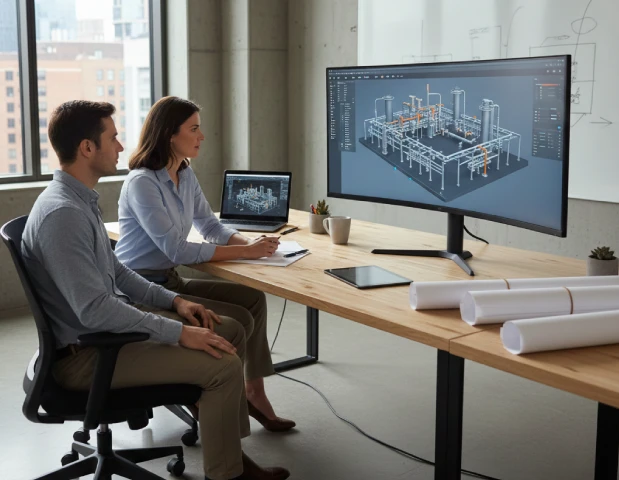
3D Modelling and Simulation (Digital Twin) in India
A digital twin is an intelligent, data-driven virtual replica of a manufacturing facility, integrating architectural, structural, MEP, and process design data into a single model that can be interrogated, simulated, and validated before physical construction begins. Studies show that BIM has been demonstrated to speed up project delivery by 20–50%, minimise rework by up to 40%, and lower construction costs by 10–20%, making virtual validation one of the highest-return investments in any manufacturing project.
IMARC Engineering’s 3D modelling and digital twin services in India cover BIM-based facility modelling, clash detection and resolution, construction sequencing simulation, equipment layout optimisation, process flow visualisation, and lifecycle asset management, delivered across pharmaceuticals, food processing, chemicals, and FMCG manufacturing projects.
For Indian manufacturing projects, digital twin models directly support regulatory submissions, providing accurate layout drawings for Factory Act approvals, fire NOC applications, environmental clearance submissions, and CDSCO or FSSAI facility licensing documentation that require dimensioned, coordinated facility drawings prepared to regulatory standards.
Our Digital Engineering Approach to 3D Modeling and Simulation
Our systematic digital engineering methodology integrates intelligent modeling, simulation analysis, and stakeholder collaboration to deliver comprehensive digital twin solutions. This proven four-phase approach ensures accurate virtual representations supporting design optimization and project success.
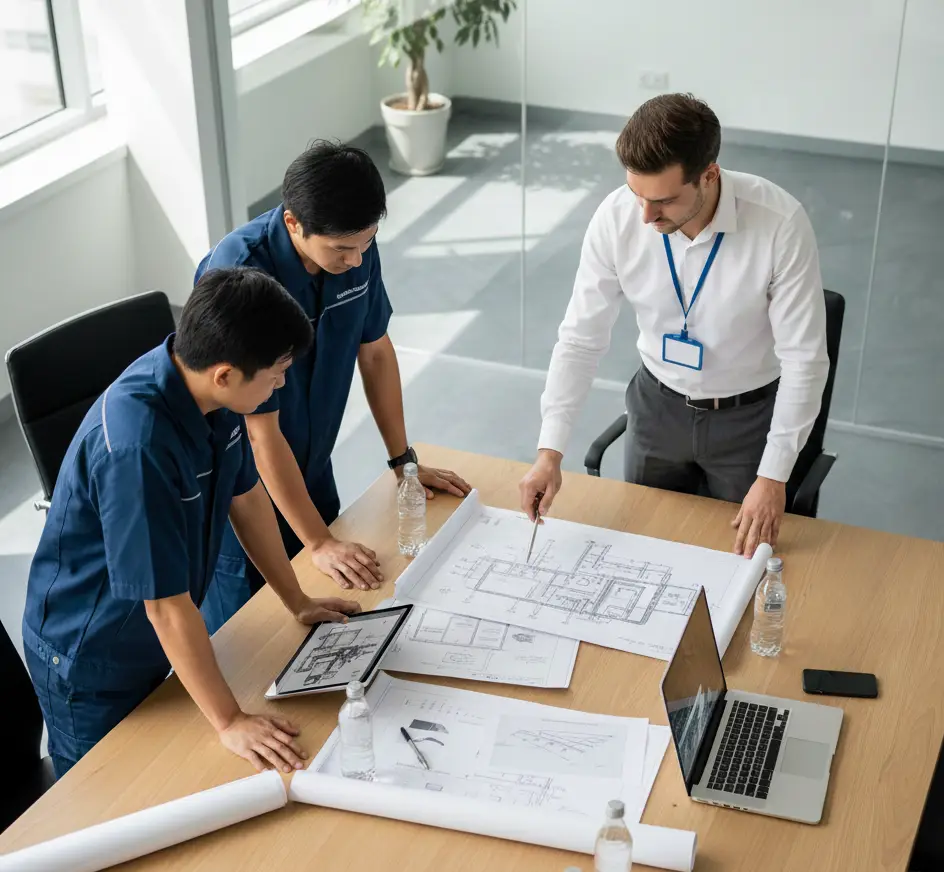

Digital Data Integration & Model Development
Gathering design documents, equipment specifications, process requirements, and site constraints to develop intelligent 3D models incorporating geometric, functional, and operational information.

Clash Detection & Design Optimization
Performing comprehensive interference checking, identifying design conflicts, optimizing equipment layouts, evaluating maintenance access, and refining spatial arrangements before construction.

Simulation & Performance Analysis
Conducting process flow simulations, analyzing operational scenarios, evaluating ergonomics and safety, visualizing construction sequences, and assessing facility performance under various conditions.

Visualization & Stakeholder Collaboration
Creating immersive walkthroughs, developing training simulations, supporting design reviews, facilitating stakeholder approvals, and maintaining living digital models throughout project execution.
Why Choose IMARC Engineering for 3D Modelling and Simulation Services in India?
Our integrated digital engineering approach combines advanced modeling technologies with manufacturing expertise to deliver intelligent digital twin. This comprehensive methodology ensures accurate virtual representations supporting design validation, construction coordination, and operational planning.

Fully Integrated Multi-Discipline BIM Models
The value of a digital twin is directly proportional to the completeness and accuracy of the data integrated within it. A BIM model that captures architectural geometry but excludes structural elements, process equipment, or MEP service routing provides clash detection capability for only a fraction of the inter-system conflicts that generate construction-stage rework. The majority of costly construction clashes in Indian manufacturing facility projects occur at the interfaces between structural members and MEP service routes, between process equipment and civil infrastructure, and between utility distribution systems and cleanroom ceiling and wall configurations. IMARC Engineering develops fully integrated multi-discipline BIM models that incorporate architectural, structural, civil, HVAC, electrical, plumbing, process piping, and equipment data within a single federated model environment, enabling comprehensive clash detection across every discipline interface, and providing a virtual facility that accurately represents the as-designed construction before a single foundation is excavated.

Manufacturing Process Intelligence Embedded in the Digital Model
A digital twin for a manufacturing facility is fundamentally different from a digital twin for a commercial building because the manufacturing facility’s spatial configuration, structural design, utility routing, and environmental systems are all determined by the process it houses. A pharmaceutical cleanroom digital twin must represent the ISO classification boundaries, pressure cascade zones, personnel and material flow paths, and HVAC system configuration as active model data, not simply as visual geometry. A chemical manufacturing digital twin must represent hazardous area classification zones, secondary containment boundaries, and process piping routing within the structural frame as queryable model attributes. IMARC Engineering embeds manufacturing process data, including equipment operating envelopes, maintenance access zones, utility connection points, GMP flow path requirements, and hazardous area classifications, directly into the digital twin model, enabling process-informed clash detection, layout optimisation, and regulatory compliance verification that a geometry-only model cannot provide.

Clash Detection and Resolution Before Construction Commitment
Construction rework in Indian manufacturing facility projects, arising from clashes between structural members and MEP service routes, equipment that cannot be installed as designed due to access conflicts, or utility connections that conflict with structural elements, represents one of the most significant and most preventable sources of cost overrun and schedule delay. The cost of resolving a clash in the digital model at the design stage is a small fraction of the cost of resolving the same clash in the field after structural work is complete and MEP installation has commenced. IMARC Engineering conducts systematic clash detection across all discipline interfaces within the federated BIM model, classifying identified clashes by severity and discipline ownership, and coordinating resolution with the relevant design disciplines before construction documentation is issued. Clash detection reports with visual clash locations, severity classifications, and resolution status tracking are provided as structured deliverables, enabling project managers to monitor design coordination progress and confirm that all critical clashes are resolved before construction tender packages are released.

Regulatory-Compliant Drawing Production Directly
Manufacturing facility construction in India requires building plan approval drawings, Factory Act inspection documentation, fire NOC application drawings, environmental clearance facility plans, and CDSCO or FSSAI facility layout submissions, each requiring drawings at specific scales, with specific annotations, dimensioning standards, and content requirements. Producing these regulatory submission drawings as separate manual drafting exercises from a 2D design basis is time-consuming, error-prone, and creates a documentation divergence risk when design changes are made after initial submission. IMARC Engineering produces all regulatory submission drawings directly from the federated 3D model, ensuring that building plan drawings, Factory Act inspection packages, fire NOC layouts, and CDSCO or FSSAI facility plans are always consistent with the current design, accurately dimensioned, and formatted to the submission standards of each regulatory authority. Model-extracted drawings are automatically updated when design changes are incorporated, eliminating the manual drawing revision process that creates inconsistency between submitted regulatory documentation and the current design intent.

Construction Sequencing Simulation for Schedule Optimisation
Construction sequencing for manufacturing facilities, particularly those with constrained site access, complex underground utility installations, and cleanroom construction within structural shells, requires a level of spatial and temporal planning that 2D schedule management tools cannot adequately support. Construction sequencing simulation within the digital twin environment enables the project team to visualise the construction programme as a time-phased 3D simulation, identifying spatial conflicts between concurrent construction activities, verifying that critical equipment can be installed before building envelope closure, confirming that large vessels and reactors can be moved into position before structural connections are made, and optimising the sequence of utility installation to minimise programme duration. IMARC Engineering’s construction sequencing simulations identify programme-critical sequencing issues before construction commencement, enabling the project team to adjust the construction programme, temporary works arrangements, and equipment delivery schedules to eliminate construction-phase delays before they occur.

Lifecycle Asset Management Support from the As-Built Digital Twin
The value of a manufacturing facility digital twin extends beyond the design and construction phase into the operational life of the facility, where the as-built model becomes the central data repository for asset management, maintenance planning, regulatory compliance documentation, and facility modification management. An as-built digital twin that accurately represents the installed facility, including equipment specifications, maintenance access requirements, utility connection details, spare parts data, and regulatory certification status for each asset, provides the operational team with a queryable facility database that replaces paper-based asset registers, incompatible maintenance management spreadsheets, and incomplete as-built drawing archives. IMARC Engineering delivers as-built digital twin models updated to reflect the constructed facility at handover, with asset data structures configured for integration with the client’s computerised maintenance management system, and with model access configured to support ongoing facility modification, regulatory inspection preparation, and capital planning for future expansion projects.
3D Modelling and Simulation Services Across Key Sectors in India
IMARC Engineering delivers BIM-based facility modelling, digital twin development, clash detection, construction sequencing simulation, and lifecycle asset management support across India’s most active manufacturing sectors
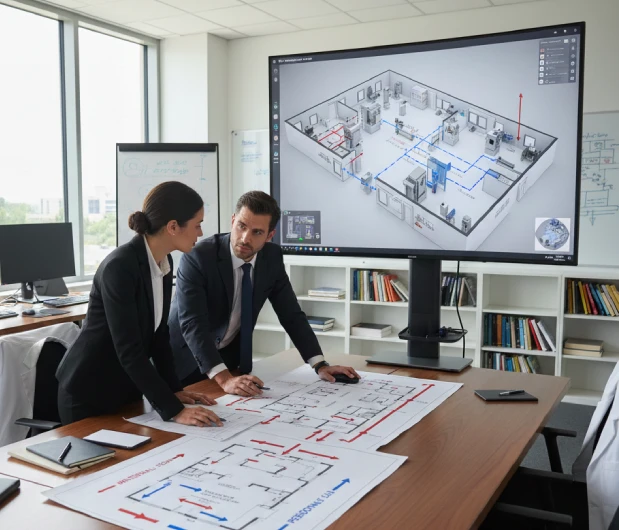
BIM-based digital twin development for GMP pharmaceutical manufacturing facilities integrating cleanroom ISO classification zone data, pressure cascade boundaries, personnel and material flow path analysis, and HVAC system configuration within the federated model. Clash detection across cleanroom structural, MEP, and process utility systems with GMP compliance verification of material flow segregation, cross-contamination prevention layouts, and personnel gowning route configurations. Regulatory layout drawings extracted from the model for CDSCO manufacturing licence applications, Factory Act inspection submissions, and fire NOC documentation. As-built model delivery supporting IQ documentation and ongoing GMP facility modification management.
3D facility modelling for food processing plants incorporating hygienic design zone classification, HACCP-based flow separation between raw and processed product areas, equipment layout optimisation for high-care and high-risk zone configurations, and drainage gradient verification for wash-down operational requirements. Clash detection between food processing equipment, structural elements, and sanitary drainage systems. Process flow simulation for raw material intake, processing, packaging, and cold store distribution sequences. Regulatory drawing production for FSSAI facility licensing submissions and building plan approval documentation.
Digital twin development for chemical manufacturing facilities with hazardous area classification zone data, secondary containment boundary models, process piping routing within structural constraints, and explosion-proof equipment placement verification integrated into the federated model. Clash detection across chemical process piping, structural steel, and electrical cable tray routes in congested plant areas. As-built model integration with process safety documentation for HAZOP study reference and CPCB environmental clearance facility plan submissions.
3D facility modelling for multi-product FMCG manufacturing facilities covering high-speed filling and packaging line equipment layout optimisation, materials flow simulation from raw material storage through production to finished goods dispatch, and warehouse racking configuration verification for structural loading compliance. Clash detection between packaging line conveyor systems, structural columns, and overhead MEP services. Regulatory drawing production for Factory Act submissions, fire NOC applications, and building plan approvals for FMCG facility construction and expansion projects.
Digital twin development for agrochemical manufacturing facilities incorporating hazardous area classification, toxic chemical containment zone modelling, and process safety exclusion zone verification within the 3D model environment. Clash detection across process piping, structural steel, and electrical systems in hazardous area zones with IS 5571 area classification compliance verification. Environmental clearance facility plan and site layout documentation produced from the digital twin model for SEAC and CEAC submission requirements.
BIM-based digital twin for medical device manufacturing cleanrooms integrating ISO 13485-aligned cleanroom classification data, vibration isolation zone modelling for precision manufacturing and metrology equipment, and validated system boundary identification within the federated model. Clash detection between cleanroom structural elements, HVAC distribution, and precision equipment maintenance access zones. Regulatory layout drawings for CDSCO Class B and C device manufacturing licence applications, CE marking technical file facility descriptions, and ISO 13485 audit facility documentation. As-built model delivery structured to support ongoing facility modification management within the ISO 13485 change control framework.
3D facility modelling for heavy industrial manufacturing plants covering crane gantry structural coordination, heavy equipment foundation integration, multi-level mezzanine platform layout optimisation, and large-span roof structure design verification. Clash detection between structural crane rails, roof structure members, and overhead MEP services in high-bay industrial buildings. Construction sequencing simulation for heavy equipment installation, including press, furnace, and CNC machine tool installation, verifying access routes and lifting crane positions before construction commencement. Factory Act inspection drawing packages and building plan approval documentation produced from the coordinated 3D model.
Frequently Asked Questions: 3D Modelling and Simulation Services in India
We have compiled answers to common questions investors, project managers, and facility owners ask about 3D Modeling and digital twin services. These insights address technology capabilities, implementation approaches, value delivery, and practical applications.
Trusted by Industry Leaders
We partner with global enterprises and ambitious businesses across sectors to deliver operational excellence, strategic insights, and sustainable growth through integrated solutions.











Success in Their Words
Real feedback from clients across industries. Discover how our solutions delivered measurable impact and operational excellence.

I wanted to express my sincere appreciation for your efforts in handling this matter. Your dedication and commitment have been truly commendable, and it is evident that you have put in tremendous hard work and expertise into resolving the issues at hand. We are greatly interested in continuing our collaboration with you in the future, as your professionalism and reliability have made you a trusted partner. Thank you once again for your invaluable contribution. We look forward to strengthening our partnership ahead.

It has been a pleasure working with the IMARC team. The insights provided were structured, clear, and highly valuable, helping us strengthen both our technical and financial planning with confidence. We deeply appreciate the team’s professionalism, responsiveness, and attention to detail throughout the engagement. Every requirement was well understood and effectively incorporated, resulting in a comprehensive and actionable output. Overall, our experience has been excellent, and I would gladly recommend IMARC to organizations seeking a reliable research partner.

Your service is truly exceptional. Working with the IMARC team has been a seamless and professional experience. The clarity of communication, responsiveness to queries, and consistent support at every stage made the entire engagement highly efficient. The insights shared were well-structured, practical, and perfectly aligned with our requirements, helping us make informed decisions with confidence. Overall, the dedication and professionalism demonstrated by your team stand out, and I would be glad to recommend IMARC as a reliable and trustworthy research partner.

IMARC did an outstanding job in preparing our study. They were punctual, precise, and consistently responsive throughout the entire process. The team delivered all the data we required in a clear, well-organized, and highly professional format. Their strong attention to detail, combined with their ability to meet every deadline without compromising quality, truly set them apart. Overall, their reliability and commitment made them an exceptional partner for our project, and we would gladly work with them again in the future.

IMARC made the whole process incredibly easy from start to finish. Everyone I interacted with via email was polite, professional, and straightforward to deal with, always keeping their promises regarding delivery timelines and remaining consistently solutions-focused. From my very first contact, I appreciated the professionalism and support shown by the entire IMARC team. I highly recommend IMARC to anyone seeking timely, affordable, and reliable information or advice. My experience with IMARC was excellent, and I truly cannot fault any aspect of it.

I’d like to express my sincere gratitude for the excellent work you accomplished with the study. Your ability to quickly understand our requirements and deliver high-quality results under tight timelines truly reflects your expertise, exceptional work ethic, and unwavering commitment to your customer’s success. The professionalism and responsiveness you demonstrated throughout the process made a significant difference. Our entire team and company are incredibly thankful for your dedication, reliability, and support. Once again, thank you for your outstanding contribution.
Speak to Our 3D Modelling and Simulation Team
Whether you are a pharmaceutical, food, chemical, FMCG, agrochemical, medical device, or industrial manufacturer, IMARC Engineering delivers integrated BIM and digital twin solutions tailored to your process, compliance, and operational needs. Our capabilities combine multi-discipline modelling, regulatory documentation aligned with authorities such as Central Drugs Standard Control Organization and Food Safety and Standards Authority of India, and advanced simulation for layout and process optimisation. We help reduce construction risk, accelerate approvals, and maximise lifecycle asset performance.