
Optimizing Production Through Strategic Equipment Selection
Select, specify, and procure the right manufacturing equipment in India with independent equipment selection and technical specification services covering technology assessment, capacity sizing, vendor evaluation, specification drafting, and acceptance testing protocols.


Equipment Selection and Technical Specification in India
Equipment selection and technical specification is the engineering process of identifying, evaluating, and documenting the machinery and systems required for a manufacturing facility, covering technology assessment, capacity sizing, vendor evaluation, and specification drafting, to ensure equipment procured meets process, quality, regulatory, and commercial requirements before purchase orders are placed.
IMARC Engineering’s equipment selection and technical specification services in India enable manufacturers, investors, and project developers in the pharmaceutical, food processing, chemicals, and FMCG industries to receive independent, vendor-independent advice on equipment selection. This helps them make informed decisions on their projects.
In India, equipment procurement carries specific risks and opportunities, including customs duty implications for imported equipment, EPCG scheme eligibility for duty-free capital goods imports, BIS mandatory certification for certain equipment categories, IBR compliance for pressure vessels and boilers, and PESO approval requirements for equipment handling hazardous materials. IMARC Engineering maps these regulatory and financial considerations into every equipment selection recommendation, ensuring procurement decisions reflect total cost of ownership rather than purchase price alone.
Our Equipment Selection Methodology
Our systematic equipment selection approach integrates production requirements analysis, technology evaluation, vendor assessment, and comprehensive specification development to identify optimal machinery solutions. This proven four-phase methodology ensures equipment selections meet performance objectives while supporting reliable operations and value optimization.
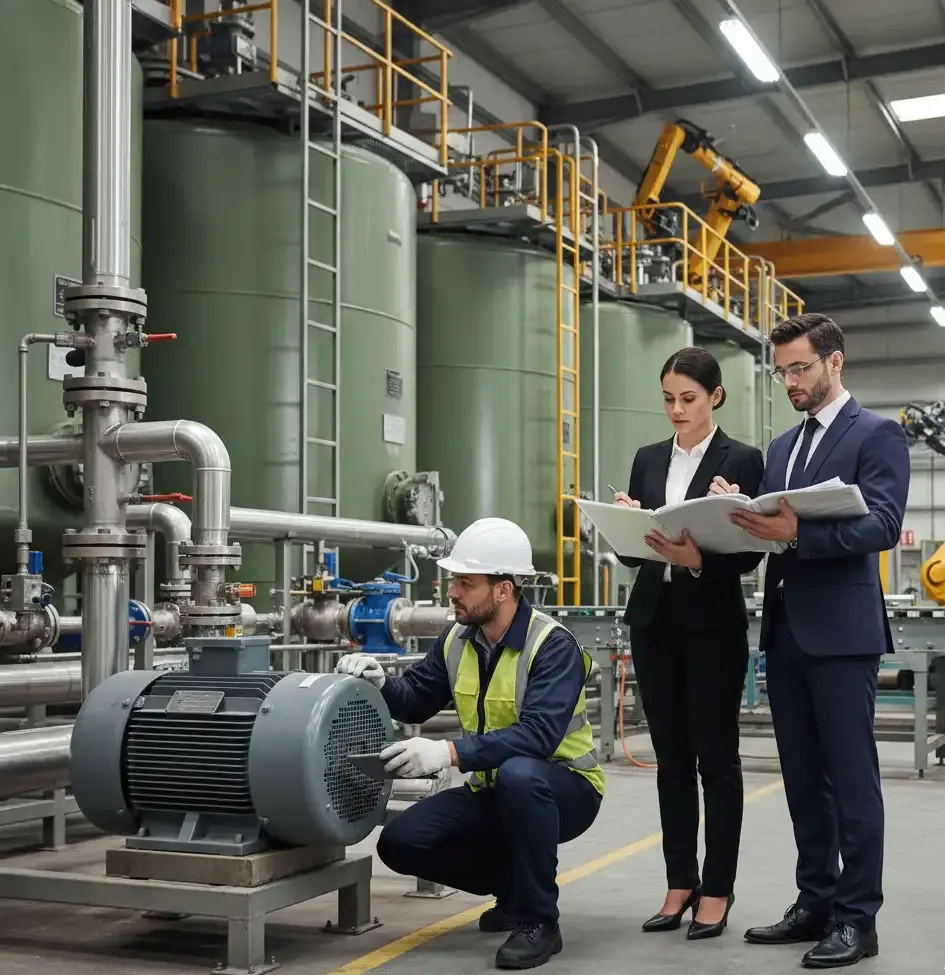

Requirements Definition & Capacity Analysis
Evaluating production targets, process requirements, quality specifications, operational constraints, and integration needs to establish comprehensive equipment performance criteria and functional requirements.

Technology Assessment & Equipment Evaluation
Analyzing available technologies, equipment alternatives, performance capabilities, reliability records, and vendor offerings to identify optimal solutions meeting operational and budgetary requirements.

Technical Specification Development
Creating comprehensive equipment specifications defining performance requirements, quality standards, materials of construction, utilities requirements, safety features, documentation needs, and acceptance criteria.

Vendor Evaluation & Procurement Support
Providing bid analysis, technical clarifications, equipment inspections, acceptance testing protocols, and commissioning support ensuring procured equipment meets all specified requirements.
Why Choose IMARC Engineering for Equipment Selection and Technical Specification in India
Our proven equipment selection methodology combines technical expertise, industry knowledge, and practical operational experience to optimize machinery investments. This comprehensive approach ensures equipment selections deliver intended performance while supporting reliability, efficiency, and long-term value throughout operational lifecycles.

Independent, Vendor-Neutral Equipment Evaluation
Equipment selection recommendations in Indian manufacturing projects are frequently influenced by vendor relationships, distributor arrangements, and commission-based referral structures that introduce fundamental conflicts of interest between the recommending party and the client’s best outcome. An equipment consultant compensated by a supplier referral fee has an incentive to recommend that supplier regardless of whether their equipment represents the best technical or commercial fit for the project. A project promoter with a preferred vendor relationship has an incentive to specify equipment from that vendor regardless of lifecycle cost or regulatory compliance implications. IMARC Engineering has no commercial relationships with any equipment manufacturer, supplier, or distributor in India or internationally.

Process Engineering-Led Technology Assessment
Equipment vendors in India present their products through specification sheets, factory demonstrations, and reference site visits, all of which are curated to present the equipment in its most favourable context. Specification sheet performance data reflects ideal operating conditions that frequently differ from the client’s actual process parameters, raw material characteristics, and production schedule variability. Factory demonstrations use optimised feedstocks and operating conditions that do not represent the variability of industrial production. Reference site visits are directed to the vendor’s most successful installations rather than a representative cross-section of performance outcomes. IMARC Engineering’s technology assessment methodology evaluates equipment based on independent process engineering analysis of each technology’s performance characteristics against the specific process conditions of the client’s application, including raw material variability, required product quality specifications, throughput demand profiles, energy consumption under actual operating loads, and maintenance requirements under Indian operating environment conditions.

Total Cost of Ownership Analysis
Equipment procurement decisions in Indian manufacturing projects that are based on purchase price alone systematically underestimate the true cost of equipment ownership over the facility’s operating life. A low-purchase-price imported equipment option may carry substantial customs duty exposure if not structured through the EPCG scheme, high spare parts import costs and lead times that create production vulnerability, and maintenance requirements that exceed the capability of locally available service infrastructure. A domestically manufactured equipment option with a higher purchase price but lower energy consumption, locally available spares, and domestic service support may represent a significantly lower total cost of ownership over a ten-year operating period. IMARC Engineering’s equipment selection analysis incorporates purchase price, customs duty and import cost optimisation including EPCG scheme eligibility assessment, energy consumption modelling across the equipment’s full load range, spare parts cost and availability assessment, maintenance cost estimation, and residual value projection, producing a total cost of ownership comparison that enables procurement decisions based on economic rationality rather than initial capital outlay minimisation.

Comprehensive Regulatory Compliance Mapping
Manufacturing equipment in India is subject to a multi-layered regulatory compliance framework that varies by equipment category, process application, and industry sector, and non-compliance with applicable regulatory requirements creates production, financial, and legal risks that equipment procurement decisions must account for from the outset. BIS mandatory certification applies to a growing range of equipment categories, with non-certified equipment prohibited from import and domestic sale. IBR compliance is mandatory for all pressure vessels, boilers, and steam pipework above specified pressure ratings, with non-IBR-compliant equipment rejected by statutory inspectors during factory licensing inspections. PESO approval is required for equipment handling flammable liquids, gases, and explosives under the Petroleum Act and Explosives Act frameworks. CDSCO requirements apply to pharmaceutical manufacturing equipment under Schedule M.

Technical Specification Documentation
An equipment procurement process conducted without rigorous technical specifications transfers performance and compliance risk from the vendor to the buyer, because without a documented specification, there is no contractual basis for rejecting equipment that fails to perform as required, claiming warranty remedies for underperformance, or withholding payment pending deficiency correction. Vendor-supplied specifications and datasheets define the equipment in terms that favour the vendor, with ambiguous performance claims, untested capacity ratings, and exclusions that limit vendor liability for performance shortfalls. IMARC Engineering prepares client-side technical specifications that define equipment performance requirements in measurable, unambiguous terms including process performance guarantees, material specifications for product-contact components, utility consumption limits, noise and vibration limits, regulatory compliance certifications, spare parts requirements, and factory acceptance test protocols, with acceptance criteria that must be demonstrated before vendor payment milestones are released.

End-to-End Procurement Support
IMARC Engineering supports manufacturing equipment procurement from initial technology assessment through technical specification drafting, competitive tendering, bid evaluation, factory acceptance testing, delivery supervision, and site acceptance testing, maintaining independent technical oversight at every stage where vendor and client interests diverge. At the technology assessment stage, IMARC Engineering develops the equipment selection basis and technology comparison framework. During specification drafting, IMARC Engineering prepares client-side technical specifications with unambiguous acceptance criteria. During tendering, IMARC Engineering manages the technical query and clarification process with shortlisted vendors. During bid evaluation, IMARC Engineering conducts technical bid analysis and commercial normalisation. During factory acceptance testing, IMARC Engineering witnesses performance testing against specification requirements at the vendor’s works before equipment is shipped.
Equipment Selection and Technical Specification Across Key Sectors in India
IMARC Engineering delivers independent technology assessment, technical specification drafting, vendor bid evaluation, and factory acceptance testing support across India’s most active manufacturing sectors
Equipment selection and technical specification for oral solid dosage manufacturing including tablet compression, granulation, coating, and capsule filling equipment; liquid and semi-solid formulation equipment including mixing, homogenisation, and filling systems; and sterile manufacturing equipment including lyophilisers, autoclaves, and aseptic fill-finish lines. Technology assessment against WHO-GMP, Schedule M, and CDSCO qualification requirements, with technical specifications incorporating GMP material specifications for product-contact components, cleaning validation compatibility requirements, and IQ, OQ, PQ documentation obligations.
Equipment selection and technical specification for food processing operations including pasteurisation, homogenisation, evaporation, spray drying, extrusion, and packaging systems. Technology assessment against FSSAI hygienic design requirements, HACCP critical control point compatibility, and export market food safety standards. Technical specifications incorporating food-grade material specifications for product-contact surfaces, CIP compatibility requirements, allergen cleaning validation obligations, and cold chain integration parameters.
Equipment selection and technical specification for chemical manufacturing operations including reactors, distillation columns, centrifuges, dryers, heat exchangers, and storage vessels. Technology assessment incorporating materials of construction selection for corrosive process environments, pressure rating requirements under IBR for pressure vessels and steam systems, and PESO compliance requirements for equipment handling flammable and hazardous materials. Technical specifications covering mechanical design standards including IS 2825 for unfired pressure vessels, seal and containment requirements for toxic and flammable service applications, explosion-proof electrical specification for hazardous area classification zones, and factory acceptance test protocols including hydraulic pressure testing and performance trials.
Equipment selection and technical specification for high-speed FMCG manufacturing operations including mixing, filling, labelling, and packaging equipment for liquid, cream, powder, and aerosol product categories. Technology assessment covering equipment flexibility for multi-SKU production requirements, changeover time and cleaning validation implications for multi-product manufacturing lines, and energy efficiency under variable production schedules. Technical specifications for filling and packaging line equipment incorporating accuracy and reject rate performance guarantees, material specifications for product-contact components in contact with cosmetic and personal care formulations, and CDSCO compliance requirements for cosmetic manufacturing equipment under the Drugs and Cosmetics Act.
Equipment selection and technical specification for agrochemical manufacturing including technical grade synthesis reactors, formulation equipment for emulsifiable concentrates and wettable powders, and packaging systems for liquid and solid agrochemical products. Technology assessment incorporating PESO compliance requirements for equipment handling flammable solvents and toxic intermediates, containment design requirements for equipment in contact with Schedule I and II hazardous chemicals, and IBR compliance for steam-heated reactor systems.
Equipment selection and technical specification for medical device manufacturing operations including precision machining, injection moulding, assembly, sterilisation, and packaging equipment. Technology assessment against ISO 13485 process validation requirements, equipment calibration and maintenance traceability obligations, and CDSCO Class B and C device manufacturing licence equipment compliance expectations. Technical specifications incorporating validation documentation requirements including IQ, OQ, and PQ protocol frameworks, calibration certificate and traceability requirements for measurement equipment, and site acceptance test protocols aligned with ISO 13485 equipment qualification standards. EPCG scheme eligibility assessment for imported precision manufacturing and metrology equipment.
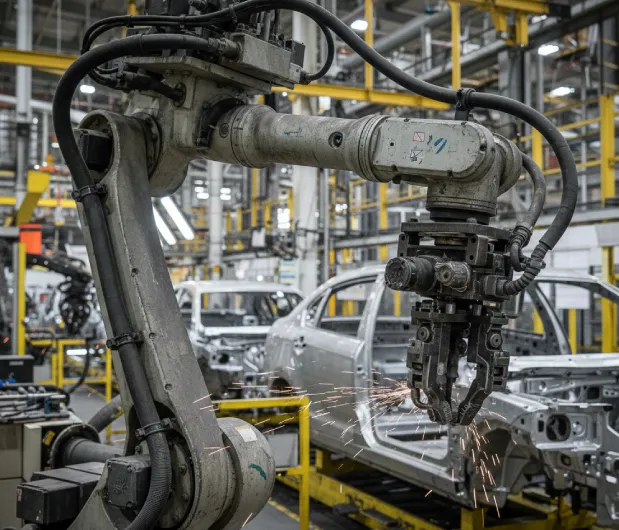
Equipment selection and technical specification for industrial manufacturing operations including CNC machine tools, heat treatment equipment, surface finishing systems, material handling equipment, and quality inspection systems. Technology assessment covering productivity benchmarking against comparable installed base performance data, energy consumption evaluation against BEE efficiency norms, and local service infrastructure capability for maintenance and breakdown support.
Frequently Asked Questions: Equipment Selection and Technical Specification in India
We've compiled answers to critical questions manufacturers and investors ask about equipment selection and technical specification development. These insights address key concerns around selection criteria, specification requirements, procurement processes, and impact on manufacturing performance and investment returns.
Trusted by Industry Leaders
We partner with global enterprises and ambitious businesses across sectors to deliver operational excellence, strategic insights, and sustainable growth through integrated solutions.







Success in Their Words
Real feedback from clients across industries. Discover how our solutions delivered measurable impact and operational excellence.

I wanted to express my sincere appreciation for your efforts in handling this matter. Your dedication and commitment have been truly commendable, and it is evident that you have put in tremendous hard work and expertise into resolving the issues at hand. We are greatly interested in continuing our collaboration with you in the future, as your professionalism and reliability have made you a trusted partner. Thank you once again for your invaluable contribution. We look forward to strengthening our partnership ahead.

It has been a pleasure working with the IMARC team. The insights provided were structured, clear, and highly valuable, helping us strengthen both our technical and financial planning with confidence. We deeply appreciate the team’s professionalism, responsiveness, and attention to detail throughout the engagement. Every requirement was well understood and effectively incorporated, resulting in a comprehensive and actionable output. Overall, our experience has been excellent, and I would gladly recommend IMARC to organizations seeking a reliable research partner.

Your service is truly exceptional. Working with the IMARC team has been a seamless and professional experience. The clarity of communication, responsiveness to queries, and consistent support at every stage made the entire engagement highly efficient. The insights shared were well-structured, practical, and perfectly aligned with our requirements, helping us make informed decisions with confidence. Overall, the dedication and professionalism demonstrated by your team stand out, and I would be glad to recommend IMARC as a reliable and trustworthy research partner.

IMARC did an outstanding job in preparing our study. They were punctual, precise, and consistently responsive throughout the entire process. The team delivered all the data we required in a clear, well-organized, and highly professional format. Their strong attention to detail, combined with their ability to meet every deadline without compromising quality, truly set them apart. Overall, their reliability and commitment made them an exceptional partner for our project, and we would gladly work with them again in the future.

IMARC made the whole process incredibly easy from start to finish. Everyone I interacted with via email was polite, professional, and straightforward to deal with, always keeping their promises regarding delivery timelines and remaining consistently solutions-focused. From my very first contact, I appreciated the professionalism and support shown by the entire IMARC team. I highly recommend IMARC to anyone seeking timely, affordable, and reliable information or advice. My experience with IMARC was excellent, and I truly cannot fault any aspect of it.

I’d like to express my sincere gratitude for the excellent work you accomplished with the study. Your ability to quickly understand our requirements and deliver high-quality results under tight timelines truly reflects your expertise, exceptional work ethic, and unwavering commitment to your customer’s success. The professionalism and responsiveness you demonstrated throughout the process made a significant difference. Our entire team and company are incredibly thankful for your dedication, reliability, and support. Once again, thank you for your outstanding contribution.
Speak to Our Equipment Selection and Technical Specification Team
Whether you are a pharmaceutical, food, chemical, FMCG, agrochemical, medical device, or industrial manufacturer, IMARC Engineering provides independent equipment selection and specification aligned with standards from Central Drugs Standard Control Organization, Food Safety and Standards Authority of India, and Bureau of Energy Efficiency. Our approach combines process engineering expertise, regulatory compliance, and structured bid evaluation. We ensure equipment decisions deliver optimal performance, compliance, and lifecycle value.