Manufacturing
October 08 2026
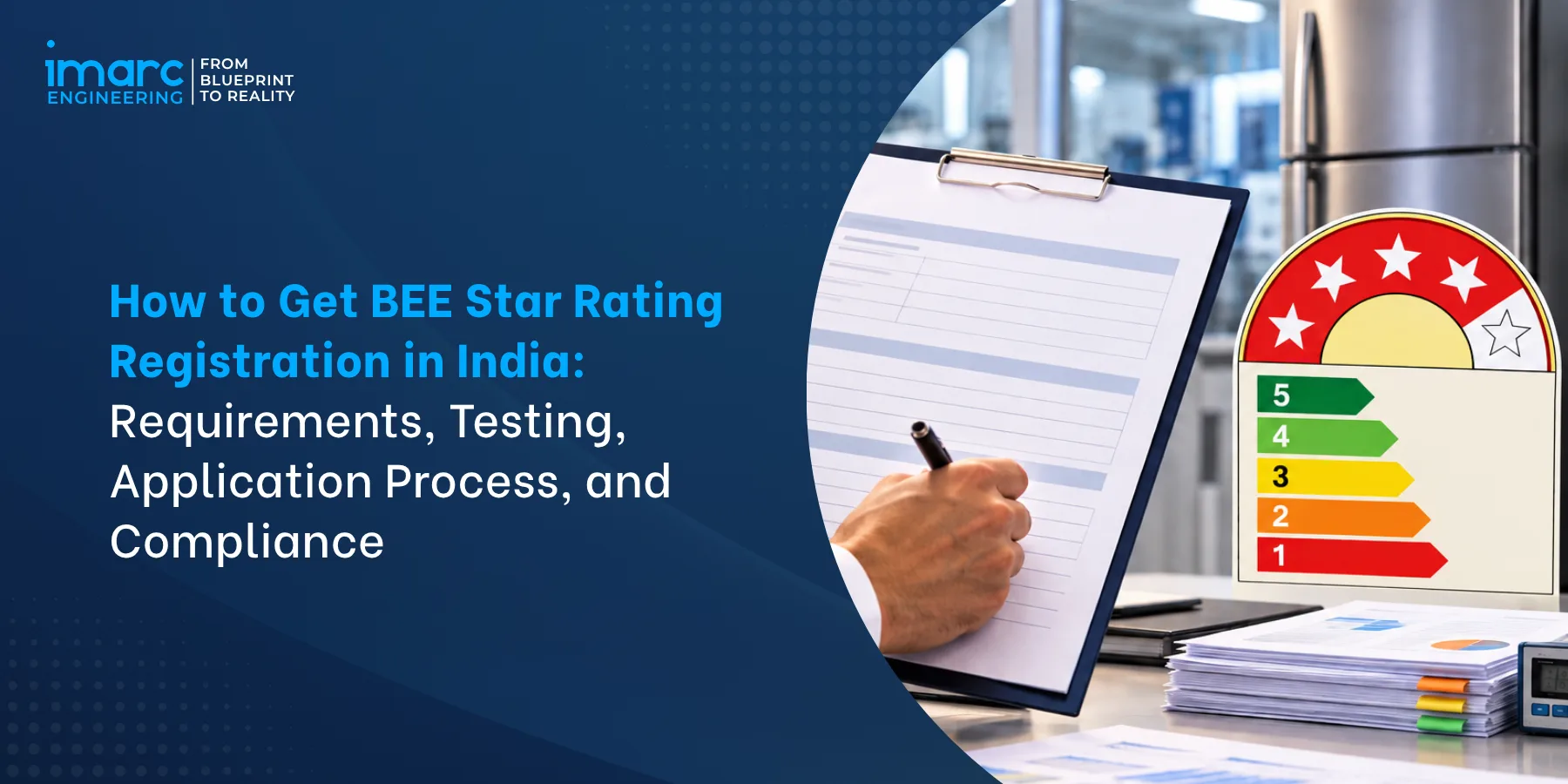
How to Get BEE Star Rating Registration in India: Requirements, Testing, Application Process, and Compliance
Introduction
For manufacturers, importers, brand owners and the investors financing their India entry, BEE Star Rating registration in India is a product-specific market-access condition rather than a one-off certificate. The Standards & Labelling Programme administered by the Bureau of Energy Efficiency (BEE) covers a shifting list of appliances and equipment split between mandatory and voluntary regimes, and every category carries its own schedule, test standard, label period, rating bands and fee structure.
Sponsors who treat registration as paperwork completed after tooling, packaging artwork and retail listings are already committed to routinely finding that testing, model nomenclature or label release sits on the critical path to first sale. This guide sets out how applicability is determined, how testing and registration are sequenced, and what continues to be owed after the star label is affixed.
Scope of This Guide
This guide answers the sponsor's guiding question directly: how do manufacturers, importers and brands determine whether an appliance or equipment item requires BEE Star Rating registration in India, and how are testing, brand and model registration, star labelling and continuing compliance completed? It moves from applicability screening and schedule identification through accredited testing, permittee and model registration on the BEE portal, label release and affixing, check testing, renewal and penalty exposure. It deliberately avoids universal claims about documents, fees, timelines or rating thresholds, because these are prescribed category-wise and revised by notification. Every figure quoted here is indicative and must be verified against the current BEE notification and schedule for the specific equipment category, and against the live BEE Star Label portal, before publication or project sanction.
Table of Contents
- Introduction
- Why BEE Star Rating Registration Matters for Manufacturers and Importers in India
- What BEE Star Rating Registration is and Why It Matters in India
- BEE Star Rating Registration Applicability and Product Schedule Selection in India
- BEE Star Rating Registration Testing and Energy Performance Requirements in India
- How BEE Star Rating Registration Covers Brand and Model Registration in India
- How BEE Star Rating Registration is Followed Through Label Affixing and Post-Registration Compliance in India
- Laboratories, Test Equipment and Digital Infrastructure for BEE Star Rating Registration in India
- Non-Compliance, Penalties and Project Economics of BEE Star Rating Registration in India
- Conclusion
1. Why BEE Star Rating Registration Matters for Manufacturers and Importers in India
Four factors make BEE Star Rating registration in India a board-level planning item for any business placing regulated appliances or energy-consuming equipment on the Indian market in 2026.
1.1 Statutory Basis and Enforcement Architecture
The Standards & Labelling Programme derives its authority from the Energy Conservation Act, 2001, which empowers the Central Government to prescribe energy consumption standards and labelling requirements for appliances and equipment, with BEE under the Ministry of Power as the administering agency. The Energy Conservation (Amendment) Act, 2022 modernised the framework, expanded the standard-setting mandate and moved Standards & Labelling (S&L) contraventions toward monetary penalties and adjudication rather than purely criminal process. Registration is therefore not voluntary industry participation.
For categories notified as mandatory, no model may be manufactured, imported or sold in India without a valid permission to affix the BEE star label. Enforcement operates at three levels: the portal, which will not release a label without an approved model registration; check testing, which verifies production units against declared performance; and market surveillance, which can lead to label suspension or withdrawal. Sponsors must confirm the current notification and effective date for their category, since both the mandatory list and the standards it references are revised periodically.
1.2 Mandatory Versus Voluntary Regimes
Category status is the single most important screening decision in the entire compliance plan. Appliance categories notified under the mandatory regime may not be manufactured, imported or sold without star labelling supported by a valid model registration; the label carries the star band and the measured energy performance and is checked at retail, at ports and in public procurement.
Categories under the voluntary regime may be labelled at the manufacturer's or importer's option, but voluntary labelling follows the same disciplined route — test report, permittee registration, model registration and permission to affix the label — and a voluntarily labelled model must still meet its declared performance if it is later check tested.
Status is not static: categories migrate from voluntary to mandatory as minimum energy performance standards (MEPS) tighten, and label periods, rating bands and threshold tables are revised when a new schedule is notified. A model registered under an earlier schedule may require re-testing to remain lawfully saleable after that shift. Any applicability assessment should therefore be re-run at the start of each label period and whenever a fresh BEE notification for the category is issued.
1.3 Procurement, Retail and Export Pull
Beyond the statutory floor, commercial buyers impose their own screens. Public procurement through GeM and utility demand-side management programmes commonly specify minimum star bands in tender conditions, and large-format retail and e-commerce platforms require the label on packaging and in catalogue listings before a SKU is onboarded.
Brands exporting from India, or importing under a global parent, face a further layer: an appliance certified in another jurisdiction may still need an India-specific test on the exact IS standard version referenced in the BEE schedule for that category. From an investor's standpoint, registration cost is therefore not merely a compliance line item. It determines which models can be bid, listed or shipped, and how quickly revenue can begin after plant commissioning or after the first import consignment clears customs.
1.4 The Cost of Late Discovery
The most expensive failures in this programme are sequencing failures rather than technical ones. A model name on the nameplate that does not match the model name in the test report can invalidate an otherwise sound registration and force repeat testing. A test report issued by a laboratory whose accreditation scope does not cover the relevant IS standard can be rejected after the testing invoice has been paid. A rating band computed on one standard version, when the notified schedule has moved to the next version, produces a label that cannot be released.
Importers who discover applicability only at customs face detention, demurrage and possible re-export, while manufacturers who discover it after tooling may have to rework packaging artwork, nameplate markings and label placement across an entire model family. Because testing slots at accredited laboratories for major appliances are limited, a late start can add weeks or months to launch. Treating registration as a design input rather than a downstream formality is the cheapest control available to a sponsor.
2. What BEE Star Rating Registration is and Why It Matters in India
Registration under the Standards & Labelling Programme is a permission to affix a prescribed label to a defined model. It is legally distinct from BIS product certification and from the BEE building star rating programmes, and that distinction matters for budgeting and for what the approval actually permits a business to do.
2.1 Definition and Legal Character
BEE Star Rating registration in India is the formal process through which the Bureau of Energy Efficiency grants a permittee the right to affix a star label to a specific model of a notified appliance or equipment category, based on an energy performance value established by testing at an accredited laboratory and validated against the threshold table in the applicable schedule. The permission is model-specific and label-period specific, not company-wide.
It is also distinct from adjacent regimes that are frequently confused with it: BIS registration or compulsory registration under the BIS Act deals with product safety and quality conformity; EPR registration deals with end-of-life waste obligations; and the BEE building programme rates commercial buildings rather than appliances. A single appliance therefore commonly carries both a BIS marking and a BEE star label, each governed by a separate application, separate fee and separate audit trail.
2.2 Core Terminology
A working vocabulary prevents most drafting errors. The permittee is the legal entity in whose name the permission to affix the label is granted and who is accountable for declared performance. The brand is the commercial identity under which the model is sold, which may belong to a different entity from the manufacturer. The model is the specific product identifier as it appears on the nameplate, packaging and invoice.
A family or derivative is a group of variants that may, where the schedule permits, rely on a single set of test data. The schedule is the notified category document that fixes the applicable standard, threshold table, label period, fees and definitions. MEPS is the minimum energy performance standard that a model must meet at all. Label period is the validity window of the star label. Check testing is the post-registration verification of production units. The label security fee is charged against the quantity of labels released, and the QR code on the label is the machine-readable link to the registered model record.
2.3 Scale Determinants: Portfolio, Variants and Testing Load
The size of the registration exercise scales with portfolio complexity rather than with factory size. Three variables dominate. The first is the number of registrable models, since each model requires its own test evidence and its own registration file; a portfolio of forty SKUs sold across three brands carries a very different cost from a single-platform launch. The second is variant structure: where the schedule allows family or derivative treatment, variants differing only in colour, voltage or trim may be covered by one test, and modelling the portfolio to maximise family coverage is a legitimate cost lever.
The third is label period and revision risk, because a model lying in a category whose standard is due for revision may need re-testing within a shorter horizon than expected. As an indicative planning convention, sponsors typically assume a dedicated compliance workstream of one to three people for a mid-sized appliance portfolio, with outsourced testing, whereas a large white-goods programme with continuous launches supports an in-house technical file team (figures are indicative in nature, may vary).
Programme Sections
| Section | Function | Key Equipment |
|---|---|---|
| Applicability screening | Confirms whether the appliance is covered by the S&L Programme | Current BEE schedule and portal category list |
| Regime determination | Fixes mandatory or voluntary status before launch planning | Notified category list with effective dates |
| Schedule and standard mapping | Identifies the test standard version and threshold table | Category schedule and IS standard text |
| Energy performance testing | Establishes the measured performance value of the model | Accredited laboratory test bench and report |
| Permittee and brand registration | Creates the legal entity record that holds labels | BEE S&L portal enterprise profile |
| Model registration | Links a specific model and its test data to the brand | Model application form and technical file |
| Label release and rating | Assigns the star band and permission to affix | BEE-issued label file with QR code |
| Label printing and affixing | Places the approved label on units and packaging | Controlled label artwork and print vendor |
| Check testing and verification | Confirms production units match declared performance | Market or factory-drawn sample |
| Reporting, renewal and database upkeep | Maintains label validity across periods | Annual data submission and renewal filing |
3. BEE Star Rating Registration Applicability and Product Schedule Selection in India
Applicability is decided category by category, not once for the business. The determination rests on the current BEE notification, the commercial status of the goods in India, and the effective date of each regime change.
3.1 How the BEE Schedule Is Structured
Each notified category is published as a schedule that a sponsor should read as a specification document rather than a list. A typical schedule states the appliance or equipment category and its scope, whether labelling is mandatory or voluntary, the effective date from which the requirement applies, the IS or IEC test standard and its version year, the label period, the star rating plan or threshold table mapping measured performance to star bands, the definitions of model, family and derivative, the fee schedule, and the conditions governing permission to affix the label.
Because the schedule is re-notified when standards tighten, a compliance plan built on a superseded version can be invalid at launch. Sponsors should retain a dated copy of the schedule relied upon for every model registration, since it is the reference document in any later dispute over declared performance.
3.2 Applicability Screening Sequence
A five-step screen resolves most cases. First, identify the appliance type and compare it against the notified category list — the commercial name matters less than the technical description, and equipment sold under a novel marketing name may still fall inside an existing category definition. Second, establish whether the goods are manufactured, assembled, assembled-from-kits or merely re-badged in India. Third, confirm whether they are imported for sale in India or for re-export without domestic sale. Fourth, fix the regime status on the actual date of first sale, since categories newly moved to mandatory often apply from a specified cut-off. Fifth, test whether the model can be positioned within a family or derivative that already holds test data, or whether it needs its own test. Documenting this screen in writing protects the sponsor from later allegations that a regulated category was placed on the market unlabelled.
3.3 Mandatory Categories
As of 30 September 2026, BEE's Standards & Labelling page lists 11 appliances/equipment under mandatory labelling: Frost Free Refrigerators, Stationary Storage Type Electric Water Heaters, Colour Televisions, Variable Speed Room Air Conditioners, Tubular Fluorescent Lamps (TFL), LED Lamps, Fixed Speed Room Air Conditioners, RACs covering cassette, floor-standing tower, ceiling and corner ACs, Distribution Transformers, Direct Cool Refrigerators, and Ceiling Fans. BEE states that these 11 products are currently under mandatory labelling, while the other products on its listed portfolio remain voluntary.
Manufacturers and importers should nevertheless verify the applicable product notification, schedule and effective date before launch, because BEE's Standards & Labelling portfolio and product-specific requirements can be revised. Mandatory status means the applicable BEE labelling and registration requirements must be satisfied before the product is placed on the Indian market.
3.4 Voluntary Categories
BEE's current Standards & Labelling portfolio also includes products under the voluntary regime. These include computers, domestic LPG stoves, general-purpose industrial motors, submersible pump sets, washing machines, ballasts, solid-state inverters, office automation products, diesel engine-driven agricultural monoset pumps, diesel generator sets, chillers, microwave ovens, solar water heaters, deep freezers, light commercial air conditioners, UHD televisions, air compressors, tyres, high-energy Li-batteries, table or wall-mounted fans, pedestal fans, induction hobs and side-by-side refrigerators. BEE currently identifies these products as voluntary under its Standards & Labelling programme.
Voluntary labelling remains optional, but manufacturers and importers that participate must follow the applicable BEE testing, registration and labelling requirements. The commercial value of voluntary labelling can vary by product and market, particularly where buyers, tenders or institutional procurement specifications favour energy-efficient models.
3.5 Exemptions, Imports and Transitional Cases
Schedules and general instructions normally provide relief for clearly defined non-commercial situations: units imported or produced for research and development, prototypes and samples, goods manufactured solely for export and not offered for domestic sale, and in some cases units held for testing or demonstration. These reliefs are conditional, documented and time-bound, and they typically do not cover products displayed for sale or transferred to channel partners.
A separate and frequently mishandled case is stock already in the channel on the effective date of a regime change or a threshold revision, where the transition provisions in the notification determine whether existing inventory must be recalled, relabelled or may be sold through. Because these provisions are category-specific, the transitional clause of the relevant notification should be read in full and, where the volumes are commercially material, addressed in writing with the BEE portal or the designated agency before the cut-off.
4. BEE Star Rating Registration Testing and Energy Performance Requirements in India
Testing converts a product claim into a regulatory value. The quality of the test report, its accreditation pedigree and the fidelity of the sample to production determine whether the resulting star label survives the check-testing stage.
4.1 Laboratory Selection and Accreditation Scope
For most categories, the test report supporting BEE Star Rating registration in India must originate from a laboratory accredited by the National Accreditation Board for Testing and Calibration Laboratories (NABL) for the specific test method, or otherwise recognised by BEE for the relevant parameter. The critical control is the scope of accreditation: a laboratory may be accredited for a test in general terms but not for the exact IS standard version cited in the current schedule, in which case the report can be rejected at the registration desk after testing has been completed and paid for.
Before booking a test slot, the sponsor or its consultant should obtain the laboratory's current accreditation certificate and schedule, map the clause-level scope against the schedule's test requirement, confirm availability of the required test bench and calibration validity, and agree the report format in advance, including the identification details that must appear on the face of the report. Laboratory capacity for large-appliance testing is finite, so booking lead times of several weeks should be assumed in launch planning.
4.2 Sample Selection, Identification and Sealing
The sample tested must be representative of the model to be registered, and the identification trail must survive audit. In practice this requires a defined sample selection protocol: the unit is drawn from regular production or from an import consignment, its serial number, batch code and model nomenclature are recorded exactly as they appear on the nameplate and packaging, and the sample is sealed or otherwise controlled before dispatch to the laboratory.
Any deviation between the configuration tested and the configuration sold — a different compressor, an alternative control board, a different diffuser for a lamp, a different tolerance class for a transformer — can render the registration unusable for the commercial product. Sponsors should freeze the product specification before testing starts and manage engineering changes through a formal revision process, because the version of the product that is tested effectively becomes the version that is registered.
4.3 Measuring the Energy Performance Parameter
The measured quantity differs by category but always resolves to a single declared value that maps to a star band. For room air conditioners the governing index is the Indian Seasonal Energy Efficiency Ratio (ISEER), computed from part-load performance across defined outdoor temperature bins rather than a single full-load point, with indoor and outdoor test conditions set by the schedule. For refrigerators it is energy consumption over a defined test cycle under specified ambient conditions.
For lamps it is luminous efficacy in lumens per watt, for fans it is specific energy consumption or air delivery per unit power, for motors it is efficiency class at rated output, and for distribution transformers it is load loss and no-load loss measured against the prescribed limits. Each of these is measured on a bench with defined instrumentation accuracy and a defined stabilisation period. The star band is then read from the threshold table in the schedule; the sponsor does not select a band, it is assigned by the measured value.
4.4 Test Report Review, Tolerance and Re-Testing
A test report is not automatically acceptable because it was issued by an accredited laboratory. The review should confirm that the model identifier in the report matches the nameplate and the registration file character for character, that the standard version cited is the one currently required, that calibration certificates underlying the instrumentation are valid for the test dates, that test conditions and stabilisation criteria are recorded, and that the performance value is expressed to the precision demanded by the threshold table.
Where a measured value falls inside the tolerance band defined in the applicable regulation, the declared value must be handled in accordance with that provision rather than rounded up commercially. Re-testing is required when a model materially changes, when the standard version changes, and when a check test finds the production unit outside the permitted tolerance. Because re-testing is both costly and schedule-critical, sponsors should maintain a small design margin above the target star threshold rather than testing at the exact band boundary.
4.5 Standards Typically Referenced by Schedules
The IS standard referenced in a schedule is the controlling technical document, and its version year matters as much as its number. Common references across the programme include IS 374 for ceiling fans, IS 7872 for household refrigerating appliances, IS 12615 for line-operated induction motors, IS 1180 for distribution transformers, and the IS 16102 and IS 16103 series for LED lamps and luminaires, alongside category-specific methods for air conditioners, water heaters, washing machines and office equipment.
None of these allocations should be assumed to be current: schedules are updated to newer standard versions, and a report issued against a superseded version may be rejected. The correct procedure is to read the standard number and year directly from the live schedule for the category, verify it against the laboratory's accreditation scope, and only then release the test order.
5. How BEE Star Rating Registration Covers Brand and Model Registration in India
Brand and model registration are two distinct records in the same system. The brand record establishes who is accountable; the model record establishes what is being labelled, on what evidence, for how long.
5.1 Permittee and Brand Registration
The permittee registration creates the entity record against which labels will be released. Documentation for an Indian company typically includes the certificate of incorporation or registration, permanent account number and GST registration, the name and authorisation of the signatory, and contact and factory details for the manufacturing location. An importer filing in its own name will additionally require an Importer-Exporter Code, and where the application is made on behalf of an overseas manufacturer, an authorisation letter from that manufacturer confirming the relationship and the right to register the models in India.
Trading entities that do not manufacture or import but sell under their own brand must establish whether they are the appropriate permittee or whether the obligation sits with the manufacturing or importing entity, since a mismatch here produces labels held by an entity that cannot lawfully apply them to the goods. The brand record also carries the label artwork conventions that must match the printed label.
5.2 The Model Registration File
The model registration ties a single product identifier to a test report and a declared performance value. The file normally contains the model nomenclature exactly as printed on the nameplate, packaging and invoice; the category and schedule under which registration is sought; the technical specifications relevant to energy performance, including rated input power, capacity, refrigerant or light source data as applicable; the accredited test report and its annexures; product photographs showing the unit and the nameplate; the family or derivative declaration where variants are grouped; and label data such as the star band and the declared energy consumption or efficiency figure.
Portal fields must reconcile exactly with the supporting documents, because discrepancies between the application form, the test report and the nameplate are the most common cause of return. A controlled technical file should be maintained for the life of the label period and beyond, since check testing and any dispute over declared performance will be adjudicated against it.
5.3 Fees, Label Security Fee and Commercial Sequencing
BEE prescribes application and model registration fees that differ by category, and a label security fee is levied against the quantity of labels released. Because these are notified category-wise, no single figure applies across the programme. As a planning convention, sponsors typically budget for the following components (all figures indicative in nature, may vary by category, laboratory and volume): documentation and consultant effort per model; laboratory testing charges, which commonly range from tens of thousands of rupees for simple lighting products to several lakh rupees for room air conditioners, refrigerators and large capacity equipment; label security fee on the label quantity anticipated over the period; label printing and artwork control; and annual effort for data reporting, renewal and re-testing contingency. Cash-flow sequencing matters as much as quantum, since testing is paid before registration, and label quantities must be estimated before sales volumes are known with confidence.
5.4 Permission to Affix the Label
Once the model registration is accepted, the permission to affix the label is issued with the label file. The label file defines the content and layout of the printed label: the star band, the declared energy performance value and its unit, the permittee name, the model identifier, the label period and the QR code that links the physical label to the registered record. Label quantities are requested against the release and governed by the security fee, and sponsors must plan for waste, replacement of damaged labels and the need to re-label units if a model's rating changes.
Control of the label is a compliance obligation in itself: labels must not be printed outside the approved artwork, must not be applied to unregistered models, and must be accounted for in the production and sales records submitted to the portal. Independent printing without authorisation is a recurring cause of enforcement action and of label suspension.
5.5 Common Reasons Applications Are Returned
Applications are most often returned for administrative rather than technical reasons, and these are predictable. Typical causes are a mismatch between the model name on the nameplate and the name in the test report; a test report from a laboratory whose accreditation does not cover the referenced standard version; missing or expired calibration certificates; photographs that do not clearly show the nameplate or that show a different variant; a family declaration that groups variants which the schedule does not permit to be grouped; declared values inconsistent with the threshold table precision; and authorised signatory documents that do not match the entity record.
Each of these costs calendar time rather than money, and each is avoidable through a pre-submission checklist. Sponsors running multiple models in parallel should stagger submissions so that an error identified on the first file is corrected before the rest are filed.
6. How BEE Star Rating Registration is Followed Through Label Affixing and Post-Registration Compliance in India
The permission to affix the label is the midpoint of the obligation, not the end. Affixing rules, data reporting, check testing and renewal operate continuously for as long as the model is sold under a star label.
6.1 Label Content, Design and Placement
The star label communicates a specific claim to the buyer and must therefore be applied exactly as approved. Its content is fixed by the schedule and the released label file: the star band, the declared energy performance value in the prescribed unit, the permittee's name, the model identifier, the label period, and the QR code.
The applicable schedule and approved label requirements specify the label's content, format, dimensions, placement and any requirements for displaying the label on the product, packaging or other prescribed locations. Manufacturers and importers should follow the requirements applicable to the specific equipment category and label period.
Labels must be printed from the approved artwork only, in the quantities released, and any change to model data requires a revised label file before new units carry the revised claim. Units already labelled under a superseded model record cannot simply continue to be sold with the old label beyond the transition provisions of the notification.
6.2 Production, Sales Data and Periodic Reporting
Post-registration compliance may include periodic production, sales and label-use reporting as prescribed under the applicable BEE schedule, portal requirements or programme instructions. The purpose is traceability: the regulator must be able to reconcile labels released with units placed on the market, and to identify models whose volumes, configurations or performance profile warrant closer attention.
Sponsors should maintain an internal ledger that links label quantities received, labels applied, units produced or imported, and units sold by model and period, so that the portal submission is a reconciliation rather than a reconstruction. Where a portfolio is sold through distributors, e-commerce platforms and institutional channels simultaneously, the ledger must draw on multiple systems; the practical answer is to make label accounting a controlled workflow in the ERP or production system rather than a spreadsheet maintained by the compliance team alone.
6.3 Check Testing and Verification Testing
Check testing is the mechanism that connects the registered claim to the units actually being produced. A sample is drawn, typically from the market or from factory stock, and tested independently against the declared performance for the model. The tolerance framework in the applicable regulation determines whether the measured value is acceptable, taking measurement uncertainty into account. Where a model fails, consequences escalate through stages that may include a requirement for corrective action, re-testing, suspension of permission to affix the label, withdrawal of labels already released, and a public direction affecting the model.
Because check testing is triggered by the regulator rather than requested by the sponsor, the only defences are a production process that holds the tested configuration, a design margin above the target threshold, and a technical file that can demonstrate control of the variant. Sponsors should treat check-test readiness as a permanent operating condition, not a one-off launch task.
6.4 Renewal, Revalidation and Label Period Management
Every permission to affix a label runs for a label period defined in the schedule for that category, and continuation of sales requires renewal or revalidation before expiry. Where the underlying standard or threshold table has been revised, renewal may be accompanied by a requirement to re-test and to register the model against the new threshold, which can change the star band and therefore packaging, marketing and tender positioning.
Portfolio planning should therefore track, for every registered model, the date of registration, the expiry of the label period, the standard version relied upon and any announced revision date. A rolling twelve-month renewal calendar, with testing slots reserved ahead of the busy periods, prevents the common failure in which a revenue-generating model is temporarily unsaleable because its label period lapsed during a quarter-end sales push.
6.5 Changes, Discontinuation and Portfolio Housekeeping
Registered records need active housekeeping. A change of brand owner, a merger or an internal transfer of the permittee role requires the records to be updated so that the entity holding labels is the entity selling the goods. Engineering changes that affect declared performance — a new compressor, a revised control algorithm, a different light engine — generally require new test evidence and a fresh model registration rather than an amendment to the existing file.
Discontinued models should be closed out deliberately, with residual label stock accounted for and no further printing authorised, because unclosed records create reconciliation gaps in subsequent reporting and complicate any audit. Sponsors running an annual product refresh should build model lifecycle management into the same governed process as new model registration, with a single owner accountable for the entire register.
7. Laboratories, Test Equipment and Digital Infrastructure for BEE Star Rating Registration in India
Whether testing is outsourced or brought in-house, the equipment, metrology and documentation systems behind BEE Star Rating registration in India determine how quickly models can be registered and how reliably declared performance survives verification.
7.1 Outsourced Versus In-House Testing Capability
Outsourcing is the correct default for importers, brand owners and manufacturers with small portfolios, because the capital cost of a compliant bench is high and the utilisation requirement is severe. In-house testing becomes defensible when annual model throughput is high, when the category's test facility is scarce and booking delays threaten launch schedules, or when the company is also developing products and needs iterative measurement.
The decision should be taken on a four-year view that compares outsourced test spend at forecast volumes against the capital cost of the benches, the recurring cost of calibration and accreditation maintenance, and the value of schedule control. A hybrid model is common and effective: retain quick screening capability in-house for development, and use accredited external laboratories for the registration-grade reports that carry regulatory weight (figures are indicative in nature, may vary by category and volume).
7.2 Core Test Facilities by Category
Test facilities are category-specific and cannot be generalised. Air conditioner testing requires a psychrometric calorimeter test room, essentially a paired indoor and outdoor chamber with controlled dry-bulb and wet-bulb conditions, capable of holding the required indoor and outdoor set points across the part-load bins used for the seasonal efficiency index, with capacity commonly in the 3 to 5 TR range for split and window units and larger for ducted equipment. Refrigerator testing requires an ambience-controlled chamber with stable temperature and defined loading and door-opening cycles.
Lamp and luminaire testing requires an integrating sphere of roughly 1.5 to 2 metres diameter for luminous flux and a goniophotometer for distribution-dependent parameters. Motor testing uses a dynamometer bench with torque and speed measurement across the load range. Transformer testing requires a loss-measurement bench with a precision power analyser and a stable supply. All of these are indicative configurations that must be matched to the exact test method in the schedule.
7.3 Instrumentation, Calibration and Measurement Uncertainty
The credibility of a test rests on instrumentation accuracy and on traceability. Typical requirements include precision power analysers in the 0.1 to 0.2 accuracy class for electrical measurements, calibrated platinum resistance temperature sensors with stability of the order of a few tenths of a degree, humidity sensors with matched wet-bulb or dew-point references, torque transducers and speed encoders on dynamometer benches, and multi-channel data acquisition capable of logging a stabilised period at defined intervals.
Every instrument must be calibrated against references traceable to national standards, with calibration certificates valid at the time of test and uncertainty budgets documented for each measured parameter. Calibration cycles should be scheduled so that no test campaign straddles an expiry date, because a report supported by a lapsed certificate is a report that can be challenged during check testing or in any subsequent dispute.
7.4 Technical File, Portal Records and Digital Traceability
The documentary system is as important as the benches. A controlled technical file should exist for every registered model, containing the approved schedule, the test report and calibration records, the product specification and its revision history, the label file, the registered performance values and the correspondence with the portal. Version control matters because the configuration tested must remain identifiable among subsequent engineering changes.
Digital traceability — linking the ERP or PLM record to the model register and to label issuance — is what makes production and sales reporting a reconciliation rather than an investigation. Where a company operates multiple brands or contract-manufacturing relationships, the register should record which entity holds each permission and which entity applies each label, since the most damaging audit findings usually arise from a permittee that is not the seller rather than from a technical failure.
Key Machinery
| Category | Equipment | Illustrative Scale |
|---|---|---|
| Air conditioner testing | Psychrometric calorimeter test room | Paired indoor and outdoor chambers, 3 to 5 TR range |
| Refrigeration testing | Ambient-controlled test chamber | Multiple chambers, wide ambient range |
| Lamp and luminaire testing | Integrating sphere and goniophotometer | 1.5 to 2 metre sphere diameter |
| Motor and pump testing | Dynamometer test bench | Small to medium industrial rating range |
| Transformer testing | Loss measurement bench with power analyser | Distribution transformer class |
| Electrical measurement | Precision power analyser | 0.1 to 0.2 accuracy class |
| Environmental control | Chamber HVAC and stability control | Sub-one-degree temperature stability |
| Data capture | Calibrated multi-channel data acquisition | Continuous logging across full test cycle |
8. Non-Compliance, Penalties and Project Economics of BEE Star Rating Registration in India
Compliance cost is predictable; non-compliance cost is not. The economics of BEE Star Rating registration in India should therefore be built as a portfolio-level programme with a defined risk register, not as a per-invoice expense.
8.1 Enforcement and Penalty Exposure
The Energy Conservation (Amendment) Act, 2022 repositioned S&L enforcement around monetary penalties and adjudication, with a designated authority able to impose penalties for contraventions and additional penalties for continuing failure. The precise quantum, the adjudication procedure and the appeal route are set out in the amended Act and the rules and regulations made under it and must be verified against the current text before being relied upon in a project document.
Beyond statutory penalty, the practical sanctions are commercially severe: suspension or withdrawal of the permission to affix the label, which makes the model unsaleable; delisting by retail and e-commerce platforms; disqualification from public tenders; and, for importers, difficulty in clearing consignments where registration is absent. Penalty exposure is compounded by reputational consequences for a brand whose core consumer promise is energy efficiency.
8.2 Check-Testing Failure: Consequences and Recovery
A check-test failure is best handled as a defined incident response rather than an ad hoc negotiation. The sequence normally involves the regulator's test result, an opportunity for the permittee to respond, a possible re-test on a fresh sample, and a decision that can range from corrective action to withdrawal of the label for the model. Recovery requires evidence that the production configuration matches the registered configuration and that any drift was identified and corrected.
The recovery playbook should include immediate verification of the current production build against the technical file, an engineering review of the parameters governing the measured value, a voluntary re-test at an accredited laboratory where the company needs independent evidence, and a communication plan for trade partners and platforms if the label is temporarily unavailable. Companies that maintain margin above the target star threshold usually pass check testing without intervention.
8.3 Compliance Cost Structure: CAPEX and OPEX
Compliance cost falls into four buckets. Testing cost is the largest recurring item for most companies and scales with the number of models and the complexity of the test. Registration and label cost covers application and model registration fees plus the label security fee on released quantities and label printing. Internal cost is the compliance workstream itself — technical file management, portal administration, label accounting and reporting — typically one to three full-time equivalents for a mid-sized portfolio.
Capital cost arises only where testing is brought in-house, covering test benches, environmental chambers, instrumentation, calibration, laboratory fit out and the accreditation process. As an indicative convention, the split between these four buckets for a mid-sized manufacturer or importer running an annual model refresh is weighted heavily toward testing and internal effort in the early years, with capital only justified at high throughput (figures are indicative in nature, may vary).
8.4 Risk Register and Mitigation
The recurring risks are identifiable in advance. Applicability risk — assuming a category is voluntary when it has moved to mandatory — is mitigated by a documented annual schedule review with a dated record. Testing risk — rejection of a report for scope, version or calibration reasons — is mitigated by pre-qualifying laboratories against the live schedule. Nomenclature risk — rejection for model name mismatch — is mitigated by freezing nameplate and packaging artwork before testing.
Revision risk — a standard change invalidating current registrations — is mitigated by tracking announced revision dates against the portfolio renewal calendar. Check-test risk — production drift — is mitigated by design margin and by periodic internal verification. Label control risk — unauthorised printing or misapplication — is mitigated by a single accountable owner and a reconciled label ledger. Each risk should have a named owner and a defined trigger for escalation.
Project Economics
| Configuration | Scale Assumption | Investment (INR) (Indicative, may vary) |
|---|---|---|
| Importer, single brand, outsourced testing | One brand, a handful of registered models per year | INR 8 to 20 lakh per year |
| Indian manufacturer, mixed portfolio, outsourced testing | One brand, ten to fifteen models in the first year | INR 25 to 60 lakh in year one |
| In-house laboratory for air conditioning and refrigeration | Twenty or more models, dedicated test facility | INR 5 to 15 crore capital, plus annual operating cost |
| Multi-brand OEM or contract manufacturer | Three to five brands, forty or more models | INR 1.5 to 4 crore per year |
Conclusion
Setting up BEE Star Rating registration in India is a disciplined sequencing exercise that starts with a category-level applicability determination and ends with a continuous compliance function. The logic runs in a fixed order: read the live BEE schedule for the category, fix mandatory or voluntary status on the date of first sale, freeze the product configuration and its nomenclature, obtain an accredited test report against the exact standard version referenced, register the permittee and then the model, secure the permission to affix the label, control label printing and application, and maintain reporting, renewal and check-test readiness for the life of the model. Three priorities determine whether a project succeeds. First, verify applicability and the applicable schedule before tooling, packaging artwork or import commitments are frozen, because that decision governs every downstream cost. Second, hold a design margin above the target star threshold and freeze the tested configuration, so that production units survive check testing. Third, run registration as a portfolio programme with a renewal calendar, a technical file discipline and a single accountable owner, since the failure mode in this regime is not a single rejected application but a portfolio that quietly drifts out of compliance.
PURSUING BEE STAR RATING REGISTRATION IN INDIA?
IMARC Engineering supports manufacturers, importers, brand owners and investors with applicability screening, schedule identification, test planning, laboratory coordination, permittee and model registration, documentation control, label release, check-test readiness and post-registration compliance management. The advisory covers mandatory and voluntary appliance and equipment categories, including the screening, testing, registration, labelling and renewal stages, with project-specific infrastructure, testing and commissioning planning.
→ Schedule a free BEE star rating registration scoping consultation with an IMARC specialist
Frequently Asked Questions
It is the process by which the Bureau of Energy Efficiency grants a permittee permission to affix a star label to a specific appliance or equipment model, based on accredited testing against the standard and threshold table in the notified schedule for that category. It is model-specific, not company-wide.
As of 30 September 2026, BEE lists 11 appliances/equipment under mandatory Standards & Labelling. Manufacturers and importers should verify the latest BEE notification and product schedule before placing a product on the Indian market because category requirements and effective dates may be revised.
Under mandatory labelling, a model cannot be manufactured, imported or sold without a valid label and registration. Under voluntary labelling, participation is optional but the procedure, testing and accuracy of declared performance are the same, and a labelled model must still meet its claim if check tested.
Document requirements are category-specific. Typically an entity proof such as incorporation certificate, tax registration, authorised signatory details, importer code where applicable, manufacturer authorisation for imports, an accredited test report, product and nameplate photographs, and technical specifications. Verify the current list for your category.
Yes. Registration requires an energy performance value established by testing at a laboratory accredited for the exact test method and standard version cited in the schedule. Reports from laboratories outside the relevant accreditation scope, or issued against superseded standard versions, are generally not accepted.
Brand or permittee registration creates the legal entity record that holds and applies labels. Model registration links one specific product identifier to its test evidence and declared performance value. A brand record alone permits no labelling; each model sold under a star label needs its own valid registration.
The accredited test produces a measured performance value, such as a seasonal efficiency index for air conditioners or luminous efficacy for lamps. That value is compared with the threshold table in the notified schedule, which assigns the star band. The manufacturer does not choose the band.
Identify the appliance by technical description rather than marketing name, match it against the notified category list, establish whether it is manufactured, assembled or imported for domestic sale, confirm mandatory or voluntary status on the sale date, and read the schedule for the standard version and label period.
Consequences escalate through corrective action, re-testing on a fresh sample, suspension or withdrawal of the permission to affix the label for that model, and possible public direction. Recovery depends on showing that the production configuration matches the registered configuration tested.
Each category's schedule defines the label period. Continuation of sales requires renewal or revalidation before expiry, with re-testing where the standard has been revised. Ongoing obligations include periodic production and sales data reporting, correct label application and check-test readiness.
Product star labelling applies to appliances and equipment under the Standards & Labelling Programme, is granted per model, and is verified by laboratory testing. The BEE building programme rates commercial buildings on measured energy performance under a separate framework with different assessors and validity rules.
Recent Post




Trusted by Industry Leaders
We partner with global enterprises and ambitious businesses across sectors to deliver operational excellence, strategic insights, and sustainable growth through integrated solutions.












Success in Their Words
Real feedback from clients across industries. Discover how our solutions delivered measurable impact and operational excellence.

I wanted to express my sincere appreciation for your efforts in handling this matter. Your dedication and commitment have been truly commendable, and it is evident that you have put in tremendous hard work and expertise into resolving the issues at hand. We are greatly interested in continuing our collaboration with you in the future, as your professionalism and reliability have made you a trusted partner. Thank you once again for your invaluable contribution. We look forward to strengthening our partnership ahead.

It has been a pleasure working with the IMARC team. The insights provided were structured, clear, and highly valuable, helping us strengthen both our technical and financial planning with confidence. We deeply appreciate the team’s professionalism, responsiveness, and attention to detail throughout the engagement. Every requirement was well understood and effectively incorporated, resulting in a comprehensive and actionable output. Overall, our experience has been excellent, and I would gladly recommend IMARC to organizations seeking a reliable research partner.

Your service is truly exceptional. Working with the IMARC team has been a seamless and professional experience. The clarity of communication, responsiveness to queries, and consistent support at every stage made the entire engagement highly efficient. The insights shared were well-structured, practical, and perfectly aligned with our requirements, helping us make informed decisions with confidence. Overall, the dedication and professionalism demonstrated by your team stand out, and I would be glad to recommend IMARC as a reliable and trustworthy research partner.

IMARC did an outstanding job in preparing our study. They were punctual, precise, and consistently responsive throughout the entire process. The team delivered all the data we required in a clear, well-organized, and highly professional format. Their strong attention to detail, combined with their ability to meet every deadline without compromising quality, truly set them apart. Overall, their reliability and commitment made them an exceptional partner for our project, and we would gladly work with them again in the future.

IMARC made the whole process incredibly easy from start to finish. Everyone I interacted with via email was polite, professional, and straightforward to deal with, always keeping their promises regarding delivery timelines and remaining consistently solutions-focused. From my very first contact, I appreciated the professionalism and support shown by the entire IMARC team. I highly recommend IMARC to anyone seeking timely, affordable, and reliable information or advice. My experience with IMARC was excellent, and I truly cannot fault any aspect of it.

I’d like to express my sincere gratitude for the excellent work you accomplished with the study. Your ability to quickly understand our requirements and deliver high-quality results under tight timelines truly reflects your expertise, exceptional work ethic, and unwavering commitment to your customer’s success. The professionalism and responsiveness you demonstrated throughout the process made a significant difference. Our entire team and company are incredibly thankful for your dedication, reliability, and support. Once again, thank you for your outstanding contribution.