India EV Conclave 2026 Highlights Next-Generation Materials for Electric Vehicle Manufacturing
November 13, 2026
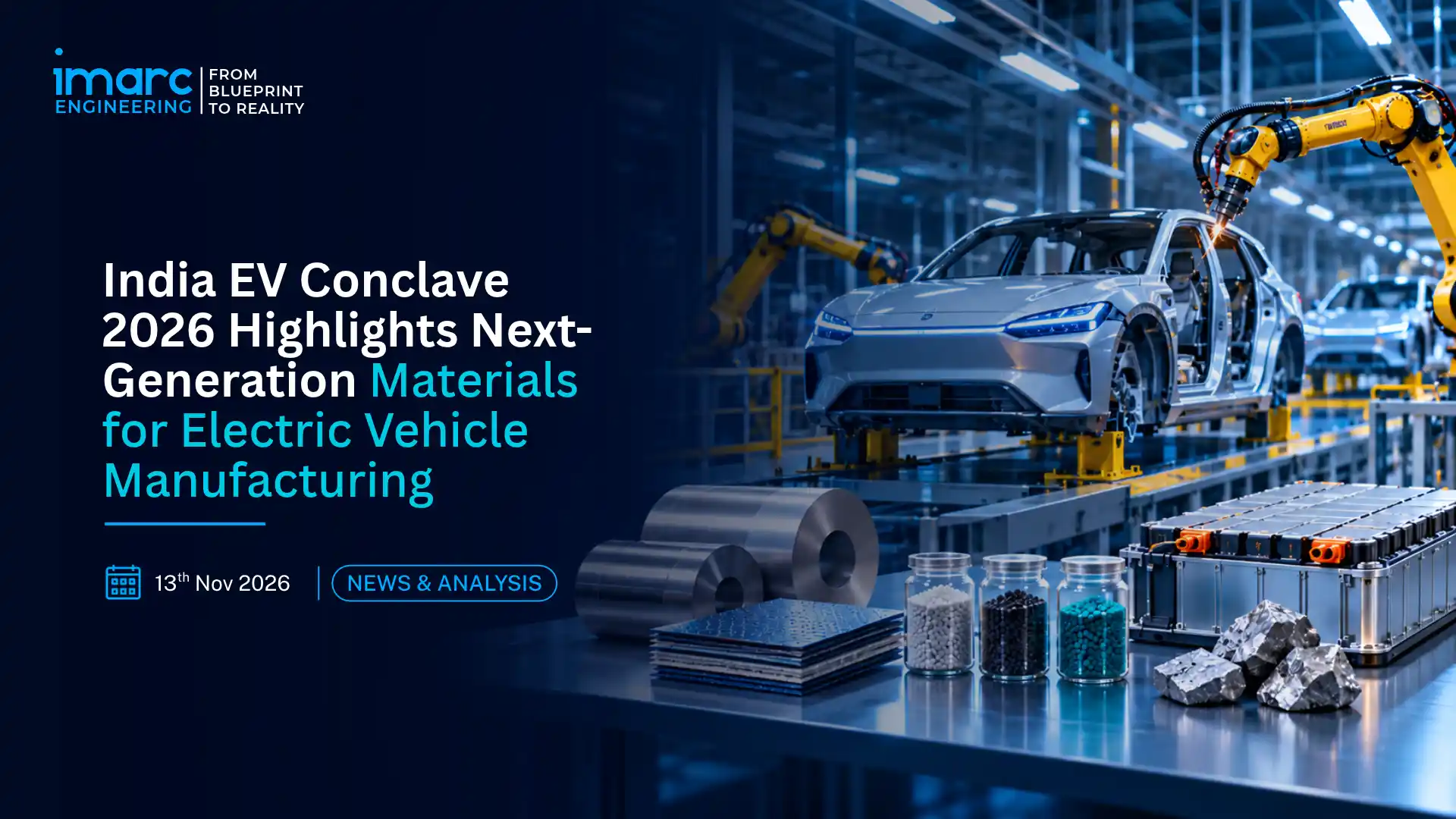
India EV Conclave 2026, organised by Autocar Professional on October 27 at the Hyatt Regency in New Delhi, included a technical session on next-generation EV materials. According to Autocar Professional's November 11 coverage, Ascend Performance Materials presented a cross-linked polyamide compound designed for potential use in battery thermal runaway protection applications. Its reported performance claims remain subject to application-specific testing and validation. Most of the conclave's agenda focused on demand, ownership economics and localisation. Materials featured in technical presentations, and the coverage reviewed is largely company-led.
What is India EV Conclave 2026?
India EV Conclave 2026 is Autocar Professional's annual conclave, themed "Electric Mobility 2.0: Ideas, Innovations & Impact on India". The one-day event covered EV adoption, ownership economics, localisation and the supply chain.
Speakers included the Ministry of Heavy Industries' Additional Secretary Dr Hanif Qureshi and executives from Tata Motors, Mahindra, Hyundai, ZF Group, Ather Energy and Amara Raja. Technical presentations came from Ingersoll Rand, Neenjas Electric and Ascend Performance Materials.
What Next-Generation EV Materials Were Discussed?
The materials coverage centres on Ascend's technical presentation, by Anton Kumanan, Technology Leader for India. He described Starflam X-Protect, a polyamide 66 compound in which electron-beam treatment creates cross-links after conventional injection moulding.
According to the report, standard polyamide 66 loses stiffness as it nears its melting range of roughly 240 to 260 degrees Celsius. Kumanan said the material "nearly becomes a thermoset" after cross-linking. It targets components exposed to heat during battery thermal runaway.
According to Kumanan, the material could provide more than two minutes of additional protection during a battery thermal runaway event. This is a supplier-reported performance claim, and actual protection would depend on component design, testing conditions and validation within the vehicle's battery system. He noted that actual performance depends on the extent of cross-linking, part design and validation for each application. This is a supplier claim and not independent test data.
What Other Materials and Applications Were Mentioned?
Ascend also described overmoulded busbars, which need electrical insulation and heat resistance, and said it is working on them with global automakers. It presented HiDura PA610 and PA612, specialty polyamides reported to absorb less moisture than PA6 and PA66, helping to preserve dimensional stability.
The company said certain materials retained more than 50% of their properties after 1,000 hours of exposure to automotive coolants and fuels. These are company statements.
In a separate premium-EV panel reported on October 28, speakers cited sustainable materials and interior craftsmanship as brand differentiators. They also discussed NMC and LFP battery chemistries. No specific material or performance data were reported from that panel.
How is the Localisation Angle Developing?
Ascend entered India in 2022 by acquiring Chennai-based Formulated Polymers, and operates a compounding facility in Chennai. It plans to make Starflam X-Protect in India. Its proposed route is a ready-to-use compound from Ascend, parts moulded by a Tier 1 supplier, electron-beam treatment at an industrial facility, and validation in the battery system with OEM support.
Kumanan said industrial-scale cross-linking capacity already exists in India. The company is also building simulation capability at IIT Madras Research Park and is seeking OEM and Tier 1 partners. Customer commitments or production dates were not reported.
What Manufacturing Technology Was Presented Alongside the Materials?
Ingersoll Rand's Vikas Bhat spoke on EV manufacturing technology, according to an Autocar Professional report dated November 6. Ingersoll Rand highlighted its role in supplying manufacturing equipment for India's EV industry, including fastening and assembly technologies designed to improve process control and traceability.
The presentation covered fastening tools that record torque and tightening data, which allows individual joints to be traced. These tools can be mounted on robotic arms, and Bhat cited two-wheeler lines running at about 13 to 14 seconds per vehicle.
The report named no specific materials. It is relevant here because new materials and joining methods depend on process control and traceability on the line.
What Else Did the Conclave Say About the Supply Chain?
The concluding panel was titled "Building India's EV Ecosystem: Localisation, Self-Reliance and Competitiveness". It included speakers from ACMA, ZF Group, Amara Raja Group, Ather Energy and ASDC. The coverage reviewed does not report specific outcomes from that panel on materials.
In the premium-EV panel, Brar of BMW India said long-range vehicles need NMC chemistry for energy density. BYD's Rajeev Chauhan highlighted LFP Blade batteries for thermal stability. These are executive statements on battery chemistry, not independent assessments.
Why Are Advanced Materials Important for EV Manufacturing?
Material choice affects safety, weight, thermal performance, cost and manufacturability. In EVs, heat from the battery and power electronics, and the need for range, make these trade-offs sharper than in many conventional vehicles. The conclave coverage does not discuss aluminium alloys, composites or high-strength steel. The examples below are broader industry context and were not reported from the conclave.
How Do Lightweight Materials Affect Component Design, and What is Used in Battery Enclosures?
Lightweight vehicle structures can improve range or allow smaller batteries, but they bring design constraints. Aluminium alloys, advanced composites and high-strength steel each differ in stiffness, joining methods, tooling and repair. Battery enclosure materials are commonly steel, aluminium or composites, chosen for crash protection, sealing, thermal behaviour and fire containment. Thermal management materials are selected for heat conduction and flame resistance. The best choice depends on the vehicle and the cost target.
How Can Advanced Materials Affect Costs, and What Challenges Do Manufacturers Face?
New materials can lower weight or improve safety, but may raise material cost, tooling cost or process complexity. Ascend's route, for example, adds an electron-beam step after moulding. That adds a processing stage and a dependence on cross-linking capacity. Challenges for suppliers include material testing and validation, supplier qualification, reliable sourcing, process control and meeting automotive quality standards. Costs and timelines for the materials discussed were not reported.
The conclave showed supplier interest in new EV materials, but the evidence is early. Manufacturers should treat the claims as starting points for their own testing and qualification.
IMARC Engineering’s Perspective
The discussions at India EV Conclave 2026 highlight the growing importance of material selection, manufacturing compatibility and supplier readiness in electric vehicle component development. For EV component manufacturers and industrial project developers, adopting advanced materials requires more than evaluating product performance. It also involves assessing manufacturing processes, tooling requirements, equipment compatibility, material sourcing, testing infrastructure and production costs.
IMARC Engineering supports manufacturers through feasibility studies, DPR preparation, supplier identification, plant layout and process planning, and engineering coordination for EV component manufacturing projects. The supplier-reported developments discussed at the conclave should be treated as potential opportunities requiring independent technical evaluation, application-specific testing and commercial feasibility assessment.
Latest News
-
India EV Conclave 2026 Highlights Next-Generation Materials for Electric Vehicle Manufacturing
November 13, 2026
-
NTPC Green Energy Invites Bids for Battery Containers and PCS for 40 GWh BESS Projects in India
November 12, 2026
-
India Approves INR 1,856 Crore Khelo India Scheme to Boost Sports Goods Manufacturing
November 06, 2026
-
India Clears 58 Companies Under INR 1,500 Crore Critical Mineral Recycling Scheme, with INR 5,000 Crore in Proposed Investments
November 02, 2026
-
India's Solar Manufacturing Expansion Highlights Growing Need for Integrated Cell and Wafer Production
October 30, 2026
Trusted by Industry Leaders
We partner with global enterprises and ambitious businesses across sectors to deliver operational excellence, strategic insights, and sustainable growth through integrated solutions.



Success in Their Words
Real feedback from clients across industries. Discover how our solutions delivered measurable impact and operational excellence.

I wanted to express my sincere appreciation for your efforts in handling this matter. Your dedication and commitment have been truly commendable, and it is evident that you have put in tremendous hard work and expertise into resolving the issues at hand. We are greatly interested in continuing our collaboration with you in the future, as your professionalism and reliability have made you a trusted partner. Thank you once again for your invaluable contribution. We look forward to strengthening our partnership ahead.

It has been a pleasure working with the IMARC team. The insights provided were structured, clear, and highly valuable, helping us strengthen both our technical and financial planning with confidence. We deeply appreciate the team’s professionalism, responsiveness, and attention to detail throughout the engagement. Every requirement was well understood and effectively incorporated, resulting in a comprehensive and actionable output. Overall, our experience has been excellent, and I would gladly recommend IMARC to organizations seeking a reliable research partner.
Your service is truly exceptional. Working with the IMARC team has been a seamless and professional experience. The clarity of communication, responsiveness to queries, and consistent support at every stage made the entire engagement highly efficient. The insights shared were well-structured, practical, and perfectly aligned with our requirements, helping us make informed decisions with confidence. Overall, the dedication and professionalism demonstrated by your team stand out, and I would be glad to recommend IMARC as a reliable and trustworthy research partner.

IMARC did an outstanding job in preparing our study. They were punctual, precise, and consistently responsive throughout the entire process. The team delivered all the data we required in a clear, well-organized, and highly professional format. Their strong attention to detail, combined with their ability to meet every deadline without compromising quality, truly set them apart. Overall, their reliability and commitment made them an exceptional partner for our project, and we would gladly work with them again in the future.

IMARC made the whole process incredibly easy from start to finish. Everyone I interacted with via email was polite, professional, and straightforward to deal with, always keeping their promises regarding delivery timelines and remaining consistently solutions-focused. From my very first contact, I appreciated the professionalism and support shown by the entire IMARC team. I highly recommend IMARC to anyone seeking timely, affordable, and reliable information or advice. My experience with IMARC was excellent, and I truly cannot fault any aspect of it.

I’d like to express my sincere gratitude for the excellent work you accomplished with the study. Your ability to quickly understand our requirements and deliver high-quality results under tight timelines truly reflects your expertise, exceptional work ethic, and unwavering commitment to your customer’s success. The professionalism and responsiveness you demonstrated throughout the process made a significant difference. Our entire team and company are incredibly thankful for your dedication, reliability, and support. Once again, thank you for your outstanding contribution.
Ready to Experience the IMARC Advantage?
Whether you're planning a new facility, expanding operations, optimizing performance, or facing complex challenges—IMARC Engineering brings the expertise, experience, and commitment needed for success.