Manufacturing
November 25 2026
How to Set Up a Carrier Tape and Reel Manufacturing Plant in India: Pocket Forming, ESD Protection, and Production Line Design
Introduction
Establishing a carrier tape and reel manufacturing plant in India requires specialised polymer processing, precision tooling and electrostatic discharge (ESD) control. These packaging materials protect electronic components during storage, transportation and automated assembly. Product quality depends on pocket dimensions, material properties, indexing accuracy, cover tape compatibility and winding consistency.
Investors must first define whether the proposed facility will manufacture embossed carrier tape, plastic reels, cover tape or a combination of these products. Each option involves different machinery, production processes, tooling requirements and capital investment. Contract tape-and-reel packaging services represent a separate business model. A project feasibility assessment should establish the target product range, customer requirements, manufacturing capacity, material sourcing strategy and investment scope.
Scope of this Guide
This guide answers one question: what technical, machinery, quality and financial requirements should investors evaluate before establishing a carrier tape and reel manufacturing facility in India? It covers embossed carrier tape production and the supply of reels and cover tape, and it separates these from contract tape-and-reel packaging services. Each section flags decisions that are costly to reverse, and every cost figure is tied to a stated scope.
Table of Contents
- Introduction
- Why a Carrier Tape and Reel Manufacturing Plant in India Matters for Investors in 2026
- What Carrier Tape and Reel Packaging is, and How a Carrier Tape and Reel Manufacturing Plant in India Differs from Packaging Services
- How to Start a Carrier Tape and Reel Manufacturing Plant in India: Products, Business Models and Site
- Process and Precision Thermoforming in a Carrier Tape and Reel Manufacturing Plant in India
- Raw Materials, Reels, Cover Tape and ESD Protection for a Carrier Tape and Reel Manufacturing Plant in India
- Quality Testing, Standards and Layout for a Carrier Tape and Reel Manufacturing Plant in India
- Machinery, Capacity and Automation for a Carrier Tape and Reel Manufacturing Plant in India
- Cost, DPR, Approvals and Project Economics for a Carrier Tape and Reel Manufacturing Plant in India
- Conclusion
1. Why a Carrier Tape and Reel Manufacturing Plant in India Matters for Investors in 2026
Four conditions shape the investment case, and each influences the scope worth funding.
1.1 Role in Component Handling and Automated Assembly
Carrier tape holds each component in its own pocket, and cover tape seals it, so reels can feed pick-and-place machines at speed while protecting terminations from damage and static. SMD component packaging and semiconductor component packaging both rely on the format. Demand therefore follows electronics assembly and semiconductor back-end activity rather than one end market.
1.2 Localization and Policy Context
India's semiconductor and electronics manufacturing expansion may create opportunities for domestic suppliers of packaging materials and production inputs. Government initiatives such as the India Semiconductor Mission and the Electronics Component Manufacturing Scheme (ECMS) aim to strengthen domestic electronics and semiconductor supply chains. However, a carrier tape manufacturing project should not assume automatic eligibility for these incentives.
ECMS eligibility depends on the notified target segment, product classification, investment thresholds and other scheme conditions. Carrier tape is not specifically named in the illustrative list of eligible supply-chain products, so investors should obtain confirmation from the scheme's Project Management Agency before including any incentive in the financial model. State industrial policies may offer additional benefits, subject to location and project eligibility.
1.3 Investment Ecosystem and Cluster Depth
Potential locations for a carrier tape manufacturing facility include established electronics and component manufacturing centres such as Noida and Greater Noida, Bengaluru, Chennai-Sriperumbudur-Hosur, Pune, Hyderabad and Sanand. Their suitability should be assessed against the location of target customers, supplier access, logistics costs, industrial infrastructure and availability of skilled personnel. Proximity shortens delivery for just-in-time reel supply and customer audits. Port access matters for imported polymer sheet and tooling steel.
1.4 The Cost of Poor Planning
Machinery is bought before customer pocket drawings are secured, leaving tooling that does not match demand. Conductive sheet is qualified late, so ESD failures surface at customer audit. Capacity is stated at peak line speed, ignoring changeovers and scrap. Underfunding customer qualification also adds months between first shipment and repeat orders.
2. What Carrier Tape and Reel Packaging is, and How a Carrier Tape and Reel Manufacturing Plant in India Differs from Packaging Services
A carrier tape and reel system is a matched set of formed tape, cover tape and reel; a plant manufactures these materials but does not load components.
2.1 Embossed Carrier Tape, Cover Tape, Sprocket Holes, Pockets and Reels
A carrier tape is a continuous strip containing individual pockets that hold electronic components in a defined orientation. Sprocket holes allow automated placement equipment to index the tape accurately. A cover tape seals the pockets during storage, handling and transportation, while the completed tape is wound onto a reel.
Tape width, pocket dimensions, component pitch, sprocket-hole geometry and reel dimensions must match the applicable packaging standard and customer drawing. Common reel formats include 7-inch and 13-inch sizes, although other configurations may be specified for particular applications.
2.2 Embossed versus Punched Carrier Tape
Carrier tape designs include punched, pressed and embossed constructions. Punched carrier tape is formed by creating cavities through the base material, with the component compartment closed using a bottom cover tape and a top cover tape where required. Pressed carrier tape forms cavities by compressing the base material.
Embossed or blister carrier tape uses thermoforming to create shaped pockets in a plastic sheet. The suitable construction depends on component geometry, tape width, pocket depth, material requirements and the applicable packaging specification. Each process requires a different tooling and machinery configuration.
2.3 Carrier Tape Manufacturing versus Tape-and-Reel Packaging Services
Carrier tape manufacturing converts polymer sheet into packaging materials sold to component makers and EMS companies. Tape-and-reel services place a customer's components into pockets, seal, label and reel them, often with baking and dry-pack capability for moisture-sensitive devices.
The first is a polymer-converting business judged on tooling and dimensional control; the second is contract packaging judged on component handling and traceability. This guide focuses on manufacturing carrier tape and related packaging materials. Contract tape-and-reel services are discussed only to clarify the difference in business scope and investment requirements.
2.4 Plant Sections and Infrastructure Requirements
A carrier tape and reel manufacturing plant should be divided into functional areas based on its product range and production processes. The layout should support material movement from storage and preparation through forming, punching, inspection, winding and dispatch. Additional production areas are required if the facility also manufactures plastic reels, cover tape or polymer sheets.
| Plant Section | Function | Key Equipment and Infrastructure |
|---|---|---|
| Raw Material Storage | Store polymer sheets, resin, film rolls, reels and other production inputs under suitable conditions | Storage racks, roll-handling equipment, material identification and traceability systems |
| Sheet Conditioning Area | Prepare polymer sheets for forming and maintain material quality before processing | Controlled storage, pre-drying equipment and material-conditioning systems, where required by the material specification |
| Carrier Tape Forming Area | Form component pockets through thermoforming or other selected forming processes | Roll-fed thermoforming machines, heating systems, forming tools, vacuum or pressure systems and cooling equipment |
| Punching and Slitting Area | Produce indexing holes and cut formed tape to the required width | Rotary or stepper punching units, precision slitters and dimensional inspection equipment |
| Inspection and Winding Area | Check tape dimensions and surface quality before winding finished rolls | Inline vision systems, profile measurement equipment, tension-controlled winders and labelling systems |
| Plastic Reel Production Area | Manufacture reels through injection moulding and complete finishing or assembly operations | Injection moulding machines, reel-specific moulds, resin feeders, material-conditioning equipment where required, and assembly stations |
| Cover Tape Production Area | Convert film substrates into cover tape through coating, laminating, slitting and rewinding | Film unwinding units, coating or laminating equipment, drying or curing systems where applicable, slitters and rewinders |
| Sheet Extrusion Area | Manufacture polymer sheets in-house for subsequent carrier tape forming | Polymer extruders, flat dies, sheet-forming systems, chill rolls, haul-off equipment and sheet winders |
| Tooling and Maintenance Area | Maintain forming tools, punching dies and other production tooling | Tool storage racks, maintenance benches and precision machining equipment where in-house tooling is justified |
| Quality Control Laboratory | Test dimensional accuracy, material properties, sealing performance and ESD characteristics | Coordinate measuring equipment, profile projectors, peel-force testers, thickness gauges and electrical resistance meters |
| Utilities and Engineering Services | Supply power, cooling, compressed air and ventilation for production operations | Electrical panels, transformers, backup power where required, chillers, cooling-water systems, air compressors and ventilation equipment |
| Scrap and Waste Management Area | Segregate polymer offcuts, start-up scrap, rejected products and other process waste | Scrap collection bins, granulators where reprocessing is suitable, designated storage areas and waste-handling systems |
The exact infrastructure depends on the manufacturing model. A facility producing embossed carrier tape from purchased polymer sheets will primarily require forming, punching, slitting, inspection and winding equipment. In-house sheet extrusion, plastic reel moulding or cover tape production will require additional production areas, machinery, tooling and utilities.
Precision tooling may be manufactured in-house or sourced from specialised toolmakers. Equipment such as CNC milling machines, wire EDM systems and jig grinders should be considered only when production volumes, product variety, maintenance requirements and tooling lead times justify the investment.
Factory layout should also provide adequate space for raw material storage, finished-goods handling, inspection, maintenance and future capacity expansion. Material movement, environmental controls and ESD protection should be planned according to the product specifications and customer requirements.
3. How to Start a Carrier Tape and Reel Manufacturing Plant in India: Products, Business Models and Site
Starting a carrier tape manufacturing business means fixing products, customers and scope before machinery.
3.1 Product Selection and Customer Requirements
Start from customer drawings, not machine catalogues. Define tape widths, pocket sizes and depths, pitches, material grade (conductive, dissipative or clear), cover-tape compatibility and reel size for the first target accounts. Component families such as SOT, QFN, BGA, connectors and LEDs imply different pockets. Standard widths with few pocket sizes lower tooling inventory; custom pockets add tooling cost and approval time.
3.2 Business Models and Investment Scope
The investment scope of a copper recycling plant depends on the range of operations the facility intends to undertake. A project may focus only on processing purchased scrap or extend into component manufacturing and integrated production. Each configuration requires a different set of machinery, infrastructure, and capital investment, as outlined below.
Embossed tape only: purchased sheet; forming, slitting, inspection and winding; reels and cover tape bought in.
Tape plus reels: adds injection moulding presses, reel moulds and handling.
Tape plus cover tape: adds coating, laminating and slitting lines on a separate process flow.
Integrated with sheet: adds extrusion and conductive compounding.
Contract tape-and-reel services are a distinct activity. Investment and machinery differ significantly between these scopes, so any cost figure must state which one it assumes.
3.3 Site Selection
Select sites for stable power quality, humidity-control capability, truck access, proximity to customer clusters and room for expansion. Forming lines need level, vibration-limited floors and overhead clearance for roll handling. Notified industrial estates in electronics clusters can shorten approvals; check feeder reliability, water availability and state incentive terms before allotment.
3.4 Feasibility and Implementation Planning
Implementation runs from feasibility and customer commitments to DPR, site and approvals, machinery and tooling specification, installation, trial production, sample approval and ramp-up. Customer qualification runs alongside commissioning because first samples depend on tuned tooling. Treat sample approvals as schedule milestones and model a pre-revenue period whose length depends on vendor lead times and customers.
4. Process and Precision Thermoforming in a Carrier Tape and Reel Manufacturing Plant in India
The carrier tape manufacturing process runs from sheet to wound tape; punching and forming sequences vary by machinery configuration.
4.1 Plastic Film Preparation and Feeding
Polystyrene, polycarbonate or PET sheet arrives on cores at a thickness chosen for tape width and pocket depth. Rolls are conditioned in the forming hall, then loaded on unwinds with edge-position and tension control. Sheet rolls should be stored under conditions that prevent contamination, deformation and moisture-related quality issues.
Any pre-drying or conditioning requirement should be established from the material supplier's technical specification and the forming process. Lot identification and splice records should be maintained for traceability.
4.2 Pocket Forming and Precision Thermoforming
Sheet passes through a heating zone to the resin's forming range from the supplier datasheet, then to a forming station where tooling with vacuum, pressure or plug assist shapes the pockets. Cooling sets geometry. Forming temperature, dwell, vacuum level and cooling rate govern pocket depth, wall thickness and shrinkage, and are recorded as a validated process window per product.
Forming trials should also verify wall-thickness distribution, pocket deformation, component fit and dimensional stability after cooling, since acceptable pocket depth alone does not establish component compatibility.
4.3 Sprocket Hole Punching, Inspection, Winding and Packing
Sprocket holes are punched at the indexing pitch specified by the applicable carrier tape standard, commonly 4 mm for standard EIA-481 carrier tape formats. The punching unit is synchronised with the forming and indexing system, and punching may occur before or after pocket forming, depending on the machine configuration. Inline vision checks pocket presence, hole position and defects. Tape is slit to width, wound on reels with tension control and level winding, then labelled, bagged and boxed.
4.4 Carrier Tape Tooling, Pocket Geometry and Changeovers
Carrier tape tooling includes forming dies or rotary moulds, punch and die sets and slitting knives. Pocket length, width, depth, corner radii and draft are designed so the component fits without tilting or rotating, with allowance for forming shrinkage. Precision tooling may be developed in-house or procured from specialised toolmakers. In-house CNC machining, wire EDM and jig grinding can improve control over tool maintenance and modification, but their investment should be justified by production volume, product variety and tooling lead times.
Each changeover needs tool swap, thermal stabilization and first-article inspection, so its frequency drives utilization. The tooling plan should include the number of pocket designs, expected product changeovers, spare tool availability, tool life, maintenance requirements and customer approval timelines. A broad custom-product portfolio can increase tooling inventory and reduce effective line utilisation.
5. Raw Materials, Reels, Cover Tape and ESD Protection for a Carrier Tape and Reel Manufacturing Plant in India
Material choice sets formability, ESD performance and customer acceptance, so it is a quality decision before it is a purchasing one.
5.1 Polymer Films for Semiconductor Carrier Tape
Polystyrene is common for cost-efficient, readily formed tape. Polycarbonate offers higher heat resistance and toughness for demanding uses. PET suits clear, strong tapes. Selection depends on component weight, handling temperature, transparency, forming behavior and customer specification. Supplier qualification should cover datasheets, lot-to-lot consistency and regrind tolerance.
Material qualification should also consider sheet thickness consistency, forming behaviour, mechanical strength, pocket-wall uniformity, dimensional stability and compatibility with the selected cover tape. Conductive or dissipative grades should be evaluated for electrical performance and lot-to-lot consistency.
Material suppliers should provide technical datasheets, test certificates and traceability information. Regrind use should be controlled because repeated processing and mixing of different material grades can affect forming behaviour and ESD performance.
5.2 Conductive and Antistatic Grades
Carrier tape materials may be specified as conductive, static-dissipative or antistatic, depending on the required electrostatic performance. Conductive grades commonly use carbon-based fillers, while dissipative and antistatic properties may be achieved through material additives, coatings or other treatments. These approaches differ in electrical resistance, charge generation, durability and sensitivity to environmental conditions.
Material selection should follow the component manufacturer's ESD requirements and customer specifications. Testing should consider surface resistance, charge generation or decay characteristics where required, along with performance stability after storage and environmental exposure.
5.3 Plastic Reel and Cover Tape Manufacturing Options
Plastic reel and cover tape production involve separate manufacturing processes and should be evaluated independently from carrier tape thermoforming. Plastic reels are generally produced through injection moulding. The process involves resin preparation, material feeding, injection moulding, cooling, part ejection, inspection and assembly of reel components where required. Reel moulds must maintain the specified hub, flange, bore and dimensional characteristics. Injection moulding machinery, moulds, resin-handling systems and assembly equipment add to the plant's capital requirements.
Cover tape manufacturing generally involves unwinding a suitable film substrate, applying an adhesive or sealant coating, drying or curing where required, slitting to the specified width, inspection and rewinding. Coating chemistry and sealing performance must be compatible with the carrier tape material and the customer's sealing equipment. Peel force, seal consistency, film handling and storage stability are important qualification parameters.
A new facility may initially purchase reels and cover tape from established suppliers while concentrating investment on carrier tape production. In-house manufacturing should be considered when customer demand, product volumes, quality requirements and investment returns justify the additional equipment and technical capabilities.
Plastic Reel Manufacturing Process:
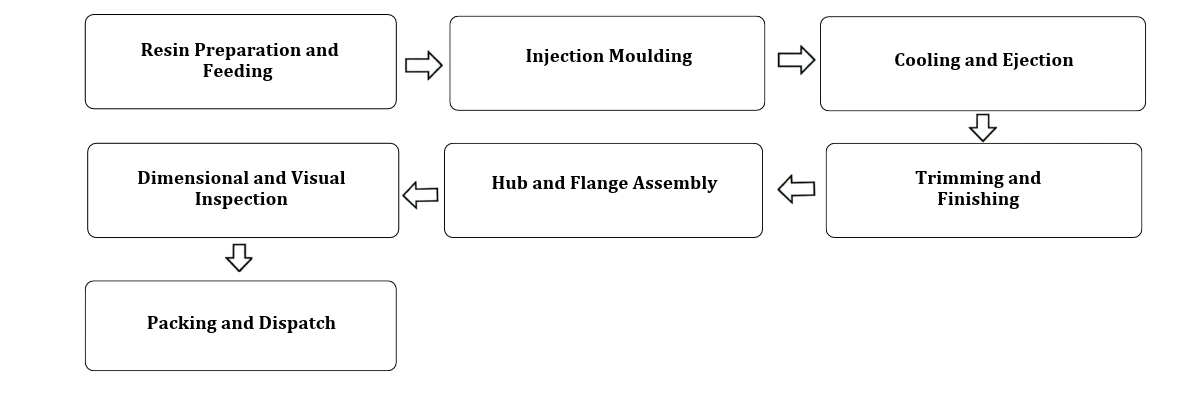
The process configuration depends on reel design, resin grade, mould construction, cavity arrangement and required production volume.
Cover Tape Manufacturing Process:
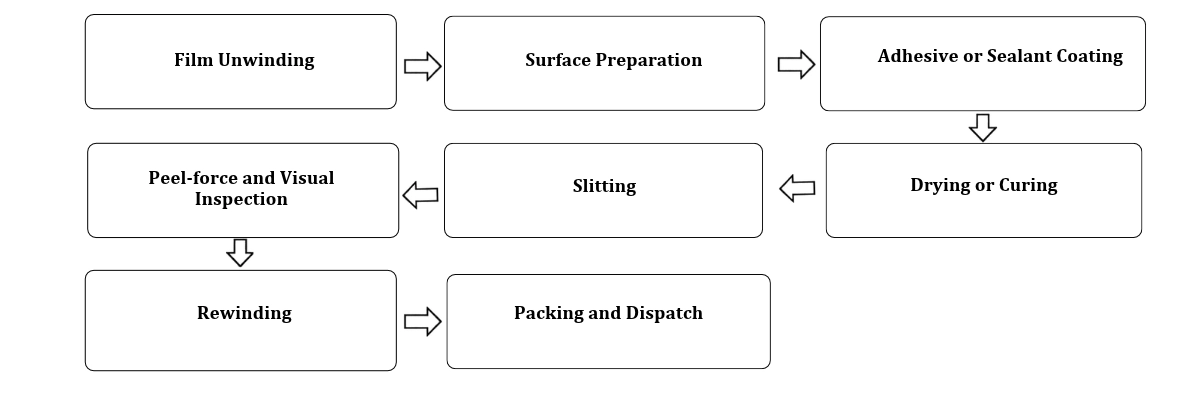
The coating and sealing process should be validated against the carrier tape material and the customer's sealing equipment and process parameters.
5.4 ESD Protection and Material Qualification
ESD protection involves material selection, electrical resistance control, grounding, personnel handling practices and suitable storage and transportation procedures. Carrier tape grades should be selected according to the electrostatic sensitivity of the components and the customer's packaging specification.
Surface resistance can be evaluated using an applicable test method such as ANSI/ESD STM11.11-2022, with test conditions and acceptance limits defined by the relevant specification. ANSI/ESD S20.20-2021 and IEC 61340-5-1:2024 provide requirements for establishing and maintaining an ESD control programme within organisations that handle ESD-sensitive devices. These standards should be distinguished from product-specific material testing and qualification requirements.
6. Quality Testing, Standards and Layout for a Carrier Tape and Reel Manufacturing Plant in India
Quality evidence, not nameplate capability, converts samples into repeat orders.
6.1 Dimensional Inspection and Pocket Accuracy
Inspection measures pocket length, width and depth, pocket pitch, hole diameter and position, tape width, thickness and camber. Tools include video measuring systems, profile projectors, depth and thickness gauges and CMMs, supported by inline vision and statistical process control. Component fit trials with sample parts verify retention and orientation, with sampling plans set per customer.
Inspection should also evaluate pocket wall thickness, cavity deformation, burrs, surface defects, component tilt, component rotation and component retention. The inspection plan should identify the measurement method, sampling frequency, tolerance limits and first-article acceptance criteria for each product design. Vision systems can support continuous inspection, while offline metrology verifies critical dimensions and confirms production capability.
6.2 EIA-481, Cover Tape Compatibility and Winding Quality
ECIA EIA-481-F:2021 specifies requirements for embossed and punched carrier taping of surface-mount components for automatic handling. IEC 60286-3:2022 provides an international specification for packaging surface-mount components on continuous tapes. These standards address relevant tape, pocket, indexing and reel dimensions, as applicable to the packaging format.
Cover tape qualification should evaluate peel force and sealing consistency against the applicable specification and customer requirements. Reel inspection should cover dimensions, flange alignment, winding tension, edge position and telescoping. The revision and dimensional requirements specified by the customer should be confirmed before tooling design is finalised.
6.3 Customer Qualification and JEDEC Requirements
Customer qualification typically involves sample submission, first-article inspection, dimensional measurement records, material datasheets, ESD test results and production capability evidence. Component manufacturers may also specify requirements relating to device handling and moisture sensitivity.
JEDEC JESD625C.01:2024 addresses handling of ESD-sensitive devices, while IPC/JEDEC J-STD-033 covers handling, packing, shipping and use of moisture- and reflow-sensitive devices. These requirements should be considered where relevant to the customer's packaging and handling process. Carrier tape suppliers should maintain batch traceability, tooling records, inspection reports and consistent quality documentation to support customer approval and repeat orders.
A typical customer qualification process involves:
- Review of customer drawings, material specifications and packaging requirements.
- Tooling design and production of initial samples.
- Dimensional inspection and ESD material testing.
- Component fit and orientation trials.
- Cover tape sealing and peel-force validation, where applicable.
- Submission of inspection reports and material documentation.
- Customer approval, process validation and production release.
The exact sequence and acceptance criteria depend on the customer's supplier qualification procedure.
6.4 Land, Factory Layout and Utility Requirements
Factory layout should follow the production sequence: raw material storage, sheet conditioning, pocket forming, punching, slitting, inspection, winding, packing and dispatch. Separate areas may be required for tooling, quality testing, reel moulding and cover tape production, depending on the business model.
Environmental conditions such as temperature, humidity, dust levels and ESD controls should be established according to material properties, process stability and customer specifications. A cleanroom should not be assumed to be necessary unless the product, process or customer qualification requirements justify it.
Utilities include stable electrical supply, backup power where required, cooling water or chilled water for equipment, compressed air and suitable ventilation for heating and coating operations. Conventional thermoforming may operate with a recirculating cooling-water system, while coating, cleaning or other integrated processes may generate additional wastewater or emissions. Polymer offcuts, rejected tape and start-up scrap should be segregated and assessed for controlled reprocessing or disposal. The final utility and waste-management design should reflect the actual manufacturing scope.
7. Machinery, Capacity and Automation for a Carrier Tape and Reel Manufacturing Plant in India
Machinery configuration and realistic capacity logic decide how much saleable tape a carrier tape production line delivers.
7.1 Carrier Tape Manufacturing Machinery and Equipment
Core equipment is the roll-fed thermoforming line with heaters, forming station and cooling, followed by sprocket punching, slitting, inline vision and precision winding. Supporting equipment includes tool-room machines, metrology and ESD measurement instruments. Specify the punch-before or punch-after-forming configuration against product mix, and run acceptance trials on the buyer's own pocket designs.
A facility manufacturing plastic reels will additionally require injection moulding machines, reel-specific moulds, resin dryers or material-conditioning systems where required, material feeders, part-handling equipment and assembly or finishing stations. In-house cover tape production requires film unwinding, coating or laminating equipment, drying or curing systems where applicable, slitting, inspection and rewinding machinery.
An integrated sheet-manufacturing facility will also require polymer extrusion, sheet-forming, cooling, haul-off and winding equipment. These production lines should be specified and costed separately from the embossed carrier tape line.
7.2 Production Capacity Calculation
Carrier tape production capacity should be calculated from line speed, scheduled operating time, equipment availability, production performance and quality yield. Under the standard OEE methodology, availability, performance and quality are combined into one overall equipment effectiveness figure.
Annual saleable output in metres can therefore be estimated as:
Annual output = Rated line speed × Scheduled operating minutes × OEE
Where OEE already includes quality losses, a separate yield factor should not be applied again. If the plant uses an availability-and-performance factor that excludes quality, the quality yield should be calculated separately.
Actual output depends on tape width, pocket pitch, pocket depth, material grade, forming stability, tooling changeovers, start-up scrap, rejection rates and planned maintenance. Capacity should be calculated separately for each product family and converted into saleable output using realistic operating assumptions. Supplier-rated line speed should be validated through production trials and equipment acceptance testing.
7.3 Automation, Utilization and Rejection Planning
Automation planning covers inline vision with reject marking, roll loading, tension-controlled winding, barcode labelling and recipe storage for validated process windows. Track changeover loss, start-up scrap and rejection by product, and report OEE per line. Higher automation reduces operator variation but raises capital and skill needs, so stage it with volume.
Production reporting should distinguish between gross line output, accepted saleable tape, reprocessed material and rejected output. This helps identify losses caused by forming defects, punching errors, dimensional variation, winding problems and product changeovers.
7.4 Key Machinery
| Category | Equipment | Selection basis |
|---|---|---|
| Forming | Roll-fed thermoforming line | Tape width, pocket depth, pitch, material, line speed and forming configuration |
| Punching | Rotary or stepper punch unit | Hole geometry, indexing accuracy and punch-before or punch-after-forming configuration |
| Slitting | Precision slitter | Tape width range, edge quality, material thickness and changeover frequency |
| Inspection | Inline vision and offline metrology | Critical dimensions, pocket geometry, hole position and inspection frequency |
| Winding | Tension-controlled winder | Reel size, winding tension, alignment and finished roll quality |
| Tooling | Forming dies, punch tools and slitting knives | Number of product designs, tool life, tolerances and maintenance requirements |
| Testing | Peel tester, resistance meter and dimensional inspection equipment | Customer test specifications and ESD requirements |
| Reel production | Injection moulding machine and reel moulds | Reel dimensions, resin grade, mould cavities and annual demand |
| Cover tape | Coating or laminating, slitting and rewinding line | Film substrate, adhesive system, seal requirements and production volume |
| Sheet extrusion | Extruder, flat die and sheet winding system | Sheet width, thickness, resin grade and integrated production capacity |
| Utilities | Chillers, compressors, power distribution and backup systems | Equipment load, operating schedule and utility balance |
Machinery should be selected according to the defined product portfolio and business model. An embossed carrier tape-only facility can begin with purchased polymer sheet and a thermoforming line. Adding reel production, cover tape conversion or sheet extrusion requires separate equipment, tooling, utilities, quality controls and working-capital provisions. Equipment sizing should be based on actual product specifications and validated production rates rather than a fixed number of machines.
8. Cost, DPR, Approvals and Project Economics for a Carrier Tape and Reel Manufacturing Plant in India
Investment requirements for a carrier tape and reel manufacturing plant depend on the proposed product range, production capacity, machinery configuration, tooling requirements and level of manufacturing integration. The following sections outline the major cost components, financial feasibility considerations and regulatory requirements to be evaluated during project planning.
8.1 Carrier Tape Manufacturing Plant Cost Drivers
Cost depends on scope, line count, tape width range, tooling inventory, controlled-area size, utilities, test equipment, factory setup and working capital. Imported machinery and tooling add duty, freight and installation. A single investment figure is not meaningful without stating whether reels and cover tape are included, so compare projects like-for-like on scope.
The cost model should distinguish between purchased and in-house manufactured sheet, carrier tape tooling, plastic reel moulds, cover tape coating systems and product inspection equipment. Other significant considerations include imported machinery, installation and commissioning, spare parts, tooling maintenance, customer qualification trials, material testing, start-up scrap and the time required to secure repeat customer orders. These factors should be assessed separately for each proposed business model.
8.2 DPR and Financial Feasibility
A carrier tape manufacturing plant DPR should establish the product portfolio, target customers, tape width range, pocket dimensions, component applications and material specifications. It should define the proposed manufacturing scope, including embossed or punched tape, plastic reels, cover tape and any in-house sheet extrusion. The DPR should also cover production capacity, machinery selection, tooling inventory, raw material consumption, scrap and rejection assumptions, customer qualification costs, CAPEX, OPEX, utilities, manpower and working capital.
Financial projections should incorporate product-wise selling prices, material costs, production utilisation, tooling expenses, maintenance, customer payment terms and the time required to qualify products. The financial model should include cash flow projections, break-even analysis, IRR, NPV, DSCR and sensitivity analysis for raw material prices, rejection rates, capacity utilisation and customer demand. Implementation risks should cover machinery delivery, tooling validation, regulatory approvals, customer qualification and competition from established suppliers.
8.3 Profitability Factors for a Carrier Tape Manufacturing Business
Profitability depends on raw material costs, product mix, selling prices, tooling utilisation, production yield and customer demand. Resin price fluctuations can affect material costs, while custom pocket designs increase tooling requirements and changeover time. Rejection rates, start-up scrap, line utilisation, energy consumption and maintenance also influence manufacturing costs. Customer qualification periods and payment terms affect working capital and the time required to generate repeat revenue. Manufacturers should therefore assess product-wise contribution margins, capacity utilisation, customer concentration and sensitivity to material price changes before committing investment.
8.4 Regulatory Approvals and Environmental Compliance
Regulatory requirements for a carrier tape manufacturing plant in India depend on the manufacturing scope, location, installed machinery, pollution category and materials handled. The approval checklist should be finalised before construction and commissioning.
Key requirements may include:
- Factory registration and licensing: Factory registration, plan approval, licensing and occupational safety compliance under the Occupational Safety, Health and Working Conditions Code, 2020 and applicable Central and State rules.
- Pollution-control consents: Consent to Establish and Consent to Operate, where applicable, under the Water (Prevention and Control of Pollution) Act, 1974, the Air (Prevention and Control of Pollution) Act, 1981 and relevant SPCB/PCC requirements.
- Plastic waste compliance: Assessment of applicability under the Plastic Waste Management Rules, 2016, as amended, including producer classification, EPR registration and obligations where relevant.
- Hazardous-waste authorisation: Compliance with the Hazardous and Other Wastes (Management and Transboundary Movement) Rules, 2016, as amended, where regulated waste streams are generated.
- Fire and electrical safety: Applicable fire-safety clearances, electrical installation approvals and inspection requirements based on the site and equipment.
- Business registrations: Udyam registration, GST registration and other business or local registrations, as applicable.
A conventional dry thermoforming facility may have different pollution-control requirements from an integrated unit undertaking sheet extrusion, injection moulding or solvent-based cover tape coating. Wastewater, air emissions, polymer scrap and hazardous waste should therefore be assessed against the actual process configuration. The final approval schedule should be confirmed with the relevant authorities before the plant layout is frozen.
8.5 Project Economics
Indicative Cost Heads for a Carrier Tape and Reel Manufacturing Plant
The investment required for a carrier tape manufacturing plant in India depends on the manufacturing scope, production capacity, material sourcing strategy, tooling requirements and level of integration. The DPR should assess the following cost heads separately:
| Cost Head | Main Components |
|---|---|
| Land and site development | Land purchase or lease, site preparation, internal roads and drainage |
| Civil construction | Production halls, raw material stores, finished goods storage, laboratory and utility buildings |
| Carrier tape machinery | Thermoforming lines, punching systems, slitters, inspection equipment and winders |
| Tooling | Forming dies, punch tools, slitting knives, spare tooling and maintenance equipment |
| Reel manufacturing | Injection moulding machines, reel moulds, resin handling and assembly equipment |
| Cover tape manufacturing | Coating or laminating equipment, drying or curing systems, slitters and rewinders |
| Sheet extrusion | Extrusion line, flat die, cooling rolls, haul-off and winding equipment |
| Utilities and installation | Electrical distribution, cooling systems, compressed air, ventilation and equipment installation |
| Quality and testing | Dimensional inspection, peel-force testing, ESD measurement and laboratory equipment |
| Pre-operative expenses | Engineering, approvals, recruitment, training, trials and customer qualification |
| Working capital | Raw material inventory, work-in-progress, finished goods, receivables and operating cash requirements |
The DPR should use supplier quotations, civil estimates, equipment specifications and project-specific utility calculations. It should state whether land, taxes, import duties, freight, installation, contingency, interest during construction and working capital are included or excluded. Separate investment estimates should be prepared for embossed carrier tape-only manufacturing, reel production, cover tape production and fully integrated operations.
8.6 How IMARC Engineering Supports Carrier Tape Manufacturing Plant Setup
IMARC Engineering supports investors and manufacturers planning carrier tape and reel production facilities in India through feasibility studies, business planning, site selection, plant layout and process flow design, machinery selection, CAPEX and OPEX planning, and regulatory approval advisory.
Its engineering consulting services help evaluate manufacturing scope, production capacity, tooling requirements, utilities, quality-control infrastructure and implementation planning for embossed carrier tape, plastic reels, cover tape and integrated manufacturing facilities.
Conclusion
A bankable carrier tape and reel manufacturing plant in India is built backwards from the customer: the pocket drawings, material grades and qualification evidence that target accounts require determine tooling, machinery, controlled-area design and, finally, the capital figure. Investors who treat forming, ESD control, inspection and winding as one engineered system avoid funding a second round to correct mismatches.
Three priorities decide outcomes. First, fix business scope and customer requirements before sizing machinery, so reels and cover tape are consciously made or sourced. Second, build tooling capability and validated process windows early, and calculate capacity from OEE, changeover and rejection assumptions rather than line speed. Third, run customer qualification, ESD verification and approvals in parallel with commissioning. Incentives, automation level and finish are secondary to these.
PURSUING A CARRIER TAPE AND REEL MANUFACTURING PLANT IN INDIA?
IMARC Engineering supports investors, electronics component manufacturers and project sponsors planning carrier tape and reel manufacturing facilities in India through feasibility studies, site selection, plant layout and process flow design, equipment selection, utility planning, CAPEX and OPEX assessment, regulatory approval support and waste-management planning. The advisory covers embossed carrier tape, plastic reel and cover tape production, including sheet preparation, precision thermoforming, pocket forming, punching, inspection and winding.
→ Schedule a carrier tape and reel manufacturing scoping consultation with an IMARC specialist
Frequently Asked Questions
Begin with target customers and their pocket drawings, then choose scope: embossed tape only, or with reels and cover tape. Prepare a DPR, select a site in an electronics cluster, specify forming and tooling capability, secure approvals, and plan customer sample qualification alongside commissioning.
Polymer sheet is conditioned, heated and thermoformed into pockets, sprocket holes are punched, tape is inspected, slit and wound. Machinery includes roll-fed thermoforming lines, punching stations, slitters, inline vision, tension winders, tool-room machines and QC instruments. Punch-and-form sequence varies by machine configuration.
Embossed carrier tape is made by thermoforming plastic sheet into shaped component pockets. Punched carrier tape is produced by creating cavities through the base material and closing them with a bottom cover tape, where required by the design. Pressed carrier tape forms cavities by compressing the base material. These constructions have different material, tooling and machinery requirements, as defined by the applicable packaging specification.
Common materials are polystyrene, polycarbonate or PET sheet made conductive or dissipative with carbon-based fillers, or made antistatic through coatings or additives. Cover tape uses PET film with adhesive and antistatic treatment. Grade selection follows component ESD sensitivity and customer specification, verified by surface resistance testing.
Investment depends on the manufacturing scope, production capacity, equipment configuration, tooling inventory, material sourcing and site infrastructure. An embossed carrier tape-only plant has a different cost structure from an integrated facility manufacturing plastic reels, cover tape and polymer sheet. A project-specific DPR should assess machinery, tooling, utilities, civil works, testing equipment, installation, pre-operative expenses and working capital before establishing the investment requirement.
Manufacturing produces the carrier tape, cover tape and reels from polymer materials, judged on tooling and dimensional control. Tape-and-reel services load customers' components into the tape, seal, label and reel them, judged on handling, traceability and, where relevant, baking and dry-pack capability.
ECIA EIA-481-F:2021 specifies requirements for embossed and punched carrier taping of surface-mount components for automatic handling. It covers relevant tape, pocket, sprocket-hole and reel dimensions, along with associated packaging requirements. IEC 60286-3:2022 provides the corresponding international framework for packaging surface-mount components on continuous tapes. Manufacturers should use the revision and dimensional requirements specified by the customer before designing tooling or approving production.
Reels are injection moulded, usually in polystyrene or similar resin, in multi-cavity moulds forming flanges and hubs to EIA-481 dimensions, then assembled and inspected. ESD-suitable resin is used where required. Reel moulding is a separate process flow needing presses, moulds and its own quality checks.
Typical tests include pocket length, width, depth and pitch, sprocket hole position, tape width, thickness, camber, cover tape peel force, surface resistance and winding quality. Component fit trials and customer-specific records complete the set. Required tests depend on customer specification and EIA-481.
Carrier tape production capacity is calculated from rated line speed, scheduled operating time and overall equipment effectiveness (OEE). Since OEE includes availability, performance and quality losses, a separate yield factor should not be applied again. The DPR should cover product range, production capacity, machinery, tooling, CAPEX, OPEX, customer qualification costs, working capital, break-even analysis, IRR, NPV, DSCR and project risks.
Recent Post



Trusted by Industry Leaders
We partner with global enterprises and ambitious businesses across sectors to deliver operational excellence, strategic insights, and sustainable growth through integrated solutions.











Success in Their Words
Real feedback from clients across industries. Discover how our solutions delivered measurable impact and operational excellence.

I wanted to express my sincere appreciation for your efforts in handling this matter. Your dedication and commitment have been truly commendable, and it is evident that you have put in tremendous hard work and expertise into resolving the issues at hand. We are greatly interested in continuing our collaboration with you in the future, as your professionalism and reliability have made you a trusted partner. Thank you once again for your invaluable contribution. We look forward to strengthening our partnership ahead.

It has been a pleasure working with the IMARC team. The insights provided were structured, clear, and highly valuable, helping us strengthen both our technical and financial planning with confidence. We deeply appreciate the team’s professionalism, responsiveness, and attention to detail throughout the engagement. Every requirement was well understood and effectively incorporated, resulting in a comprehensive and actionable output. Overall, our experience has been excellent, and I would gladly recommend IMARC to organizations seeking a reliable research partner.

Your service is truly exceptional. Working with the IMARC team has been a seamless and professional experience. The clarity of communication, responsiveness to queries, and consistent support at every stage made the entire engagement highly efficient. The insights shared were well-structured, practical, and perfectly aligned with our requirements, helping us make informed decisions with confidence. Overall, the dedication and professionalism demonstrated by your team stand out, and I would be glad to recommend IMARC as a reliable and trustworthy research partner.

IMARC did an outstanding job in preparing our study. They were punctual, precise, and consistently responsive throughout the entire process. The team delivered all the data we required in a clear, well-organized, and highly professional format. Their strong attention to detail, combined with their ability to meet every deadline without compromising quality, truly set them apart. Overall, their reliability and commitment made them an exceptional partner for our project, and we would gladly work with them again in the future.

IMARC made the whole process incredibly easy from start to finish. Everyone I interacted with via email was polite, professional, and straightforward to deal with, always keeping their promises regarding delivery timelines and remaining consistently solutions-focused. From my very first contact, I appreciated the professionalism and support shown by the entire IMARC team. I highly recommend IMARC to anyone seeking timely, affordable, and reliable information or advice. My experience with IMARC was excellent, and I truly cannot fault any aspect of it.

I’d like to express my sincere gratitude for the excellent work you accomplished with the study. Your ability to quickly understand our requirements and deliver high-quality results under tight timelines truly reflects your expertise, exceptional work ethic, and unwavering commitment to your customer’s success. The professionalism and responsiveness you demonstrated throughout the process made a significant difference. Our entire team and company are incredibly thankful for your dedication, reliability, and support. Once again, thank you for your outstanding contribution.