Manufacturing
October 16 2026
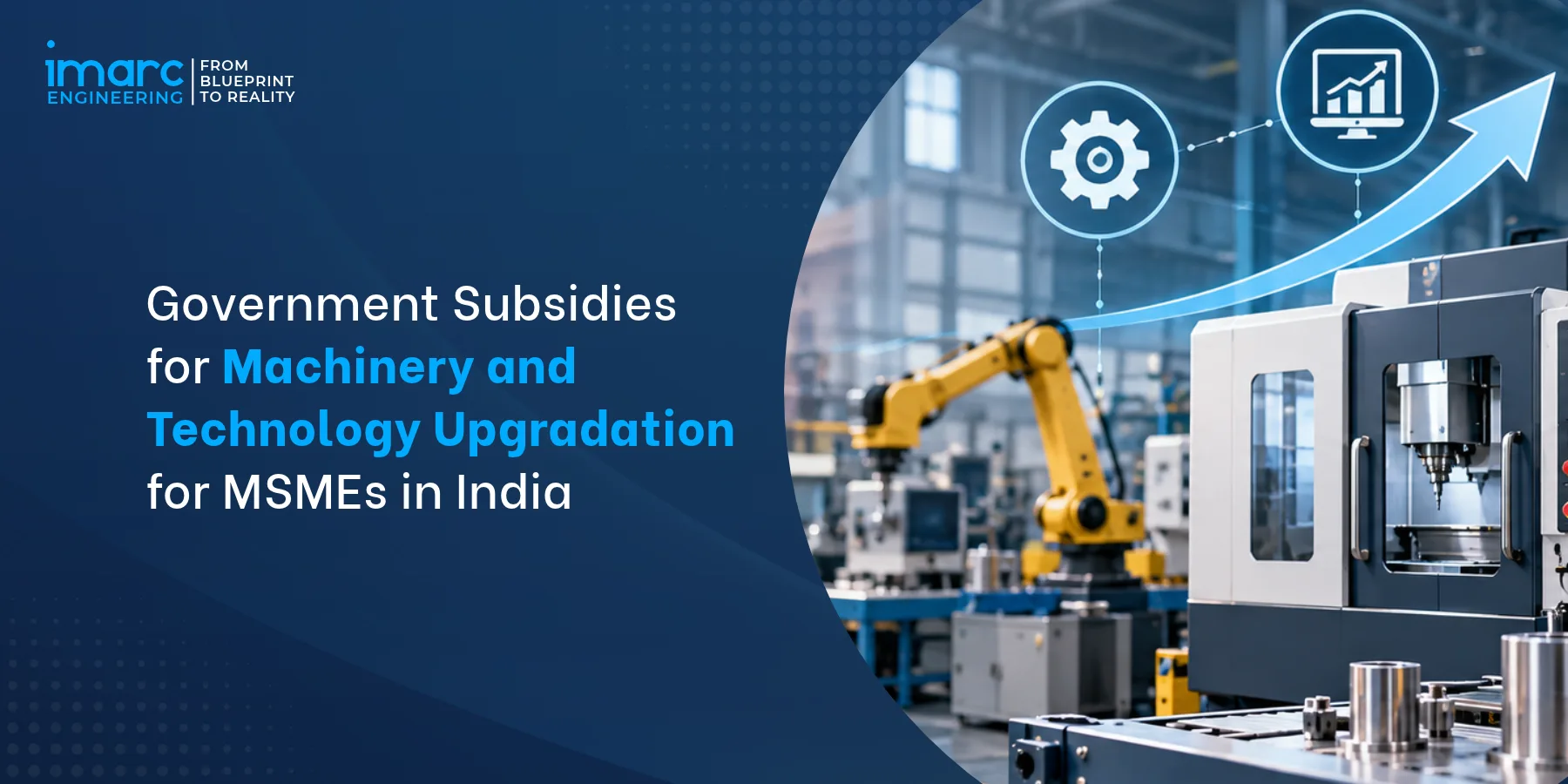
Government Subsidies for Machinery and Technology Upgradation for MSMEs in India
Introduction
For manufacturing MSMEs planning plant modernisation, government incentives for machinery upgradation in India can reduce eligible investment costs or financing expenses. The actual benefit depends on Udyam classification, sector, location, machinery type, project expenditure, and financing structure. Scheme availability must also be verified before investment commitments are made. ADEETIE supports eligible energy-efficient technology upgrades, while the current availability of new applications under legacy technology-upgradation schemes must be confirmed through official government channels.
Scope of this Guide
This guide walks through MSME machinery upgradation subsidy options from eligibility assessment through scheme comparison, state incentives, application workflow, and net-benefit calculation - anchored to officially verified scheme provisions in effect as of October 2026, not aspirational or discontinued programmes.
Table of Contents
- Introduction
- Why Government Subsidies for Machinery Upgradation in India Matter for MSMEs in 2026
- Eligibility Framework for MSME Machinery Upgradation Subsidy Schemes in India
- Central Government Schemes for Technology Upgradation in Manufacturing MSMEs in India
- ADEETIE Scheme for Energy-Efficient Machinery Upgrades for MSMEs in India
- Capital Subsidy Versus Interest Subsidy Versus Credit Guarantee for MSMEs in India
- State Government Incentives for Machinery Modernization in India
- Application Workflow and Documentation for MSME Machinery Upgradation Assistance in India
- Calculating Net Benefits of Machinery Upgradation After Eligible Incentives in India
- Conclusion
1. Why Government Subsidies for Machinery Upgradation in India Matter for MSMEs in 2026
Four reasons make disciplined evaluation of applicable subsidies central to any MSME machinery upgrade decision in 2026.
1.1 Direct Impact on Project IRR
Capital subsidies can reduce the eligible investment cost or outstanding loan balance, depending on the scheme's disbursement mechanism. Interest subvention can reduce borrowing costs over the eligible period, while credit guarantees may improve access to institutional finance. The effect on project IRR, payback period, and debt service coverage ratio depends on the project cost, financing structure, operating cash flows, subsidy amount, and timing of benefit realization. Manufacturers should calculate these indicators using project-specific assumptions rather than relying on standard IRR improvement benchmarks.
1.2 Access to Credit
Government-backed credit guarantee mechanisms can support eligible MSMEs seeking institutional finance for machinery modernisation. The Credit Guarantee Fund Trust for Micro and Small Enterprises (CGTMSE) enables participating lenders to extend eligible credit facilities without requiring conventional collateral, subject to scheme and lender conditions. However, eligibility for a machinery subsidy does not automatically improve loan approval prospects or guarantee financing. Manufacturers should evaluate lender requirements, repayment capacity, project viability, and applicable credit-support provisions alongside potential subsidies.
1.3 Alignment with Policy Direction
Current scheme design signals policy direction - energy efficiency (ADEETIE), circular economy (MSE-SPICE), green technology adoption (MSE-GIFT), and formal quality adoption (ZED Certification). Aligning a planned upgrade with these themes - choosing energy-efficient equipment, adding resource-recovery capability, moving to energy-efficient equipment under BEE's standards - unlocks support that generic machinery replacement does not. The upgrade decision therefore benefits from being shaped around the scheme landscape, not retrofitted to it afterwards.
1.4 Udyam Classification Advantage
MSME classification is based on investment in plant and machinery or equipment and annual turnover. From 1 April 2025, the limits are INR 2.5 crore and INR 10 crore for micro enterprises, INR 25 crore and INR 100 crore for small enterprises, and INR 125 crore and INR 500 crore for medium enterprises, respectively. Applicants should confirm their current Udyam classification and check the eligibility conditions of the specific scheme before applying.
2. Eligibility Framework for MSME Machinery Upgradation Subsidy Schemes in India
Before applying for any technology upgradation subsidy for MSMEs, seven eligibility dimensions should be checked systematically against each scheme's current guidelines.
2.1 Udyam Classification and Registration
Businesses applying for MSME machinery and technology upgradation assistance should verify their Udyam registration status and enterprise classification under the revised MSME criteria. Udyam registration is based on self-declaration, with PAN, Aadhaar and applicable GST details linked to the registration process. Eligibility varies across schemes: MSE-SPICE is intended for qualifying micro and small enterprises, while ADEETIE also covers eligible medium enterprises.
Historical CLCSS provisions primarily targeted micro and small enterprises, but the scheme's current operational status must be verified before considering any potential benefit. Applicants should confirm their latest Udyam classification, as changes in investment or turnover may affect eligibility for specific government assistance programmes.
2.2 Sector and Sub-Sector
Sector eligibility varies by scheme and must be checked against the applicable guidelines. CLCSS documentation identifies 51 notified sub-sectors or product categories, but prospective applicants should confirm whether new claims are currently accepted and which technologies remain eligible. ADEETIE covers Udyam-registered MSMEs operating in identified energy-intensive clusters across 14 sectors: brass, bricks, ceramics, chemicals, fisheries, food processing, forging, foundry, glass and refractory, leather, paper, pharmaceuticals, steel re-rolling, and textiles. ADEETIE eligibility also depends on the identified cluster, eligible loan, and energy-saving requirements.
2.3 Machinery and Technology Type
Each government scheme defines specific machinery, equipment, and technology categories eligible for financial assistance. Historical CLCSS guidelines identify approved technologies and machinery categories for eligible manufacturing sub-sectors; however, inclusion in these lists does not confirm current subsidy availability. ADEETIE supports qualifying energy-efficient technologies, such as IE3/IE4 motors, variable frequency drives, efficient furnaces, waste-heat recovery systems, and process optimisation equipment, subject to technical eligibility and energy-saving requirements.
MSE-SPICE focuses on eligible plant and machinery investments that support circular-economy practices and resource efficiency. Eligibility for new, refurbished, or second-hand equipment must be checked against the applicable scheme guidelines. Manufacturers should ensure that machinery specifications, supplier quotations, and supporting technical documentation align with the selected scheme's requirements.
2.4 Investment Ceiling and Project Type
Investment limits and eligible project costs differ by scheme. CLCSS documentation historically specifies a 15% capital subsidy with a maximum subsidy of INR 15 lakh against eligible institutional credit of up to INR 1 crore. New applicants must verify the current operating status and application conditions before relying on this assistance. MSE-SPICE offers a 25% credit-linked capital subsidy capped at INR 12.5 lakh for eligible brownfield circular-economy investments. ADEETIE supports eligible energy-efficient projects through interest subvention on qualifying loans of INR 10 lakh to INR 15 crore, subject to scheme conditions. Greenfield and brownfield eligibility must be checked separately under each programme.
2.5 Location Factors
Some schemes offer differential benefits based on location - MSMEs in special category states, aspirational districts, hilly regions, or North-Eastern states may receive higher subsidy rates or additional support. State industrial policies apply only within the state. Projects straddling multiple states need to confirm which state's policy applies for the fixed-asset investment location.
2.6 Financing Structure
Credit-linked subsidies (CLCSS, MSE-SPICE) require the investment to be financed through a term loan from a scheduled commercial bank, SIDBI, or notified financial institution. Self-funded investments do not qualify under credit-linked schemes. The lending institution typically needs to be among the scheme's empanelled nodal banks or SIDBI partners.
2.7 Compliance and Timing
Application timing matters. Several schemes require sanction before machinery procurement; retroactive claims on already-purchased equipment are typically rejected. Current scheme guidelines, open application windows, and empanelment status of the chosen bank should be checked against the official portal before the project is committed.
3. Central Government Schemes for Technology Upgradation in Manufacturing MSMEs in India
Several government schemes for machinery purchase in India operate at the central level. Each has different scope, assistance type, and eligibility - verify current status against official portals before committing.
3.1 Credit Linked Capital Subsidy Scheme (CLCSS): Historical Provisions and Current Status
The Credit Linked Capital Subsidy Scheme (CLCSS) historically provided a 15% capital subsidy for eligible technology upgradation investments by micro and small enterprises, subject to a maximum subsidy of INR 15 lakh and eligible institutional credit of up to INR 1 crore. These figures represent published historical scheme provisions and should not be interpreted as confirmation that the scheme is currently accepting new applications.
Manufacturers considering machinery modernisation must verify the latest operational status, availability of funds, approved technologies, eligibility requirements, and application route through the Ministry of MSME and the relevant lending institution before including any potential CLCSS benefit in their investment plans.
3.2 MSE-SPICE for Circular Economy
The MSE Scheme for Promotion and Investment in Circular Economy (MSE-SPICE), a sub-scheme under the Raising and Accelerating MSME Performance (RAMP) programme, offers 25 percent credit-linked capital subsidy on plant and machinery costs, capped at INR 12.5 lakh per project. The scheme is implemented by SIDBI and covers brownfield investments in circular-economy and resource-efficiency technologies - including those supporting EPR compliance and waste-recycling targets. Eligibility is for micro and small enterprises on Udyam. Scheme duration runs FY 2023-24 to FY 2026-27.
The subsidy is limited to eligible plant and machinery expenditure and should not be interpreted as 25% assistance on the entire project cost. The applicant must also satisfy the applicable circular-economy activity, technology, financing, and approval requirements. Projects exceeding the indicative project-cost threshold may still be considered subject to the scheme's maximum subsidy ceiling and operational guidelines.
3.3 MSE-GIFT for Green Technology Adoption
The MSE Green Investment and Financing for Transformation (MSE-GIFT) Scheme was launched on 20 December 2023 under the Raising and Accelerating MSME Performance (RAMP) programme and is implemented through SIDBI. The scheme supports eligible micro and small enterprises (MSEs) in adopting green technologies through institutional financing, interest subvention of 2% per annum, and applicable credit guarantee support.
Assistance is subject to eligible technology categories, financing requirements, participating lenders, and scheme-specific conditions. Applicants should verify the latest operational guidelines, benefit ceilings, application status, and eligibility requirements through the official RAMP portal (ramp.msme.gov.in) before committing to an investment.
3.4 MSME Sustainable (ZED) Certification Scheme
The MSME Sustainable (ZED) Certification Scheme supports Zero Defect Zero Effect certification cost - up to 80 percent subsidy for micro, up to 60 percent for small, and up to 50 percent for medium enterprises, across Bronze, Silver, and Gold certification levels. This is a certification-cost subsidy, not a direct machinery subsidy. However, ZED certification is often sought by MSMEs supplying to government procurement channels, OEM Tier-1 programmes, and export markets, so it is relevant for modernisation projects aimed at upgrading product quality.
3.5 MSME Competitive (LEAN) Scheme
The MSME Competitive (LEAN) Scheme provides consultancy and handholding support for lean manufacturing adoption - process improvements that often precede or complement machinery investments. The scheme funds lean implementation consultants and training, not the machinery itself. For MSMEs planning a manufacturing machinery subsidy India project, LEAN support can prepare the shop floor to absorb the new equipment efficiently.
3.6 CGTMSE Credit Guarantee
The Credit Guarantee Fund Trust for Micro and Small Enterprises (CGTMSE) provides collateral-free credit guarantee on term loans for eligible micro and small enterprises. It is not a subsidy per se - but it enables MSMEs to borrow for machinery investment without full collateral, which is often the practical constraint. CGTMSE coverage stacks with other schemes.
3.7 PLI Schemes - Output-Linked
The 14 Production Linked Incentive (PLI) schemes - across Pharmaceuticals, Auto Components, ACC Batteries, Electronics, White Goods, Textiles, Specialty Steel, Food Processing, Drones, Medical Devices, Solar PV, Telecom, and other notified sectors - provide output-linked incentives rather than capital subsidies. MSMEs that meet threshold investment and output criteria may participate; however, PLI is not a direct machinery subsidy. Scheme guidelines, eligibility thresholds, and output benchmarks are sector specific.
The Special Credit Linked Capital Subsidy Scheme (SCLCSS), introduced under the National SC-ST Hub, provides capital subsidy support for eligible micro and small enterprises owned by Scheduled Caste or Scheduled Tribe entrepreneurs. Published scheme provisions specify a 25% subsidy on eligible plant and machinery investment, subject to a maximum assistance of INR 25 lakh. Eligibility depends on the prescribed ownership requirements, institutional financing, qualifying machinery expenditure, and other scheme conditions. Applicants should verify the current application status, eligible expenditure, and subsidy disbursement requirements through the National SC-ST Hub and the relevant lending institution before committing to the investment.
4. ADEETIE Scheme for Energy-Efficient Machinery Upgrades for MSMEs in India
The ADEETIE scheme is one of the most relevant 2025-2026 additions to the MSME support landscape - specifically designed for energy-efficient technology adoption.
4.1 Scheme Overview
The Assistance in Deploying Energy Efficient Technologies in Industries and Establishments (ADEETIE) scheme was launched by the Ministry of Power through the Bureau of Energy Efficiency (BEE) in July 2025. The approved financial support is INR 925 crore. The scheme is being implemented over three financial years, from FY 2025–26 to FY 2027–28, and targets Udyam-registered MSMEs operating in identified energy-intensive clusters across 14 eligible sectors. Applicants should consult BEE's current guidelines for the applicable cluster, eligible investment, loan conditions, and application process.
4.2 Interest Subvention Rates
ADEETIE provides interest subvention of 5% for micro and small enterprises and 3% for medium enterprises on eligible term loans for energy-efficient technology adoption. Eligible loans range from INR 10 lakh to INR 15 crore, and up to 75% of project cost may qualify for debt funding under the scheme. Projects must achieve and sustain at least 10% energy savings during the scheme period to receive annual interest subvention.
Eligibility also depends on Udyam registration, operation in an identified cluster, sector coverage, and compliance with applicable scheme conditions. Applicants should confirm the latest implementation and disbursement requirements with BEE and the participating lending institution.
4.3 Sector Eligibility
ADEETIE targets Udyam-registered MSMEs operating in identified energy-intensive clusters across 14 sectors: brass, bricks, ceramics, chemicals, fisheries, food processing, forging, foundry, glass and refractory, leather, paper, pharmaceuticals, steel re-rolling, and textiles. Sector eligibility alone does not establish entitlement. Applicants must also meet the scheme's cluster, lending, project, and energy-saving requirements. The proposed investment should be assessed against the applicable energy audit, technical eligibility conditions, and current scheme guidelines.
4.4 Combined Audit and Interest Benefits
ADEETIE's design pairs energy audits (funded within the scheme) with the interest subvention. The audit identifies specific equipment or process changes that would improve energy efficiency; the subvention then supports the capital investment to implement those recommendations. Units applying through the BEE handholding programme are guided through audit scope, proposal preparation, lender identification, and claim documentation - which is particularly useful for MSMEs that have not previously accessed government scheme assistance.
5. Capital Subsidy Versus Interest Subsidy Versus Credit Guarantee for MSMEs in India
Confusion between these three forms of credit-linked financial assistance is common. Each works differently and the net benefit profile varies.
5.1 Capital Subsidy
A capital subsidy provides one-time financial assistance calculated as a percentage of eligible machinery or project investment, subject to the scheme's prescribed limits and approval conditions. Schemes such as the historical CLCSS and MSE-SPICE provide capital subsidy support for qualifying technology upgradation and machinery investments.
Depending on the programme, the approved subsidy may be adjusted against the outstanding term loan, routed through a lending institution, or disbursed through another prescribed mechanism. Its impact on loan principal, repayment obligations, interest costs, and overall project returns depends on the approved amount, disbursement timing, and applicable guidelines. Manufacturers should therefore include capital subsidies in financial projections only after verifying eligibility, benefit ceilings, and disbursement conditions.
5.2 Interest Subsidy or Subvention
An interest subvention reduces the effective interest rate charged by the lender over the loan tenure. ADEETIE's 5 percent (micro/small) and 3 percent (medium) are interest subventions. The benefit accrues as reduced interest cost each year. On a long-tenure loan, cumulative interest savings can exceed the equivalent capital subsidy - but the benefit is spread over time and depends on continued compliance with scheme conditions through the tenure.
5.3 Credit Guarantee
A credit guarantee - CGTMSE being the primary example is not a cash subsidy. It is a guarantee issued to the lending bank that covers a portion of the loan in case of default, which lets the bank lend to the MSME without full collateral. The benefit is access to credit, not reduced cost. For first-generation entrepreneurs and smaller units with limited collateral, this is often the most practical lever.
5.4 Instrument Comparison
| Instrument | Benefit Form | Example | Best For |
|---|---|---|---|
| Capital subsidy | One-time credit against loan | CLCSS (15%), MSE-SPICE (25%) | Clear machinery investment |
| Interest subvention | Reduced interest over tenure | ADEETIE (5%/3%) | Energy-efficient upgrades |
| Credit guarantee | Collateral substitute | CGTMSE | Collateral-constrained MSMEs |
6. State Government Incentives for Machinery Modernization in India
State industrial policies can provide additional assistance for eligible manufacturing investments. However, the applicable rate, maximum benefit, eligible expenditure, and application window depend on the relevant state policy and its operating guidelines. Incentives for new units, substantial expansions, technology upgrades, and routine machinery replacement should not be treated as interchangeable.
6.1 State-Wise Policy Comparison
Several Indian states provide capital investment incentives for eligible manufacturing projects, but the applicable benefit varies by state policy, enterprise category, sector, location, project type, and eligible investment. Gujarat, Maharashtra, Tamil Nadu, Karnataka, Telangana, Uttar Pradesh, Rajasthan, and Madhya Pradesh have industrial or MSME incentive frameworks that may include support linked to capital investment, fixed assets, or other qualifying project expenditure.
However, these benefits should not be treated as uniform machinery subsidies. Eligibility, subsidy rates, maximum assistance, eligible expenditure, application timelines, and claim procedures must be verified against the current policy and operating guidelines of the relevant state before the incentive is included in the project financial model. Benefits intended for new units or major expansions may also differ from those available for routine machinery replacement or technology upgradation.
6.2 Interest Subsidy and Power Tariff Rebate
Some state policies provide interest assistance, power-cost relief, or electricity-duty exemptions to eligible industrial units. These benefits have separate eligibility conditions and may depend on the unit's location, investment date, category, and compliance with the relevant policy.
An MSME should not assume that a state interest subsidy can automatically be combined with ADEETIE or another central interest-support programme. The applicant must check the terms of both schemes, including restrictions on duplicate assistance for the same interest expenditure.
6.3 Stamp Duty and SGST Reimbursement
Certain state policies provide stamp-duty exemptions, SGST-linked reimbursements, or other incentives for qualifying investments. These benefits are distinct from machinery capital subsidies and may apply only to eligible new units, expansions, specified locations, or approved project categories.
The financial model should distinguish machinery subsidies from tax-linked reimbursements, transaction-cost relief, and operating-cost incentives. Each benefit should be included only after its eligibility and claim conditions have been verified.
6.4 Sector-Specific State Policies
Textiles, food processing, electronics, pharmaceuticals, and other industries may have sector-specific incentive frameworks in addition to general industrial policies. Eligibility and assistance can differ by sector, location, investment size, and project type.
Before applying, manufacturers should confirm whether the sector-specific scheme permits the proposed machinery expenditure, whether a separate registration or approval is required, and whether any restrictions apply to receiving assistance under another central or state scheme.
7. Application Workflow and Documentation for MSME Machinery Upgradation Assistance in India
A disciplined application process shortens approval timelines and avoids rejection. The workflow for MSME machinery upgradation subsidy claims follows a predictable sequence.
7.1 Scheme Shortlisting and Pre-Qualification
Before preparing an application, confirm the scheme's current operational status, eligibility criteria, application window, and claim mechanism. The assessment should cover Udyam classification, sector, location, eligible machinery, project cost, financing route, and investment timing. Potential options may include ADEETIE for eligible energy-efficient upgrades, MSE-SPICE for qualifying brownfield circular-economy investments, SCLCSS for eligible SC/ST-owned micro and small enterprises, and PMEGP's second-loan provision for qualifying existing units. CLCSS should be considered only after its current availability for new claims has been confirmed. Where multiple schemes appear relevant, check each scheme's restrictions on duplicate assistance before including benefits in the financial model.
7.2 Detailed Project Report Preparation
A detailed project report (DPR) is the single document that supports lender appraisal and scheme application. It covers promoter and company profile, existing operations, machinery assessment, demand and capacity rationale, proposed scope with technical specifications, vendor selection summary, project cost estimate with contingency, means of finance (promoter equity, term loan, subsidy), financial projections with sensitivity, implementation schedule, risk register, and compliance plan. For scheme applications, the DPR should also explicitly cross-reference the applicable scheme's eligible-machinery list, sub-sector classification, and benefit calculation.
7.3 Standard Documentation Set
The application portal and submission route vary by scheme. Applicants should use the current official portal and operating guidelines for the selected programme, confirm whether the application must be submitted through a lending institution or implementing agency, and verify the required documents before committing to the machinery purchase. Do not assume that a historical scheme URL or application form indicates that new applications are currently open.
7.4 Approval and Claim Mechanics
The application and claim process differs across schemes. Depending on the programme, the applicant may need to complete registration, eligibility verification, technical assessment, lender appraisal, application submission, procurement, installation verification, and benefit claims in a prescribed sequence. Capital subsidy disbursement and interest-subvention claims follow different mechanisms. Manufacturers should follow the selected scheme's current operating guidelines rather than assuming a common process across all programmes.
For interest subvention, credits flow periodically through the loan tenure. Timelines vary by scheme and completeness of documentation - a well-prepared DPR with correct scheme referencing moves faster than one that triggers queries.
8. Calculating Net Benefits of Machinery Upgradation After Eligible Incentives in India
A disciplined machinery investment incentives India calculation separates subsidy benefit from underlying project viability. The project should be bankable on its own merits; subsidy should improve returns, not rescue a weak case.
8.1 Project Base Case
Begin with the actual project cost before incentives. Record machinery purchase cost, installation, freight, civil work, utilities, commissioning, and other eligible or ineligible expenditure separately. Establish the proposed financing structure, including promoter contribution, term loan, and other funding sources. Calculate the project's cash flows, operating costs, debt service coverage ratio, payback period, and IRR using the actual financing terms.
Next, identify the schemes for which the project appears eligible and verify their current operational status, eligible expenditure, benefit ceiling, application timing, and disbursement conditions. Only benefits supported by current scheme rules should be included in the incentive-adjusted case. The project should also be stress-tested for delayed, reduced, or unavailable incentives.
8.2 Illustrative Benefit Calculation
The following example illustrates how to separate actual project expenditure from potential subsidy assistance. It does not assume that any particular subsidy has been approved.
| Item | Illustrative Amount |
|---|---|
| Machinery purchase cost | INR 1,00,00,000 |
| Installation, freight, and commissioning | INR 5,00,000 |
| Total project cost before incentives | INR 1,05,00,000 |
| Promoter contribution | INR 25,00,000 |
| Proposed term loan | INR 80,00,000 |
| Potential subsidy | To be determined after scheme eligibility and approval |
| Net financing requirement | To be calculated using confirmed funding and subsidy terms |
The total project cost is the actual expenditure required to install and commission the machinery. A potential subsidy should be shown separately and must not be deducted from project cost before eligibility and approval are established. If a subsidy is subsequently approved, reflect it according to the scheme's disbursement mechanism, such as a credit to the loan account or reimbursement of eligible expenditure.
Interest subvention should be modelled separately as a reduction in eligible borrowing costs over the applicable period. The final financing requirement depends on the approved term loan, promoter contribution, other funding sources, and the timing and conditions of any confirmed incentive.
8.3 Non-Duplication and Combined Benefits
Whether an MSME can combine central and state incentives depends on the specific provisions of each scheme. Applicants must check restrictions on duplicate subsidies, overlapping eligible expenditure, assistance from multiple government programmes, and limits on total assistance. A central and state incentive should not be assumed to be compatible merely because they are administered by different authorities.
The detailed project report should list each proposed benefit, its eligible expenditure, funding source, maximum assistance, application status, and relevant non-duplication clause. Where a scheme excludes expenditure already supported by another programme, the same expenditure must not be claimed twice. The combined-benefit calculation should be included only after the applicable authorities' guidelines have been checked.
8.4 Sensitivity and Risk
Subsidy benefit should not be treated as working capital. Credit timing can extend 3-9 months after disbursement; delayed subsidy does not change loan repayment obligations in the interim. ADEETIE interest subvention requires continued compliance through tenure. State SGST reimbursement often has cumulative caps and claim-window conditions. Sensitivity analysis should include a scenario where subsidy is delayed or partially realised - testing project resilience without the full stack.
Conclusion
Effective access to machinery-upgradation subsidies in India requires checking eligibility by Udyam classification, sector, machinery type and location; shortlisting relevant central and state schemes; preparing a scheme-linked DPR; following the correct application process; avoiding duplicate claims; and assessing project viability before factoring in subsidy benefits.
Three reminders for MSME sponsors: verify current scheme terms before committing, as guidelines and application windows can change; align machinery choices with eligible schemes, rather than selecting equipment solely for subsidy access; and ensure the project is viable without subsidy. Subsidies should improve project returns, not make an otherwise weak project viable.
MAPPING GOVERNMENT SUBSIDIES FOR YOUR MACHINERY UPGRADE IN INDIA?
IMARC Engineering supports manufacturing businesses with industrial incentive identification, eligibility assessment, project documentation, application coordination, and compliance planning. Its Industrial Licensing and Incentive Advisory services help clients assess relevant central and state incentive frameworks, prepare applications, coordinate with authorities, and monitor applicable compliance and benefit-disbursement requirements. Scheme eligibility, approval, and disbursement remain subject to the applicable government guidelines and decisions of the relevant authorities.
→ Schedule an MSME machinery-upgradation incentive assessment with an IMARC Engineering specialist
Frequently Asked Questions
Government support relevant to MSME machinery upgrades includes ADEETIE for eligible energy-efficient investments, MSE-SPICE for qualifying brownfield circular-economy projects, SCLCSS for eligible SC/ST-owned micro and small enterprises, and PMEGP's second-loan provision for qualifying existing units. MSE-GIFT may support eligible green-technology investments under its current guidelines. ZED and LEAN provide certification or consultancy support, while CGTMSE provides credit guarantees rather than direct machinery subsidies. CLCSS should be included only after confirming its current availability for new applications. State incentives depend on the applicable policy and project eligibility.
Relevant central programmes include ADEETIE for eligible energy-efficient technology investments, MSE-SPICE for qualifying circular-economy projects, SCLCSS for eligible SC/ST-owned micro and small enterprises, and PMEGP's second-loan provision for qualifying existing units. MSE-GIFT supports eligible green investments, while ZED and LEAN focus on certification and process improvement. CGTMSE provides credit guarantees. CLCSS and CLCS-TUS should not be described as currently open for new applications unless the relevant government authority confirms their operational status and applicable application route.
Official CLCSS documentation specifies a historical 15% capital subsidy, capped at INR 15 lakh against eligible institutional credit of up to INR 1 crore. However, the continued publication of scheme information does not establish that new applications are currently being accepted under those terms. MSMEs should verify the latest operational status, availability of funds, eligible technologies, and application route with the Ministry of MSME and the relevant lending institution before including CLCSS assistance in a machinery-upgradation plan.
Eligibility requires valid Udyam Registration, sector match with the scheme's notified list, approved machinery type, investment within the scheme ceiling, credit-linked financing (where applicable), and compliance with scheme-specific location, project-type (brownfield vs greenfield), and application timing conditions. Each scheme has distinct eligibility criteria.
ADEETIE, implemented by the Bureau of Energy Efficiency under the Ministry of Power, supports eligible energy-efficient technology investments by Udyam-registered MSMEs operating in identified clusters across 14 energy-intensive sectors. It provides interest subvention of 5% for micro and small enterprises and 3% for medium enterprises on qualifying term loans ranging from INR 10 lakh to INR 15 crore. Up to 75% of project cost may qualify for debt funding, and projects must achieve and sustain at least 10% energy savings during the scheme period to receive annual interest subvention. Eligibility and disbursement remain subject to the current scheme guidelines.
A capital subsidy credits a percentage of machinery cost against the loan upfront (CLCSS, MSE-SPICE). An interest subsidy reduces effective interest rate over loan tenure (ADEETIE). A credit guarantee (CGTMSE) covers lender default risk without cash support, enabling collateral-free lending for micro and small units.
State government machinery subsidy programmes operate in Gujarat, Maharashtra, Tamil Nadu, Karnataka, Telangana, Uttar Pradesh, Rajasthan, and Madhya Pradesh among others - offering capital subsidies, interest subvention, stamp duty exemption, SGST reimbursement, and power tariff rebates with location-graded benefits per each state's industrial policy.
Required documents include Udyam Certificate, PAN, GSTIN, business incorporation, promoter KYC, audited financials, machinery pro forma invoice with specifications, land/building papers, bank sanction letter, applicable NOCs, and the scheme-specific application. The DPR should cross-reference the scheme's eligible-machinery list and sub-sector classification.
Central and state incentives may be combined only when the relevant scheme guidelines permit it. Applicants should verify restrictions on duplicate assistance, overlapping eligible expenditure, and limits on total benefits. Do not assume that CLCSS or another central capital subsidy automatically combines with a state subsidy. The project report should document each proposed incentive, its eligible expenditure, application status, and applicable non-duplication conditions before calculating the combined benefit.
Start with actual machinery CAPEX and other project costs, then establish the promoter contribution, term loan, and total financing requirement. Identify potentially applicable schemes and verify their eligibility conditions, current availability, benefit ceilings, and application requirements. Show potential capital subsidies separately from project cost and include them in the financial model only according to the applicable disbursement mechanism. Model interest subvention as a separate financing benefit and test the project under scenarios involving delayed, reduced, or unavailable incentives.
Recent Post
Trusted by Industry Leaders
We partner with global enterprises and ambitious businesses across sectors to deliver operational excellence, strategic insights, and sustainable growth through integrated solutions.







Success in Their Words
Real feedback from clients across industries. Discover how our solutions delivered measurable impact and operational excellence.

I wanted to express my sincere appreciation for your efforts in handling this matter. Your dedication and commitment have been truly commendable, and it is evident that you have put in tremendous hard work and expertise into resolving the issues at hand. We are greatly interested in continuing our collaboration with you in the future, as your professionalism and reliability have made you a trusted partner. Thank you once again for your invaluable contribution. We look forward to strengthening our partnership ahead.

It has been a pleasure working with the IMARC team. The insights provided were structured, clear, and highly valuable, helping us strengthen both our technical and financial planning with confidence. We deeply appreciate the team’s professionalism, responsiveness, and attention to detail throughout the engagement. Every requirement was well understood and effectively incorporated, resulting in a comprehensive and actionable output. Overall, our experience has been excellent, and I would gladly recommend IMARC to organizations seeking a reliable research partner.

Your service is truly exceptional. Working with the IMARC team has been a seamless and professional experience. The clarity of communication, responsiveness to queries, and consistent support at every stage made the entire engagement highly efficient. The insights shared were well-structured, practical, and perfectly aligned with our requirements, helping us make informed decisions with confidence. Overall, the dedication and professionalism demonstrated by your team stand out, and I would be glad to recommend IMARC as a reliable and trustworthy research partner.

IMARC did an outstanding job in preparing our study. They were punctual, precise, and consistently responsive throughout the entire process. The team delivered all the data we required in a clear, well-organized, and highly professional format. Their strong attention to detail, combined with their ability to meet every deadline without compromising quality, truly set them apart. Overall, their reliability and commitment made them an exceptional partner for our project, and we would gladly work with them again in the future.

IMARC made the whole process incredibly easy from start to finish. Everyone I interacted with via email was polite, professional, and straightforward to deal with, always keeping their promises regarding delivery timelines and remaining consistently solutions-focused. From my very first contact, I appreciated the professionalism and support shown by the entire IMARC team. I highly recommend IMARC to anyone seeking timely, affordable, and reliable information or advice. My experience with IMARC was excellent, and I truly cannot fault any aspect of it.

I’d like to express my sincere gratitude for the excellent work you accomplished with the study. Your ability to quickly understand our requirements and deliver high-quality results under tight timelines truly reflects your expertise, exceptional work ethic, and unwavering commitment to your customer’s success. The professionalism and responsiveness you demonstrated throughout the process made a significant difference. Our entire team and company are incredibly thankful for your dedication, reliability, and support. Once again, thank you for your outstanding contribution.