Indian Public Sector Banks Integrate ESG Factors into Corporate Credit Risk Assessments
November 16, 2026
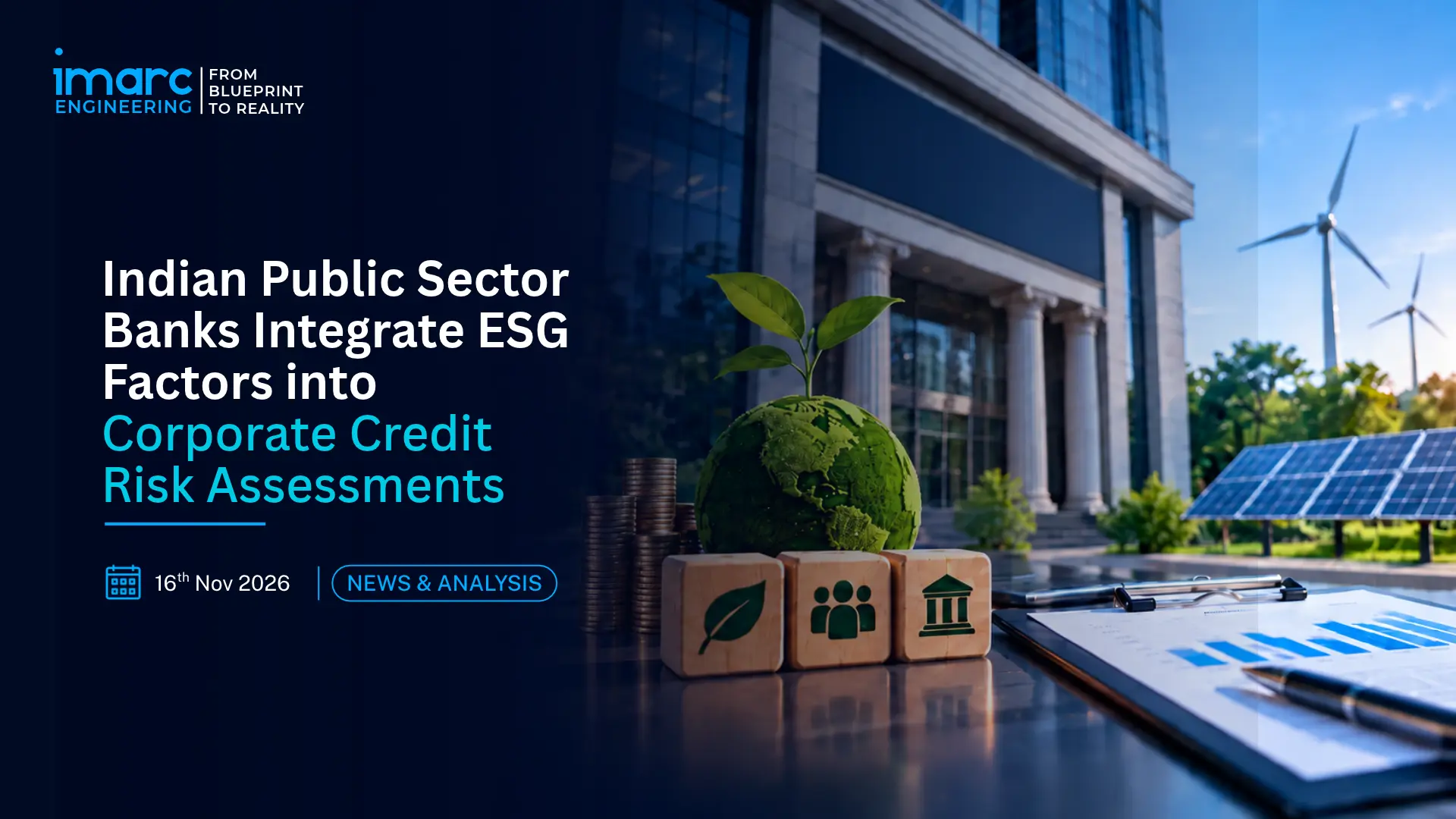
ESG credit risk assessment in India is becoming more structured as public sector banks incorporate environmental, social and governance considerations into corporate lending decisions. According to State Bank of India's Sustainability Report for FY 2025–26, published on May 27, 2026, the bank has integrated ESG factors into credit appraisal, particularly for large corporate borrowers. Other public sector banks are also developing climate-risk assessment frameworks. However, the available disclosures do not indicate a uniform ESG assessment requirement across all banks or suggest that ESG performance alone determines loan approval.
Public Sector Banks Incorporate ESG into Credit Evaluation
SBI's report says it has internal mechanisms to assess ESG risks for identified corporate borrowers. Those cover environmental compliance, social practices, governance and reputational factors. According to SBI's report, its ESG risk assessment framework applies to identified corporate borrowers meeting specified thresholds of INR 100 crore for listed entities and INR 250 crore for unlisted entities.
Industries are grouped by environmental, social and governance impact, and scores are weighted by industry. SBI also reports a Climate Risk Scorecard to rate borrowers on climate risk, and a climate policy framed to comply with an RBI Master Direction dated November 28, 2025. The report gives no start date for the scorecard.
Other public sector banks are also working on climate risk. A May 2026 study by Climate Risk Horizons assessed the climate-risk preparedness of Indian banks for FY 2024-25. Union Bank of India and Punjab National Bank scored 15 out of 20, while SBI scored 11.5 out of 20. The assessment covered emissions disclosure, climate scenario analysis, governance, sustainable finance and other climate-related parameters. The study assessed FY 2024-25.
What Else is Shaping Bank Behaviour?
On October 21, the Indian Banks' Association reported that public sector banks under its EASE 8.0 programme are strengthening ESG practices and developing frameworks to assess climate-related risks. The report names no banks and gives no credit-assessment rules.
In August 2026, public sector banks proposed to the Finance Minister a 2% climate and transition finance sub-target within priority sector lending. Experts noted that the draft climate taxonomy was not final and that banks would need new skills to assess transition loans. Union Bank of India's sustainable financing framework received an external opinion from Moody's in January 2026.
RBI announced the creation of the Reserve Bank Climate Risk Information System (RB-CRIS) in October 2024 and launched the platform in May 2025 to address climate-related data gaps. It comprises a public directory of climate-related data sources and a restricted data portal providing standardised datasets to regulated entities. RBI's June 2025 Financial Stability Report also identified climate risk as a potential threat to financial stability.
The study found that 14 banks had undertaken climate scenario analysis or stress testing. However, none disclosed the resulting impacts on their capital or assets, limiting the ability to assess how these exercises influence financial and lending decisions. That suggests the data behind ESG credit assessment is still developing.
ESG Parameters in Corporate Credit Risk Assessment
Based on SBI's disclosure, the parameters include environmental compliance, social practices, governance and reputation. Climate risk is rated separately through its scorecard.
ESG assessment differs from traditional credit analysis, which focuses on cash flow, leverage and collateral. ESG analysis adds non-financial risks that can affect a borrower's cash flows, such as regulatory penalties, operational disruption or reputation. Other public sector banks may use different parameters, and none was detailed in the coverage reviewed.
Is ESG Compliance Mandatory for All Borrowers?
No. The disclosures reviewed do not require ESG certification from all borrowers. SBI's assessment applies to identified large borrowers above the stated thresholds. RBI's climate-risk rules are directed at banks and not at borrowers.
The regulatory position involves separate developments. On November 28, 2025, RBI issued climate finance and climate change risk directions for commercial banks, small finance banks and NBFCs. SBI states that its Climate Finance and Management of Climate Change Risks Policy was framed in compliance with the applicable Master Direction.
Separately, Reuters reported in January 2026 that RBI had deferred its proposed broader mandatory climate-risk disclosure and management rules for lenders. These developments should not be interpreted as a universal ESG certification requirement for corporate borrowers.
Implications for Manufacturing and Industrial Borrowers
This section is analysis and not an announcement by the banks. Manufacturers above the reported thresholds may face questions on environmental compliance, workplace practices and governance controls during appraisal. Smaller borrowers may see indirect effects, as banks build climate and ESG data across portfolios.
Heavy industry may face more questions. Industries are scored by impact in SBI's approach, and transition finance experts mention steel, chemicals, fertilisers and construction as carbon-intensive sectors. A poor ESG finding does not automatically mean a loan is declined. The reports do not say how scores affect pricing or approval.
ESG Due Diligence and Project Financing
For project finance, lenders typically look for evidence that a project is legally and environmentally sound. Documents that banks may consider include environmental clearances, pollution control consents, hazardous-waste authorisations, safety and labour compliance records, and governance policies. This is general practice and not a list published by the banks.
Manufacturers can prepare by building an organised compliance file, identifying gaps before appraisal, assessing emissions, water and waste risks, and documenting corrective actions. Project finance due diligence by an independent engineer can help lenders and borrowers agree on the facts.
What This Means for Industrial Investment in India?
As banks strengthen their ESG and climate-risk assessment frameworks, environmental compliance and governance readiness may become more relevant to industrial credit appraisal alongside traditional financial indicators. The extent of assessment will depend on the lender, borrower profile, project characteristics and applicable requirements.
Early planning of environmental compliance can reduce delays at financing, while weak documentation can lengthen appraisal. The Climate Risk Horizons study concluded that governance is improving but its effect on lending decisions is unclear. Borrowers should therefore expect gradual change, not a single date when ESG rules take effect.
ESG is moving from reporting to credit appraisal in public sector banks, but unevenly and without a single rule. Borrowers that keep their compliance evidence current will be better prepared whichever way requirements develop.
IMARC Engineering’s Perspective
The growing consideration of ESG and climate-related risks in corporate lending highlights the importance of environmental compliance, technical feasibility and risk management for industrial projects. For manufacturers and project developers, preparing for ESG-related due diligence may involve reviewing pollution control consents, environmental clearances, emissions and waste management practices, operational risks and supporting compliance documentation.
IMARC Engineering supports businesses through ESG Compliance, Environmental Compliance Audits, Technical Due Diligence and Risk Assessment services. These assessments can help identify compliance gaps, evaluate project-related risks and strengthen documentation required during industrial financing discussions. ESG assessment requirements vary by lender and borrower category. IMARC Engineering does not participate in banks' credit approval decisions, and applicable documentation requirements should be confirmed directly with the financing institution.
Latest News
-
Battery Recycling Gains Importance for India's EV Supply Chain and Critical Mineral Security
November 17, 2026
-
Indian Public Sector Banks Integrate ESG Factors into Corporate Credit Risk Assessments
November 16, 2026
-
India EV Conclave 2026 Highlights Next-Generation Materials for Electric Vehicle Manufacturing
November 13, 2026
-
NTPC Green Energy Invites Bids for Battery Containers and PCS for 40 GWh BESS Projects in India
November 12, 2026
-
India Approves INR 1,856 Crore Khelo India Scheme to Boost Sports Goods Manufacturing
November 06, 2026
Trusted by Industry Leaders
We partner with global enterprises and ambitious businesses across sectors to deliver operational excellence, strategic insights, and sustainable growth through integrated solutions.











Success in Their Words
Real feedback from clients across industries. Discover how our solutions delivered measurable impact and operational excellence.

I wanted to express my sincere appreciation for your efforts in handling this matter. Your dedication and commitment have been truly commendable, and it is evident that you have put in tremendous hard work and expertise into resolving the issues at hand. We are greatly interested in continuing our collaboration with you in the future, as your professionalism and reliability have made you a trusted partner. Thank you once again for your invaluable contribution. We look forward to strengthening our partnership ahead.

It has been a pleasure working with the IMARC team. The insights provided were structured, clear, and highly valuable, helping us strengthen both our technical and financial planning with confidence. We deeply appreciate the team’s professionalism, responsiveness, and attention to detail throughout the engagement. Every requirement was well understood and effectively incorporated, resulting in a comprehensive and actionable output. Overall, our experience has been excellent, and I would gladly recommend IMARC to organizations seeking a reliable research partner.

Your service is truly exceptional. Working with the IMARC team has been a seamless and professional experience. The clarity of communication, responsiveness to queries, and consistent support at every stage made the entire engagement highly efficient. The insights shared were well-structured, practical, and perfectly aligned with our requirements, helping us make informed decisions with confidence. Overall, the dedication and professionalism demonstrated by your team stand out, and I would be glad to recommend IMARC as a reliable and trustworthy research partner.

IMARC did an outstanding job in preparing our study. They were punctual, precise, and consistently responsive throughout the entire process. The team delivered all the data we required in a clear, well-organized, and highly professional format. Their strong attention to detail, combined with their ability to meet every deadline without compromising quality, truly set them apart. Overall, their reliability and commitment made them an exceptional partner for our project, and we would gladly work with them again in the future.

IMARC made the whole process incredibly easy from start to finish. Everyone I interacted with via email was polite, professional, and straightforward to deal with, always keeping their promises regarding delivery timelines and remaining consistently solutions-focused. From my very first contact, I appreciated the professionalism and support shown by the entire IMARC team. I highly recommend IMARC to anyone seeking timely, affordable, and reliable information or advice. My experience with IMARC was excellent, and I truly cannot fault any aspect of it.

I’d like to express my sincere gratitude for the excellent work you accomplished with the study. Your ability to quickly understand our requirements and deliver high-quality results under tight timelines truly reflects your expertise, exceptional work ethic, and unwavering commitment to your customer’s success. The professionalism and responsiveness you demonstrated throughout the process made a significant difference. Our entire team and company are incredibly thankful for your dedication, reliability, and support. Once again, thank you for your outstanding contribution.
Ready to Experience the IMARC Advantage?
Whether you're planning a new facility, expanding operations, optimizing performance, or facing complex challenges—IMARC Engineering brings the expertise, experience, and commitment needed for success.