Delhi Tightens CNG Cylinder Hydro-Test Certificate Checks at Refuelling Stations
November 24, 2026
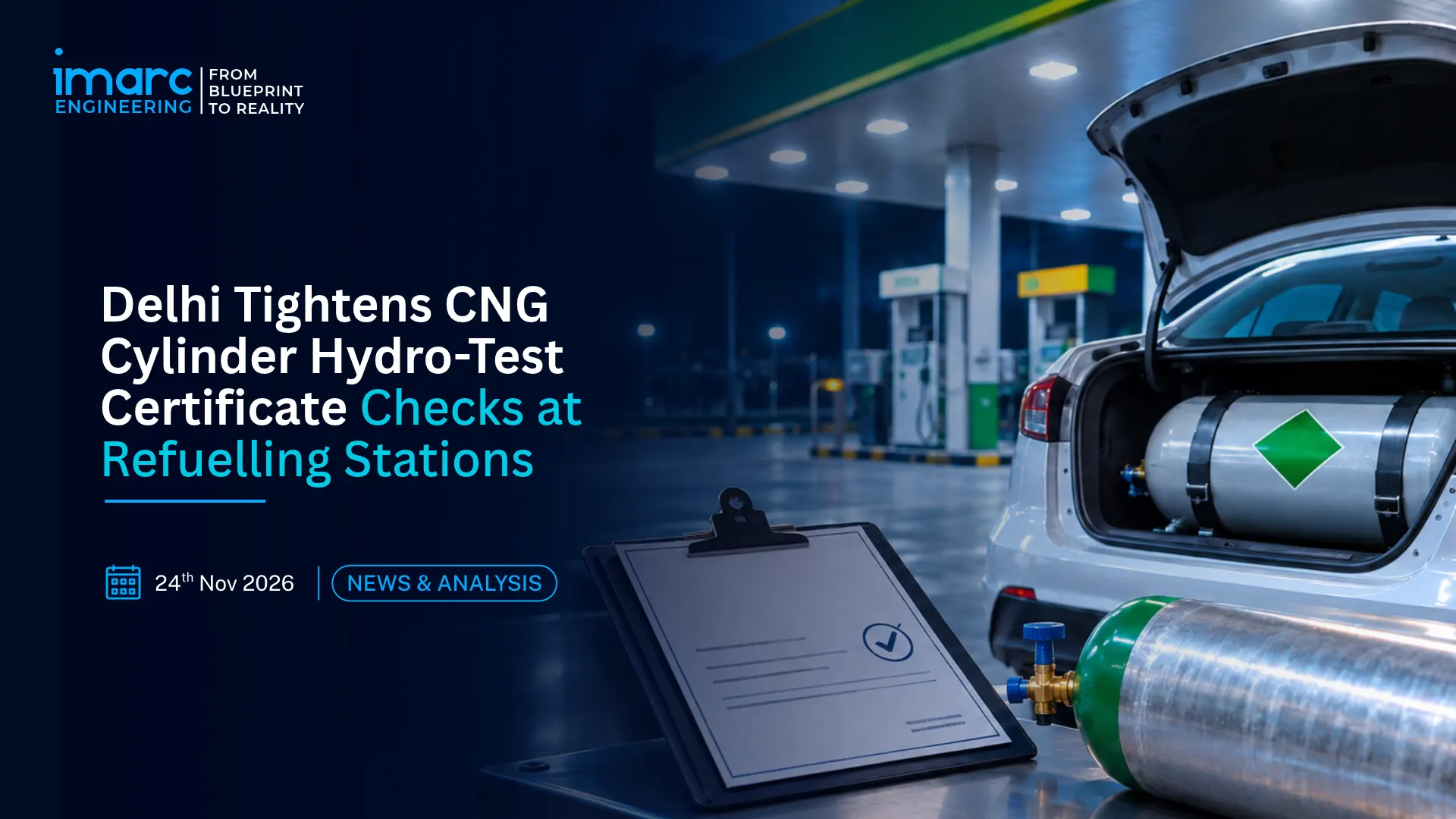
CNG cylinder hydro-test certificate verification has come under increased scrutiny in Delhi following safety concerns and stricter enforcement measures reported in August and September 2026. Indraprastha Gas Limited (IGL) has introduced additional verification measures, including an automated vehicle verification system reportedly deployed at 10 CNG stations in September. The checks are intended to identify vehicles with expired or invalid cylinder test certification before refuelling.
The system was subsequently inaugurated at IGL's Shantipath station, although reports differ on the exact launch date. Separately, media reports have highlighted long queues and waiting periods of two to three months at some hydro-testing centres. However, waiting times and queue lengths at CNG refuelling stations have not been independently established.
Why Is Delhi Enforcing CNG Cylinder Hydro-Test Certificate Checks?
The trigger was a fatal incident. A truck's CNG cylinder reportedly exploded during refuelling on August 19, 2026, in West Delhi, killing three pump workers and injuring three. The cause has not been established in the reports reviewed, nor whether the cylinder had a valid certificate.
On September 10, the Delhi government ordered stricter checks, according to reports. Vehicles with expired or missing hydro-test certificates are to be denied CNG. IGL started a verification drive, and the Petroleum and Explosives Safety Organisation (PESO) directives underpin the enforcement, per IGL's October announcement.
Periodic testing of CNG vehicle cylinders is an established safety requirement under the Gas Cylinders Rules, 2016, as amended. The applicable provisions, including the 2025 amendment to Rule 35, should be read together to determine the testing interval and requirements for the relevant cylinder category. The recent development concerns stricter verification of cylinder certification at refuelling stations, rather than the introduction of hydrostatic testing as a new safety practice.
What Is the Timeline of the Delhi Enforcement?
Reports of stricter CNG cylinder safety checks followed a fatal refuelling incident in West Delhi on August 19, 2026. Subsequent enforcement developments were reported during late August and September, including verification of cylinder testing certificates and measures to prevent refuelling of non-compliant vehicles. IGL's automated verification rollout was reported in September, with a further deployment at the Shantipath CNG station reported in October.
On September 11, the Delhi government's order was reported. IGL's automated system at 10 stations was reported on September 22 and 23, and the Shantipath rollout followed on October 21. IGL also announced an awareness campaign and a stronger safety action plan to detect illegal cylinder modifications.
No official statement on queue lengths, vehicles turned away or non-compliance rates was found. The size of the affected fleet and the number of cylinders due for testing are also unreported.
How Is Certificate Verification Affecting CNG Refuelling?
IGL introduced an Automated Vehicle Verification System at 10 CNG stations in September 2026. The system uses cameras to capture vehicle registration numbers and an AI-based application to check vehicle and cylinder details against certification records available through PESO's online portal. It generates alerts through handheld devices, LED displays and public-address systems when a vehicle fails the compliance check. Vehicles with expired or invalid certification can consequently be stopped from refuelling.
On October 21, PESO's Joint Chief Controller of Explosives (North Circle), Sanjay Kumar Singh, inaugurated Nawgati's system at the Shantipath station. Station staff and queue marshals use a handheld app, while LED screens show status. Unverified vehicles are stopped.
Owners can use the Nawgati Fuelling App to check status and show a compliance pass. The same report says checks happen while vehicles are in the refuelling queue. Wider Delhi-NCR expansion is planned, but no schedule is given.
Additional certificate verification may increase processing time at refuelling stations, particularly during peak hours or when vehicle records require manual review. However, the available reporting does not establish the extent of delays or provide verified waiting-time data for Delhi CNG stations. Reported waiting periods at hydro-testing centres should be distinguished from queues at refuelling outlets.
What Is CNG Cylinder Hydrostatic Testing?
CNG cylinders hold gas at roughly 200 to 250 bar. In hydrostatic pressure testing, the cylinder is emptied, filled with water and pressurised to check for leaks, cracks or swelling that visual checks may miss.
A fuller test, as described by a testing company, includes degassing, internal inspection, ultrasonic wall thickness measurement, a stretch test, a tare-weight check and a certificate. Periodic cylinder inspection matters because repeated filling cycles and corrosion can weaken a cylinder over time.
CNG Cylinder Testing Rules and Certification Requirements
CNG vehicle cylinders require periodic testing under the Gas Cylinders Rules, 2016, as amended. A three-year testing interval applies to the relevant vehicle-cylinder categories.
Testing must be conducted at PESO-recognised facilities, and vehicle owners should retain valid certificates containing cylinder identification and testing details. IGL provides information on recognised testing centres, while refuelling eligibility depends on certificate validity and applicable verification procedures. Testing intervals may differ for other cylinder categories, including CNG station cascade cylinders. This article focuses on vehicle cylinders.
Implications for CNG Testing Facilities and Station Operators
Stricter certificate verification could increase demand at authorised CNG cylinder testing facilities, particularly when large numbers of vehicle owners need to renew expired certifications. Testing centres may need to review appointment scheduling, equipment availability, inspection capacity and certificate issuance procedures.
For CNG station operators, verification introduces additional operational requirements, including checking certification status, handling discrepancies and communicating refuelling restrictions to vehicle owners. Automated systems depend on accurate vehicle and cylinder records, reliable data access and appropriate staff training.
Testing facilities must maintain the equipment, trained personnel, inspection procedures and documentation required under their applicable approvals. Any delays in updating certification records could create verification difficulties for vehicle owners, although the scale of such problems has not been established.
What Challenges Could Affect Compliance?
For station operators, stricter verification introduces additional checks before refuelling. Automated systems depend on accurate vehicle details, valid cylinder certification records and readable cylinder barcodes. Incorrect or outdated records could result in compliant vehicles being flagged, while unreadable barcodes may prevent refuelling under the applicable rules. Operators may therefore need staff training, procedures for handling verification discrepancies and reliable access to updated certification records.
Testing infrastructure is another important part of compliance. Recognised testing stations need appropriate equipment, trained personnel, documented inspection procedures and systems for issuing valid test certificates. Timely updating of testing records is also essential so that cylinder certification can be verified during refuelling.
What Should CNG Vehicle Owners Know?
CNG vehicle owners should check their cylinder's last hydro-test date and complete periodic testing within the prescribed three-year interval. They should retain a valid test certificate and ensure cylinder identification details are legible.
Before refuelling, owners can use the Nawgati Fuelling App, where available, to verify their certification status. Any discrepancies should be resolved with the testing centre or relevant service provider. Testing must be conducted at PESO-recognised facilities. Owners should confirm the centre's approval, appointment availability and charges before scheduling a test.
Delhi's hydro-test checks tie a long-standing rule to real-time enforcement. Queues are reported but not measured, and owners who keep valid certificates ready are least exposed.
IMARC Engineering’s Perspective
Stricter CNG cylinder certification checks highlight the importance of regulatory compliance, safety management and reliable testing infrastructure. For investors considering the establishment of a CNG cylinder hydrostatic testing facility in India, project planning should assess market demand, applicable PESO recognition requirements, testing equipment, site infrastructure, manpower, safety systems and operating costs.
IMARC Engineering supports industrial projects through feasibility studies, regulatory approval and licensing advisory, technical due diligence, risk assessment and CAPEX/OPEX planning. These services can help investors evaluate the technical, regulatory and commercial requirements of proposed cylinder testing facilities.
Latest News
-
Delhi Tightens CNG Cylinder Hydro-Test Certificate Checks at Refuelling Stations
November 24, 2026
-
India Targets USD 10 Billion Investment in Five Greenfield Shipbuilding Clusters
November 23, 2026
-
NTPC's NVVN Awards USD 75 Million EPC Contract for 57 MW Gas Power Plant in Andaman
November 19, 2026
-
Battery Recycling Gains Importance for India's EV Supply Chain and Critical Mineral Security
November 17, 2026
-
Indian Public Sector Banks Integrate ESG Factors into Corporate Credit Risk Assessments
November 16, 2026
Trusted by Industry Leaders
We partner with global enterprises and ambitious businesses across sectors to deliver operational excellence, strategic insights, and sustainable growth through integrated solutions.


Success in Their Words
Real feedback from clients across industries. Discover how our solutions delivered measurable impact and operational excellence.

I wanted to express my sincere appreciation for your efforts in handling this matter. Your dedication and commitment have been truly commendable, and it is evident that you have put in tremendous hard work and expertise into resolving the issues at hand. We are greatly interested in continuing our collaboration with you in the future, as your professionalism and reliability have made you a trusted partner. Thank you once again for your invaluable contribution. We look forward to strengthening our partnership ahead.

It has been a pleasure working with the IMARC team. The insights provided were structured, clear, and highly valuable, helping us strengthen both our technical and financial planning with confidence. We deeply appreciate the team’s professionalism, responsiveness, and attention to detail throughout the engagement. Every requirement was well understood and effectively incorporated, resulting in a comprehensive and actionable output. Overall, our experience has been excellent, and I would gladly recommend IMARC to organizations seeking a reliable research partner.
Your service is truly exceptional. Working with the IMARC team has been a seamless and professional experience. The clarity of communication, responsiveness to queries, and consistent support at every stage made the entire engagement highly efficient. The insights shared were well-structured, practical, and perfectly aligned with our requirements, helping us make informed decisions with confidence. Overall, the dedication and professionalism demonstrated by your team stand out, and I would be glad to recommend IMARC as a reliable and trustworthy research partner.

IMARC did an outstanding job in preparing our study. They were punctual, precise, and consistently responsive throughout the entire process. The team delivered all the data we required in a clear, well-organized, and highly professional format. Their strong attention to detail, combined with their ability to meet every deadline without compromising quality, truly set them apart. Overall, their reliability and commitment made them an exceptional partner for our project, and we would gladly work with them again in the future.

IMARC made the whole process incredibly easy from start to finish. Everyone I interacted with via email was polite, professional, and straightforward to deal with, always keeping their promises regarding delivery timelines and remaining consistently solutions-focused. From my very first contact, I appreciated the professionalism and support shown by the entire IMARC team. I highly recommend IMARC to anyone seeking timely, affordable, and reliable information or advice. My experience with IMARC was excellent, and I truly cannot fault any aspect of it.

I’d like to express my sincere gratitude for the excellent work you accomplished with the study. Your ability to quickly understand our requirements and deliver high-quality results under tight timelines truly reflects your expertise, exceptional work ethic, and unwavering commitment to your customer’s success. The professionalism and responsiveness you demonstrated throughout the process made a significant difference. Our entire team and company are incredibly thankful for your dedication, reliability, and support. Once again, thank you for your outstanding contribution.
Ready to Experience the IMARC Advantage?
Whether you're planning a new facility, expanding operations, optimizing performance, or facing complex challenges—IMARC Engineering brings the expertise, experience, and commitment needed for success.