Manufacturing
August 03 2026
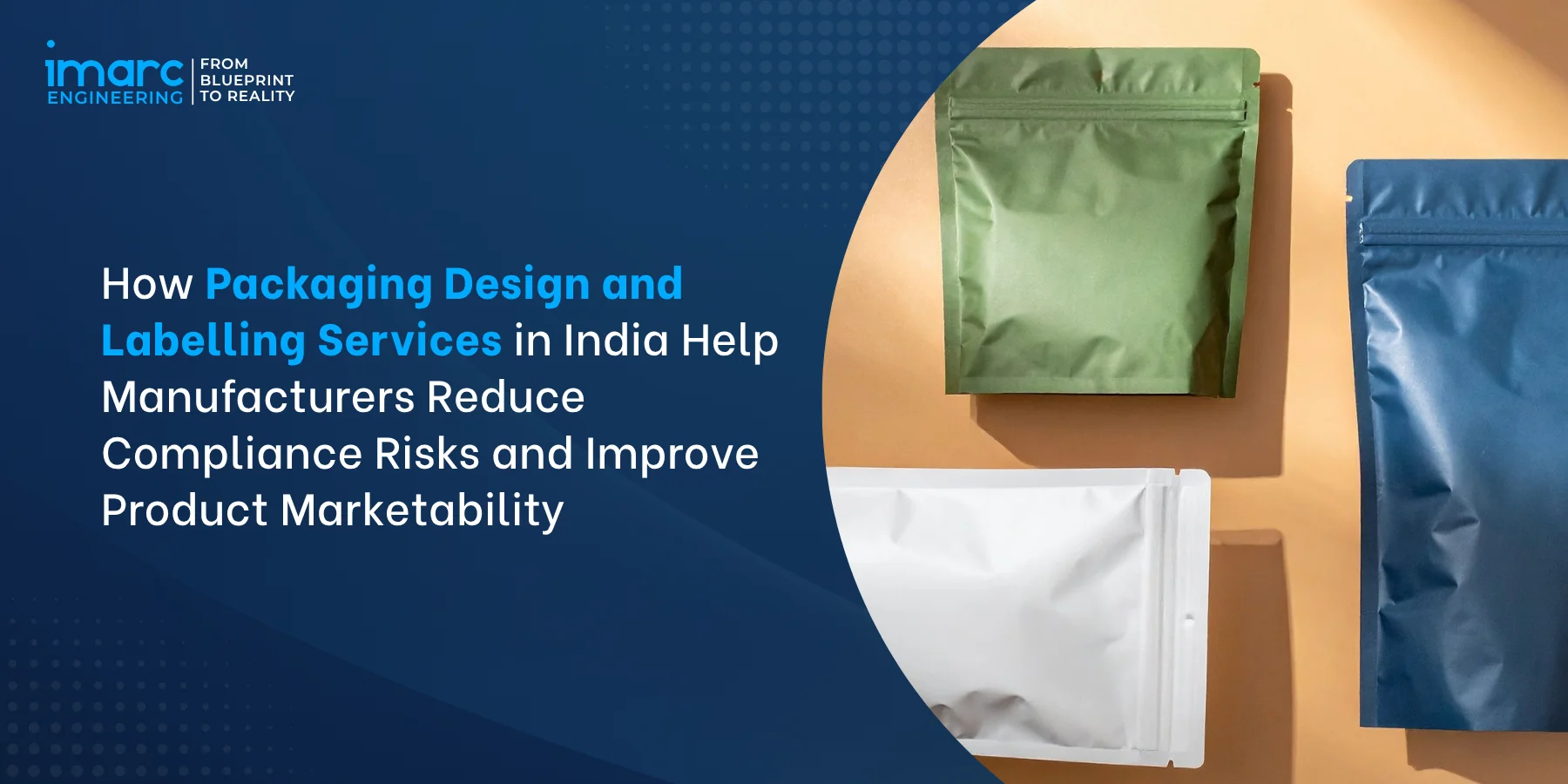
How Packaging Design and Labelling Services in India Help Manufacturers Reduce Compliance Risks and Improve Product Marketability
Introduction
For any Indian manufacturer preparing to launch or expand a product portfolio in 2026, professional packaging design and labelling services in India are strategic business functions rather than purely aesthetic activities. Well-designed packaging improves product protection, regulatory compliance, consumer communication, shelf appeal, and brand recognition while supporting successful launches across domestic and international markets. India's expanding regulatory framework covering Legal Metrology, FSSAI, CDSCO, BIS, Plastic Waste EPR, and sector-specific rules make disciplined packaging discipline a compliance prerequisite rather than optional differentiation.
Scope of this Guide
This guide answers the manufacturer's packaging discipline question directly. How can packaging design services and structured labelling improve regulatory compliance, product presentation, brand visibility, and market readiness while reducing packaging-related risks? It walks through material and structural selection, mandatory labelling elements, sector-specific requirements for food and pharmaceutical categories, export market compliance, sustainability integration, and the practices that separate structured packaging compliance from ad-hoc packaging that faces enforcement risk.
Table of Contents
- Introduction
- Why Professional Packaging Design and Labelling Matter in 2026
- How to Design Compliant Product Packaging in India
- Mandatory Labelling Requirements for Products Sold in India
- FSSAI Food Packaging and Labelling Compliance in India
- Pharmaceutical Packaging Design and Labelling in India
- Export Packaging and Labelling Compliance for Indian Manufacturers
- Sustainability Considerations for Packaging Design in India
- Common Mistakes and Best Practices
- Conclusion
1. Why Professional Packaging Design and Labelling Matter in 2026
Four structural drivers make disciplined packaging design a strategic priority for Indian manufacturers in 2026.
1.1 Expanding Regulatory Framework
Legal Metrology (Packaged Commodities) Rules 2011 govern pre-packaged commodities. Consumer Protection Act 2019 imposes disclosure discipline. FSSAI Packaging Regulations 2018 and Labelling Regulations 2020 govern food. CDSCO under Drugs and Cosmetics Act 1940 governs pharmaceutical and cosmetic labelling. Plastic Waste Management Rules 2016 as amended in 2022 impose Extended Producer Responsibility. Structured regulatory labelling across these frameworks is materially more complex than in earlier decades.
1.2 Enforcement Intensification
State legal metrology enforcement has materially intensified with structured inspection programmes, penalty escalation, and product recall powers. FSSAI has expanded surveillance including online commerce channels. CDSCO enforcement covers both manufacturing and market surveillance. Consumer forums progressively address packaging and labelling grievances. Non-compliance costs including penalties, product recalls, litigation, and reputational damage typically far exceed structured compliance investment supporting economic case for professional advisory.
1.3 E-Commerce and Consumer Expectations
E-commerce channels expose packaging to broader scrutiny including consumer review, comparison shopping, and social media commentary. Structured product information, ingredient transparency, sustainability credentials, and cultural sensitivity increasingly shape purchase decisions. Digital packaging elements including QR codes, augmented reality, and traceability increasingly extend physical packaging into digital consumer engagement. Structured packaging supports both compliance and commercial engagement in modern retail contexts.
1.4 Export Market Requirements
Indian exporters progressively face stringent packaging and labelling requirements across EU, UK, USA, Middle East, and other markets. EU Packaging and Packaging Waste Regulation 2025, EU Food Information Regulation 1169/2011, USA FDA labelling requirements, USDA organic standards, and UKCA marking post-Brexit collectively shape export packaging discipline. Structured export packaging supports market access while reducing rework risk during customs clearance.
2. How to Design Compliant Product Packaging in India
Understanding how to design compliant product packaging in India helps manufacturers sequence structural, material, artwork, and regulatory decisions correctly. Structured packaging artwork development integrates protection, communication, and compliance objectives from concept stage.
2.1 The Structured Packaging Development Roadmap
| Stage | Activities | Typical Duration |
|---|---|---|
| Product and Market Brief | Product definition, market positioning, regulatory scan | 2-4 weeks |
| Structural Design | Material selection, packaging format, protection engineering | 3-6 weeks |
| Artwork Development | Concept, layout, typography, colours, visualisation | 3-8 weeks |
| Regulatory Compliance | Labelling verification, statutory disclosures | 2-4 weeks |
| Prototyping and Testing | Physical samples, drop tests, shelf-life validation | 4-8 weeks |
| Production and Launch | Vendor selection, artwork files, production oversight | 4-8 weeks |
2.2 Material and Structural Selection
Packaging material selection balances protection requirements, consumer preferences, regulatory constraints, and sustainability goals. Common materials include paperboard (folding cartons, corrugated), glass, metal (steel, aluminium), plastics (PET, HDPE, LDPE, PP, PS, PVC), flexible laminates, and emerging bioplastics (PLA, PHA). Structural design considers product characteristics (fragility, shelf life, temperature sensitivity), supply chain requirements (stacking, transportation), and retail presentation. Structured trade-off analysis balances competing objectives supporting informed decisions.
2.3 Artwork Development and Brand Integration
Structured artwork development integrates brand identity, product information, statutory disclosures, and consumer engagement. Typography selection considers legibility, brand alignment, and regulatory clarity requirements. Colour management using PANTONE or CMYK systems supports production consistency.
Barcode integration per GS1 India standards supports retail and logistics. Regulatory disclosures balance visual impact with mandated prominence. Structured artwork files (typically vector-based Adobe Illustrator with high-resolution assets) support both current production and future adaptation.
3. Mandatory Labelling Requirements for Products Sold in India
Mandatory labelling requirements for products sold in India combine Legal Metrology core disclosures with sector-specific requirements. Structured compliance across all applicable frameworks is prerequisite for lawful sale in India.
3.1 Legal Metrology Core Disclosures
| Element | Requirement (LM PCR 2011) |
|---|---|
| Name and address | Manufacturer, packer, importer (with PIN code) |
| Common or generic name | Product identity |
| Net quantity | Standard SI units (grams, ml, litres, kilograms) |
| Retail Sale Price (MRP) | Inclusive of all taxes |
| Date of manufacture, packing, or import | Month and year |
| Consumer care details | Name, address, phone, email |
| Country of origin | Mandatory for imported goods |
3.2 Barcode and Traceability Integration
Barcode integration supports retail scanning, inventory management, and traceability. GS1 India administers Global Trade Item Number (GTIN) allocation with EAN-13 (13-digit) and EAN-8 (8-digit) common retail formats, and GS1-128 for logistics units. Two-dimensional codes including QR codes and GS1 DataMatrix increasingly support product-level serialisation particularly for pharmaceutical, cosmetic, and premium consumer products. Structured barcode planning during artwork development prevents post-launch corrections that require full artwork revision.
3.3 Multilingual Packaging and Artwork Development
Multilingual packaging and artwork development supports both domestic language diversity and export market access. Hindi, English, and additional regional languages typically appear on domestic packaging with structured hierarchy. Export packaging includes destination-country languages per applicable regulations. Structured translation quality control including regulatory content verification prevents both compliance failures and consumer confusion. Language selection strategy balances shelf space, visual clarity, and market reach.
3.4 Prominence, Font, and Layout Requirements
Legal Metrology rules prescribe minimum font sizes proportional to package dimensions ensuring consumer readability. FSSAI additionally specifies front-of-pack information prominence for food. CDSCO requires specific warning statements and schedule markings on pharmaceutical packaging. Consumer Protection Act 2019 grievance provisions cover misleading representations. Structured typography and layout discipline satisfying prominence requirements while supporting brand aesthetics balances competing objectives.
4. FSSAI Food Packaging and Labelling Compliance in India
FSSAI food packaging and labelling compliance under Food Safety and Standards Act 2006 with associated Packaging Regulations 2018 and Labelling and Display Regulations 2020 governs all pre-packaged food. Structured food packaging labelling is materially more prescriptive than general Legal Metrology requirements.
4.1 FSSAI Additional Requirements
- Best before or use by date (in addition to manufacture date)
- Complete ingredients list in descending order of quantity
- Nutritional information per FSSAI prescribed format
- Vegetarian (green square) or non-vegetarian (brown square) symbol
- Allergen declaration for prescribed allergens
- FSSAI licence number with logo
- Food category disclosure
- Halal, organic, or other claims subject to substantiation
- Front-of-Pack (FoP) nutrition labelling under progressive rollout
4.2 FSSAI Packaging Material Requirements
FSSAI Packaging Regulations 2018 prescribe permitted packaging materials for food contact. Migration limits for chemicals from packaging into food are specified. Recycled plastic use in direct food contact is restricted per amendments and clarifications.
BIS certifications for food-grade materials (IS 9845 for overall migration; various IS codes for specific materials) support demonstrated compliance. Structured packaging material selection with documented food-grade certification supports both regulatory compliance and consumer safety.
4.3 Nutrition Labelling and Claims
FSSAI prescribes nutritional information format covering energy, carbohydrates (including sugars), protein, fat (including saturated and trans fats), and salt (or sodium). Additional nutrients such as fibre, vitamins, and minerals appear where claims are made.
Health and nutrition claims require substantiation per FSSAI guidelines. Structured nutrition analysis through NABL-accredited laboratories supports label credibility. Front-of-Pack labelling including proposed Indian Nutrition Rating (INR) system is under progressive implementation.
4.4 Specific Food Category Requirements
Specific food categories carry additional requirements. Infant food requires prominent breastfeeding promotion. Fortified foods require +F logo. Organic products require FSSAI Jaivik Bharat logo where certified. GM (genetically modified) products face restrictions and disclosure requirements.
Nutraceuticals and dietary supplements under FSS (Health Supplements, Nutraceuticals, Food for Special Dietary Use) Regulations 2016 carry distinct requirements. Structured category-specific compliance during artwork development prevents late-stage corrections.
5. Pharmaceutical Packaging Design and Labelling in India
Pharmaceutical packaging design and labelling under Drugs and Cosmetics Act 1940 with Drugs and Cosmetics Rules 1945 is the most stringent product labelling framework in India. Central Drugs Standard Control Organisation (CDSCO) administers with State Drug Controllers. Structured pharmaceutical labelling requires specialised expertise across regulatory, technical, and commercial dimensions.
5.1 Mandatory Pharmaceutical Labelling Elements
- Proper name (generic name) with prominence
- Brand name where used
- Composition with active ingredients
- Batch number, manufacturing date, expiry date
- Manufacturing licence number and CDSCO approval reference
- Storage instructions
- Maximum Retail Price (MRP) per Drugs Prices Control Order
- Schedule H, H1, X, or other warnings where applicable
- Prescription-only warnings (Rx symbol)
- Barcode with GS1 DataMatrix for supply chain traceability
5.2 Track and Trace Requirements
Central Drugs Standard Control Organisation has progressively implemented track and trace requirements for pharmaceutical products. Top 300 brands were required to implement QR code or barcode with primary identification data (product name, brand, manufacturer, batch number, manufacturing date, expiry date, unique product identification code) from 1 August 2023. Broader implementation continues progressively. Structured GS1 DataMatrix integration during packaging design supports current and expected requirements.
5.3 Cosmetics and Cosmetics Packaging
Cosmetics packaging labelling requirements in India under Drugs and Cosmetics Rules 1945 with Cosmetics Rules 2020 govern cosmetics manufacturers. Mandatory labelling elements include product name, batch number, manufacturing date and shelf life, manufacturer name and address, ingredient declaration in International Nomenclature of Cosmetic Ingredients (INCI) format, net content, directions for use, warnings where applicable, and manufacturing licence number. Import registration under Cosmetics Rules 2020 requires additional documentation for imported cosmetics.
5.4 Medical Devices Packaging
Medical devices under Medical Devices Rules 2017 face specific labelling requirements including device name, model, manufacturer name and address, batch or serial number, manufacturing date and expiry (where applicable), sterility indications (where applicable), storage instructions, warnings and precautions, and CDSCO registration/licence. Symbols per ISO 15223-1 support international consistency. Structured medical device packaging discipline supports both CDSCO compliance and export market access.
6. Export Packaging and Labelling Compliance for Indian Manufacturers
Export packaging and labelling compliance for Indian manufacturers requires destination-country compliance layered onto domestic Indian requirements. Structured export packaging compliance supports market access while reducing customs and enforcement risk.
6.1 Key Export Market Frameworks
| Market | Key Framework | Focus |
|---|---|---|
| European Union | Packaging and Packaging Waste Regulation 2025 | Sustainability, EPR, material restrictions |
| EU (Food) | Regulation (EU) 1169/2011 | Food information to consumers |
| United States | FDA labelling requirements, FTC FPLA | Product safety, disclosure discipline |
| United States (Organic) | USDA National Organic Program | Organic certification and labelling |
| United Kingdom | UKCA marking post-Brexit | Product conformity assessment |
| Middle East | GSO / SFDA / ESMA standards | Halal, Arabic labelling requirements |
| Japan | Food Sanitation Act, JAS standards | Food safety and organic |
| Australia | Food Standards Australia New Zealand | Nutrition and health claims |
6.2 EU Export Requirements
EU Packaging and Packaging Waste Regulation 2025 progressively implements sustainability requirements including recycled content targets, recyclability standards, reduction of unnecessary packaging, and Extended Producer Responsibility harmonisation.
EU Food Information Regulation 1169/2011 governs food labelling including nutrition, allergens, and origin. CE marking indicates conformity with EU directives for applicable products. REACH governs chemicals in packaging. Structured EU compliance requires specialised expertise particularly for food, cosmetics, and consumer product exporters.
6.3 US Export Requirements
USA FDA governs labelling for food, drugs, cosmetics, and medical devices. Federal Trade Commission Fair Packaging and Labeling Act (FPLA) governs consumer commodities. USDA governs organic labelling under National Organic Program.
Nutrition Facts panel format follows FDA-prescribed structure. Ingredient declaration follows specific requirements. Country of origin labelling under Customs and Border Protection applies. State-specific requirements including California Proposition 65 may apply. Structured US compliance requires layered federal and state analysis.
6.4 Multi-Market Packaging Strategy
Manufacturers serving multiple export markets typically balance market-specific packaging (higher tooling and inventory cost, precise compliance) against unified international packaging (lower cost, requires largest-common-denominator compliance).
Multi-language packaging with panels for different market groups (English + destination language) supports moderate consolidation. Digital packaging elements including QR codes to market-specific product information support consolidation. Structured multi-market strategy balances cost efficiency with compliance discipline.
7. Sustainability Considerations for Packaging Design in India
Sustainability considerations for packaging design progressively shift from voluntary differentiation to mandatory compliance. Plastic Waste Management Rules and Extended Producer Responsibility framework establish structured obligations.
7.1 Plastic Waste EPR Framework
Extended Producer Responsibility for plastic packaging under Plastic Waste Management Rules 2016 as amended in 2022 imposes structured obligations. Producers, importers, and brand owners register on CPCB EPR Portal. Plastic packaging categorises across Category I (rigid), Category II (flexible less than 50 microns), Category III (flexible above 50 microns), and Category IV (multi-layered plastic).
Progressive targets cover recyclable plastic content, recycled plastic content, reusable plastic content, and end-of-life management. Structured EPR compliance from Day 1 supports both regulatory adherence and circular economy positioning.
7.2 Sustainable Material Selection
- Recycled paperboard and corrugated for structural packaging
- Recycled PET (rPET) for beverage bottles where regulations permit
- Mono-material flexibles supporting recyclability
- Compostable materials per IS 17088 for food service applications
- Aluminium for high-value recyclable containers
- Glass for premium and heritage products
- Reduced material intensity through structural optimisation
- Right-sized packaging minimising void space
7.3 Design for Recyclability
Design for recyclability considers material compatibility across primary packaging components. Mono-material construction supports higher recycling recovery. Removable labels and closures support cleaner recycling streams. Colour selection considers optical sorting compatibility.
Adhesive selection considers recycling process compatibility. Structured recyclability assessment during design phase materially outperforms post-launch modification. Bureau of Indian Standards IS 14535 covers plastics identification for recycling supporting standardised marking.
7.4 Sustainability Communication
Structured sustainability communication supports consumer engagement while avoiding greenwashing risk. Third-party certifications (FSC for paper, EU Ecolabel, Cradle to Cradle, Green Dot voluntary) provide substantiated claims.
Life Cycle Assessment (LCA) per ISO 14040/14044 supports comparative claims. Advertising Standards Council of India (ASCI) guidelines cover environmental claims. Structured communication with documented substantiation prevents both regulatory scrutiny and consumer challenge.
8. Common Mistakes and Best Practices
8.1 Treating Packaging as Post-Design Formality
Product development completing before packaging design produces both compliance surprises and rushed launches.
Best practice: packaging brief during product concept stage; regulatory scan during early development; structural design in parallel with product development; artwork and compliance well before commercial launch dates; structured stage-gate reviews across product and packaging tracks.
8.2 Weak Regulatory Scan
Packaging designed against incomplete regulatory understanding produces post-launch corrections that damage both brand and cash flow.
Best practice: comprehensive regulatory scan covering Legal Metrology, sector-specific (FSSAI, CDSCO, BIS), Plastic EPR, and export market requirements; documented regulatory register; regulatory reviewer sign-off on artwork before production; regulatory updates monitoring for progressive changes.
8.3 Inadequate Artwork Files and Version Control
Artwork files without structured version control produce production errors across multiple SKU variations.
Best practice: master brand and packaging guidelines document; structured artwork file architecture with version control; approved colour standards (PANTONE, CMYK); production-ready files with proper bleeds, marks, and colour separations; digital asset management supporting long-term retrieval and audit.
8.4 Deferred Sustainability Planning
Packaging designed without sustainability integration faces retrofit requirements as EPR obligations expand.
Best practice: sustainability strategy defined during packaging brief; recyclability assessment during structural design; EPR compliance planning from Day 1; life cycle considerations informing material choices; documented sustainability performance supporting consumer communication.
8.5 Weak Prototyping and Testing
Packaging launched without adequate prototyping produces both quality issues and consumer complaints.
Best practice: physical prototyping ahead of production commitments; drop testing per ISTA (International Safe Transit Association) protocols; shelf life validation for sensitive products; consumer research on shelf visibility and communication clarity; supply chain testing including transport simulation; structured feedback integration before commercial launch.
Conclusion
Structured packaging design and labelling services in India in 2026 combine structural engineering, artwork development, regulatory compliance across Legal Metrology, FSSAI, CDSCO, BIS, and Plastic EPR frameworks, sector-specific requirements, export market compliance, sustainability integration, and disciplined prototyping into coherent product commercialisation programmes.
Successful product launches depend on planning packaging during the product development stage, validating artwork against all applicable regulatory requirements before production, and integrating sustainability from the outset rather than as a later retrofit.
PLANNING YOUR PACKAGING DESIGN AND LABELLING PROGRAMME?
IMARC Engineering's packaging design and labelling advisory team supports manufacturers, product managers, and regulatory leads across product and packaging briefing, regulatory scan covering Legal Metrology, FSSAI, CDSCO, BIS, and Plastic Waste EPR frameworks, structural packaging design, material selection and sustainability integration, artwork development and brand identity integration, multilingual packaging strategy, barcode and GS1 DataMatrix integration, prototyping and consumer testing coordination, food and pharmaceutical sector-specific compliance, cosmetics and medical device packaging discipline, export market compliance across EU, US, UK, Middle East, and Asia-Pacific destinations, Extended Producer Responsibility registration and compliance, sustainability certifications, and product launch coordination across sectors in India.
→ Schedule a free packaging design and labelling scoping consultation with an IMARC specialist
Frequently Asked Questions
Packaging Design and Labelling Services in India cover integrated structural design, material selection, artwork development, regulatory compliance, sustainability integration, and prototyping supporting product launches and lifecycle management. Services typically span product concept through commercial launch and progressive brand refreshes across product categories.
Professional packaging supports product protection, regulatory compliance, consumer communication, shelf appeal, and brand recognition. Structured discipline reduces compliance risks including penalties, recalls, and reputational damage. Well-designed packaging supports both successful domestic launches and export market access. Investment in professional packaging typically produces cost savings versus post-launch corrections.
Structured regulatory labelling under Legal Metrology (Packaged Commodities) Rules 2011 requires manufacturer/packer/importer name and address, common name, net quantity, MRP inclusive of taxes, date of manufacture, consumer care details, and country of origin for imports. Sector-specific requirements apply for food (FSSAI), pharmaceutical (CDSCO), cosmetic, and other regulated categories.
Structured food packaging labelling under FSSAI Packaging Regulations 2018 and Labelling Regulations 2020 requires best before or use by date, ingredients list in descending order, nutritional information, vegetarian or non-vegetarian symbol, allergen declaration, FSSAI licence number with logo, food category, and additional requirements for infant food, fortified foods, organic products, and nutraceuticals.
Pharmaceutical labelling under Drugs and Cosmetics Act 1940 requires proper name and brand name where used, composition with active ingredients, batch number, manufacturing and expiry dates, manufacturing licence number, storage instructions, MRP per DPCO, Schedule H/H1/X warnings where applicable, prescription warnings, and GS1 DataMatrix for supply chain traceability with progressive implementation for top brands from 1 August 2023.
Export packaging compliance layers destination-country requirements onto Indian domestic compliance. EU Packaging and Packaging Waste Regulation 2025 and Food Information Regulation 1169/2011 govern EU exports. USA FDA and FTC FPLA govern US exports. UKCA marking applies post-Brexit. Middle East markets require Arabic labelling and halal certification where applicable. Multi-market strategy balances compliance discipline with cost efficiency.
Plastic Waste Management Rules 2016 as amended in 2022 impose Extended Producer Responsibility on producers, importers, and brand owners through CPCB EPR Portal registration. Plastic packaging categorises across Category I (rigid), II (flexible less than 50 microns), III (flexible above 50 microns), and IV (multi-layered plastic). Recyclable content, recycled content, reusable content, and end-of-life management targets progressively increase. Structured EPR compliance from Day 1 supports both regulation and circular economy positioning.
Basic label design typically costs INR 25,000-3 lakh. Comprehensive packaging design programmes typically cost INR 5-50 lakh. Regulatory compliance advisory typically ranges INR 5-30 lakh. Structural packaging design with testing typically ranges INR 3-25 lakh. Full brand identity plus packaging programmes typically ranges INR 25 lakh-2 crore. Investment scales with product category, market complexity, and portfolio scope.
Structured packaging consultants in India support regulatory scan, structural design, artwork development, material and sustainability strategy, prototyping coordination, sector-specific compliance, and export market compliance. Advisory materially reduces compliance risk, accelerates product launches, strengthens brand positioning, and supports domestic and export market readiness through structured packaging artwork development integrated with regulatory discipline.
Recent Post




Trusted by Industry Leaders
We partner with global enterprises and ambitious businesses across sectors to deliver operational excellence, strategic insights, and sustainable growth through integrated solutions.









Success in Their Words
Real feedback from clients across industries. Discover how our solutions delivered measurable impact and operational excellence.

I wanted to express my sincere appreciation for your efforts in handling this matter. Your dedication and commitment have been truly commendable, and it is evident that you have put in tremendous hard work and expertise into resolving the issues at hand. We are greatly interested in continuing our collaboration with you in the future, as your professionalism and reliability have made you a trusted partner. Thank you once again for your invaluable contribution. We look forward to strengthening our partnership ahead.

It has been a pleasure working with the IMARC team. The insights provided were structured, clear, and highly valuable, helping us strengthen both our technical and financial planning with confidence. We deeply appreciate the team’s professionalism, responsiveness, and attention to detail throughout the engagement. Every requirement was well understood and effectively incorporated, resulting in a comprehensive and actionable output. Overall, our experience has been excellent, and I would gladly recommend IMARC to organizations seeking a reliable research partner.

Your service is truly exceptional. Working with the IMARC team has been a seamless and professional experience. The clarity of communication, responsiveness to queries, and consistent support at every stage made the entire engagement highly efficient. The insights shared were well-structured, practical, and perfectly aligned with our requirements, helping us make informed decisions with confidence. Overall, the dedication and professionalism demonstrated by your team stand out, and I would be glad to recommend IMARC as a reliable and trustworthy research partner.

IMARC did an outstanding job in preparing our study. They were punctual, precise, and consistently responsive throughout the entire process. The team delivered all the data we required in a clear, well-organized, and highly professional format. Their strong attention to detail, combined with their ability to meet every deadline without compromising quality, truly set them apart. Overall, their reliability and commitment made them an exceptional partner for our project, and we would gladly work with them again in the future.

IMARC made the whole process incredibly easy from start to finish. Everyone I interacted with via email was polite, professional, and straightforward to deal with, always keeping their promises regarding delivery timelines and remaining consistently solutions-focused. From my very first contact, I appreciated the professionalism and support shown by the entire IMARC team. I highly recommend IMARC to anyone seeking timely, affordable, and reliable information or advice. My experience with IMARC was excellent, and I truly cannot fault any aspect of it.

I’d like to express my sincere gratitude for the excellent work you accomplished with the study. Your ability to quickly understand our requirements and deliver high-quality results under tight timelines truly reflects your expertise, exceptional work ethic, and unwavering commitment to your customer’s success. The professionalism and responsiveness you demonstrated throughout the process made a significant difference. Our entire team and company are incredibly thankful for your dedication, reliability, and support. Once again, thank you for your outstanding contribution.