Manufacturing
September 14 2026
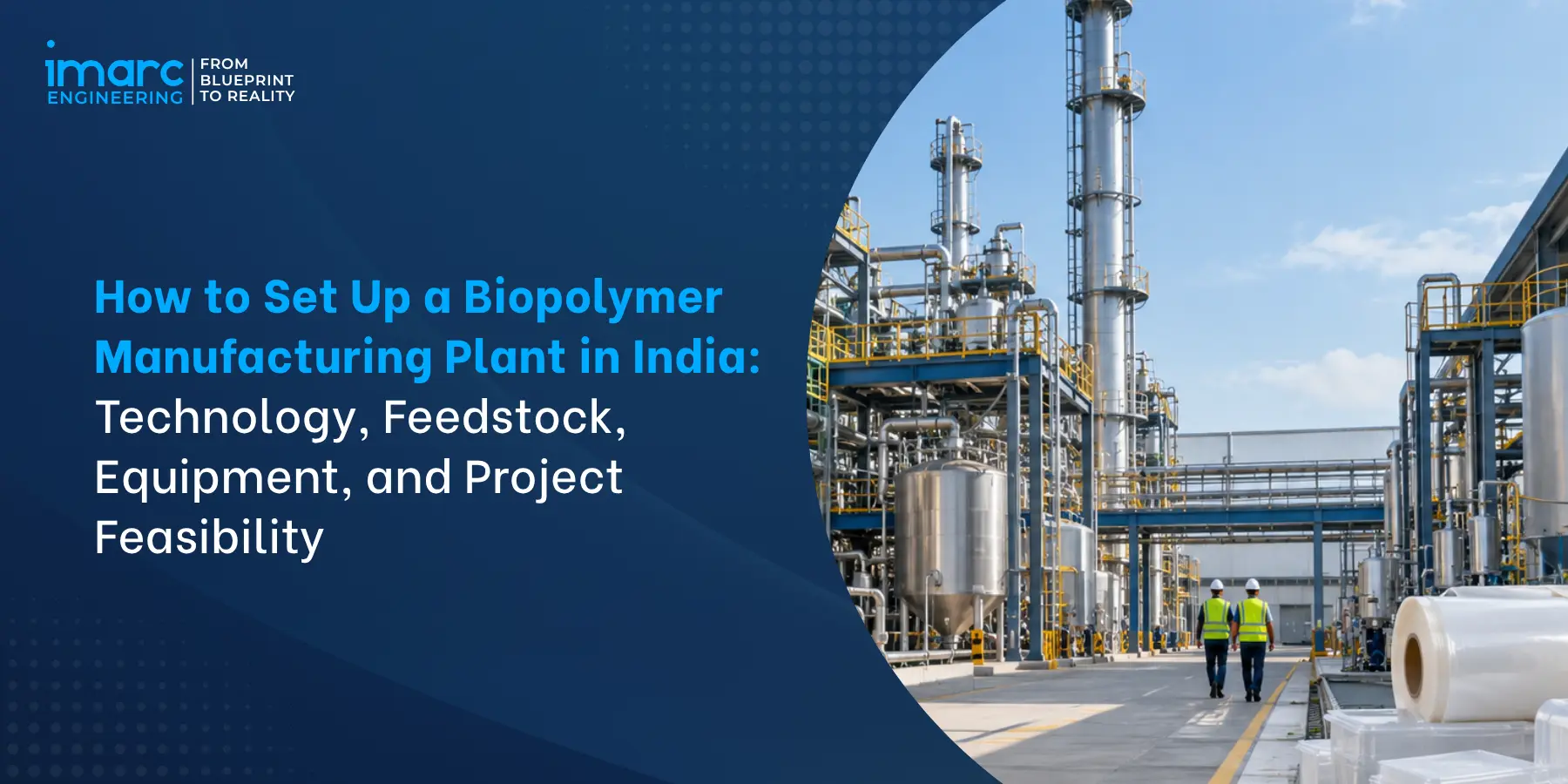
How to Set Up a Biopolymer Manufacturing Plant in India: Technology, Feedstock, Equipment, and Project Feasibility
Introduction
For biotech manufacturers, investors, and project developers evaluating a biopolymer manufacturing plant in India in 2026, disciplined integration across polymer selection, feedstock strategy, process technology, equipment specification, downstream processing, utilities, and regulatory framework determines commercial viability.
India's BioE3 Policy, approved by the Union Cabinet on 24 August 2024, identifies high-value bio-based chemicals, biopolymers and enzymes as a key thematic area for high-performance biomanufacturing. The broader Bio-RIDE framework also supports biotechnology R&D, entrepreneurship, biomanufacturing and biofoundry development. For products marketed as compostable or biodegradable plastics, applicable Plastic Waste Management requirements and relevant Indian standards must be evaluated according to the intended product category.
Scope of the Guide
This guide answers the sponsor's question directly. How can manufacturers plan a commercially viable biopolymer plant in India based on polymer type, feedstock availability, process technology, plant capacity, equipment requirements, and project economics? It walks through the critical bio-based vs biodegradable distinction, polymer categories (PLA, PHA, TPS, bio-PE), feedstock strategy, fermentation vs polymerization process routes, downstream purification, equipment and utilities, CPCB/BIS regulatory compliance, and investment brackets anchored to explicit polymer type and capacity assumptions.
Table of Contents
- Introduction
- Why Biopolymer Manufacturing Matters for India in 2026
- What a Biopolymer Manufacturing Plant Is and Why It Matters in India
- Bio-Based vs Biodegradable Polymer Distinction for Biopolymer Plants in India
- Polymer Selection and Feedstock Strategy for Biopolymer Manufacturing in India
- Fermentation and Polymerization Process Technology for Biopolymer Plants in India
- Downstream Purification Drying and Pelletizing for Biopolymer Manufacturing in India
- Equipment Utilities and Process Systems for Biopolymer Plants in India
- Regulatory Approvals BIS Compliance and Project Economics for Biopolymer Manufacturing in India
- Conclusion
1. Why Biopolymer Manufacturing Matters for India in 2026
Four drivers make disciplined biopolymer plant setup a strategic opportunity for Indian manufacturers and investors in 2026.
1.1 BioE3 Policy Framework
India's biopolymer manufacturing in India framework strengthened significantly with BioE3 Policy (Biotechnology for Economy, Environment and Employment) approved by Union Cabinet on 24 August 2024 by Department of Biotechnology under Ministry of Science and Technology. Bio-based chemicals, biopolymers and enzymes are identified as a key thematic area under the BioE3 biomanufacturing initiative. Bio-RIDE Scheme integrates R&D, entrepreneurship, and biomanufacturing support.
1.2 Regulatory Momentum on Conventional Plastics
Plastic Waste Management framework tightening creates commercial opportunity for biopolymer substitutes. Single-Use Plastic (SUP) ban effective 1 July 2022 under PWM (Amendment) Rules 2021 removed 19 SUP items from market. PWM (Amendment) Rules 2026 notified 31 March 2026 (G.S.R. 237(E)) mandate recycled plastic content in packaging.
Extended Producer Responsibility (EPR) obligations progressively expanding with compliance requirements for producers, importers, brand owners. Compostable and biodegradable plastics registered with CPCB conforming to IS/ISO 17088:2021 or IS 17899:2024 access markets exempt from certain SUP restrictions.
1.3 Growing Domestic and Export Market
Global biopolymer market growing 15-25 percent annually while India's biodegradable polymer manufacturing and bio-based polymers demand supported by brand owner sustainability commitments, retail chain packaging changes, and consumer preferences. India's bioeconomy grew from USD 165 billion in 2024 to USD 195 billion in 2025 targeting USD 300 billion by 2030 under BioE3 Policy framework. Export markets in EU (under Packaging and Packaging Waste Regulation) and North America increasingly specify bio-based content with premium pricing. Well-executed plants access domestic replacement demand and international premium markets simultaneously.
1.4 Financial Support Available
Multiple support mechanisms available for biopolymer projects. Bio-RIDE Scheme INR 9,197 crore covering R&D, entrepreneurship, and biomanufacturing. BIRAC (Biotechnology Industry Research Assistance Council) startup financing and technology transfer support. DBT grants for pilot and demonstration facilities.
State-level industrial policies offering capital subsidies and land support. Praj Industries commissioned India's first biopolymer demonstration facility in Pune illustrating framework operationalization. However, these schemes reward well-planned projects with technical rigor rather than compensate for weak feasibility.
2. What a Biopolymer Manufacturing Plant Is and Why It Matters in India
Understanding what a biopolymer manufacturing plant is and why it matters in India begins with defining the specific manufacturing type. Biopolymer plants combine biological, chemical, and polymer engineering disciplines.
2.1 Definition and Scope
A biopolymer manufacturing facility is an integrated industrial plant that produces polymers derived from renewable biological feedstock (bio-based) and/or polymers designed to biodegrade under specified conditions (biodegradable), through fermentation, chemical polymerization, or thermoplastic conversion routes. Commercial plants integrate feedstock preparation, biological or chemical conversion, monomer synthesis where applicable, polymerization, downstream separation and purification, drying, compounding, and pelletizing. Biopolymer plants differ from conventional polymer plants through biological process integration, feedstock complexity, and product certification requirements (CPCB, IS/ISO 17088, IS 17899).
2.2 Plant Components
| Component | Function | Illustrative Elements |
|---|---|---|
| Feedstock Store | Raw material handling | Silos, storage tanks, conveyors |
| Preparation Area | Feedstock conditioning | Milling, hydrolysis, sterilization |
| Fermentation | Biological conversion (where used) | Bioreactors, fermenters, seed tanks |
| Polymerization | Chemical conversion (where used) | Reactors, catalyst handling |
| Separation | Product isolation | Centrifuges, filtration, extraction |
| Drying & Compounding | Product finishing | Dryers, extruders, additive mixers |
| Pelletizing | Final product form | Pelletizers, coolers, packaging |
| Quality Laboratory | Testing and certification support | GPC, DSC, tensile testing |
2.3 Polymer-Specific Plant Configuration
Plant configuration varies significantly by target polymer. PLA (Polylactic Acid) plants require integrated fermentation (glucose to lactic acid), monomer synthesis (lactic acid to lactide), and ring-opening polymerization - complex multi-step integrated facility. PHA (Polyhydroxyalkanoates) plants use direct microbial fermentation producing polymer intracellularly followed by extraction and purification - fermentation-dominant facility.
TPS (Thermoplastic Starch) plants use physical plasticization and extrusion - simplest configuration with no fermentation or polymerization. Bio-PE plants use ethanol fermentation followed by dehydration to bio-ethylene and conventional polymerization - can leverage existing polyethylene infrastructure. Plant scope should follow target polymer rather than assume universal configuration.
3. Bio-Based vs Biodegradable Polymer Distinction for Biopolymer Plants in India
Understanding bio-based vs biodegradable polymer distinction for biopolymer plants in India is the single most important conceptual framework in biopolymer projects. Confusing these two independent attributes is the most common project scoping error.
3.1 Two Independent Attributes
- Bio-based polymers are made from renewable biological feedstock (starch, sugar, oil, cellulose) - a feedstock attribute
- Biodegradable polymers break down through biological action under specified conditions - an end-of-life attribute
- These attributes are INDEPENDENT - polymers can be one, both, or neither
- A bio-based polymer is not automatically biodegradable (Bio-PE is bio-based but non-biodegradable)
- A biodegradable polymer is not automatically bio-based (PBAT is fossil-based but biodegradable)
- Compostable is a specific subset of biodegradable requiring composting conditions per IS/ISO 17088:2021
3.2 Four Polymer Categories
The regulatory pathways shown below are indicative and depend on the claims made for the finished plastic material or product. Polymer chemistry alone does not establish compostability or biodegradability compliance; the applicable testing, certification and labelling pathway should be determined from the intended product and end-of-life claim.
| Category | Examples | Regulatory Pathway |
|---|---|---|
| Bio-based + Biodegradable | PLA, PHA, TPS, cellulose acetate | IS/ISO 17088 or IS 17899 |
| Bio-based + Non-biodegradable | Bio-PE, Bio-PP, Bio-PET, Bio-PA | Conventional plastic rules |
| Fossil + Biodegradable | PBAT, PCL, PBS (partial) | IS/ISO 17088 or IS 17899 |
| Fossil + Non-biodegradable | Conventional PE, PP, PS, PET | Conventional/EPR under PWM |
3.3 India Regulatory Distinction
Indian regulatory framework under PWM Rules distinguishes compostable and biodegradable plastics explicitly. Compostable plastic materials must conform to IS/ISO 17088:2021 (Specifications for Compostable Plastics) with mandatory label 'compostable only under industrial composting'. Biodegradable plastics must conform to IS 17899:2024 test protocols with label 'Biodegradable in [number of days] only in [recipient environment - soil, landfill, water, etc.]'. Both require CPCB certification before manufacturing or marketing. Bio-based non-biodegradable polymers (Bio-PE, Bio-PP) follow conventional plastic rules including EPR obligations. Regulatory pathway follows biodegradability, not bio-based origin.
3.4 Strategic Implication for Plant Development
The bio-based vs biodegradable distinction drives strategic project decisions. Sustainability-focused markets (compostable packaging, agricultural mulch, food service) require biodegradable certification - IS/ISO 17088 or IS 17899 becomes market access requirement. Drop-in replacement markets (bottles, films, industrial products) accept bio-based non-biodegradable for renewable content credentials without compostability. Product certification cost, testing timelines (6-18 months), and market positioning depend fundamentally on this choice. Sponsors should decide target category before feedstock or technology selection.
4. Polymer Selection and Feedstock Strategy for Biopolymer Manufacturing in India
Understanding polymer selection and feedstock strategy for biopolymer manufacturing in India connects market decision to project engineering. Biopolymer feedstock availability and cost determine long-term project economics.
The feedstock quantities, yields and sourcing ranges below are indicative planning benchmarks rather than universal biopolymer conversion ratios. Actual feedstock consumption, conversion yield, sourcing radius and material balance should be established for the selected polymer, feedstock composition, microorganism or catalyst system, process technology, product specification and plant configuration.
4.1 Major Biopolymer Options
| Polymer | Feedstock | Process Route |
|---|---|---|
| PLA | Corn/sugar starch → dextrose | Fermentation + polymerization |
| PHA | Sugar, oil, waste substrates | Microbial fermentation (direct) |
| TPS | Corn/potato/cassava starch | Thermoplasticization |
| Bio-PE | Sugarcane → ethanol | Fermentation + dehydration |
| Bio-PP | Bio-based intermediates → bio-propylene | Fermentation + dehydration |
| Cellulose Acetate | Wood pulp cellulose | Chemical modification |
| PBAT (blend) | Typically, fossil-derived adipic acid, BDO and terephthalic acid | Chemical polymerization |
4.2 Feedstock Categories
- Starch-based polymers sourced from corn, cassava, potato, tapioca - year-round availability in India
- Sugar-based feedstock (sugarcane, molasses) for PLA/PHA/Bio-PE - abundant in India's sugar-producing states
- Biomass feedstock (cellulosic residues) for second-generation biopolymers - developing supply chain
- Vegetable oils for PHA and select bio-based polymers - domestic availability
- Industrial by-products (whey, molasses, food waste) - low-cost alternative feedstock
- Feedstock cost typically 25-45 percent of variable operating cost
4.3 Feedstock Availability Assessment
- Feedstock availability assessment covering annual generation, seasonality, competing uses
- India is world's largest sugar producer and second-largest starch crop producer
- Sugarcane concentrated in Maharashtra, UP, Karnataka, TN with mill-based sourcing
- Corn availability in Karnataka, MP, AP, Bihar with organized markets
- Cellulosic residues (bagasse, rice/wheat straw) - competing uses with CBG, power
- Long-term feedstock contracts protect against price volatility
- Sourcing radius typically 100-300 km for economical logistics
4.4 Polymer-Feedstock Matching
Polymer selection should follow feedstock availability and cost analysis alongside target market. PLA production requires 1.6-2.0 kg dextrose per kg PLA (from 1.5-2.0 kg corn/starch equivalent). PHA fermentation yields 0.30-0.50 kg PHA per kg substrate (highly bacteria/substrate dependent). TPS uses 0.7-0.9 kg starch per kg product with plasticizer addition.
Bio-PE requires approximately 3 kg sugar per kg polyethylene through fermentation to ethanol. Universal conversion ratios without specific process assumptions can mislead early feasibility - project-specific mass balance essential. Bio-based polymers with domestic feedstock advantage support project economics.
5. Fermentation and Polymerization Process Technology for Biopolymer Plants in India
Understanding fermentation and polymerization process technology for biopolymer plants in India covers the core value-addition activities. Process choice determines equipment, utilities, and plant complexity.
5.1 Fermentation-Based Route
- Fermentation process uses microorganisms (bacteria, yeast, fungi) to convert feedstock to polymer or monomer
- PHA manufacturing through direct microbial fermentation - Cupriavidus, Bacillus, Alcaligenes strains accumulate PHA up to 80 percent of cell dry weight
- PLA lactic acid stage uses Lactobacillus fermentation from glucose
- Bio-PE ethanol stage uses Saccharomyces cerevisiae from sucrose
- Batch, fed-batch, or continuous fermentation modes
- Sterile operation typically at 30-40°C, pH 5-7, controlled aeration and mixing
- Fermentation cycle 24-72 hours depending on substrate and product
5.2 Chemical Polymerization Route
- Polymerization process uses catalysts to convert monomers to polymers through chemical reaction
- PLA manufacturing through ring-opening polymerization of lactide (cyclic dimer of lactic acid) at 180-200°C with tin-based catalyst
- Alternative direct polycondensation of lactic acid (technical challenges limit commercial use)
- PBS/PBAT polycondensation of dicarboxylic acids and diols
- Bio-PE polymerization identical to fossil PE using bio-derived ethylene
- Catalyst selection, temperature, and pressure control determine molecular weight and properties
5.3 Physical Conversion Route
Thermoplastic Starch (TPS) uses physical plasticization rather than fermentation or polymerization. Native starch is disrupted through thermal and mechanical energy in extrusion with water and plasticizers (glycerol, sorbitol) yielding thermoplastic material. Blending with other polymers (PLA, PBAT) improves properties. This route uses simpler equipment (extruders, mixers) than fermentation-based routes making TPS the lowest-capital biopolymer route. However, TPS has property limitations (moisture sensitivity, mechanical strength) restricting applications versus PLA/PHA.
5.4 Process Technology Selection
Process technology selection should follow target polymer, feedstock strategy, capacity requirement, and technology maturity. PLA technology is commercially mature with established licensors globally. PHA technology has multiple strains and process routes at different maturity levels. Bio-PE uses proven ethylene polymerization technology with bio-ethanol integration. TPS is simplest with widely available extrusion technology.
Pilot validation is essential for emerging technologies (PHA new strains, novel PLA variants) before commercial scale-up. Technology licensing versus in-house development represents a fundamental strategic choice affecting timelines and IP position.
6. Downstream Purification Drying and Pelletizing for Biopolymer Manufacturing in India
Understanding downstream purification drying and pelletizing for biopolymer manufacturing in India covers product finishing operations. Downstream processing typically 30-40 percent of plant investment and directly determines product quality.
6.1 Separation and Purification
- Separation and purification operations recover polymer from fermentation broth or reaction mixture
- Cell separation for PHA - centrifugation or membrane filtration
- Cell lysis for intracellular PHA release - mechanical, chemical, or enzymatic
- PHA extraction - solvent extraction, aqueous digestion, or supercritical CO2
- Lactic acid purification for PLA - ion exchange, membrane, or crystallization
- Solvent recovery loops for economics and environmental compliance
- Purity typically 95-99 percent+ for polymer-grade output
6.2 Drying Operations
- Drying removes moisture from separated polymer to specifications
- Spray dryers for polymer suspensions and solutions
- Fluid bed dryers for polymer granules
- Vacuum dryers for temperature-sensitive polymers
- Drying temperature and time controlled to prevent polymer degradation
- Target moisture typically <0.1 percent for polymerization/compounding grade
- Nitrogen atmosphere for oxidation-sensitive polymers (PLA, PHA)
6.3 Compounding and Pelletizing
- Compounding combines base polymer with additives (plasticizers, stabilizers, colorants) for specific applications
- Extrusion (typically twin-screw) melts and mixes polymer/additives
- Pelletizing (underwater, strand, or hot-face) produces finished pellet product
- Pellet cooling, drying, and classification for uniform size
- PLA/PHA blends with PBAT common for improved flexibility
- Grade differentiation through additive package (extrusion, injection, film grades)
- Bagging, palletization, and quality certification per lot
6.4 Downstream Quality Control
Downstream quality control verifies polymer meets specifications for downstream converters. Molecular weight and distribution (GPC/SEC), thermal properties (DSC melting/glass transition), rheology (melt flow index, capillary rheometry), mechanical properties (tensile, impact), color/optical properties, and residual monomer/catalyst content. Testing per polymer-specific standards. Compostable/biodegradable grade certification per IS/ISO 17088:2021 or IS 17899:2024 through NABL-accredited or CPCB-approved laboratories. Quality laboratory typically 5-10 percent of plant CAPEX.
7. Equipment Utilities and Process Systems for Biopolymer Plants in India
Equipment, utilities, and process-system requirements for biopolymer manufacturing plants in India vary significantly by polymer type, production route, plant capacity, and operating strategy.
The following values are indicative engineering ranges and should not be treated as universal design criteria. Final equipment sizing, materials of construction, operating temperatures and pressures, water and energy demand, utility capacities, and land requirements should be established through polymer-specific process design and material and energy balances.
7.1 Core Process Equipment
- Reactors and fermenters sized per capacity requirement with appropriate materials of construction
- Fermenters: 316L SS with jacket cooling, aeration, agitation (5-500 m3)
- Polymerization reactors: temperature- and pressure-controlled, with operating conditions determined by polymer type, catalyst system, monomer and process technology.
- Seed tanks and pre-culture vessels for fermentation
- CIP (Clean-in-Place) systems for sterile fermentation operations
- Sterilization systems (steam, filtration) for fermenter media
- Distributed Control System (DCS) integrating fermentation and polymerization
7.2 Process Utilities
- Process utilities sized for biopolymer manufacturing operations
- Water requirement covering fermentation media, cooling, cleaning - typically 10-50 m3 per tonne product
- Energy requirement covering steam, thermal energy - 5-15 kWh per kg product
- Steam supply from boiler (12-18 kg/cm2) for sterilization and heating
- Chilled water for fermentation cooling (fermentation is exothermic)
- Compressed air (oil-free) for fermentation aeration and instrumentation
- Nitrogen for inert atmosphere in polymerization and packaging
7.3 Environmental Systems
- Effluent treatment plant sized for fermentation wastewater - high BOD/COD requiring biological treatment
- Anaerobic digestion often integrated for high-strength organic waste
- Emissions control for solvent recovery and VOC management
- Solid waste management for biomass residues and packaging
- Zero Liquid Discharge (ZLD) increasingly required in water-scarce regions
- Recovered biomass residues can offer biogas or animal feed value
7.4 Plant Layout and Infrastructure
Facility layout should support unidirectional material flow from feedstock reception through preparation, fermentation/reaction, downstream processing, compounding to finished goods storage. Hygienic zoning for fermentation area preventing contamination. Utility area segregated with clear services routing. Quality laboratory positioned to support in-process testing. Land requirement typically 15-30 acres for small commercial through 50-100 acres for large integrated plants. Site selection considers feedstock proximity, utility access (power, water, gas), effluent disposal options, and logistics for finished pellet dispatch.
8. Regulatory Approvals BIS Compliance and Project Economics for Biopolymer Manufacturing in India
Understanding regulatory approvals and BIS compliance for biopolymer manufacturing in India alongside capital investment and project feasibility for biopolymer manufacturing in India completes the development framework.
8.1 Regulatory Approvals
The applicable approval pathway depends on the polymer, manufacturing process, chemicals handled, plant capacity, site and intended product claims. The following framework is indicative; not every approval or certification applies to every biopolymer manufacturing project.
| Approval | Authority | Framework |
|---|---|---|
| CPCB Product Certification | Central Pollution Control Board | For compostable/biodegradable products |
| BIS Certification (product) | Bureau of Indian Standards | IS/ISO 17088:2021 or IS 17899:2024 |
| SPCB CTE/CTO | State Pollution Control Board | Water Act 1974, Air Act 1981 |
| Factory Licence | State Directorate of Factories | OSH Code 2020 |
| Fire NOC | State Fire Services | NBC 2016 Part 4 |
| Environmental Clearance | SEIAA/MoEFCC | EIA Notification 2006 where applicable |
| IEM via NSWS | DPIIT | IDRA 1951 |
8.2 BIS Compliance for Bioplastics
Product certification pathway depends on target category. Compostable plastic products must conform to IS/ISO 17088:2021 (Specifications for Compostable Plastics) with mandatory label 'compostable only under industrial composting'. Biodegradable plastic products must conform to IS 17899:2024 (Test Methods for Biodegradable Plastics) with label 'Biodegradable in [number of days] only in [recipient environment]'.
Testing typically 6-18 months at NABL-accredited or CPCB-empanelled laboratories. CPCB provisional certificate available during test completion. Bio-based non-biodegradable polymers (Bio-PE, Bio-PP) follow conventional plastic rules including PWM 2026 recycled content requirements and EPR obligations. Certification pathway should be planned during project design, not post-commissioning.
8.3 Capital Investment by Polymer and Scale
| Configuration | Scale Assumption | Investment (INR) (Indicative in nature, may vary) |
|---|---|---|
| Small pilot/demo | 50-100 TPA, depending on the polymer | 20-100 crore |
| Small commercial TPS/blends | 5-15 kTPA extrusion-based | 100-500 crore |
| Medium PLA/PHA integrated | 15-50 kTPA integrated fermentation-polymerization | 500-2,000 crore |
| Large PLA integrated | 50-100+ kTPA world-scale | 2,000-8,000 crore |
8.4 CAPEX/OPEX and Project Feasibility
- CAPEX and OPEX composition vary significantly by polymer and route
- Fermentation and reaction equipment: 25-40 percent of CAPEX
- Downstream processing (separation, drying, compounding): 25-40 percent
- Utilities and environmental systems: 15-25 percent
- Civil, buildings, land development: 10-15 percent
- Engineering, project management, contingency: 8-12 percent
- Project feasibility integrates technical, financial, regulatory, and market dimensions before major investment
- Scale-up through pilot to demo to commercial stages critical for fermentation-based routes
- Commissioning typically 18-30 months from investment decision to commercial production
Conclusion
Setting up a biopolymer manufacturing plant in India in 2026 requires distinguishing bio-based from biodegradable polymers, selecting the polymer and process based on end use, and developing an integrated feedstock, fermentation/polymerization, downstream processing, utilities, and environmental-management strategy. Key requirements include fermentation or polymerization systems, separation, drying, compounding and pelletizing, with feedstock contributing 25–45% of OPEX and downstream processing around 30–40% of CAPEX. Projects must also address CPCB certification, SPCB CTE/CTO, factory licensing, fire safety, applicable environmental controls, and route- and scale-dependent capital investment ranging from pilot to large integrated facilities.
Three priorities should guide sponsors: bio-based and biodegradable are independent attributes with different market and regulatory implications; polymer selection drives process configuration, equipment and CAPEX; and fermentation-based technologies require disciplined pilot-to-commercial scale-up, as laboratory performance does not guarantee commercial results.
PURSUING BIOPOLYMER MANUFACTURING?
IMARC Engineering’s biopolymer plant development advisory team supports manufacturers, investors, and project developers with polymer and process selection, feedstock strategy, fermentation and polymerization design, downstream processing, equipment and utility planning, environmental systems, and regulatory strategy. The team supports PLA, PHA, TPS, Bio-PE, cellulose acetate, and other polymer routes, covering fermentation, polymerization, separation, drying, compounding, pelletizing, CIP, and sterilization systems. Advisory also covers CPCB certification, SPCB CTE/CTO, factory and fire-safety requirements, route- and scale-based CAPEX planning, BioE3/Bio-RIDE and other applicable funding opportunities, and pilot-to-commercial scale-up.
→ Schedule a free biopolymer plant scoping consultation with an IMARC specialist
Frequently Asked Questions
Setting up a biopolymer manufacturing plant in India involves polymer type selection (PLA, PHA, TPS, bio-PE), feedstock strategy (starch, sugar, cellulose feedstock), process technology (fermentation or polymerization), plant capacity sizing, equipment specification, IS/ISO 17088 or IS 17899 compliance, and integrated commissioning across 18-30 months.
Biopolymer feedstock includes corn starch (PLA precursor lactic acid), sugarcane/molasses (fermentation for PLA/PHA and bio-ethanol for Bio-PE), cassava starch (TPS), cellulose from wood/agricultural residues, vegetable oils (PHA), glycerol, and industrial by-products (whey, food waste). Feedstock choice depends on target polymer, availability, and cost.
Biopolymer production technology varies by polymer type. PLA uses fermentation (glucose to lactic acid) followed by chemical polymerization (lactide route). PHA uses microbial fermentation (direct polymer synthesis in bacteria). TPS uses thermoplasticization of starch with plasticizers. Bio-PE uses ethanol fermentation followed by dehydration and polymerization.
Biopolymer manufacturing equipment varies by polymer route. Fermentation-based plants (PLA, PHA) require bioreactors/fermenters, separation systems (centrifugation, filtration), purification units, drying equipment, and polymerization reactors. Compounding and extrusion lines for pelletizing. Starch-based plants require plasticization and extrusion equipment. All plants need utilities and process controls.
Fermentation-based biopolymer production uses microorganisms to synthesize polymers (PHA directly) or monomers (lactic acid for PLA), operating at 25-45°C with aqueous conditions. Chemical polymerization uses catalysts to convert monomers to polymers (PLA from lactide) at higher temperatures. Fermentation is bioconversion; polymerization is chemical synthesis.
Biopolymer plant cost in India varies significantly with polymer type and scale. Small pilot/demo (1-5 kTPA) INR 20-100 crore. Small commercial (5-15 kTPA) INR 100-500 crore. Medium (15-50 kTPA integrated PLA/PHA) INR 500-2,000 crore. Large integrated (50-100+ kTPA) INR 2,000-8,000 crore excluding land.
Biopolymer project feasibility depends on target polymer selection matched to end-use, feedstock availability and cost, technology maturity (PLA established vs PHA emerging), plant capacity vs market demand, product certification pathway (IS/ISO 17088 or IS 17899), CAPEX/OPEX per polymer, and downstream customer engagement including brand commitments.
Biopolymer manufacturing requires process water, steam, cooling, compressed air, power. Environmental systems include effluent treatment plant, waste management, and air emissions control. Regulatory approvals include CPCB certification for compostable/biodegradable products, SPCB CTE/CTO, factory licence under OSH Code 2020, and IS/ISO 17088 compliance.
Recent Post


Trusted by Industry Leaders
We partner with global enterprises and ambitious businesses across sectors to deliver operational excellence, strategic insights, and sustainable growth through integrated solutions.












Success in Their Words
Real feedback from clients across industries. Discover how our solutions delivered measurable impact and operational excellence.

I wanted to express my sincere appreciation for your efforts in handling this matter. Your dedication and commitment have been truly commendable, and it is evident that you have put in tremendous hard work and expertise into resolving the issues at hand. We are greatly interested in continuing our collaboration with you in the future, as your professionalism and reliability have made you a trusted partner. Thank you once again for your invaluable contribution. We look forward to strengthening our partnership ahead.

It has been a pleasure working with the IMARC team. The insights provided were structured, clear, and highly valuable, helping us strengthen both our technical and financial planning with confidence. We deeply appreciate the team’s professionalism, responsiveness, and attention to detail throughout the engagement. Every requirement was well understood and effectively incorporated, resulting in a comprehensive and actionable output. Overall, our experience has been excellent, and I would gladly recommend IMARC to organizations seeking a reliable research partner.

Your service is truly exceptional. Working with the IMARC team has been a seamless and professional experience. The clarity of communication, responsiveness to queries, and consistent support at every stage made the entire engagement highly efficient. The insights shared were well-structured, practical, and perfectly aligned with our requirements, helping us make informed decisions with confidence. Overall, the dedication and professionalism demonstrated by your team stand out, and I would be glad to recommend IMARC as a reliable and trustworthy research partner.

IMARC did an outstanding job in preparing our study. They were punctual, precise, and consistently responsive throughout the entire process. The team delivered all the data we required in a clear, well-organized, and highly professional format. Their strong attention to detail, combined with their ability to meet every deadline without compromising quality, truly set them apart. Overall, their reliability and commitment made them an exceptional partner for our project, and we would gladly work with them again in the future.

IMARC made the whole process incredibly easy from start to finish. Everyone I interacted with via email was polite, professional, and straightforward to deal with, always keeping their promises regarding delivery timelines and remaining consistently solutions-focused. From my very first contact, I appreciated the professionalism and support shown by the entire IMARC team. I highly recommend IMARC to anyone seeking timely, affordable, and reliable information or advice. My experience with IMARC was excellent, and I truly cannot fault any aspect of it.

I’d like to express my sincere gratitude for the excellent work you accomplished with the study. Your ability to quickly understand our requirements and deliver high-quality results under tight timelines truly reflects your expertise, exceptional work ethic, and unwavering commitment to your customer’s success. The professionalism and responsiveness you demonstrated throughout the process made a significant difference. Our entire team and company are incredibly thankful for your dedication, reliability, and support. Once again, thank you for your outstanding contribution.