NTPC Plans Nuclear Power Project Feasibility Studies in More Indian States, Including Uttar Pradesh
October 21, 2026
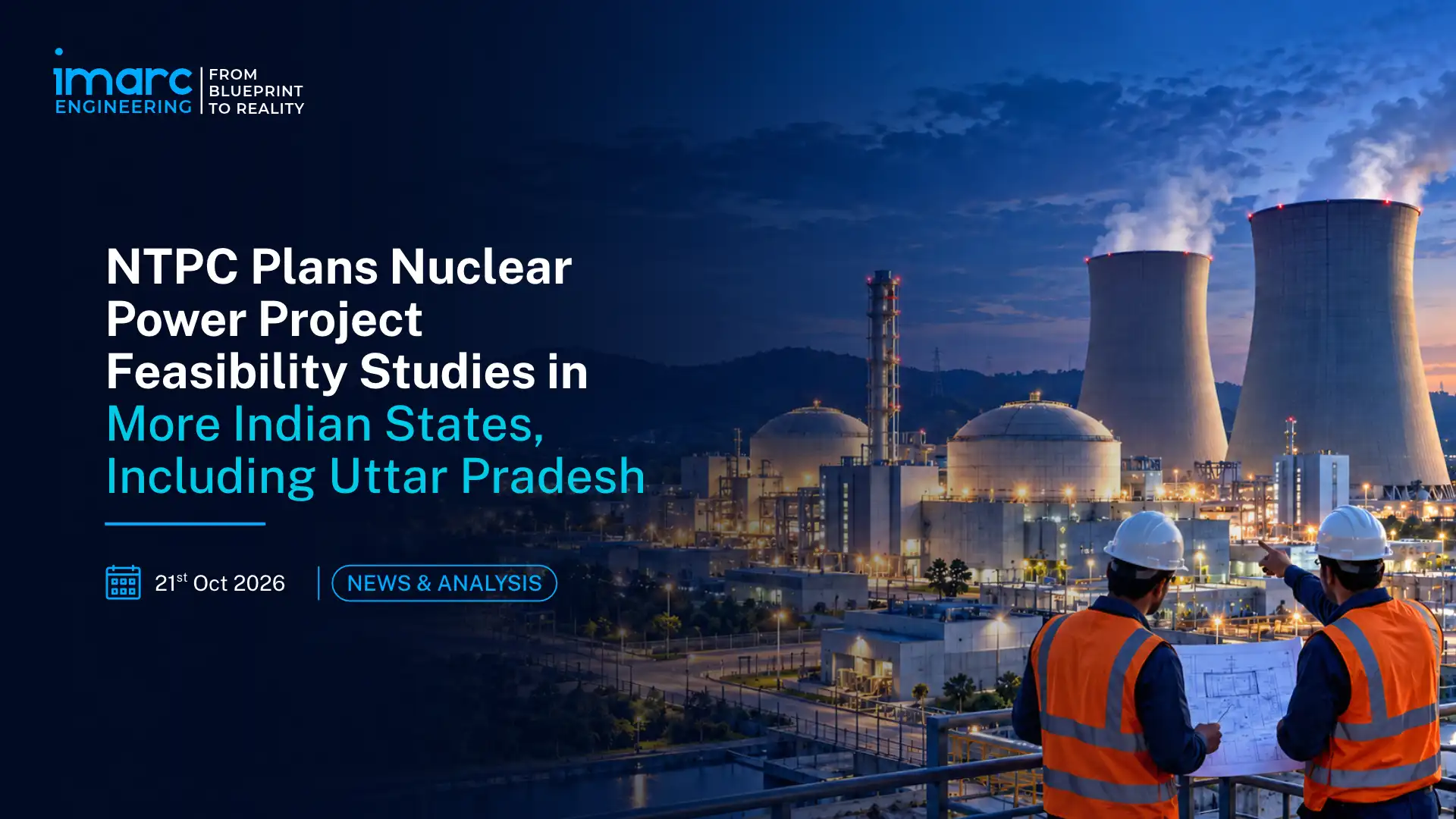
NTPC plans to begin nuclear power feasibility studies in more states, including Uttar Pradesh, according to a PTI report published on October 18, 2026, that quotes a senior NTPC official. The company has already completed NTPC nuclear power feasibility studies in Madhya Pradesh, Bihar and Odisha, which identified Basai, Banka and Nabarangpur as potential sites. The official said studies in Uttar Pradesh would happen soon. None of these sites has received final approval. A feasibility study is an early-stage assessment, and construction is not imminent at any of them. The report names no Uttar Pradesh site, capacity or timeline.
Which states will NTPC assess for New Nuclear Power Projects?
NTPC is looking beyond the three states where work is complete. The official said, "More states will be explored as the vision is 30 GW nuclear capacity by 2047." Uttar Pradesh is the one additional state named in the report. The official did not list others, so the full set of planned assessments is not yet public. The extension is a planned assessment and not an approved project: the report describes the Uttar Pradesh work as upcoming, with no site selected.
Where has NTPC already completed Nuclear Feasibility Studies?
NTPC has completed nuclear power project feasibility studies in three states, identifying the following potential sites:
- Madhya Pradesh: Basai
- Bihar: Banka
- Odisha: Nabarangpur
These are potential sites, not approved nuclear sites. According to the October 2026, PTI report, these locations have been identified through preliminary feasibility assessments and remain subject to further technical evaluation and regulatory review. The completion of feasibility studies does not constitute final site approval, and none of these locations has been confirmed as construction-ready.
What Capacity is Being Considered for Individual Projects?
According to PTI, NTPC is considering an indicative project configuration of 1,400 MW, comprising two 700 MW nuclear units. The final capacity and reactor technology for individual sites remain subject to further assessment and approvals. The 700 MW unit size aligns with India's domestically developed pressurised heavy-water reactor design, although the report does not specify the technology proposed for these sites. Separately, NTPC is reportedly exploring collaboration with Westinghouse of the US, Rosatom of Russia and EDF of France on large pressurised water reactor projects in India. These discussions have not been reported as finalised agreements.
What is NTPC's Nuclear Capacity Target for 2047?
NTPC is targeting 30 GW of nuclear projects, in support of the government's goal of 100 GW of nuclear capacity by 2047. This NTPC 30 GW nuclear target is a long-term ambition, and it is not a sanctioned programme. The Central Electricity Authority estimates that about INR 15 lakh crore is needed to take India's nuclear capacity from about 8.8 GW to 100 GW, an addition of about 91 GW.
Separately, NTPC is advancing the 2,800 MW Mahi Banswara Rajasthan Atomic Power Project through its joint venture with NPCIL, illustrating the distinction between projects already under development and the newly identified potential sites.
What happens after a Nuclear Power Plant Feasibility Study is Completed?
According to the PTI report, NTPC submits the study to the Department of Atomic Energy. The Standing Site Selection Committee then reviews it, and if the site is found technically feasible, it goes to the Atomic Energy Commission for further processing. This is a site-level process and sits ahead of other approvals, including regulatory, environmental and financial approvals, which the report does not detail. Some other coverage describes the reports as already submitted to the Atomic Energy Commission, so the exact stage of each site should be confirmed with NTPC or the Department of Atomic Energy.
Why are Land and Water Important for Nuclear Site Selection?
The PTI report says land needs depend on project size, and it cites an exclusion zone of 1 square kilometre. It also describes continuous water supply as a key requirement. Nuclear plants need reliable cooling water throughout the year, so water availability and land suitability shape both the choice of site and the cost of the project.
Water availability is a critical consideration in nuclear site selection because cooling requirements depend on reactor technology, cooling-system design, plant capacity and local conditions. Developers must assess the reliability of water sources, seasonal availability and associated infrastructure requirements during feasibility studies. Nuclear project site assessment also covers seismic and hydrological conditions, population around the site and access for heavy equipment. Those factors are not itemised in the coverage reviewed.
The October 18 PTI report cites an indicative industry investment range of INR 15,000–20,000 crore per GW of nuclear capacity. Actual project expenditure would depend on reactor technology, site conditions, infrastructure requirements, financing and regulatory compliance. These figures are industry estimates and do not represent sanctioned budgets for the potential NTPC sites.
NTPC's feasibility programme is moving from three states toward more, but the path from a potential site to an approved project still runs through several reviews. Readers should treat every site in this report as a candidate and not a committed project.
IMARC Engineering’s Perspective
NTPC's expansion of nuclear feasibility studies highlights the importance of systematic site assessment before major infrastructure investment decisions. Land suitability, reliable water availability, transport connectivity, supporting infrastructure and project economics must be evaluated alongside specialised nuclear safety and regulatory requirements.
For large-scale power and industrial infrastructure developments, early-stage feasibility studies, technical due diligence, detailed project reports (DPRs), infrastructure planning and project management help investors identify development constraints and assess project readiness.
IMARC Engineering supports investors and developers with these broader infrastructure planning and advisory services. Nuclear-specific engineering, safety assessments and statutory approvals remain the responsibility of appropriately authorised organisations and regulatory authorities.
Latest News
-
NTPC Plans Nuclear Power Project Feasibility Studies in More Indian States, Including Uttar Pradesh
October 21, 2026
-
NITI Aayog Releases Data Centre Evaluation Framework, Highlights Power and Water Planning Risks
October 20, 2026
-
Tamil Nadu Allocates INR 98 Lakh for DPR Preparation of Five Infrastructure Projects in Chennai
October 16, 2026
-
SunBridge BioEnergy Starts Commercial Production at INR 350 Crore, 300 KLD Ethanol Plant in Madhya Pradesh
October 15, 2026
-
PM Modi Launches INR 753.68 Crore VOC Port Infrastructure Projects in Tamil Nadu
October 14, 2026
Trusted by Industry Leaders
We partner with global enterprises and ambitious businesses across sectors to deliver operational excellence, strategic insights, and sustainable growth through integrated solutions.












Success in Their Words
Real feedback from clients across industries. Discover how our solutions delivered measurable impact and operational excellence.

I wanted to express my sincere appreciation for your efforts in handling this matter. Your dedication and commitment have been truly commendable, and it is evident that you have put in tremendous hard work and expertise into resolving the issues at hand. We are greatly interested in continuing our collaboration with you in the future, as your professionalism and reliability have made you a trusted partner. Thank you once again for your invaluable contribution. We look forward to strengthening our partnership ahead.

It has been a pleasure working with the IMARC team. The insights provided were structured, clear, and highly valuable, helping us strengthen both our technical and financial planning with confidence. We deeply appreciate the team’s professionalism, responsiveness, and attention to detail throughout the engagement. Every requirement was well understood and effectively incorporated, resulting in a comprehensive and actionable output. Overall, our experience has been excellent, and I would gladly recommend IMARC to organizations seeking a reliable research partner.

Your service is truly exceptional. Working with the IMARC team has been a seamless and professional experience. The clarity of communication, responsiveness to queries, and consistent support at every stage made the entire engagement highly efficient. The insights shared were well-structured, practical, and perfectly aligned with our requirements, helping us make informed decisions with confidence. Overall, the dedication and professionalism demonstrated by your team stand out, and I would be glad to recommend IMARC as a reliable and trustworthy research partner.

IMARC did an outstanding job in preparing our study. They were punctual, precise, and consistently responsive throughout the entire process. The team delivered all the data we required in a clear, well-organized, and highly professional format. Their strong attention to detail, combined with their ability to meet every deadline without compromising quality, truly set them apart. Overall, their reliability and commitment made them an exceptional partner for our project, and we would gladly work with them again in the future.

IMARC made the whole process incredibly easy from start to finish. Everyone I interacted with via email was polite, professional, and straightforward to deal with, always keeping their promises regarding delivery timelines and remaining consistently solutions-focused. From my very first contact, I appreciated the professionalism and support shown by the entire IMARC team. I highly recommend IMARC to anyone seeking timely, affordable, and reliable information or advice. My experience with IMARC was excellent, and I truly cannot fault any aspect of it.

I’d like to express my sincere gratitude for the excellent work you accomplished with the study. Your ability to quickly understand our requirements and deliver high-quality results under tight timelines truly reflects your expertise, exceptional work ethic, and unwavering commitment to your customer’s success. The professionalism and responsiveness you demonstrated throughout the process made a significant difference. Our entire team and company are incredibly thankful for your dedication, reliability, and support. Once again, thank you for your outstanding contribution.
Ready to Experience the IMARC Advantage?
Whether you're planning a new facility, expanding operations, optimizing performance, or facing complex challenges—IMARC Engineering brings the expertise, experience, and commitment needed for success.