Delhi EV Policy 2026: EV Charging Infrastructure Investment Opportunities in India
May 06, 2026
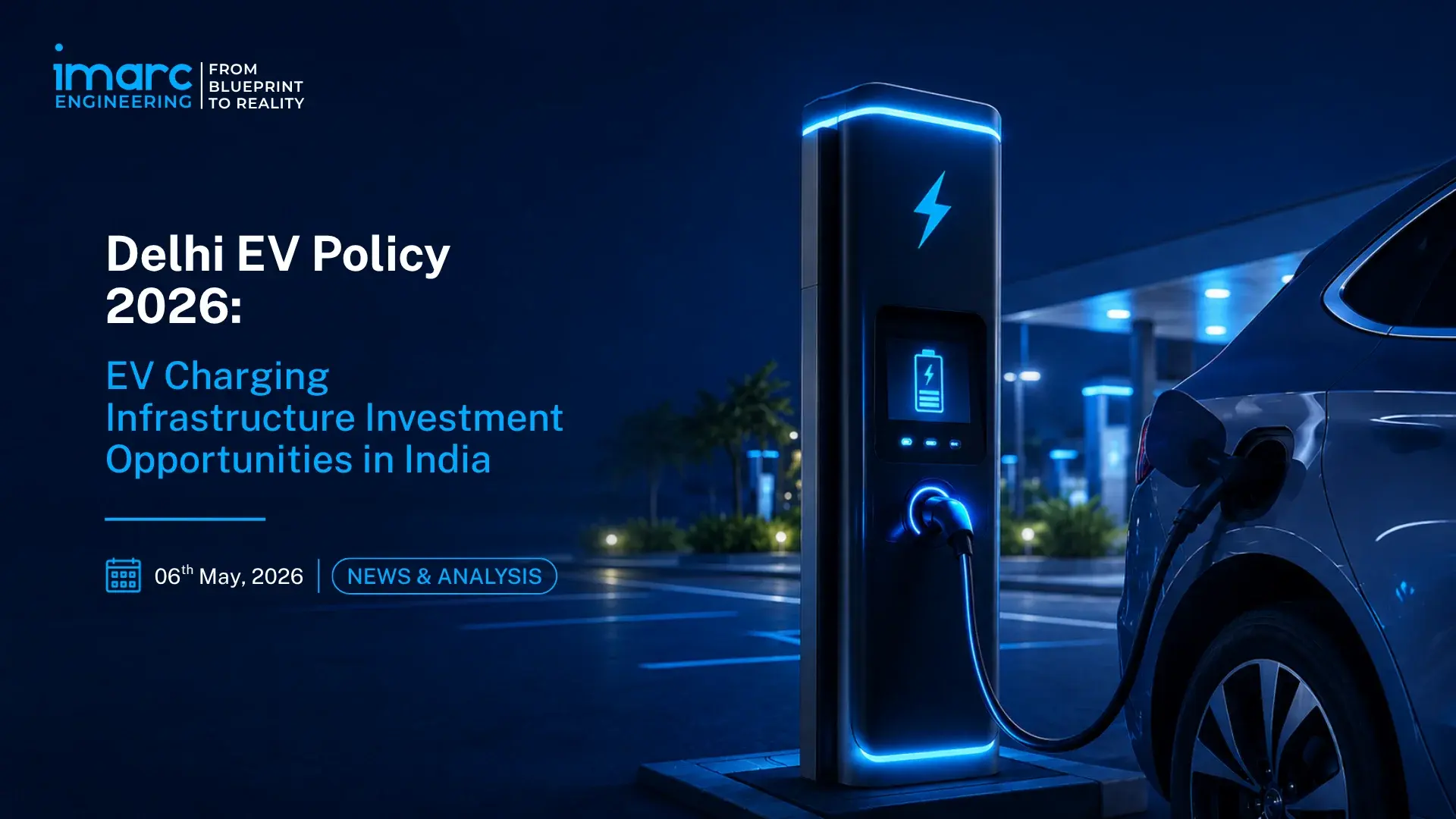
On April 11, 2026, the Government of the National Capital Territory of Delhi released its draft Electric Vehicle Policy 2026, a document that marks a decisive pivot in India's most-watched urban mobility market. Where the 2020 policy led with purchase subsidies and aspiration, the 2026 framework leads with mandates, infrastructure obligations, and institutional architecture. For investors in EV charging infrastructure, this is not merely a policy update. It is a structural reset of the investment case, one that opens specific windows of opportunity while introducing execution risks that require careful navigation.
What’s New in Delhi EV Policy 2026: From Incentives to Mandates
The Delhi EV Policy 2026, valid through March 31, 2030, allocates a total budgetary outlay of Rs 3,954 crore covering purchase incentives, scrapping bonuses, and charging infrastructure. The policy's defining characteristic is its shift from pull-based adoption to mandate-driven transition. New petrol two-wheeler registrations face a ban from 2028. ICE three-wheeler inductions by aggregators and fleet operators are prohibited from January 2026. All new government fleet vehicles must be electric. Thirty percent of school bus fleets must be electric by March 2030, with a city-wide target of 12,000 electric buses by 2029.
On the demand side, financial incentives taper over three years, electric two-wheelers priced up to Rs 2.25 lakh receive Rs 10,000/kWh (capped at Rs 30,000) in Year 1, declining to Rs 3,300/kWh by Year 3. Scrapping bonuses for BS-IV or older vehicles top up these incentives. The policy also proposes Aadhaar-linked direct benefit transfers to cut subsidy disbursement timelines from 40 days to under a week, a reform that, if executed, would materially reduce working capital friction for dealers and operators. The structural signal for infrastructure investors is clear: Delhi is creating a durable floor under EV demand. The question is whether the charging network can keep pace.
Delhi EV Charging Infrastructure Gap: The 27,000-Point Deficit
Delhi currently has approximately 8,849 charging points against a stated requirement of 36,150, a deficit of over 27,000 points. The policy targets adding 7,000 charging points in 2026 alone. Battery swapping stations stand at 893 against a requirement of 1,500, with 1,268 new stations planned by December 2026. On public bus infrastructure, budget allocations for 2026-27 include Rs 320 crore for depot electrification and charging, with 6,130 electric buses being inducted under PM E-DRIVE.
The grid load trajectory sharpens the investment case further. Delhi's EV charging load surged from 24 MW in FY 2018-19 to over 227 MW currently, nearly a ninefold increase and is projected to reach 375 MW within two years. Delhi already accounts for approximately 40% of India's total electricity consumed for EV charging. For investors, this is not just a demand signal it is a capex planning input that every site-level financial model must incorporate.
Who Controls Delhi’s EV Charging Network: DTL, DISCOMs, and Approvals
The policy designates Delhi Transco Limited (DTL) as the nodal agency for planning, implementation, and grid integration of the entire public charging and battery swapping network. DTL sits at the transmission layer, above the three distribution companies (BSES Rajdhani, BSES Yamuna, and Tata Power-DDL) that hold the last-mile relationship with consumers and charging point operators. For investors, DTL designation means project approvals and grid access coordination flow through a single institutional channel, reducing process fragmentation but concentrating approval risk.
A single-window clearance mechanism has been proposed to fast-track station approvals, alongside a unified digital platform for infrastructure management. Critically, EV charging remains a de-licensed activity under the Electricity Act, 2003. However, investors still require DISCOM connection approval, an Electrical Inspector sign-off, a Fire Safety NOC, and BIS-certified charger hardware. For loads above 100 kVA, a feasibility study from the DISCOM is mandatory and determines whether infrastructure upgrade costs fall on the investor or the utility, a cost allocation that can materially alter project IRR.
Delhi EV Charging Tariffs and Station-Level Unit Economics
Delhi's dedicated EV charging tariff is Rs 4.5 per kWh plus nominal fixed charges, significantly lower than standard commercial rates. For charging point operators building a business case, this supports margin at moderate utilisation levels: at 40% utilisation, well-designed urban fast-charging stations in high-EV-density corridors are commercially viable. At 25% utilisation, the conservative benchmark, unit economics are thin, and site selection becomes the primary lever of return management.
The policy also provides a 100% subsidy on up to Rs 6,000 per charging point for the first 30,000 slow and medium chargers installed at homes, apartments, and commercial premises. Battery swapping stations receive 100% reimbursement of state GST on advanced batteries. At the central level, PM E-DRIVE allocates Rs 2,000 crore for public charging infrastructure, with subsidies of up to 80% on upstream power infrastructure costs. Time-of-Day tariff optimisation, scheduling fleet charging during off-peak hours, can further reduce monthly electricity bills significantly, meaningfully improving station-level cash flows.
Three Risks for EV Charging Investors in Delhi
The first is grid readiness at the neighbourhood level. Two-wheelers account for approximately 67% of Delhi's vehicle stock, and scaling charging density for this segment depends on local transformer capacity, land availability in dense residential colonies, and DISCOM coordination at the feeder level. Charger additions in areas where transformer capacity is already stressed will face connection delays or unexpected cost overruns. Investors must independently verify substation and feeder-level headroom for every site rather than relying on policy commitments.
The second is NCR boundary leakage. Delhi's mandates operate within its administrative limits; Haryana and Uttar Pradesh have no parallel ICE registration restrictions. Fleet operators can register vehicles in neighbouring states and operate them in Delhi, a regulatory arbitrage that softens the demand signal the mandates are designed to generate. The third risk is DISCOM financial health. BSES, part of Reliance Infrastructure, faces material financial challenges. For charging infrastructure projects in BSES-served zones of south and west Delhi, DISCOM execution risk on grid connection timelines deserves explicit modelling alongside the financial assumptions.
Where the EV Charging Investment Window is in Delhi
Three use cases cluster the clearest near-term opportunities. Fleet charging hubs for commercial two- and three-wheelers, the segment most directly hit by the January 2026 aggregator mandate, require dense, two-wheeler-centric infrastructure in high-traffic urban corridors. Battery swapping, which reduces dependence on fixed home charging in apartment-dense neighbourhoods, carries strong policy support and a significant gap relative to stated targets. And bus depot electrification, with Rs 320 crore in budget allocation, represents a capital-intensive but government-underwritten infrastructure buildout with visible counterparties.
Delhi's charging infrastructure market is, in sum, a policy-backed opportunity with genuine execution constraints. The mandate architecture creates a durable demand floor. The incentive and tariff structure supports unit economics for well-positioned assets. But grid readiness, DISCOM coordination, and NCR boundary leakage are variables that require independent due diligence, not assumptions drawn from policy text. Investors who map the institutional terrain carefully, select sites with verified grid headroom, and structure for DISCOM risk will find Delhi among the most legible and highest conviction charging infrastructure markets in India.
Delhi's 2026 EV policy closes the era of voluntary adoption. For charging infrastructure investors, the mandate is the market, but execution is still everything.
Latest News
-
Wood Wins USD 200 Million ExxonMobil Construction Services Contract for PNG LNG Brownfield Projects
September 18, 2026
-
IHCL Signs 125-Key Greenfield Gateway Hotel in Sambalpur, Expanding Odisha Portfolio
September 18, 2026
-
Thoothukudi Mega Shipyard Moves Forward with INR 6.78 Crore Geotechnical and Seabed Investigation Tender
September 17, 2026
-
Nagpur–Warangal Greenfield Highway Targets December 2027 Completion as Land Acquisition Bottlenecks Ease
September 16, 2026
-
BRICS New Delhi Declaration 2026 Focuses on Resilient Supply Chains, Critical Minerals and Energy Cooperation
September 15, 2026
Trusted by Industry Leaders
We partner with global enterprises and ambitious businesses across sectors to deliver operational excellence, strategic insights, and sustainable growth through integrated solutions.










Success in Their Words
Real feedback from clients across industries. Discover how our solutions delivered measurable impact and operational excellence.

I wanted to express my sincere appreciation for your efforts in handling this matter. Your dedication and commitment have been truly commendable, and it is evident that you have put in tremendous hard work and expertise into resolving the issues at hand. We are greatly interested in continuing our collaboration with you in the future, as your professionalism and reliability have made you a trusted partner. Thank you once again for your invaluable contribution. We look forward to strengthening our partnership ahead.

It has been a pleasure working with the IMARC team. The insights provided were structured, clear, and highly valuable, helping us strengthen both our technical and financial planning with confidence. We deeply appreciate the team’s professionalism, responsiveness, and attention to detail throughout the engagement. Every requirement was well understood and effectively incorporated, resulting in a comprehensive and actionable output. Overall, our experience has been excellent, and I would gladly recommend IMARC to organizations seeking a reliable research partner.

Your service is truly exceptional. Working with the IMARC team has been a seamless and professional experience. The clarity of communication, responsiveness to queries, and consistent support at every stage made the entire engagement highly efficient. The insights shared were well-structured, practical, and perfectly aligned with our requirements, helping us make informed decisions with confidence. Overall, the dedication and professionalism demonstrated by your team stand out, and I would be glad to recommend IMARC as a reliable and trustworthy research partner.

IMARC did an outstanding job in preparing our study. They were punctual, precise, and consistently responsive throughout the entire process. The team delivered all the data we required in a clear, well-organized, and highly professional format. Their strong attention to detail, combined with their ability to meet every deadline without compromising quality, truly set them apart. Overall, their reliability and commitment made them an exceptional partner for our project, and we would gladly work with them again in the future.

IMARC made the whole process incredibly easy from start to finish. Everyone I interacted with via email was polite, professional, and straightforward to deal with, always keeping their promises regarding delivery timelines and remaining consistently solutions-focused. From my very first contact, I appreciated the professionalism and support shown by the entire IMARC team. I highly recommend IMARC to anyone seeking timely, affordable, and reliable information or advice. My experience with IMARC was excellent, and I truly cannot fault any aspect of it.

I’d like to express my sincere gratitude for the excellent work you accomplished with the study. Your ability to quickly understand our requirements and deliver high-quality results under tight timelines truly reflects your expertise, exceptional work ethic, and unwavering commitment to your customer’s success. The professionalism and responsiveness you demonstrated throughout the process made a significant difference. Our entire team and company are incredibly thankful for your dedication, reliability, and support. Once again, thank you for your outstanding contribution.
Ready to Experience the IMARC Advantage?
Whether you're planning a new facility, expanding operations, optimizing performance, or facing complex challenges—IMARC Engineering brings the expertise, experience, and commitment needed for success.