India’s Manufacturing Sector Sees Surge in ESG Compliance Advisory Demand in 2026
April 23, 2026
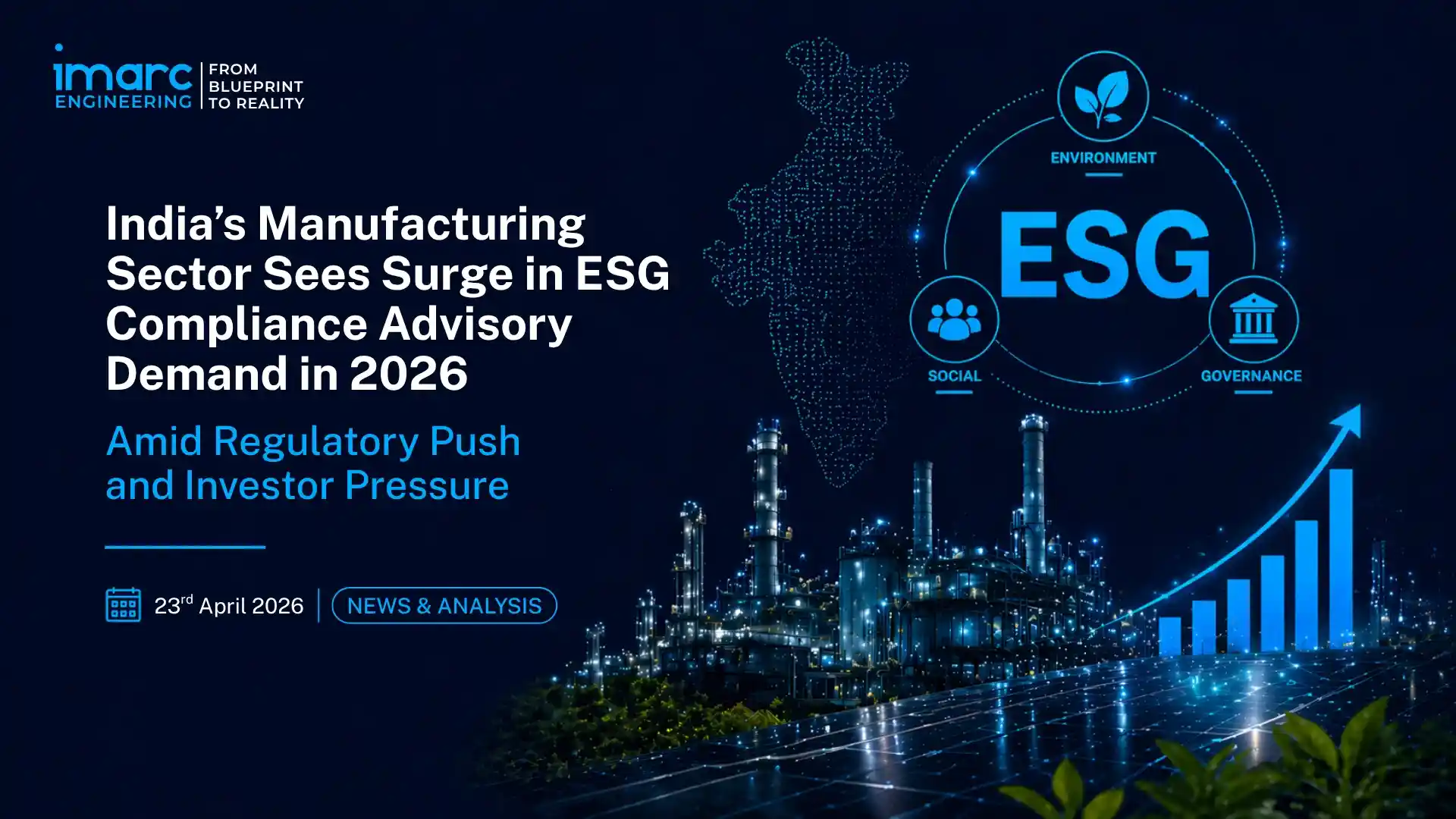
Amid Regulatory Push, Investor Pressure, and CBAM Deadlines Reshaping the Compliance Landscape
Introduction- Why ESG Is No Longer Optional for Indian Manufacturers
ESG compliance in India has become a critical priority for companies navigating evolving regulatory, investor, and market expectations. With the introduction of BRSR compliance in India for listed entities, businesses are required to move beyond intent and establish structured, auditable sustainability practices. ESG advisory services in India are therefore playing a central role in helping organisations interpret regulatory requirements, implement practical frameworks, and build systems that deliver measurable, compliance-ready ESG performance.
For Indian manufacturers, 2026 has become the year ESG compliance in India moved from the boardroom brochure to the balance sheet. What was once a voluntary corporate virtue has transformed into a hard operational requirement, tied directly to capital access, export eligibility, lender terms, and vendor qualification.
ESG compliance advisory in India has evolved rapidly, becoming essential for all large, listed companies, startups, and foreign enterprises, driven largely by SEBI’s BRSR framework. Manufacturing CFOs and sustainability leads are now scrambling to build audit-ready disclosures, and the demand for specialised ESG consulting services has surged sharply across the country.
It all boils down to an ideal storm, deadlines for SEBI’s BRSR Core assurance are looming, the RBI’s climate risk reporting requirements are trickling down to borrowers, the European Union’s CBAM has transitioned into its finance phase beginning from 2026, and institutional investors, domestic and foreign, are evaluating their investments in record detail. If you are part of the manufacturing industries that produce steel, chemicals, textiles, or pharmaceuticals, then doing nothing means paying a heavy price.
What’s Driving the Surge- SEBI Mandates, RBI Guidelines, Investor Expectations
Three forces are converging to push ESG advisory demand to record levels in 2026.
SEBI’s BRSR Core framework remains the single biggest driver of ESG reporting for listed companies in India. Introduced in 2023 as a subset of essential sustainability metrics subject to reasonable assurance by external auditors, BRSR Core reporting in India is being rolled out in phases across the top 1,000 listed companies. The assurance net has widened rapidly, and the framework now extends beyond direct operations into the value chain, forcing companies to collect verifiable data from suppliers and distributors. Indian listed companies are required to align their sustainability reporting with SEBI ESG disclosure norms, ensuring transparent and standardized reporting of environmental, social, and governance performance.
The RBI’s climate-risk disclosure framework has extended ESG pressure to the financial sector, which in turn transmits it to borrowers. Governance, strategy, and risk-management disclosures are required from fiscal 2026 for scheduled commercial banks, all-India financial institutions, and top/upper-layer NBFCs, with metrics-and-targets disclosures following in fiscal 2028, and have to fulfil their obligation of climate-risk reporting in India. As these lenders fund the bulk of Indian manufacturing, they are now passing climate-risk questionnaires down to industrial clients as a condition of credit and honoring the ESG compliance for lenders.
Investor expectations have hardened with rising ESG due diligence in India. The overall value of assets under management (AUM) of the ESG fund stood at US$ 331.4 million (Rs. 2,747.36 crore) on January 31, 2020. However, the same value has witnessed an appreciable amount of increase over the course of roughly four years to reach US$ 1176.6 million (Rs. 9,753 crore) as of March 3, 2024. The leading player behind this rise is the SBI Magnum Equity. Private equity and venture capital firms are building ESG due diligence into every deal, especially for growth-stage manufacturers seeking institutional rounds. This sums up the ESG investment trends in India.
Key ESG Regulatory Deadlines Indian Manufacturers Must Know in 2026:
The compliance calendar for 2026 is unusually dense. The critical milestones include:
- FY 2025-26: Mandatory ESG reporting in India in for the top 250 listed companies, including value chain disclosures, with first-year flexibility on prior-year comparatives.
- FY 2025-26: Mandatory submission of ESG disclosures with third-party assessment or assurance begins, including value chain partner data. Scope widens progressively to the top 500 companies.
- From FY 2026-27: The requirement is applicable even to the top 1,000 listed firms. It implies that firms already filing a complete BRSR but are not yet required to adhere to the BRSR Core reporting obligations will now have to start preparing for their verification by an external party.
- January 1, 2026: The European Union’s Carbon Border Adjustment Mechanism (CBAM) moved from its transitional phase to full implementation, a pivotal date for Indian exporters of steel, aluminium, cement, and fertilisers.
- FY 2025-26 onwards: RBI’s climate disclosure framework kicks in for scheduled commercial banks, AIFIs, and top/upper-layer NBFCs on governance, strategy, and risk-management pillars.
- January 2026: The Union government amended the Uniform Consent Guidelines to simplify industrial environmental approvals, allowing State Pollution Control Boards to issue joint permissions, doing away with periodic renewals of Consent to Operate, and shortening approval timelines, while retaining monitoring and enforcement powers.
How Investor Pressure Is Accelerating ESG Adoption in Manufacturing?
The significant expansion of ESG investment in India has become impossible to ignore. Companies with efficient ESG frameworks operate at a 10–20% lower cost of capital, achieve better risk-adjusted returns, and attract premium valuations. For capital-hungry Indian manufacturers competing for growth funding, that spread translates directly into competitive advantage. ESG performance impact on valuation is increasingly evident, with investors assigning higher multiples to manufacturers demonstrating strong sustainability practices and risk management. ESG due diligence manufacturing has therefore become a critical step in investment and acquisition decisions, ensuring operational, regulatory, and reputational risks are properly assessed.
Institutional investors are no longer satisfied with aspirational statements. Large domestic asset managers now require BRSR-aligned disclosures as a condition for investment, while global buyers, particularly in Europe, the UK, and the US, are mandating supplier ESG ratings before issuing purchase orders. Private equity firms conducting due diligence increasingly flag ESG gaps as deal-breakers or valuation adjusters. For mid-market manufacturers, this means ESG readiness has become an exit-readiness issue: weak frameworks depress multiples and can derail IPOs, strategic sales, and secondary rounds.
SEBI’s reasonable-assurance requirement is rapidly forcing data discipline. Companies are moving beyond aspirational statements to quantifiable, audit-defensible impact.
What ESG Compliance Advisory Actually Covers?
The scope of ESG consulting services in India has expanded far beyond annual report drafting. Companies are increasingly engaging ESG implementation services to translate sustainability commitments into measurable operational practices and compliance-ready reporting systems. A full-service ESG advisory scope today typically covers:
- Baseline Assessment and Materiality Mapping: identifying ESG factors relevant to a specific manufacturing sector and stakeholder base.
- Regulatory Gap Analysis: benchmarking against BRSR, BRSR Core, GRI, SASB, and TCFD standards.
- Disclosure Preparation and Assurance Readiness: building audit-ready documentation with traceable data trails for Scope 1, Scope 2, and increasingly Scope 3 emissions.
- Supply Chain and Value Chain Reporting: engaging suppliers that account for at least 75% of purchases and sales by value and collecting verified ESG data from them.
- Carbon Accounting and CBAM Readiness: installation-level GHG inventories aligned with ISO 14064 and EU-verifier expectations.
- Governance and Board Oversight: independent director training, ESG committee structures, and integrated enterprise risk registers.
- ESG Technology Implementation: digital MRV (Monitoring, Reporting, Verification) systems for continuous, audit-grade data capture.
Sectors Feeling the Heat Most- Steel, Chemicals, Textiles, Pharma:
Four manufacturing verticals are under the sharpest ESG microscope in 2026.
ESG compliance for steel and metals industry face a dual squeeze. CBAM pricing really hurts: the carbon price under EU ETS trades at €80-90 per tonne and is expected to rise to €100-150 per tonne by 2030. An average blast furnace mill in India emits about 2.1 tonnes of CO₂ per tonne of crude steel compared to the EU average of 1.37 tonnes, giving a cost disadvantage unless it gets decarbonized.
Chemicals and Fertilisers are squarely within CBAM’s scope and now confront extended producer responsibility (EPR), hazardous waste, and effluent discharge scrutiny simultaneously. The sector is also among the most complex for Scope 3 disclosure because of fragmented supplier bases. ESG for chemical manufacturers is crucial as environmental risk is inherent to the sector.
ESG in textile industry in India face layered pressure. Decarbonization failure will result in higher rates and thinner margins; a textiles manufacturer who switches to clean energy will benefit from lower production expenses and avoid CBAM liability. Buyers from the European Union are also implementing social and labor standards, compelling the Tiruppur and Surat textile clusters to adopt traceability systems.
ESG in Pharmaceutical industry faces pressure regarding the environmental footprint of its APIs, stewardship of water resources in stressed basins, and transparency along the value chain due to global demand. Environmental, social, and governance reporting is rapidly emerging as a prerequisite for business dealings with major pharmaceutical companies worldwide.
How IMARC Engineering Helps Manufacturers Navigate ESG Compliance?
IMARC Engineering offers ESG compliance advisory services in India that help manufacturers achieve BRSR Core readiness and CBAM compliance. The programme delivers structured, audit-ready ESG frameworks aligned with SEBI’s BRSR Core mandate as well as GRI, SASB, and TCFD standards, helping businesses meet regulatory deadlines while creating measurable commercial value.
The firm’s approach is engineered specifically for the execution gap most manufacturers face, the distance between good intentions and assurance-grade data. As an ESG consulting firm in India and ESG implementation partner in India, IMARC Engineering applies sector-specific frameworks tailored to API manufacturing, steel production, chemical processing, and textile value chains, translating regulatory requirements into practical plant-floor systems.
The service model is built around four phases: baseline assessment, gap analysis and regulatory mapping, implementation roadmap design, and performance tracking, with strong capability in BRSR Core consulting for listed and emerging enterprises. Target clients include:
- SEBI-Listed Manufacturers: requiring BRSR Core compliance backed by third-party assurance.
- Private Equity and VC Firms: needing ESG due-diligence assessments for investments and portfolio management.
- Mid-Market Manufacturers: building ESG investor readiness ahead of fundraising or export qualification.
- Export-Oriented Businesses: aligning with CBAM, CSRD, and global buyer ESG requirements across international supply chains.
Importantly, IMARC Engineering’s ESG practice is embedded within its broader engineering-led consulting platform, covering feasibility studies, plant design, regulatory compliance, and digital transformation, which means ESG recommendations are grounded in operational reality rather than disclosure theatre.
Conclusion:
ESG compliance in India has crossed an inflection point. With BRSR Core assurance becoming mandatory, the RBI tightening climate-risk expectations through lenders, CBAM taxing embedded emissions at the EU border, and investors pricing ESG risk directly into valuations, 2026 is the year Indian manufacturers either professionalise their sustainability function or pay a premium for every form of capital they touch.
The window to build audit-ready frameworks ahead of FY 2026-27 third-party assurance deadlines is narrow. Manufacturers treating this as a last-minute documentation exercise will fail the test on both data quality and commercial outcomes. The firms that move now, with structured advisory support, robust data systems, and genuine operational change, will convert compliance cost into a durable competitive advantage.
Ready to build an audit-ready ESG framework for your manufacturing business?
Contact IMARC Engineering for a customised ESG baseline assessment and compliance roadmap, covering SEBI BRSR Core readiness, CBAM alignment, supply chain reporting, and investor due-diligence preparation, tailored to your sector and operational footprint.
Latest News
-
China's Tunnel Boring Machine Export Controls Put Focus on India's Proposed USD 1.2 Billion Manufacturing Incentive Scheme
October 22, 2026
-
NTPC Plans Nuclear Power Project Feasibility Studies in More Indian States, Including Uttar Pradesh
October 21, 2026
-
NITI Aayog Releases Data Centre Evaluation Framework, Highlights Power and Water Planning Risks
October 20, 2026
-
Tamil Nadu Allocates INR 98 Lakh for DPR Preparation of Five Infrastructure Projects in Chennai
October 16, 2026
-
SunBridge BioEnergy Starts Commercial Production at INR 350 Crore, 300 KLD Ethanol Plant in Madhya Pradesh
October 15, 2026
Trusted by Industry Leaders
We partner with global enterprises and ambitious businesses across sectors to deliver operational excellence, strategic insights, and sustainable growth through integrated solutions.











Success in Their Words
Real feedback from clients across industries. Discover how our solutions delivered measurable impact and operational excellence.

I wanted to express my sincere appreciation for your efforts in handling this matter. Your dedication and commitment have been truly commendable, and it is evident that you have put in tremendous hard work and expertise into resolving the issues at hand. We are greatly interested in continuing our collaboration with you in the future, as your professionalism and reliability have made you a trusted partner. Thank you once again for your invaluable contribution. We look forward to strengthening our partnership ahead.

It has been a pleasure working with the IMARC team. The insights provided were structured, clear, and highly valuable, helping us strengthen both our technical and financial planning with confidence. We deeply appreciate the team’s professionalism, responsiveness, and attention to detail throughout the engagement. Every requirement was well understood and effectively incorporated, resulting in a comprehensive and actionable output. Overall, our experience has been excellent, and I would gladly recommend IMARC to organizations seeking a reliable research partner.

Your service is truly exceptional. Working with the IMARC team has been a seamless and professional experience. The clarity of communication, responsiveness to queries, and consistent support at every stage made the entire engagement highly efficient. The insights shared were well-structured, practical, and perfectly aligned with our requirements, helping us make informed decisions with confidence. Overall, the dedication and professionalism demonstrated by your team stand out, and I would be glad to recommend IMARC as a reliable and trustworthy research partner.

IMARC did an outstanding job in preparing our study. They were punctual, precise, and consistently responsive throughout the entire process. The team delivered all the data we required in a clear, well-organized, and highly professional format. Their strong attention to detail, combined with their ability to meet every deadline without compromising quality, truly set them apart. Overall, their reliability and commitment made them an exceptional partner for our project, and we would gladly work with them again in the future.

IMARC made the whole process incredibly easy from start to finish. Everyone I interacted with via email was polite, professional, and straightforward to deal with, always keeping their promises regarding delivery timelines and remaining consistently solutions-focused. From my very first contact, I appreciated the professionalism and support shown by the entire IMARC team. I highly recommend IMARC to anyone seeking timely, affordable, and reliable information or advice. My experience with IMARC was excellent, and I truly cannot fault any aspect of it.

I’d like to express my sincere gratitude for the excellent work you accomplished with the study. Your ability to quickly understand our requirements and deliver high-quality results under tight timelines truly reflects your expertise, exceptional work ethic, and unwavering commitment to your customer’s success. The professionalism and responsiveness you demonstrated throughout the process made a significant difference. Our entire team and company are incredibly thankful for your dedication, reliability, and support. Once again, thank you for your outstanding contribution.
Ready to Experience the IMARC Advantage?
Whether you're planning a new facility, expanding operations, optimizing performance, or facing complex challenges—IMARC Engineering brings the expertise, experience, and commitment needed for success.