New BIS Risk-Based Compliance Framework Aims to Simplify Quality Certification for Manufacturers in India
July 02, 2026
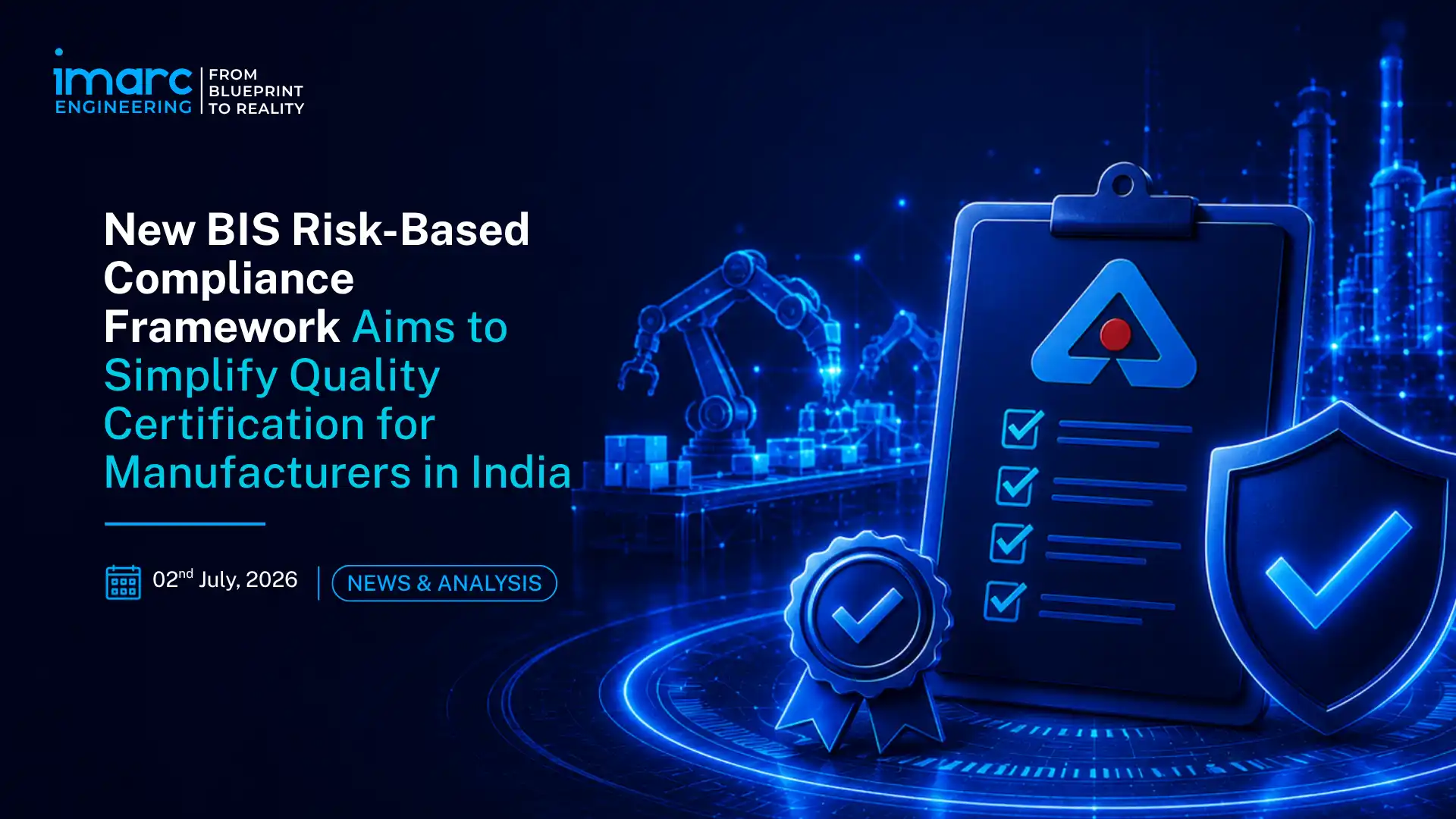
In June 2026, the Department for Promotion of Industry and Internal Trade (DPIIT) introduced the Transition Facilitation (Quality Control) Order, 2026, establishing a risk-based BIS compliance framework that allows eligible manufacturers to follow simplified conformity assessment procedures for selected products.
The change allows qualified manufacturers to use BIS Scheme II, a self-declaration of conformity route, instead of the traditional Scheme I, which requires factory inspections and continuous surveillance.
This is the most consequential update to India's QCO compliance framework since the expansion of mandatory BIS certification across hundreds of product categories began in earnest. It is also the clearest signal yet that India is trying to balance higher quality standards with lower compliance friction for manufacturers who can demonstrate a reliable track record.
What the New BIS Compliance Framework Changes and What It Doesn't
India's BIS certification in India has traditionally centred on Scheme I, the ISI mark. Under this route, manufacturers must pass a factory inspection, submit product samples for testing at BIS-approved laboratories, and maintain ongoing surveillance. The ISI mark is highly recognised and commercially valuable. But the process is also time intensive.
Certification timelines range from 3 to 6 months for well-prepared facilities and can extend to 9 to 18 months where documentation gaps or quality system weaknesses cause delays. Under the Transition Facilitation (Quality Control) Order, qualified manufacturers can now choose Scheme II instead. Scheme II requires self-declaration of conformity, the manufacturer tests its products against the relevant Indian Standard and declares compliance without mandatory factory inspection. The manufacturer remains responsible for demonstrating compliance and may still be subject to regulatory verification where applicable.
This route can significantly reduce certification timelines, documentation requirements, and administrative effort for eligible manufacturers.
Two things are worth noting. First, Scheme II is not available to all manufacturers, eligibility requires a proven quality and compliance track record. Companies with a history of non-conformance or without robust quality systems will not qualify. Second, the core quality requirement does not change.
Products must still meet the applicable Indian Standard. What changes is the mechanism for demonstrating and certifying that compliance. This is an important distinction: the reform reduces administrative burden, but it does not reduce quality obligations.
The Broader BIS Regulatory Context: Expansion Alongside Simplification
The risk-based framework reform is happening alongside a major expansion of product categories requiring mandatory BIS certification. India's QCO programme now covers hundreds of product categories, with new orders issued across electronics, chemicals, consumer goods, automotive components, and furniture throughout 2025 and 2026.
Electronics and IT products are transitioning to the IS/IEC 62368-1:2023 standard, replacing older frameworks for laptops, monitors, audio equipment, and IT accessories. Over 100 chemicals, including methanol and polycarbonate, now require mandatory BIS certification, with implementation dates staggered through 2026.
The Furniture (Quality Control) Order, 2025, brought work chairs, tables, desks, and beds under mandatory BIS certification, catching many domestic furniture manufacturers by surprise. Automotive components continue to expand under BIS regulations, covering safety-critical parts and materials used in electric vehicles.
This expansion is deliberate. The QCO programme aims to raise product quality across India's domestic market and reduce the influx of substandard imports. For manufacturers, the message is clear: BIS compliance is not a temporary requirement for a narrow set of products. It is becoming the baseline standard for operating in India's market across an ever-wider range of categories.
Updated GoL Guidelines Complement the BIS Compliance Framework
Alongside the risk-based framework reform, BIS also updated its Grant of Licence (GoL) guidelines on February 25, 2026, its most significant procedural update under Conformity Assessment Scheme I. These new guidelines affect how manufacturers apply for the ISI mark under the traditional route.
The updated BIS regulations introduce stricter compliance timelines, improved digital tracking of applications, and clearer procedural controls for each stage of the certification process. Manufacturers applying for the ISI mark must now align more carefully with requirements on long-duration product tests, sample dispatch tracking, and documentation.
The GoL guidelines explicitly aim for faster processing for compliant manufacturers and tighter scrutiny for those with documentation gaps. In practice, this means that manufacturers who invest in quality systems and documentation are rewarded with predictable, faster certification. Those who arrive at the BIS factory inspection with gaps will face a harder process than before.
What Manufacturers Must Do Now
The combination of the risk-based compliance reform and the GoL updates creates a differentiated landscape. For manufacturers with a proven compliance record and robust quality management systems, the Scheme II self-declaration route offers a meaningful reduction in time, cost, and administrative effort. Beginning to plan for the eligibility assessment, and documenting the track record that supports Scheme II qualification, should be a near-term priority for companies that believe they qualify.
For manufacturers without that track record, or those entering new product categories covered by recent QCOs, the Scheme I ISI mark route remains the pathway. The GoL guidelines make clear that the inspection and documentation requirements are being strengthened, not relaxed.
Companies targeting QCO deadlines should initiate the BIS certification process 6 to 9 months in advance to avoid commercial disruption. Customs seizures, fines, and market bans are the stated consequences of non-compliance, consequences that have been enforced consistently since the QCO expansion began.
For foreign manufacturers exporting to India, the Scheme II route is also available through the FMCS framework, which already allowed self-declaration post laboratory testing without mandatory factory audits. The new risk-based mechanism reinforces this pathway while also creating clearer eligibility standards.
Foreign manufacturers must still appoint an Authorised Indian Representative and submit testing documentation, but the compliance burden for qualifying manufacturers is now more proportionate to actual product risk.
India is expanding QCO coverage to 679 categories and simplifying compliance for those who have earned it. The manufacturers who treat BIS certification as a quality investment — not a regulatory burden — will find themselves ahead of competitors in every market where quality signals matter.
IMARC Engineering's Perspective
The Transition Facilitation Order reflects exactly the direction IMARC Engineering has been advising clients to plan for: BIS compliance is becoming more structured, more differentiated by risk, and ultimately less burdensome for manufacturers who have built the right quality systems.
At IMARC Engineering, we integrate BIS compliance planning into every greenfield plant design and brownfield expansion project we support. The quality documentation that BIS inspectors will review, materials inspection records, process control systems, test protocols, and corrective action procedures, should be designed into the facility from Day 1, not assembled after commissioning.
Manufacturers aligned with ISO 9001:2015 are consistently better positioned in BIS factory audits. Certification timelines of 3 to 6 months for well-prepared facilities versus 9 to 18 months for those that are not a direct commercial difference.
As QCOs continue to expand across chemicals, electronics, automotive components, and consumer goods, BIS compliance is becoming a market access prerequisite that manufacturing investors must plan for at the feasibility and DPR stage. IMARC Engineering supports that planning, so compliance does not become the bottleneck that delays your production launch.
Latest News
-
IEX Subsidiary Applies for Coal Exchange Registration Under India’s New Coal Exchange Rules 2026
September 30, 2026
-
India Pushes Domestic Shipping Container Manufacturing with INR 10,000 Crore Assistance Scheme
September 25, 2026
-
India’s Growing GCC Sector Brings Greenfield Setup and Regulatory Compliance into Focus
September 24, 2026
-
Uttar Pradesh Approves INR 200+ Crore Ethanol Plant at Chhata Sugar Mill in Mathura
September 23, 2026
-
Escorts Kubota Breaks Ground on INR 2,000 Crore Greenfield Manufacturing Plant in Uttar Pradesh
September 22, 2026
Trusted by Industry Leaders
We partner with global enterprises and ambitious businesses across sectors to deliver operational excellence, strategic insights, and sustainable growth through integrated solutions.










Success in Their Words
Real feedback from clients across industries. Discover how our solutions delivered measurable impact and operational excellence.

I wanted to express my sincere appreciation for your efforts in handling this matter. Your dedication and commitment have been truly commendable, and it is evident that you have put in tremendous hard work and expertise into resolving the issues at hand. We are greatly interested in continuing our collaboration with you in the future, as your professionalism and reliability have made you a trusted partner. Thank you once again for your invaluable contribution. We look forward to strengthening our partnership ahead.

It has been a pleasure working with the IMARC team. The insights provided were structured, clear, and highly valuable, helping us strengthen both our technical and financial planning with confidence. We deeply appreciate the team’s professionalism, responsiveness, and attention to detail throughout the engagement. Every requirement was well understood and effectively incorporated, resulting in a comprehensive and actionable output. Overall, our experience has been excellent, and I would gladly recommend IMARC to organizations seeking a reliable research partner.

Your service is truly exceptional. Working with the IMARC team has been a seamless and professional experience. The clarity of communication, responsiveness to queries, and consistent support at every stage made the entire engagement highly efficient. The insights shared were well-structured, practical, and perfectly aligned with our requirements, helping us make informed decisions with confidence. Overall, the dedication and professionalism demonstrated by your team stand out, and I would be glad to recommend IMARC as a reliable and trustworthy research partner.

IMARC did an outstanding job in preparing our study. They were punctual, precise, and consistently responsive throughout the entire process. The team delivered all the data we required in a clear, well-organized, and highly professional format. Their strong attention to detail, combined with their ability to meet every deadline without compromising quality, truly set them apart. Overall, their reliability and commitment made them an exceptional partner for our project, and we would gladly work with them again in the future.

IMARC made the whole process incredibly easy from start to finish. Everyone I interacted with via email was polite, professional, and straightforward to deal with, always keeping their promises regarding delivery timelines and remaining consistently solutions-focused. From my very first contact, I appreciated the professionalism and support shown by the entire IMARC team. I highly recommend IMARC to anyone seeking timely, affordable, and reliable information or advice. My experience with IMARC was excellent, and I truly cannot fault any aspect of it.

I’d like to express my sincere gratitude for the excellent work you accomplished with the study. Your ability to quickly understand our requirements and deliver high-quality results under tight timelines truly reflects your expertise, exceptional work ethic, and unwavering commitment to your customer’s success. The professionalism and responsiveness you demonstrated throughout the process made a significant difference. Our entire team and company are incredibly thankful for your dedication, reliability, and support. Once again, thank you for your outstanding contribution.
Ready to Experience the IMARC Advantage?
Whether you're planning a new facility, expanding operations, optimizing performance, or facing complex challenges—IMARC Engineering brings the expertise, experience, and commitment needed for success.