Manufacturing
May 25 2026
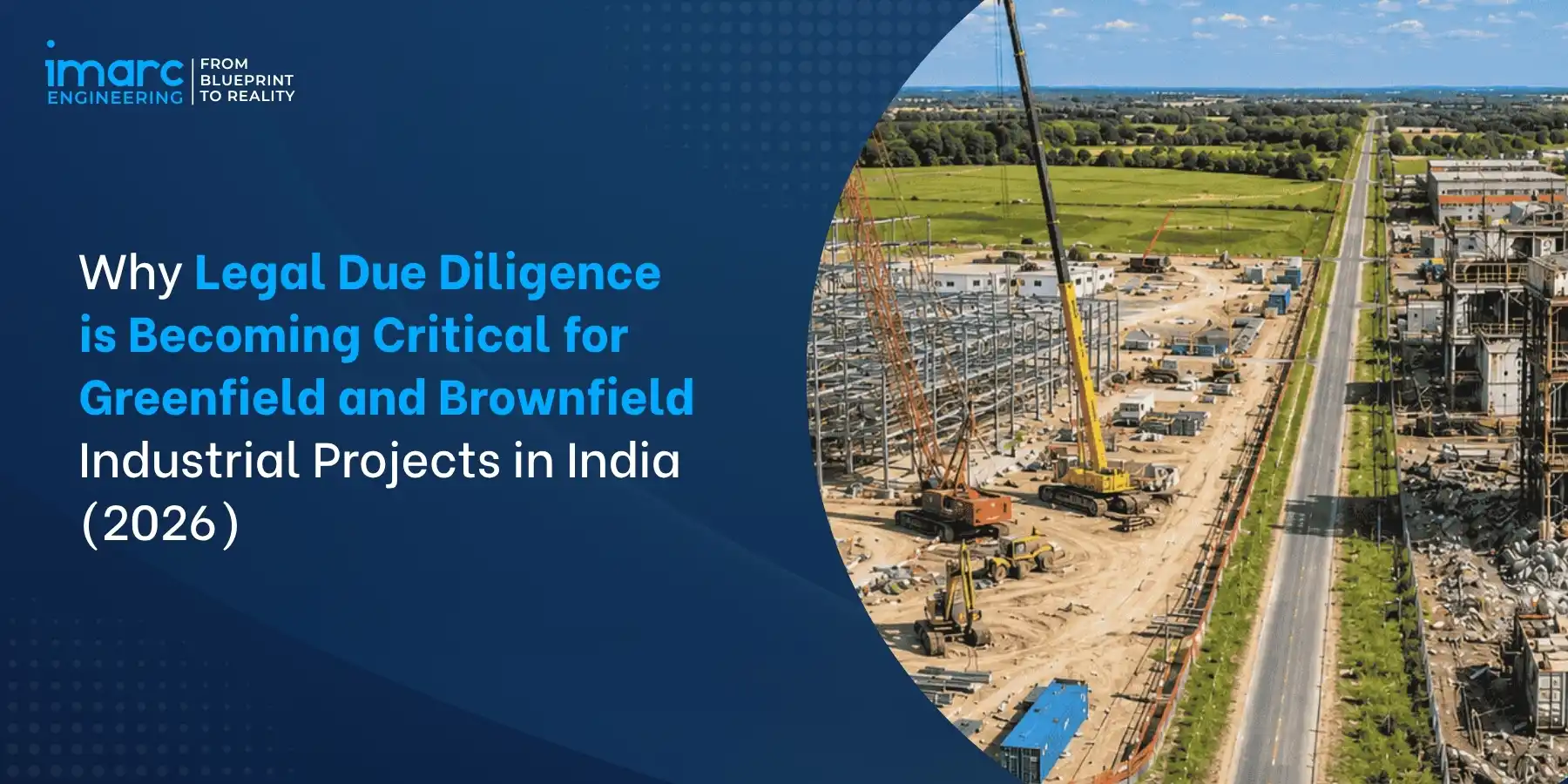
Why Legal Due Diligence is Becoming Critical for Greenfield and Brownfield Industrial Projects in India (2026)
Introduction
For any serious greenfield projects in India investment or a brownfield projects acquisition or expansion in India, disciplined legal due diligence in India has moved from a procedural pre-closing step to one of the most consequential risk-management exercises in the project lifecycle. The regulatory environment for industrial and infrastructure projects in India has tightened materially over the last 3–5 years.
The Right to Fair Compensation and Transparency in Land Acquisition, Rehabilitation and Resettlement Act, 2013 (RFCTLARR Act), operational since 1 January 2014, significantly reshaped land acquisition procedures and compensation requirements. The Environment Impact Assessment Notification, 2006 (S.O. 1533 of 14 September 2006), along with subsequent amendments, continues to govern environmental clearance requirements across more than 40 categories of project activities.
Regulatory scrutiny has further intensified through judicial intervention and expanding compliance obligations. The Supreme Court’s 2025 ruling in Vanashakti v. Union of India strengthened prior environmental-clearance requirements, while the continued expansion of Quality Control Orders, labour-code reforms, and state-level industrial policy frameworks has substantially widened the compliance perimeter for new manufacturing and industrial developments.
The cost of inadequate due diligence has increased significantly. Land-title defects discovered after CapEx commitment can trigger litigation lasting 5–10 years. In extreme cases, projects may lose access to the site entirely. Similarly, environmental-clearance gaps can lead to NGT proceedings, project halts, or even demolition orders years after commissioning; tax, labour, and regulatory non-compliance carried forward from a brownfield acquisition can transfer to the buyer with consequences far exceeding the negotiated purchase price.
Disciplined industrial project due diligence is, in this sense, the single highest-leverage risk-management investment an Indian project sponsor can make. Done well at 0.5-1.5% of total project cost, it routinely prevents losses of 10-50% of that same cost from problems that surface after commitment.
Drawing on IMARC Engineering's experience supporting feasibility studies, land and site due diligence, environmental and regulatory mapping, brownfield acquisition diagnostics, and project-risk advisory across pharmaceuticals, EV battery, chemicals, food, electronics, automotive, and engineering goods, this guide lays out a structured, step-by-step approach to industrial land due diligence in India and broader legal diligence for industrial projects in 2026.
You will find a clear view on the drivers, a comparison of greenfield vs brownfield diligence profiles, a seven-pillar diligence framework, deep-dives on land title and environmental clearance, sector-specific overlays, common-mistake warnings, a checklist for project teams, guidance on choosing a diligence partner, and a frequently-asked-questions section.
Table of Contents
- Introduction
- Why Legal Due Diligence Has Become Critical in 2026
- Greenfield vs Brownfield - Different Due Diligence Profiles
- The Seven-Pillar Legal Due Diligence Framework
- Land Acquisition and Title Verification - The Foundation Risk
- Environmental Clearance and EIA Due Diligence
- Sector-Specific Compliance Overlays
- Common Mistakes and How to Avoid Them
- Legal Due Diligence Checklist
- How to Choose a Legal Due Diligence Partner
- Conclusion
1. Why Legal Due Diligence Has Become Critical in 2026
Understanding why legal due diligence in India has become so consequential in 2026 starts with five structural factors that have reshaped the risk profile of industrial projects over the last 5-10 years.
1.1 The Regulatory Perimeter Has Expanded Sharply
India's regulatory perimeter for industrial projects now spans dozens of central and state statutes. Beyond the foundational frameworks - RFCTLARR Act 2013, Environment Protection Act 1986, EIA Notification 2006, Water Act 1974, Air Act 1981, Hazardous Waste Rules 2016, Factories Act 1948 - manufacturers must navigate the four new Labour Codes, BIS Act 2016 quality control orders, sectoral regulators (CDSCO for pharma, FSSAI for food, AERB for nuclear-adjacent, PESO for explosives and petroleum), state-specific industrial policies and land laws, urban planning regulations, panchayat-level approvals, and the National Single Window System integrating clearances across 32 Ministries and 29 States/UTs. The diligence perimeter for any new project is materially wider than it was a decade ago - and is widening further each year.
1.2 Judicial and Tribunal Activism Has Tightened Enforcement
Indian courts and the National Green Tribunal have progressively tightened enforcement of environmental, land, and regulatory obligations. The Supreme Court's ruling in Vanashakti v. Union of India (2025) reaffirmed that prior Environmental Clearance is mandatory for large-scale building, construction, and industrial projects under the EIA Notification 2006, with retrospective remediation routes substantially curtailed.
NGT cases routinely result in project shutdowns, restoration orders, and personal liability for promoters and directors. In land acquisition, multiple 2025 Supreme Court rulings reinforced that prompt and fair compensation under Article 300A is a constitutional obligation - shifting the leverage in disputed acquisitions back toward landowners. Both directions of jurisprudence increase the cost of weak diligence.
1.3 The Land Title Risk Is Real and Persistent
Despite progressive digitisation of land records under the Digital India Land Records Modernisation Programme (DILRMP), title risk remains one of the highest-frequency causes of project disruption in India. Common patterns include unresolved succession disputes, fragmented ownership across extended families, encroachment, mortgage and lien encumbrances not disclosed, panchayat or government records inconsistent with revenue records, and historical land-use restrictions (forest, wetland, agricultural conversion not completed). A clean title that looks settled on the registered sale deed often unravels under a structured 30-year title trace through revenue records, mutation registers, and encumbrance certificates.
1.4 Brownfield Liability Transfers in Acquisitions
Brownfield acquisitions, the purchase of an existing operating plant or the acquisition of an operating company, carry an additional risk layer: historical non-compliance that transfers to the buyer. Pending litigation, undisclosed tax demands, labour disputes, environmental-clearance violations, statutory dues, and contingent liabilities can all transfer to the acquirer, often with consequences far exceeding the negotiated purchase price. Robust legal due diligence for brownfield acquisition in India is the only reliable way to surface these before signing.
1.5 Capital and Lender Discipline Have Tightened
Indian and international lenders, equity investors, and joint-venture partners have all tightened their due-diligence expectations after the asset-quality cycles of the mid-2010s. Lender-side diligence increasingly mirrors investor-side diligence; project finance documentation now routinely requires legal opinions, title clearance certificates, environmental clearance attestations, and representations on compliance status that the sponsor must back with documented diligence files. Projects with thin diligence face higher coupon rates, lower leverage, longer sanction cycles, tighter covenants, and, in disputed cases, facility cancellation.
2. Greenfield vs Brownfield - Different Due Diligence Profiles
While the underlying framework of industrial project due diligence is broadly common, the practical emphasis differs substantially between greenfield and brownfield investments. Recognising the difference upfront is the foundation of an efficient diligence scope.
2.1 Greenfield Projects - Diligence Emphasis
A greenfield project involves new land, new construction, new approvals, and a new operating entity (typically an SPV). The diligence focus is forward-looking - whether the land is acquirable with clean title, whether the project is permissible at the proposed site, whether all required clearances can realistically be obtained on the planned timeline, and whether the regulatory and policy environment will remain stable over the project life. The diligence team must validate that every necessary approval can be obtained, not retroactively confirm that historical approvals were obtained correctly.
2.2 Brownfield Projects - Diligence Emphasis
A brownfield project - whether an asset acquisition, share acquisition, or operating-plant takeover - involves an existing entity with existing land, existing approvals, existing employees, existing contracts, and existing compliance posture. The diligence focus is backward-looking - whether existing land title is clean, whether all historical clearances were obtained and remain valid, whether pending litigation poses material risk, whether labour and tax compliance is in order, and whether any contingent liabilities transfer to the acquirer. The diligence team must confirm that no historical issue silently transfers to the buyer with materially different economics from the negotiated deal value.
2.3 The Profile Comparison
| Diligence Area | Greenfield Emphasis | Brownfield Emphasis |
|---|---|---|
| Land | Acquirability, title trace, conversion eligibility | Historical title, existing leases, encumbrances |
| Environmental | EC obtainable, EIA scope, public hearing readiness | Historical EC compliance, NGT cases, monitoring reports |
| Regulatory | Sequential approvals (CTE, CTO, factory licence, sectoral) | Validity of existing licences, change-of-control implications |
| Labour | Workforce planning, code compliance from Day 1 | Existing workforce, union recognition, pending IDs |
| Tax | Stamp duty, GST registration, scheme eligibility | Historical tax positions, transfer pricing, GST exposures |
| Contracts | New supplier, customer, EPC contracts | Existing contracts - change of control, novation, exit clauses |
| Litigation | Civil and criminal background of promoters / directors | Existing litigation, contingent liabilities, indemnity scope |
2.4 Why the Distinction Matters in Practice
Most diligence cost overruns and missed risks come from misallocating effort - running brownfield-style retrospective testing on a greenfield project (which adds time without value) or running greenfield-style permissibility analysis on a brownfield project (which misses the historical-liability layer that actually matters). Right-sizing the diligence scope to the project profile is the single highest-leverage discipline at scoping stage.
3. The Seven-Pillar Legal Due Diligence Framework
A disciplined legal diligence exercise rests on seven pillars. The framework below has been refined across multiple Indian and international industrial-project engagements and works for greenfield, brownfield, and hybrid projects (e.g., greenfield expansion at an existing brownfield site). The practical answer to how to conduct legal due diligence for industrial projects in India is to run all seven pillars with appropriate depth, integrated into a single risk register that feeds the investment-committee decision and the project-financing package.
| S.No. | Pillar | Focus Areas |
|---|---|---|
| 1 | Land and real estate | Title trace, encumbrances, conversion, zoning, urban planning, panchayat approvals |
| 2 | Environmental and ESG | EC, CTE/CTO, hazardous waste, forest, water, NGT cases, ESG impact |
| 3 | Regulatory and sectoral | Sector regulator (BIS, FSSAI, CDSCO, AERB, PESO), state industrial policy, NSWS |
| 4 | Tax | Stamp duty, GST, customs, transfer pricing, scheme eligibility, historical tax positions |
| 5 | Labour and employment | Four Labour Codes, ID Act, social security, union recognition, contract labour |
| 6 | Corporate and contractual | MOA/AOA, board structure, contracts, related-party, change of control |
| 7 | Litigation and disputes | Civil, criminal, regulatory, tribunal, arbitration, IBC and contingent liabilities |
3.1 Pillar 1 - Land and Real Estate
The land pillar covers 30-year title verification through registered sale deeds, mutation records, revenue documents, and encumbrance certificates. It also includes verification of khasra and khata records, ownership status, pending succession disputes, mortgages, land-use conversion approvals, zoning permissibility, municipal or panchayat NOCs, and restrictions linked to forest, wetland, or ecologically sensitive areas.
For brownfield acquisitions, land diligence additionally includes verification of pending litigation, acquisition notifications, historical title disputes, and third-party ownership or possession claims.
3.2 Pillar 2 - Environmental and ESG
The environmental pillar covers Environmental Clearance under the EIA Notification 2006, Consent to Establish (CTE) and Consent to Operate (CTO) from State Pollution Control Boards, hazardous waste authorisation, forest clearance, biodiversity approvals, and CRZ permissions for coastal projects. ESG compliance requirements are also becoming increasingly important due to lender and customer expectations.
For brownfield projects, environmental diligence must additionally verify historical EC compliance, monitoring-report submissions, hazardous-waste handling practices, and any pending notices or proceedings from Pollution Control Boards or the National Green Tribunal (NGT).
3.3 Pillar 3 - Regulatory and Sectoral
The regulatory pillar covers sector- and product-specific approvals required for industrial projects in India. These include BIS certification under QCOs, CDSCO approvals for pharmaceuticals and medical devices, FSSAI licensing, PESO approvals, DPIIT industrial licences, state industrial-policy approvals, land allotments, National Single Window filings, and PLI or state-subsidy documentation.
For brownfield acquisitions, regulatory diligence must also verify whether existing licences remain valid after a change in ownership or control. In some sectors, approvals may need transfer permissions, amendments, or fresh applications depending on the transaction structure and applicable regulations.
3.4 Pillar 4 - Tax
The tax pillar covers direct tax (income tax, MAT, tax holidays under scheme provisions, transfer pricing); indirect tax; state-level levies (stamp duty on land transactions, registration fee, electricity duty); scheme-specific tax benefits; and for brownfield projects, the full historical tax position including any open assessments, disputed demands, search and survey history, GST audit findings, and transfer pricing exposures. Tax exposures that transfer in a brownfield share acquisition can be substantial - sometimes higher than the negotiated deal value.
3.5 Pillar 5 - Labour and Employment
The labour pillar covers compliance with India’s four Labour Codes, the Factories Act 1948, contract labour regulations, and employee social security requirements including PF, ESIC, and gratuity. It also includes review of safety committees, grievance mechanisms, union recognition, and compliance with applicable state-level labour implementation rules.
For brownfield projects, labour diligence additionally assesses workforce-transfer obligations, continuity of employee benefits, union-related risks, and any pending industrial disputes or labour-court litigation.
3.6 Pillar 6 - Corporate and Contractual
For brownfield share acquisitions, the corporate pillar covers Memorandum and Articles of Association; board structure and corporate governance; statutory registers and filings with the Registrar of Companies; share capital structure including any preference share, convertible instruments, or ESOPs; related-party transaction history; FEMA compliance for any foreign shareholding; and change-of-control implications under existing material contracts.
Material contracts often contain change-of-control clauses that trigger renegotiation, novation, or termination rights on a brownfield transaction - issues that are highly material to deal value but easy to miss without structured review.
3.7 Pillar 7 - Litigation and Disputes
The litigation pillar covers civil, criminal, regulatory, tribunal, and arbitration matters involving the target entity, promoters, directors, and key managerial personnel. Reviews typically include records from e-Courts, NCLT, NCLAT, NGT, CCI, SEBI, RERA, tax tribunals, and other regulatory forums, along with pending tax disputes, environmental notices, labour cases, and contingent liabilities.
For greenfield projects, litigation diligence focuses more on promoter and director background checks, regulatory history, and potential reputational or governance-related project risks.
4. Land Acquisition and Title Verification - The Foundation Risk
Land is where most Indian industrial projects either succeed or quietly fail at the diligence stage. Robust land acquisition in India due diligence and industrial land title verification are the foundational discipline of any greenfield investment, every downstream pillar (environmental, regulatory, contractual, financing) ultimately depends on holding the right to the right piece of land.
4.1 The Three Routes to Industrial Land in India
Industrial land in India typically comes from one of three routes. First, state industrial development corporations (MIDC, GIDC, SIPCOT, KIADB, TSIIC, UPSIDC, Haryana SIDC, and equivalents in other states) allot land in notified industrial estates or parks. The title is typically a long-term lease (commonly 99 years), with use restrictions and resale conditions defined by the corporation.
Second, direct purchase from private landowners on the open market, governed by the Transfer of Property Act 1882 and state land laws. Third, government acquisition under the RFCTLARR Act 2013 for public-purpose projects, with compensation, rehabilitation, and resettlement obligations defined in the Act. Each route has a distinct diligence profile.
4.2 The 30-Year Title Trace
The standard discipline for private-purchase or share-acquisition transactions is a 30-year title trace through registered documents at the Sub-Registrar's Office. The trace verifies the chain of ownership through every transfer, gift, succession, partition, or court order; cross-checks the chain against mutation entries in revenue records; examines encumbrance certificates for the full trace period to identify any mortgages, charges, or pending litigation; and validates that current revenue records reflect actual ownership. Gaps in the trace - missing documents, inconsistent records between revenue and registration, or unrecorded transfers - are red flags that need resolution before signing.
4.3 Conversion, Zoning, and Permissibility
Even with clean title, the land must be legally permissible for industrial use. Conversion from agricultural to non-agricultural / industrial use under the relevant state's land revenue code is a frequent gating item, some states have time-bound conversion processes, others require prior development authority approval, and a few categories face categorical restrictions.
Zoning permissibility under the relevant master plan or development plan determines whether industrial use is allowed in the proposed location - and which industrial categories are permitted (light, medium, heavy, hazardous, etc.). Panchayat or municipal NOCs, urban planning clearances, and (for sites near coastlines, wetlands, or forests) sector-specific clearances add further layers. A diligence finding of clean title on land that is not zoned for industrial use is, in practice, a project-stopper.
4.4 RFCTLARR Implications
Where land is being acquired through government action under the RFCTLARR Act 2013, the diligence focus shifts to the procedural integrity of the acquisition. Key items: Social Impact Assessment completed and publicly disclosed; consent thresholds met for the relevant project category; rehabilitation and resettlement plan in place; compensation determined per Schedule I of the Act; awards issued and not subject to pending objections or appeals; and the Section 96 income-tax exemption position for landowners.
Legal risks in industrial land acquisition in India typically concentrate in RFCTLARR procedural compliance, since procedural defects can be challenged years after the acquisition is complete, with consequences that can include reverting the acquisition itself.
4.5 SIDC Land - A Lower-Risk but Not Zero-Risk Route
Land allotted by a State Industrial Development Corporation typically carries lower title risk - the corporation has already aggregated the land, secured conversion, and provided basic infrastructure. But diligence is still essential. Key items: the allotment letter and lease deed terms; compliance with allotment conditions; any default notices from the corporation; outstanding dues, lease rent, water and electricity charges; and the corporation's consent to transfer of allotment. SIDC allotments come with reversion clauses for non-compliance - a structured diligence finding that the allotment is at risk of reversion is highly material.
5. Environmental Clearance and EIA Due Diligence
After land, the environmental pillar is the next most consequential. Disciplined environmental clearance due diligence in India ensures that every required approval is obtainable on a realistic timeline (for greenfield) or has been correctly obtained and is being maintained in compliance (for brownfield).
5.1 The EIA Notification 2006 Framework
The Environment Impact Assessment Notification, 2006, issued under Sections 3(1) and 3(2)(v) of the Environment (Protection) Act 1986, governs prior Environmental Clearance for over 40 categories of projects. Projects are classified into Category A and Category B. Category B is further sub-classified into B1 (full EIA process required, including public consultation) and B2 (simpler process, no EIA / public hearing). The category assignment is driven by project type and capacity thresholds defined in the Schedule to the Notification.
5.2 The Four-Stage EC Process
The EC process unfolds across four stages. Stage 1 - Screening: determines whether the project requires EIA and EC. Stage 2 - Scoping: the EAC or SEAC issues Terms of Reference (ToR) defining the EIA study scope. Stage 3 - Public Consultation: a 30-day notification period followed by a public hearing in the affected area, with stakeholder feedback to be incorporated into the EIA.
Stage 4 - Appraisal: the EAC / SEAC reviews the EIA report and Environmental Management Plan, and recommends grant or refusal to MoEFCC / SEIAA. Total timeline for a Category A project, end-to-end, is typically 12-24 months from ToR issuance, making EC the single longest gating item for many large industrial projects.
5.3 The Post-Vanashakti Tightening
The Supreme Court's 2025 ruling in Vanashakti v Union of India (2025 SCC OnLine SC 1703) reaffirmed that prior Environmental Clearance is mandatory for all large-scale building, construction, and industrial projects under the EIA Notification 2006 - with the retrospective remediation routes used during the 2017-2021 period substantially curtailed.
The practical implication for new projects in 2026 is that any commencement of construction or operation without prior EC carries significant legal risk that cannot be cured ex post. Brownfield diligence must confirm historical EC compliance specifically against this tightened jurisprudence.
5.4 Adjacent Environmental Approvals
Beyond Environmental Clearance (EC), industrial projects in India typically require Consent to Establish (CTE) and Consent to Operate (CTO) from State Pollution Control Boards, along with approvals for hazardous waste handling, biodiversity compliance, groundwater abstraction, forest land use, CRZ compliance, and wildlife clearance where applicable.
Each approval carries its own documentation requirements, approval timelines, and ongoing compliance obligations, making coordinated environmental and regulatory planning critical during project development.
5.5 EIA Amendments to Watch
The EIA framework has been amended multiple times since 2006. Recent amendments relevant to industrial-project diligence include the 29 January 2025 notification and the March 2026 draft introducing institutional reforms. Diligence teams should track ongoing amendments closely, particularly for projects that may be at category thresholds or in newly defined exempt categories.
6. Sector-Specific Compliance Overlays
Beyond the seven-pillar framework, every project carries sector-specific compliance overlays that materially shape manufacturing project compliance in India. Mapping these correctly at diligence stage saves the project from compliance gaps that surface during commissioning or audit.
6.1 Pharmaceuticals
Pharmaceutical projects involve additional regulatory and GMP compliance requirements, including CDSCO manufacturing licences, state Drug Control approvals, and export-oriented certifications such as WHO-GMP, USFDA cGMP, or EU GMP. Projects must also comply with Schedule M requirements covering clean rooms, HVAC systems, validation protocols, and quality-control processes.
For brownfield projects, diligence must verify ongoing compliance with revised Schedule M standards, historical regulatory performance, and readiness for inspections, serialisation, pharmacovigilance, and applicable PLI scheme requirements.
6.2 EV Battery and Cell Manufacturing
EV cell manufacturing projects require compliance with ACC PLI scheme conditions, including minimum investment thresholds and domestic value addition (DVA) commitments. Projects also require approvals related to lithium handling, fire and thermal-runaway safety, dry-room infrastructure, battery testing and certification, and battery waste management compliance.
Diligence must verify that the proposed technology, investment structure, safety systems, and implementation timeline align with PLI eligibility requirements and applicable regulatory standards.
6.3 Specialty Chemicals
Chemical manufacturing projects require additional compliance related to hazardous-area classification, HAZOP and SIL studies, PESO licensing, hazardous chemical registration, hazardous waste authorisation, and Pollution Control Board approvals. Projects must also meet ETP and, where applicable, zero-liquid-discharge (ZLD) requirements, particularly in water-stressed states.
Environmental and safety diligence must assess compliance not only with central regulations but also with stricter state-specific Pollution Control Board norms and sectoral requirements.
6.4 Food Processing
Food processing projects require FSSAI licensing, labelling and packaging compliance, and, where applicable, export-oriented certifications such as USFDA, EU food, JAS, or Halal standards. Certain categories may also require cold-chain certifications, FPO compliance, and alignment with food-processing PLI schemes and Ministry of Food Processing Industries incentives.
For brownfield acquisitions, diligence must review historical FSSAI compliance, product-recall records, quality complaints, and past regulatory actions or inspection findings.
6.5 Semiconductors and Electronics
Semiconductor and electronics projects require compliance with incentive schemes such as the Semicon India Programme and Electronics Components Manufacturing Scheme (ECMS), along with MeitY approvals, BIS CRS registration for applicable products, and FDI policy compliance. Certain facilities may also require AERB approvals for radiation-related equipment.
Diligence must verify scheme eligibility, domestic value addition (DVA) commitments, incentive conditions, and compliance with sector-specific FDI regulations.
6.6 The Common Pattern
Across all sectors, the common pattern in compliance diligence is that the sector-specific overlay multiplies the seven-pillar framework rather than replacing it. The base diligence framework remains constant; what changes is the depth and specificity within each pillar based on sector. Sector-specialist input typically pays for itself in first-time entries to a sector because the cost of missing a sector-specific compliance requirement is highest exactly where the sponsor's domain knowledge is shallowest.
7. Common Mistakes and How to Avoid Them
The mistakes below are the recurring patterns we see across legal diligence engagements - and the ones most likely to surface as litigation, project halts, or unexpected liabilities long after the deal is closed or the project is committed. Each is paired with the discipline that prevents it.
7.1 Compressing Diligence to Save Calendar Time
The single most common failure mode is reducing a 6-12 week structured diligence to a 2-3 week templated review under deal-side time pressure. The hidden cost - missed liabilities, weak title trace, incomplete approval mapping - typically surfaces 12-24 months after closing, with remedy cost far exceeding the calendar saving at diligence stage.
7.2 Treating Diligence as a Procurement Bid
Selecting a diligence partner on lowest-quote basis routinely produces templated reports without sector-specific depth, inadequate primary verification, and a risk register that misses the issues that actually matter. The cost differential between a thin diligence and a rigorous one is typically modest in absolute terms but enormous in risk-adjusted terms.
7.3 Ignoring State-Specific Overlays
Each Indian state operates distinct land laws, industrial policy frameworks, labour notifications, environmental procedures, and stamp-duty regimes. Diligence reports built on a uniform national template typically miss the state-specific overlay that drives 30-50% of the actual compliance risk.
7.4 Skipping the Site Visit and Local Verification
Desk-based diligence based on documents alone misses physical-reality issues - encroachments not reflected in records, access road disputes, neighbouring industrial nuisance, ecological sensitivities, community sentiment, and panchayat-level political dynamics. These often determine whether a project actually executes on plan or stalls during construction.
7.5 Underestimating Litigation Diligence Depth
Brownfield acquisitions, in particular, require thorough litigation diligence across multiple forums - civil courts, criminal courts, tax tribunals (ITAT, CESTAT), NCLT and NCLAT, NGT, CCI, SEBI, RERA, state tribunals, and consumer commissions. Reliance on the seller's disclosure schedule alone, without independent search across these forums, routinely misses material pending proceedings.
7.6 Inadequate Coordination Between Workstreams
Diligence run as parallel but uncoordinated workstreams - lawyers on legal, accountants on tax, technical consultants on engineering, environmental consultants on EC - typically produces siloed reports without an integrated risk view. Issues that span multiple pillars (land contamination affecting both environmental and tax, labour-code transitions affecting both labour and corporate) fall through the gaps.
7.7 Treating the Diligence Report as the End Product
A diligence report is a means, not an end. Reports that document issues without prioritising them by severity, without linking them to specific remediation pathways, and without driving deal-document language (representations, warranties, indemnities, escrow, conditions precedent) leave the actual risk-transfer work incomplete.
8. Legal Due Diligence Checklist
The checklist below consolidates the operational decision points discussed across this guide into a structured legal due diligence checklist for greenfield projects in India (with brownfield-specific items flagged separately). Project teams can apply this directly to their next diligence engagement, it covers the seven pillars across pre-diligence scoping, diligence execution, and report closure.
8.1 Pre-Diligence Scoping
- Diligence scope defined by project type (greenfield, brownfield, hybrid), value, and sector
- Diligence calendar agreed against deal / financing timeline (typically 6-16 weeks)
- Diligence team appointed with named project lead and pillar-level owners
- Information-request list (IRL) issued to seller / project sponsor
- Virtual data room (VDR) or physical document room access established
- State-specific advisors engaged where multi-state exposure
- Sector-specialist advisors engaged where sector-intensive
8.2 Land and Real Estate Pillar
- 30-year title trace through registered documents at Sub-Registrar
- Mutation register and revenue records (RTC, Khata, 7/12) verification
- Encumbrance certificates for the full trace period
- Conversion status from agricultural to non-agricultural / industrial use
- Zoning and master-plan permissibility for industrial use
- Panchayat / municipal NOCs and urban-planning clearances
- Site visit and surveyor verification of boundaries
- (Brownfield) Existing leases, sub-leases, and any disputes
- (SIDC land) Allotment letter, lease deed, and compliance with allotment conditions
8.3 Environmental Pillar
- EIA category assignment confirmed (A, B1, B2)
- EC roadmap mapped including Terms of Reference, public hearing, appraisal timeline
- CTE and CTO requirements identified for State Pollution Control Board
- Hazardous waste authorisation requirements assessed
- Forest clearance applicability (FC Act 1980) verified
- Biodiversity, CRZ, wildlife clearances verified where applicable
- Groundwater abstraction NOC requirements assessed
- (Brownfield) Historical EC, CTE, CTO compliance and validity verified
- (Brownfield) Any pending NGT proceedings or PCB notices reviewed
8.4 Regulatory, Tax, Labour Pillars
- Sector-specific approvals mapped (BIS, FSSAI, CDSCO, AERB, PESO, MeitY, DPIIT)
- State-level industrial policy and SIDC compliance requirements verified
- NSWS / state single-window applicability and filings reviewed
- PLI / state-subsidy eligibility confirmed with documentation
- Stamp duty, GST, customs implications assessed
- (Brownfield) Historical direct and indirect tax positions reviewed
- Four Labour Codes compliance plan mapped
- Contract labour, gratuity, PF, ESIC positions verified
- (Brownfield) Existing workforce, union recognition, pending ID Act matters reviewed
8.5 Corporate, Contracts, Litigation Pillars
- (Brownfield) MOA / AOA, statutory registers, ROC filings verified
- (Brownfield) Share capital structure including ESOPs and convertibles reviewed
- (Brownfield) Material contracts reviewed for change-of-control clauses
- (Brownfield) Related-party transactions audit-trailed
- Independent litigation search across courts, tribunals, regulators
- Promoter / director / KMP background verification
- Contingent liabilities reviewed against disclosure schedule
- Integrated risk register consolidating findings across pillars
8.6 Diligence Closure
- Risk register prioritised by severity and remediation pathway
- Decision-grade summary memo for investment committee / board
- Deal-document inputs (representations, warranties, indemnities, escrow, CPs) drafted
- Post-closing integration / remediation plan with owners and timelines
- Lender-facing diligence summary prepared for project finance package
9. How to Choose a Legal Due Diligence Partner
For all but the simplest projects, engaging external legal due diligence consultants for industrial projects in India is a sensible investment. The selection framework below summarises what mature project sponsors test for.
9.1 The Six Selection Criteria
- Multi-disciplinary capability- land, environmental, regulatory, tax, labour, contracts, and litigation under one project lead
- Industrial project credentials- documented engagement history with comparable projects in sector and scale
- State-specific depth- access to state-level advisors where multi-state exposure
- Sector specialism- sector-specific compliance knowledge for the relevant industry
- Integration discipline- ability to deliver a single integrated risk register, not pillar-by-pillar reports
- Engagement model- fixed scope, fixed fee where possible, with clear deliverables and timelines
9.2 Red Flags to Watch
Diligence firms that quote substantially below market rates on a clearly-defined scope typically deliver thin primary verification, templated outputs, and inadequate integration. Firms that promise specific findings (clean diligence, no material issues) before doing the work are signalling a willingness to underweight inconvenient findings - dangerous in any context.
Firms that lack hands-on Indian industrial-project credentials are likely to produce a generic document rather than a project-grounded one. The right framing is total risk-adjusted value, not headline fee.
Conclusion
Disciplined legal due diligence in India has become one of the highest-leverage risk-management exercises in the lifecycle of any industrial project. The expanding regulatory perimeter, the tightening of judicial enforcement post-Vanashakti, the structural land-title risk in Indian real estate, the brownfield-liability-transfer dynamics in acquisitions, and the heightened lender-side discipline have collectively raised the stakes for getting diligence right.
Done well, it identifies the right land, the right approvals, the right deal structure, the right indemnity package, and the right post-closing remediation plan, before capital is committed. Done poorly, or compressed, it leaves the project exposed to land-title litigation, environmental shutdowns, regulatory penalties, tax demands, and contractual disputes that can surface years after the deal closes.
Three closing reminders. First, scope the diligence appropriately to the project profile - greenfield projects due diligence is forward-looking permissibility; brownfield projects due diligence is backward-looking compliance; both deserve full seven-pillar coverage. Second, integrate findings across pillars in a single risk register that feeds the investment-committee decision, the deal documents, and the post-closing integration plan - pillar-by-pillar reports without integration leave the actual risk-management work incomplete. Third, treat the diligence as a programme with a named project lead, multi-disciplinary team, and decision-grade deliverables - not as a procurement bid.
Whether you are evaluating a greenfield investment, executing a brownfield acquisition, expanding an existing facility, or preparing a lender / investment-committee submission, IMARC Engineering provides end-to-end legal and regulatory due diligence and project-advisory support.
PLANNING A NEW PROJECT OR ACQUISITION IN INDIA?
Get a structured seven-pillar legal due diligence from IMARC Engineering. Our multi-disciplinary team combines land and title experts, environmental and regulatory specialists, sector engineers, tax and labour advisors, and litigation diligence support into a single integrated programme, helping you move from term-sheet to closing with confidence in the underlying risk profile.
→ Schedule a diligence-scoping consultation with an IMARC specialist
Frequently Asked Questions
Greenfield projects typically require 6–10 weeks, while brownfield acquisitions usually take 8–12 weeks. Complex multi-state or high-CapEx projects may require 10–16 weeks depending on diligence scope and regulatory complexity.
Comprehensive industrial due diligence typically costs around 0.5–1.5% of total project value, depending on project complexity, sector, geography, and historical review requirements. Early identification of material issues can significantly reduce post-closing risks and remediation costs.
Legal due diligence is commonly commissioned by project sponsors, private-equity investors, lenders, joint-venture partners, and government agencies involved in industrial and infrastructure projects.
Yes. Brownfield due diligence is generally more complex because it evaluates both future project viability and historical compliance liabilities. Existing tax disputes, environmental issues, labour claims, and contractual obligations can transfer to the buyer after acquisition.
Common red flags include undisclosed liabilities, pending tax or environmental disputes, labour issues, gaps in statutory filings, problematic related-party transactions, change-of-control restrictions in contracts, and historical land-title defects. Seller disclosures should be treated as a starting point, not the final verification source.
Standard practice in India is a 30-year title trace through registered documents. For high-value transactions or where preliminary trace surfaces concerns, longer traces (50+ years) may be appropriate. The trace must verify chain of ownership through every transfer, not just the most recent two or three.
No. The Supreme Court's 2025 ruling in Vanashakti v Union of India reaffirmed that prior Environmental Clearance is mandatory for large-scale industrial projects under the EIA Notification 2006, with retrospective remediation routes substantially curtailed. Commencing construction without prior EC carries significant legal risk that cannot be cured ex post.
IMARC Engineering provides legal and regulatory due diligence for greenfield projects, brownfield acquisitions, lender reviews, and post-acquisition remediation. Our teams cover land and title verification, environmental compliance, engineering assessment, tax and labour review, and litigation-risk analysis.
IMARC supports diligence across pharmaceuticals, EVs and batteries, chemicals, food processing, semiconductors, electronics, automotive, engineering goods, textiles, and other manufacturing sectors.
Recent Post


Trusted by Industry Leaders
We partner with global enterprises and ambitious businesses across sectors to deliver operational excellence, strategic insights, and sustainable growth through integrated solutions.











Success in Their Words
Real feedback from clients across industries. Discover how our solutions delivered measurable impact and operational excellence.

I wanted to express my sincere appreciation for your efforts in handling this matter. Your dedication and commitment have been truly commendable, and it is evident that you have put in tremendous hard work and expertise into resolving the issues at hand. We are greatly interested in continuing our collaboration with you in the future, as your professionalism and reliability have made you a trusted partner. Thank you once again for your invaluable contribution. We look forward to strengthening our partnership ahead.

It has been a pleasure working with the IMARC team. The insights provided were structured, clear, and highly valuable, helping us strengthen both our technical and financial planning with confidence. We deeply appreciate the team’s professionalism, responsiveness, and attention to detail throughout the engagement. Every requirement was well understood and effectively incorporated, resulting in a comprehensive and actionable output. Overall, our experience has been excellent, and I would gladly recommend IMARC to organizations seeking a reliable research partner.

Your service is truly exceptional. Working with the IMARC team has been a seamless and professional experience. The clarity of communication, responsiveness to queries, and consistent support at every stage made the entire engagement highly efficient. The insights shared were well-structured, practical, and perfectly aligned with our requirements, helping us make informed decisions with confidence. Overall, the dedication and professionalism demonstrated by your team stand out, and I would be glad to recommend IMARC as a reliable and trustworthy research partner.

IMARC did an outstanding job in preparing our study. They were punctual, precise, and consistently responsive throughout the entire process. The team delivered all the data we required in a clear, well-organized, and highly professional format. Their strong attention to detail, combined with their ability to meet every deadline without compromising quality, truly set them apart. Overall, their reliability and commitment made them an exceptional partner for our project, and we would gladly work with them again in the future.

IMARC made the whole process incredibly easy from start to finish. Everyone I interacted with via email was polite, professional, and straightforward to deal with, always keeping their promises regarding delivery timelines and remaining consistently solutions-focused. From my very first contact, I appreciated the professionalism and support shown by the entire IMARC team. I highly recommend IMARC to anyone seeking timely, affordable, and reliable information or advice. My experience with IMARC was excellent, and I truly cannot fault any aspect of it.

I’d like to express my sincere gratitude for the excellent work you accomplished with the study. Your ability to quickly understand our requirements and deliver high-quality results under tight timelines truly reflects your expertise, exceptional work ethic, and unwavering commitment to your customer’s success. The professionalism and responsiveness you demonstrated throughout the process made a significant difference. Our entire team and company are incredibly thankful for your dedication, reliability, and support. Once again, thank you for your outstanding contribution.