Manufacturing
October 30 2026
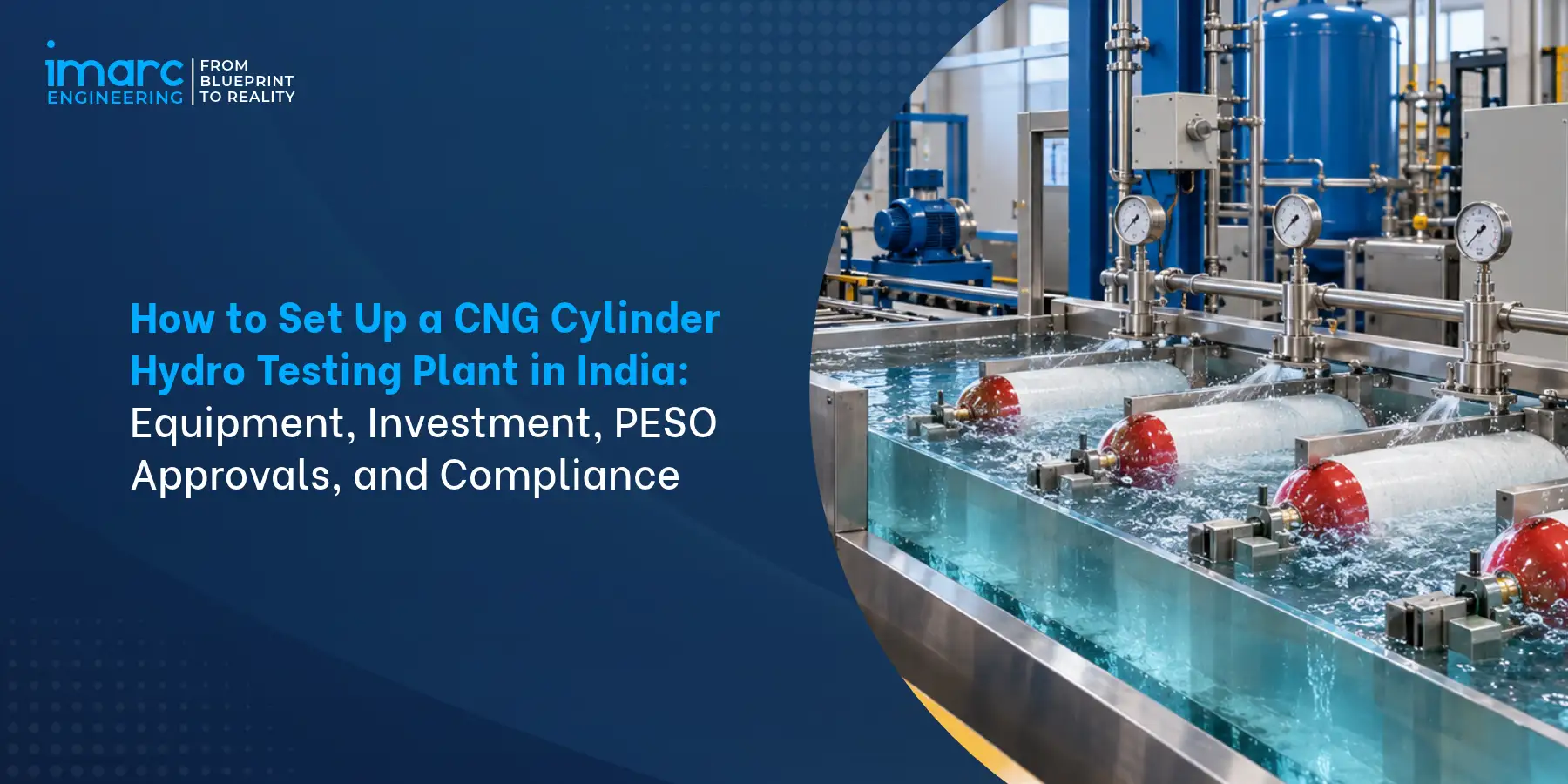
How to Set Up a CNG Cylinder Hydro Testing Plant in India: Equipment, Investment, PESO Approvals, and Compliance
Introduction
India's expanding compressed natural gas (CNG) vehicle fleet is creating recurring demand for cylinder inspection and periodic testing services. Commercial vehicles, buses, taxis and other CNG-powered vehicles require cylinder testing in accordance with applicable standards and regulatory requirements.
Automotive CNG cylinders are subject to periodic examination and testing. Under the Gas Cylinders Rules, 2016, testing must be conducted at a facility recognized by the Chief Controller of Explosives, following the applicable standards and approved procedures.
For investors planning a CNG cylinder hydro testing plant in India, key considerations include PESO recognition, cylinder types, testing equipment, qualified personnel, safe handling procedures, calibration and record-keeping systems. Project investment and operating capacity depend on the approved testing scope, facility layout, equipment configuration and demand within the target market.
Scope of this Guide
This guide explains the technical, financial, and regulatory requirements for setting up a CNG cylinder hydro testing plant in India, from feasibility assessment and PESO recognition to equipment installation, commissioning, and certification. It covers commercial testing stations handling in-service automotive CNG cylinders, including Type 1 metallic cylinders, Type 2 hoop-wrapped composite cylinders, Type 3 fully wrapped composite cylinders with metallic liners, and Type 4 fully wrapped composite cylinders with non-metallic liners.
The guide focuses specifically on cylinder testing facilities, rather than CNG filling stations, gas processing infrastructure, cascade installations, or cylinder manufacturing plants. It also covers capacity planning, machinery selection, plant layout, utilities, safety requirements, statutory approvals, and project economics. Land requirements, equipment capacity, utility loads, approval timelines, and investment estimates must be validated using vendor quotations, site-specific assessments, applicable regulatory requirements, and a detailed project report (DPR).
Table of Contents
- Introduction
- Why CNG Cylinder Hydro Testing Plant Setup in India Matters for Investors in 2026
- What a CNG Cylinder Hydro Testing Plant Setup in India Is and Why It Matters
- CNG Cylinder Hydro Testing Plant Setup in India: Cylinder Types and Capacity Planning
- Raw Materials, Test Media and Consumables in CNG Cylinder Hydro Testing Plant Setup in India
- Core Process Steps in CNG Cylinder Hydro Testing Plant Setup in India: Receipt, Degassing and Inspection
- Core Process Steps in CNG Cylinder Hydro Testing Plant Setup in India: Pressure Testing, Drying and Certification
- Machinery, Workshop Environment and Utilities in CNG Cylinder Hydro Testing Plant Setup in India
- Effluent, Licences and Project Economics in CNG Cylinder Hydro Testing Plant Setup in India
- Conclusion
1. Why CNG Cylinder Hydro Testing Plant Setup in India Matters for Investors in 2026
Four structural conditions make a disciplined CNG cylinder hydro testing plant setup in India commercially relevant in 2026, and each one shapes the technical configuration an investor should fund.
1.1 Fleet Growth and the Mandatory Retest Cycle
CNG cylinders require periodic examination and testing at the interval prescribed by the applicable standard or written approval. This creates recurring demand for testing services, but the addressable market depends on the cylinder population, type mix, testing intervals, and the number of cylinders reaching their due dates. Station capacity should therefore be estimated from the cylinder population in the catchment rather than from CNG fuel consumption alone.
1.2 Policy Framework: Gas Cylinders Rules and PESO Oversight
The Gas Cylinders Rules, 2016, administered by PESO, govern the testing and handling of gas cylinders within their scope. Under Rule 35, periodic testing must be undertaken at a testing station recognised by the Chief Controller of Explosives, in accordance with the applicable requirements. The station must meet the prescribed equipment, personnel, inspection and record-keeping conditions. Confirm the current rules, recognition procedure, forms and fees with PESO before finalising the project design.
1.3 Investment Ecosystem and Station Economics
Testing stations are best located near the fleet operators and depots they intend to serve, since cylinder collection and return affect logistics costs and turnaround time. Capacity depends on the number of test positions, validated cycle time, cylinder type mix, operating shifts, staff availability and equipment downtime. The financial model should separately estimate fixed compliance and staffing costs, variable operating costs, achievable utilisation and locally validated testing fees.
1.4 The Cost of Poor Planning
Poor planning can affect plant utilisation, testing accuracy, compliance and project returns. Dependence on a single fleet contract may expose the business to demand fluctuations when the contract changes or ends. Inadequate measurement capability or maintenance can compromise test results, while incomplete documentation or approval delays can postpone commissioning. Investors should validate demand across multiple customer segments, specify equipment against the applicable testing requirements, and incorporate PESO recognition and calibration into the project schedule.
2. What a CNG Cylinder Hydro Testing Plant Setup in India Is and Why It Matters
A CNG cylinder hydro testing plant setup in India is defined by what it is licensed to do, what it can measure, and where the facility boundary sits.
2.1 Definition and Facility Boundary
A CNG cylinder testing station receives in-service cylinders for identification, examination, testing and assessment of their fitness for continued service. The required test method depends on the cylinder type, applicable standard and approved procedure. The workflow may include safe depressurisation, valve removal, internal and external inspection, hydrostatic testing or hydrostatic stretch testing, drying, valve refitting, leak testing, marking and record-keeping, as applicable. A test-only facility may outsource cleaning or painting, while an integrated facility may undertake these activities on site. The facility scope, equipment, layout and approvals should reflect the actual services offered and the cylinder types covered by its recognition.
2.2 Filling Stations, Production Plants and Cylinder Manufacturing
A CNG filling station dispenses compressed natural gas into vehicles and requires the approvals applicable to its equipment and operations. A gas processing or city-gate facility performs gas treatment, pressure regulation and metering as applicable. A cylinder manufacturing plant manufactures new cylinders and must comply with the relevant manufacturing standards and approvals. A cylinder testing station examines and tests in-service cylinders under the applicable testing requirements. The approvals for each facility depend on its actual activities, equipment and applicable regulations.
2.3 Scale Determinants
Plant capacity depends on the number of test positions, the validated cycle time for each cylinder type, operating shifts, equipment availability and the time required for inspection, preparation, drying and documentation. Cylinder dimensions and handling requirements also affect throughput. Capacity should be calculated for a defined cylinder mix and expressed as achievable cylinders per shift or year, with allowances for downtime, repeat tests and rejected cylinders. Use equipment-vendor data and operating assumptions validated during the detailed project report rather than a universal cycle-time benchmark.
2.4 Plant Sections
| Section | Function | Key Equipment |
|---|---|---|
| Cylinder receipt yard | Inbound logging, segregation | Cylinder-handling equipment, identification and logging system |
| Degassing and vent bay | Residual gas release | Approved depressurisation and venting arrangements, gas detection where required |
| Valve removal and washing | Valve strip, internal clean | Valve machine, wash bay |
| Inspection bay | Internal and external examination | Borescope, ultrasonic gauge |
| Hydrostatic test bay | Hydrostatic testing using the approved cylinder-specific procedure | Suitable pressure-generation and measurement equipment; water-jacket system where required |
| Drying and valve shop | Moisture removal, valve refit | Hot air oven, torque tools |
| Leak test and marking | Final pressure check, stamping | Decay rig, marking machine |
| Records and dispatch | Certification, outbound loading | Test register, ERP terminal |
| Utility block | Power, air, water supply | Compressor, DG set, filters |
| Effluent treatment | Wash water treatment | Wastewater collection and treatment equipment based on actual effluent characteristics |
3. CNG Cylinder Hydro Testing Plant Setup in India: Cylinder Types and Capacity Planning
Cylinder type and capacity must be settled together in a CNG cylinder hydro testing plant setup in India, because the type fixes the test regime and the regime fixes the bench, the records and the staffing.
3.1 Cylinder Types and Test Regimes
Automotive CNG cylinders may include seamless steel and composite designs, depending on the vehicle and cylinder specification. The applicable design standard, cylinder type, markings and approved testing procedure must be checked for each cylinder. Service pressure, test pressure, inspection methods and acceptance criteria must not be assumed to be identical across cylinder types. The station should accept only those cylinder types for which its equipment, procedures and recognition cover the required testing.
| Cylinder type | Construction | Main planning consideration |
|---|---|---|
| Type 1 | Metallic cylinder | Inspection and testing according to its applicable standard |
| Type 2 | Metallic liner with hoop reinforcement | Additional attention to composite reinforcement and approved inspection procedures |
| Type 3 | Fully wrapped composite with metallic liner | Material-specific inspection, handling and test requirements |
| Type 4 | Fully wrapped composite with non-metallic liner | Liner and composite compatibility with the approved testing procedure |
This comparison is for facility planning only. The testing method, inspection criteria and PESO recognition scope must be confirmed against the applicable standard and approval for each cylinder.
3.2 Capacity Planning and Throughput
Calculate throughput from the validated test-cycle time, number of test positions, operating hours, equipment availability and cylinder type mix. Allow additional time for receipt, identification, valve removal, inspection, drying, refitting, documentation and rejected or repeat tests. Annual demand should be compared with effective capacity under the proposed shift pattern before selecting the number of benches. All capacity figures are preliminary estimates and must be validated against equipment specifications and the project’s operating plan.
3.3 Service Mix and Revenue Model
The principal revenue source is the fee charged for cylinder examination and testing. Depending on its approvals, equipment and customer requirements, a station may also offer compatible valve servicing, cleaning, surface preparation and painting. These additional activities should be included only where the facility has the necessary equipment, procedures and permissions.
Revenue projections should be based on the expected number of eligible cylinders, locally validated service fees, operating days and realistic utilisation. Fleet contracts may support demand planning, but their volumes, pricing and duration should be confirmed before they are included in the financial model.
3.4 Location and Cluster Selection
Select a site based on customer catchment, cylinder transport costs, industrial land-use permissions, road access, power availability and applicable safety requirements. Plot size must be established through a compliant layout covering cylinder receipt and storage, degassing, inspection, testing, circulation, utilities, fire access and waste handling. Any proposed land-area range should be treated as preliminary until the layout and required clearances are confirmed. Venting arrangements and separation distances must comply with the applicable Gas Cylinders Rules and PESO requirements.
4. Raw Materials, Test Media and Consumables in CNG Cylinder Hydro Testing Plant Setup in India
Test medium quality and consumable specification determine measurement accuracy and cylinder condition far more than equipment branding does in any CNG cylinder hydro testing plant setup in India.
4.1 Test Water and Wetting Agents
Water quality must be suitable for the approved hydrostatic testing procedure and the cylinder materials being tested. Filtration, corrosion control, temperature monitoring and recirculation should be specified according to the applicable standard, test-bench design and equipment manufacturer's instructions. The design should also provide for sediment removal, controlled drainage and maintenance of the water jacket and associated measuring equipment. Do not prescribe universal chlorine, filtration or temperature limits without a supporting technical standard or validated equipment specification.
4.2 Cleaning, Inspection and Finishing Consumables
Cleaning and inspection consumables depend on the cylinder type, material, condition and applicable testing procedure. Internal cleaning may use compatible alkaline or neutral-pH detergents, while metallic cylinders may require approved rust inhibitors or corrosion-control treatments. Inspection equipment and consumables may include thread and ring gauges for neck inspection, penetrant testing materials for surface defects, ultrasonic couplants and reference blocks for thickness measurement, and borescopes for internal examination.
Where refurbishment is permitted, metallic cylinders may require suitable blasting media, primers and protective coatings. Surface preparation and finishing methods must be compatible with the cylinder material and manufacturer's specifications. Composite cylinders require material-specific handling and inspection procedures. Abrasive cleaning, blasting or coating removal must not damage composite reinforcement, liners or protective surfaces. Compressed air quality and drying requirements should follow the approved testing procedure, cylinder construction and equipment manufacturer's instructions.
4.3 Valve, Seal and Fitting Inputs
Valve servicing may require replacement seals, O-rings, valves or pressure-relief components, depending on inspection findings and manufacturer requirements. Replacement parts must be compatible with the cylinder, valve assembly and intended service. Valve refitting torque, thread treatment and leak-testing procedures must follow the manufacturer's specifications and the applicable standard. Do not assume that one seal material, torque range or relief-device configuration is suitable for every cylinder.
4.4 Storage, Handling and Chemical Safety
Paints, solvents, detergents, blasting media and treatment chemicals should be stored and handled in accordance with their safety data sheets, chemical compatibility requirements, storage quantities, and applicable fire and environmental regulations. Appropriate ventilation, segregation, spill containment and fire protection should be provided wherever required.
The facility should maintain up-to-date safety data sheets and handling instructions for all chemicals in use. Cylinders should be stored securely in designated areas, with incoming, tested and condemned cylinders kept separate to prevent mix-ups and avoid damage to valves and cylinder bodies. Final storage arrangements should be determined through a site-specific safety assessment and incorporated into the facility layout.
The degassing and valve-opening area must comply with the applicable requirements in Schedule IV of the Gas Cylinders Rules, 2016, including prescribed platform dimensions, fencing and separation, vent-stack arrangements and limits on the number of cylinders handled at one time. Gas detection, ignition-source control, ventilation, emergency procedures and hot-work controls must be incorporated into the site-specific safety design. Confirm the layout with PESO before construction.
5. Core Process Steps in CNG Cylinder Hydro Testing Plant Setup in India: Receipt, Degassing and Inspection
The production flow runs from gate entry to the test bench through four controlled stages, each with parameters that must be fixed in the equipment specification and the standard operating procedures.
5.1 Receipt, Identification and Record Verification
Record each incoming cylinder using the identification and history information required by the applicable testing procedure. Check its markings, manufacturer details where available, specification, working pressure, tare weight, previous test information and visible condition. Compare the available records with the cylinder and investigate discrepancies before testing.
Barcode, RFID and photographic records may be used as supplementary traceability measures, but should not be presented as universal statutory requirements unless specifically required by the applicable procedure. Maintain a history record for each cylinder in accordance with the Gas Cylinders Rules, 2016, and applicable requirements.
5.2 Safe Depressurisation and Degassing
Depressurise incoming cylinders using an approved procedure appropriate to the residual gas and cylinder configuration. The degassing platform, venting arrangement, separation, fencing and cylinder-handling limits must comply with Schedule IV of the Gas Cylinders Rules, 2016, and applicable PESO requirements. Before removing a valve or carrying out work that could release residual gas, verify that the cylinder is safe to open under the approved procedure. Specify purge media, gas-free criteria and monitoring methods only where supported by the applicable procedure and site-specific risk assessment.
5.3 Valve Removal, External Cleaning and Internal Inspection
Remove valves using suitable equipment and procedures that prevent damage to the cylinder, neck and threads. Conduct external cleaning and internal examination using methods appropriate to the cylinder type, surface condition and applicable standard. Check for relevant defects, including corrosion, dents, cracks, fire damage and other signs of deterioration. Use additional inspection methods, such as ultrasonic thickness measurement or surface crack detection, where required by the approved procedure or indicated by the cylinder's condition. Record findings against the cylinder's identification and apply the relevant acceptance or rejection criteria.
5.4 Hydrostatic Stretch Testing
Hydrostatic stretch testing must follow the procedure and test pressure specified for the cylinder under its applicable standard, approved specification and markings. The test system must have suitable pressure ratings, calibrated measuring instruments and protective arrangements. Where the approved procedure requires a water-jacket test, total and permanent volumetric expansion must be measured using the prescribed equipment and method.
Acceptance or rejection must be determined against the applicable standard and cylinder-specific criteria, not a universal test-pressure multiplier or expansion limit. Document the test pressure, readings, equipment identification and result against the cylinder's serial number. The test method, pressure, hold period, measurement accuracy and acceptance criteria must be verified against the applicable standard and approved procedure for each cylinder type before the station's operating procedures and equipment specifications are finalised.
6. Core Process Steps in CNG Cylinder Hydro Testing Plant Setup in India: Pressure Testing, Drying and Certification
Finishing and verification turn a pressure-tested shell into a certified cylinder that a transport authority, a fleet auditor and an insurer will accept.
6.1 Drying and Moisture Verification
After hydrostatic testing, drain and dry the cylinder using the approved procedure for its construction and materials. The drying method must prevent residual moisture without exceeding the temperature limits specified for the cylinder, liner, resin system or other components. Verify dryness according to the applicable procedure and maintain the required records. Do not apply a universal drying temperature or compressed-air dew-point specification to all cylinder types.
6.2 Valve Refitting, Leak Test and Final Pressurisation
Refit the valve using compatible components and the manufacturer's specified installation procedure and torque. Check thread condition and engagement, then conduct the prescribed leak test using the approved test medium, pressure and acceptance criteria. Record the result and release the cylinder only when all applicable requirements have been met. Do not use a universal valve-torque range or pressure-decay limit across different cylinder and valve designs.
6.3 Marking, Certification and Test Records
Marking, certification and record-keeping must follow the applicable Gas Cylinders Rules, approved testing procedure and relevant cylinder standard. The certificate and station records should identify the cylinder, test date, test method, required measurements, result and responsible inspector. Maintain the prescribed testing, rejection and inspection records for their applicable retention periods. Digital records may supplement the required registers but must remain consistent with the official records and available for inspection.
6.4 Condemnation, Destruction and Rejection Handling
A cylinder that fails the applicable acceptance criteria must be condemned and rendered permanently unusable in accordance with Rule 36 of the Gas Cylinders Rules, 2016. The prescribed method is to flatten the cylinder or cut it into pieces that cannot be rejoined to form a cylinder, and to deface its markings. Record the condemnation and inform the owner as required by the rules.
Retain records of condemned cylinders for at least two years, as prescribed by Rule 36 of the Gas Cylinders Rules, 2016, subject to verification against the latest applicable amendments. Any scrap recovery or payment should be handled under the applicable ownership arrangements.
7. Machinery, Workshop Environment and Utilities in CNG Cylinder Hydro Testing Plant Setup in India
Machinery, workshop environment and utilities account for the majority of capital and effectively all of the technical risk in a CNG cylinder hydro testing plant setup in India.
7.1 Machinery Selection Drivers
Specify hydrostatic testing equipment according to the highest approved test pressure, required flow, duty cycle, and cylinder types the station will handle. Select the water-jacket and volumetric measuring system to meet the accuracy and measurement requirements of the applicable test procedure.
Valve-removal equipment must suit the cylinder and valve designs, while leak-testing equipment must meet the applicable pressure, sensitivity, and acceptance requirements. Verify instrument accuracy, calibration and maintenance requirements against Schedule IV, the relevant standards and current PESO requirements before finalising equipment specifications.
Pressure gauges, weighing equipment, test weights and volumetric measurement systems must be checked and calibrated at the intervals prescribed by the applicable Gas Cylinders Rules, testing standards and approved procedures. The station should maintain calibration certificates, equipment identification records, due-date tracking and documented corrective actions for instruments found outside tolerance.
7.2 Workshop Layout, Ventilation and Fire Safety
Layout runs one way: receipt and identification, degassing bay, valve removal, washing and blasting, inspection, hydrostatic test, drying, valve shop, leak test, marking and dispatch, with condemned cylinders routed out at the inspection stage. The degassing area and test bay must be designed with the prescribed separation, ventilation and protective arrangements.
Gas detection, alarms, emergency egress, fire protection and access provisions should be established through the applicable statutory requirements and a site-specific safety assessment. Specify ventilation rates only where supported by the applicable code, approval conditions or engineering calculations.
7.3 Utilities
Electrical load, water consumption, compressed-air capacity and nitrogen requirements depend on the selected equipment, cylinder mix, operating shifts and level of integration. Estimate connected load from equipment schedules and obtain vendor data for power, flow, pressure and duty cycle. Develop the water balance from testing, washing, cleaning and domestic requirements, accounting for reuse where feasible. Confirm utility availability and local tariffs before finalising the project cost. Any preliminary figures should be labelled as indicative and validated during detailed engineering.
7.4 Key Machinery
| Category | Equipment | Specification basis |
|---|---|---|
| Pressure generation | Hydrostatic test pump | Highest approved test pressure, required flow and duty cycle |
| Expansion measurement | Water jacket and volumetric measuring system, where applicable | Accuracy and measurement requirements of the approved test method |
| Cylinder preparation | Valve-removal machine and compatible tools | Cylinder and valve design, torque requirements and thread protection |
| Surface preparation | Cleaning and surface-preparation equipment | Required inspection and finishing procedure |
| Inspection | Borescope and other specified inspection instruments | Applicable standard, cylinder type and defect criteria |
| Drying | Drying equipment and suitable air supply | Approved procedure and material-specific temperature limits |
| Leak testing | Suitable leak-testing equipment | Applicable pressure, sensitivity and acceptance criteria |
| Records | Test records and traceability system | Required cylinder history, test results and record-keeping requirements |
8. Effluent, Licences and Project Economics in CNG Cylinder Hydro Testing Plant Setup in India
Effluent, residues and approvals determine whether an otherwise sound CNG cylinder hydro testing plant setup in India is ever allowed to run at design capacity.
8.1 Effluent, Water Balance and Hazardous Waste
Wash water and surface-preparation residues may contain detergents, rust, oil, paint particles and spent blasting media. Determine treatment requirements, discharge limits and disposal routes based on the waste characteristics, discharge destination, applicable environmental standards and State Pollution Control Board consent conditions.
Assess whether individual waste streams fall under the Hazardous and Other Wastes (Management and Transboundary Movement) Rules, 2016, or other applicable waste rules. Obtain the required consents and authorisations before commissioning and maintain the prescribed waste-handling and disposal records.
8.2 PESO Approval and Statutory Licences
PESO Recognition and Application Requirements
Recognition of the cylinder testing station under Rule 35 of the Gas Cylinders Rules, 2016, is the principal regulatory requirement. The proposed station must provide the facilities prescribed in Schedule IV and submit the required particulars and scrutiny fees to the Chief Controller of Explosives. Its design must address the applicable testing equipment, inspection and measurement capability, degassing arrangements, cylinder condemnation, qualified personnel, operating procedures, and record-keeping requirements.
Before applying, prepare the site and layout drawings, equipment specifications, calibration documentation, personnel qualifications, testing procedures and proposed records required for the application. Confirm the current submission checklist, application route, fee and inspection process directly with PESO. The facility must satisfy the applicable requirements before commencing authorised testing.
Recognition of the cylinder testing station must be obtained from the Chief Controller of Explosives under the applicable provisions of the Gas Cylinders Rules, 2016. The recognition period, renewal conditions, inspection requirements and supporting documentation should be confirmed against the current rules and PESO procedures. The project schedule should account for document preparation, equipment installation, calibration, inspection and any corrective actions required before authorised operations begin.
Other Statutory Approvals
Additional approvals depend on the location, facility design and activities. These may include Consent to Establish and Consent to Operate from the relevant State Pollution Control Board, building-plan approval, factory registration or licence where applicable, fire-safety approvals, and waste-management authorisations where required. Check local land-use conditions, building and fire requirements, labour legislation, environmental requirements and any additional permissions applicable to the proposed equipment or gas storage.
Prepare a project-specific approval matrix listing each authority, legal basis, documents, fees, dependencies and expected processing steps. Confirm the current requirements before finalising the project schedule or committing to a commissioning date.
8.3 CAPEX and OPEX Composition
Capital expenditure should be estimated from separate, project-specific quotations for the test bench and instrumentation, civil works and safety provisions, cylinder-preparation equipment, utilities, electrical systems, effluent treatment, fire and gas detection, land and pre-operative costs. Operating expenditure should cover personnel, power and water, cylinder logistics, consumables and spares, calibration, maintenance, insurance, compliance and administration.
The estimate must state its assumptions and clarify whether land, taxes, financing costs, working capital, contingency and integrated blasting or painting facilities are included. Do not use percentage allocations as industry benchmarks unless supported by a documented cost estimate for a comparable facility.
8.4 Project Economics
A feasibility model should link the plant's achievable testing volume to revenue, operating costs, and investment returns. Build the model using the proposed cylinder mix, validated service fees, operating schedule, equipment quotations, and site-specific costs.
| Model Component | Calculation or input |
|---|---|
| Annual effective capacity | Validated daily capacity × operating days, adjusted for availability and planned downtime |
| Annual tests | Annual billable tests: Estimated customer demand served within effective station capacity, adjusted for operating availability, the cylinder mix, repeat-testing requirements and the applicable billing policy. |
| Testing revenue | Annual billable tests × average realised testing fee |
| Ancillary revenue | Expected volume of additional approved services × realised fee for each service |
| Variable operating costs | Consumables, utilities, handling and other costs that vary with output |
| Fixed operating costs | Staffing, competent-person costs, rent, insurance, maintenance and compliance |
| Operating profit measure | Revenue less operating costs, with depreciation, interest and taxes shown separately as appropriate |
| Break-even volume | Fixed operating costs divided by contribution per billable test, adjusted for other revenue and costs |
| Project investment | Land, civil works, equipment, utilities, safety systems, approvals, pre-operative costs and working capital |
| Project returns | Cash-flow-based payback and return measures using stated assumptions |
Prepare conservative, base and upside scenarios for demand, service fees, utilisation, operating costs and investment. Test the effect of losing a major fleet contract, lower-than-planned throughput, higher logistics costs and delays in commissioning. Clearly distinguish vendor quotations and verified local fees from estimates. Do not publish a return, payback period or investment range until the model has been populated with defensible project-specific inputs.
Conclusion
Setting up a CNG cylinder hydro testing plant in India requires coordinated planning across regulatory recognition, equipment selection, safety engineering, cylinder-specific testing procedures and financial feasibility. The investment and operating model depend on the approved cylinder types, target-market demand, site requirements, equipment configuration and level of service integration.
Three priorities should guide the project. First, establish the target cylinder mix and applicable testing requirements before selecting equipment. Second, incorporate PESO recognition, prescribed safety provisions, calibration and record-keeping into the project plan from the outset. Third, validate customer demand, service fees and operating costs before committing to capacity. A detailed project report should bring these technical, regulatory and commercial assumptions together before investment approval.
PURSUING A CNG CYLINDER HYDRO TESTING PLANT IN INDIA?
IMARC Engineering supports investors, fleet operators and project sponsors with capacity and feasibility planning, site selection, plant layout, equipment selection, utilities planning, effluent treatment, PESO recognition and statutory approvals, scheme structuring and capital investment planning. The advisory covers Type 1 to Type 4 CNG cylinder testing stations, including receipt and degassing, valve removal and inspection, hydrostatic stretch testing, drying and valve refitting, leak testing, marking and certification, with project-specific infrastructure and commissioning planning.
→ Schedule a CNG cylinder testing scoping consultation with an IMARC specialist
Frequently Asked Questions
Assess the cylinder population and type mix in the target market, prepare a feasibility study and detailed project report, and develop a compliant site layout and equipment specification. Apply for recognition under the Gas Cylinders Rules, 2016, and identify the applicable environmental, building, fire-safety and other approvals. Install and calibrate the equipment, complete the required inspections and obtain the necessary approvals before commencing operations.
Equipment may include a hydrostatic test pump, water-jacket and volumetric measuring system, valve-removal equipment, inspection instruments, cleaning and drying equipment, valve-servicing tools, leak-testing equipment, marking and record-keeping systems, and suitable gas detection and safety provisions. Final specifications must match the cylinder types, applicable testing procedures and PESO requirements for the proposed station.
The investment depends on location, land and civil works, number of test positions, approved cylinder types, equipment specifications, safety provisions, utilities and whether cleaning, blasting or painting is integrated. Obtain current vendor quotations and prepare a project-specific estimate covering capital expenditure, pre-operative costs, working capital and contingency before stating an investment range.
Cylinder testing must be undertaken at a testing station recognised by the Chief Controller of Explosives under Rule 35 of the Gas Cylinders Rules, 2016, in accordance with the applicable requirements. Confirm the current recognition procedure and operating conditions with PESO before commissioning.
Confirm the current application procedure and documentation with PESO. Prepare the required site and layout drawings, equipment specifications, calibration records, personnel credentials, testing procedures and registers as applicable. Complete document review, inspection and any required corrective actions, and commence operations only after the necessary recognition and other approvals are in place. Verify the current validity and renewal conditions directly with PESO.
The facility layout should provide for cylinder receipt and segregated storage, compliant degassing and valve removal, inspection, hydrostatic testing, drying, valve servicing, leak testing, marking and dispatch. It must also include the prescribed safety clearances, ventilation and gas detection, emergency access, utilities and appropriate waste-management arrangements. Final dimensions and safety provisions must be checked against Schedule IV of the Gas Cylinders Rules, 2016, and applicable site requirements.
The testing interval must be determined from the applicable standard, cylinder specification and any written approval issued by the Chief Controller of Explosives. Verify the current requirement for each cylinder type before setting service schedules or making a general claim about the retesting interval.
Hydrostatic testing uses pressurized liquid to assess a cylinder's integrity under the prescribed test conditions. Hydrostatic stretch testing additionally measures volumetric expansion, including permanent expansion where required by the approved procedure. The applicable test method and acceptance criteria depend on the cylinder type, governing standard and approved testing requirements.
Major operating costs include personnel and competent-person services, electricity and water, cylinder collection and delivery, consumables and spare parts, equipment maintenance, calibration, insurance, regulatory compliance and administration. Estimate each cost from the proposed staffing, operating schedule, supplier quotations, local tariffs and expected throughput. Include depreciation and financing costs separately in the financial model.
A detailed project report assesses the cylinder population and type mix in the target market, estimates achievable throughput, determines equipment and staffing requirements, and evaluates site, utility, safety and approval requirements. It also develops project-specific capital and operating costs, revenue scenarios, working-capital needs and financial returns. The implementation schedule should account for design approvals, construction, equipment installation, calibration, inspection and statutory recognition.
Recent Post


Trusted by Industry Leaders
We partner with global enterprises and ambitious businesses across sectors to deliver operational excellence, strategic insights, and sustainable growth through integrated solutions.





Success in Their Words
Real feedback from clients across industries. Discover how our solutions delivered measurable impact and operational excellence.

I wanted to express my sincere appreciation for your efforts in handling this matter. Your dedication and commitment have been truly commendable, and it is evident that you have put in tremendous hard work and expertise into resolving the issues at hand. We are greatly interested in continuing our collaboration with you in the future, as your professionalism and reliability have made you a trusted partner. Thank you once again for your invaluable contribution. We look forward to strengthening our partnership ahead.

It has been a pleasure working with the IMARC team. The insights provided were structured, clear, and highly valuable, helping us strengthen both our technical and financial planning with confidence. We deeply appreciate the team’s professionalism, responsiveness, and attention to detail throughout the engagement. Every requirement was well understood and effectively incorporated, resulting in a comprehensive and actionable output. Overall, our experience has been excellent, and I would gladly recommend IMARC to organizations seeking a reliable research partner.

Your service is truly exceptional. Working with the IMARC team has been a seamless and professional experience. The clarity of communication, responsiveness to queries, and consistent support at every stage made the entire engagement highly efficient. The insights shared were well-structured, practical, and perfectly aligned with our requirements, helping us make informed decisions with confidence. Overall, the dedication and professionalism demonstrated by your team stand out, and I would be glad to recommend IMARC as a reliable and trustworthy research partner.

IMARC did an outstanding job in preparing our study. They were punctual, precise, and consistently responsive throughout the entire process. The team delivered all the data we required in a clear, well-organized, and highly professional format. Their strong attention to detail, combined with their ability to meet every deadline without compromising quality, truly set them apart. Overall, their reliability and commitment made them an exceptional partner for our project, and we would gladly work with them again in the future.

IMARC made the whole process incredibly easy from start to finish. Everyone I interacted with via email was polite, professional, and straightforward to deal with, always keeping their promises regarding delivery timelines and remaining consistently solutions-focused. From my very first contact, I appreciated the professionalism and support shown by the entire IMARC team. I highly recommend IMARC to anyone seeking timely, affordable, and reliable information or advice. My experience with IMARC was excellent, and I truly cannot fault any aspect of it.

I’d like to express my sincere gratitude for the excellent work you accomplished with the study. Your ability to quickly understand our requirements and deliver high-quality results under tight timelines truly reflects your expertise, exceptional work ethic, and unwavering commitment to your customer’s success. The professionalism and responsiveness you demonstrated throughout the process made a significant difference. Our entire team and company are incredibly thankful for your dedication, reliability, and support. Once again, thank you for your outstanding contribution.