Green Hydrogen Projects in India: Are They Financially Viable in 2026?
April 16, 2026
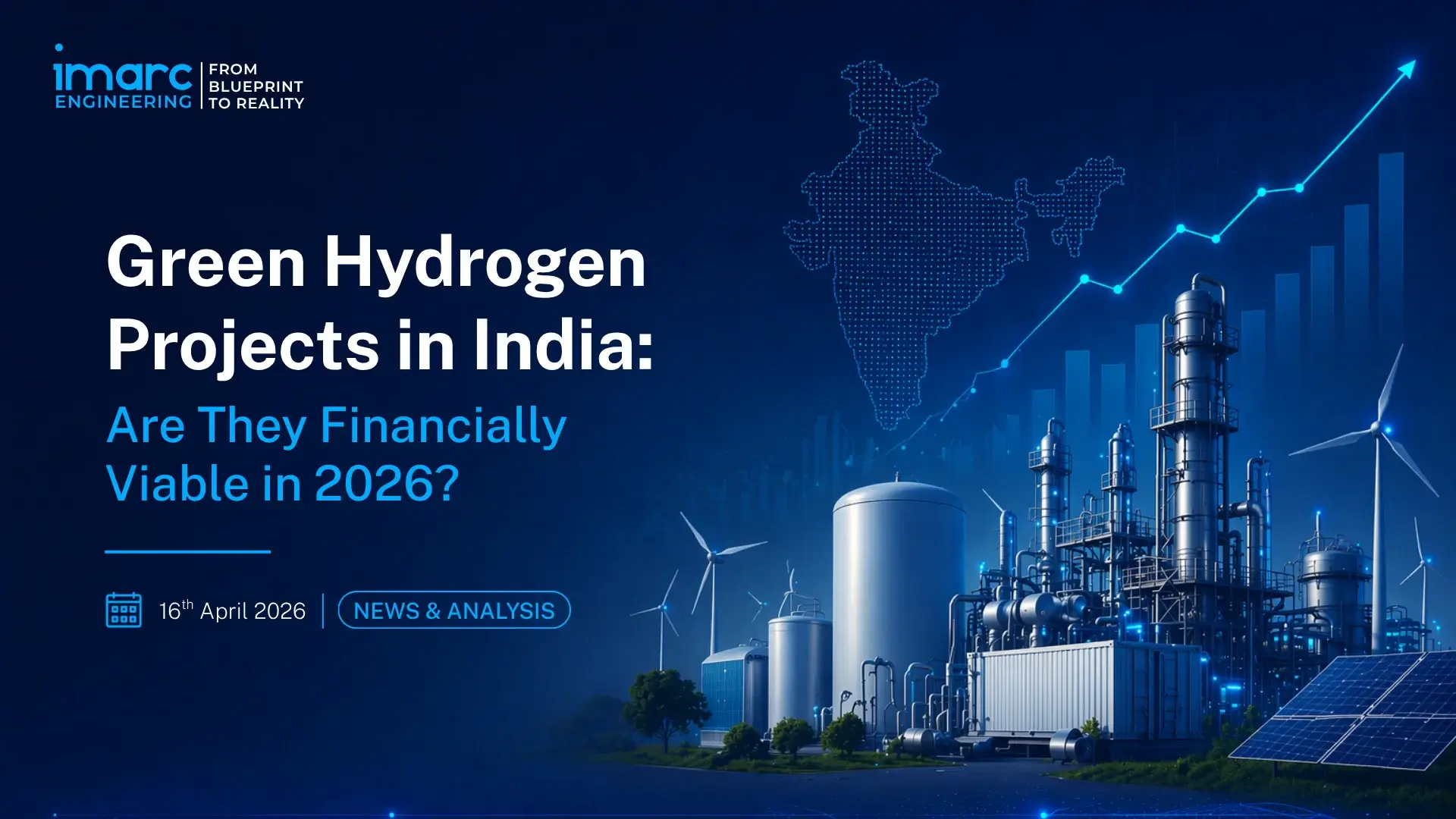
India's Green Hydrogen Ambition vs. Ground Reality in 2026
Green hydrogen has been at the heart of India’s energy policy with the launch of the National Green Hydrogen Mission, with the objective of achieving 5 MMTPA by 2030 to cut down import dependence and create export potential. Though the drivers are favourable, the low cost of renewable energy and increasing demand from industries, progress has been slower than expected. Yet in 2026, the ground reality is more sobering.
According to official data, only around 8,000 tonnes per annum (TPA) of green hydrogen production capacity in India has been commissioned as of February 2026, a fraction of the 5 MMTPA target. The gap between India's stated ambition and current execution highlights key challenges in hydrogen energy projects in India, including cost pressures, infrastructure gaps, and a financing ecosystem that is still evolving.
What Does Financial Viability Mean for Green Hydrogen Projects?
Financial viability for a green hydrogen project in India means more than producing hydrogen at any cost, it means doing so at a price point where an industrial buyer will actually pay for it, investors will commit capital, and lenders will extend project finance. In practice, this requires reaching cost parity (or near-parity) with grey hydrogen, which is currently produced from natural gas or coal through steam methane reforming. A project is financially viable when its Levelised Cost of Hydrogen (LCOH) allows the developer to cover capital costs, operating expenses, and financing charges, while offering offtake buyers a price competitive enough to justify switching from fossil-fuel-derived hydrogen.
For India, grey hydrogen currently costs approximately USD 2.30–2.50 per kg. Any renewable hydrogen project in India priced significantly above that range, without sustained subsidy support, will struggle to attract commercial offtakers.
“Green hydrogen in India is not a technology challenge anymore—it is fundamentally an economic and financing challenge,” said a senior consultant at IMARC Engineering. “Until cost parity with grey hydrogen is achieved or long-term offtake is secured, large-scale investments will remain cautious.”
Current Production Costs and What's Driving Them
As of 2026, green hydrogen production cost in India ranges between INR 397–560 per kg (approximately USD 4.6–6.7/kg), compared to grey hydrogen at INR 150–200 per kg. The cost discovered through competitive bidding under the SIGHT scheme stands at INR 397 per kg inclusive of GST for supply to Indian Oil Corporation's refineries, a figure that illustrates both progress and the distance left to travel.
Renewable energy is the dominant cost driver in green hydrogen manufacturing, accounting for 50–70% of total production costs. Electrolyser CapEx forms the next major component, with alkaline systems being cheaper but less efficient than PEM technologies. Additional cost factors include plant load factor, transmission charges, storage and water treatment infrastructure, and a relatively high cost of capital due to the sector’s early-stage risk profile.
The most critical lever for lowering costs in green hydrogen projects in India is electrolyser utilisation. Running at 75%+ keeps costs competitive, but requires either oversized renewable capacity or access to firm power. Selling excess renewable power into spot markets can further reduce costs, but depends on reliable grid connectivity and supportive regulations, which are still evolving across India.
Government Incentives and Budget Support
The policy architecture for green hydrogen market in India has become meaningfully more robust since the NGHM's launch. The SIGHT (Strategic Interventions for Green Hydrogen Transition) programme, the financial spine of the mission, carries a total outlay of INR 17,490 crore. Of this, INR 4,440 crore has been earmarked specifically for incentivising domestic electrolyser manufacturing under Component-I, and INR 13,050 crore for green hydrogen production incentives under Component-II.
Under the electrolyser PLI scheme, fifteen companies have been awarded a cumulative manufacturing capacity of 3,000 MW per annum. Major players including Adani New Industries, L&T Electrolyzers, BHEL, and Gensol Engineering have committed capacity, with the government targeting 15 GW of installed electrolyser capacity in India by 2030. Budget allocations under the NGHM have also improved year-on-year: from INR 100 crore in FY 2023–24, the outlay rose to INR 300 crore in FY 2024–25 and again in FY 2025–26, with INR 203.75 crore deployed as of March 2026, a marked improvement in fund utilisation compared to prior years.
Policy support for green hydrogen in India includes ISTS charge waivers until 2030, open access for renewable procurement, energy banking provisions, and Viability Gap Funding through auctions. Several states such as Maharashtra, Uttar Pradesh, Odisha, Rajasthan, and Tamil Nadu offer additional capital subsidies, with Uttar Pradesh providing one of the most attractive incentive packages.
Why Most Projects Are Stuck at the Planning Stage
Despite this policy scaffolding, the vast majority of India's announced green hydrogen capacity remains on paper. Several structural barriers are responsible for this inertia.
Financing Barriers
Green hydrogen projects in India face financing constraints due to their capital intensity, early-stage nature, and limited track record, making lenders cautious and increasing the cost of capital. Debt structuring remains challenging, with slow deal flow from development finance institutions and limited currency hedging options for export projects. The biggest bottleneck is the lack of long-term offtake agreements, buyers hesitate without price certainty, while developers struggle to secure financing without committed demand, creating a classic chicken-and-egg problem.
Infrastructure Gaps
India’s hydrogen infrastructure development remains underdeveloped and fragmented. Storage and transport infrastructure is limited, pipeline networks are minimal, and project enablers such as land, grid connectivity, and clearances continue to face delays. The supply chain for hydrogen plant setup in India is still import-dependent, increasing execution risks.
Electrolyser PLI Delays
Execution challenges are emerging even within the PLI programme. Several electrolyser manufacturers have delayed production timelines from 2026 to 2027 due to technology readiness issues, raw material constraints, and scale-up complexity. If delays persist, they could further push back green hydrogen project commissioning timelines in India.
As of 2025, India has only 0.3 MTPA of active and commissioned green hydrogen capacity. Projected domestic demand by 2030 is estimated at just 0.6–1.6 MTPA under conservative to optimistic scenarios, well below the 5 MTPA headline target.
When Will Green Hydrogen Become Truly Cost-Competitive in India?
The consensus view among analysts and policymakers is that cost competitiveness, defined as green hydrogen reaching USD 2/kg or below without subsidy, is unlikely before 2030, and may not arrive until 2032–2035 for most project configurations. The India target for LCOH is USD 2/kg by 2030 but achieving this will require simultaneous progress on several fronts: continued decline in renewable energy tariffs, meaningful reduction in electrolyser CapEx through domestic manufacturing scale-up, high utilisation rates, and access to concessional finance.
Progress is becoming visible. For green hydrogen in favorable states, prices are currently around USD 4.4 to 4.8 per kg, with subsidies bringing prices even lower than that. Based on structured procurements, pricing appears to be near USD 3 per kg, while modelling shows that pricing under USD 2 per kg is feasible by 2030 through appropriate policy measures.
Sectors Most Likely to Adopt Green Hydrogen First
Fertilisers
India consumes approximately 6.1 MMTPA of hydrogen for fertiliser production, making this the single largest existing hydrogen demand pool. Green hydrogen blending mandates in urea plants, supported by SIGHT's VGF mechanism, could unlock this market. However, the economics remain challenging: hydrogen constitutes a substantial portion of fertiliser production costs, and any premium for green hydrogen risks inflating final fertiliser prices, creating political and subsidy pressures.
Petroleum Refining
India's oil refineries, operated by IOCL, BPCL, and HPCL, are already using grey hydrogen at scale for hydroprocessing and desulphurisation. The government has structured the first green hydrogen offtake under SIGHT specifically for refinery supply. The competitive bid price of INR 397/kg for IOCL and slightly lower for BPCL/HPCL marks the first large commercial offtake in the country.
Steel
The steel sector is where the long-term green hydrogen opportunity in India is most transformational. In a sector that accounts for about 12% of India's industrial emissions, hydrogen-based direct reduced iron (H-DRI) offers the deepest decarbonisation by replacing coking coal in the steelmaking process.
Conclusion: The Viability Horizon Is Real- But Not Yet Here
Green hydrogen in India in 2026 occupies an uncomfortable but familiar position in the energy transition: the direction is clear, the policy intent is strong, and the technology is proven, but the economics and infrastructure are not yet aligned at commercial scale. The NGHM has created an important foundation, with INR 4,440 crore for electrolyser manufacturing, INR 13,050 crore for production incentives, structured auctions discovering competitive pricing, and a growing pipeline of private sector commitments. Yet the gap between 8,000 TPA of commissioned capacity and a 5 MMTPA target is vast, and the financing and infrastructure challenges that explain this gap will not resolve themselves without deliberate, coordinated intervention.
Financial viability for green hydrogen will emerge gradually across sectors rather than all at once. Refineries are likely to lead adoption due to regulatory pressure and existing infrastructure, while steel and fertilisers will follow as mandates, carbon pricing, and scale improve economics. True unsubsidised competitiveness is expected closer to 2030–2035 rather than in the near term.
Talk to our experts to assess the financial viability of your green hydrogen project
Latest News
-
China's Tunnel Boring Machine Export Controls Put Focus on India's Proposed USD 1.2 Billion Manufacturing Incentive Scheme
October 22, 2026
-
NTPC Plans Nuclear Power Project Feasibility Studies in More Indian States, Including Uttar Pradesh
October 21, 2026
-
NITI Aayog Releases Data Centre Evaluation Framework, Highlights Power and Water Planning Risks
October 20, 2026
-
Tamil Nadu Allocates INR 98 Lakh for DPR Preparation of Five Infrastructure Projects in Chennai
October 16, 2026
-
SunBridge BioEnergy Starts Commercial Production at INR 350 Crore, 300 KLD Ethanol Plant in Madhya Pradesh
October 15, 2026
Trusted by Industry Leaders
We partner with global enterprises and ambitious businesses across sectors to deliver operational excellence, strategic insights, and sustainable growth through integrated solutions.







Success in Their Words
Real feedback from clients across industries. Discover how our solutions delivered measurable impact and operational excellence.

I wanted to express my sincere appreciation for your efforts in handling this matter. Your dedication and commitment have been truly commendable, and it is evident that you have put in tremendous hard work and expertise into resolving the issues at hand. We are greatly interested in continuing our collaboration with you in the future, as your professionalism and reliability have made you a trusted partner. Thank you once again for your invaluable contribution. We look forward to strengthening our partnership ahead.

It has been a pleasure working with the IMARC team. The insights provided were structured, clear, and highly valuable, helping us strengthen both our technical and financial planning with confidence. We deeply appreciate the team’s professionalism, responsiveness, and attention to detail throughout the engagement. Every requirement was well understood and effectively incorporated, resulting in a comprehensive and actionable output. Overall, our experience has been excellent, and I would gladly recommend IMARC to organizations seeking a reliable research partner.

Your service is truly exceptional. Working with the IMARC team has been a seamless and professional experience. The clarity of communication, responsiveness to queries, and consistent support at every stage made the entire engagement highly efficient. The insights shared were well-structured, practical, and perfectly aligned with our requirements, helping us make informed decisions with confidence. Overall, the dedication and professionalism demonstrated by your team stand out, and I would be glad to recommend IMARC as a reliable and trustworthy research partner.

IMARC did an outstanding job in preparing our study. They were punctual, precise, and consistently responsive throughout the entire process. The team delivered all the data we required in a clear, well-organized, and highly professional format. Their strong attention to detail, combined with their ability to meet every deadline without compromising quality, truly set them apart. Overall, their reliability and commitment made them an exceptional partner for our project, and we would gladly work with them again in the future.

IMARC made the whole process incredibly easy from start to finish. Everyone I interacted with via email was polite, professional, and straightforward to deal with, always keeping their promises regarding delivery timelines and remaining consistently solutions-focused. From my very first contact, I appreciated the professionalism and support shown by the entire IMARC team. I highly recommend IMARC to anyone seeking timely, affordable, and reliable information or advice. My experience with IMARC was excellent, and I truly cannot fault any aspect of it.

I’d like to express my sincere gratitude for the excellent work you accomplished with the study. Your ability to quickly understand our requirements and deliver high-quality results under tight timelines truly reflects your expertise, exceptional work ethic, and unwavering commitment to your customer’s success. The professionalism and responsiveness you demonstrated throughout the process made a significant difference. Our entire team and company are incredibly thankful for your dedication, reliability, and support. Once again, thank you for your outstanding contribution.
Ready to Experience the IMARC Advantage?
Whether you're planning a new facility, expanding operations, optimizing performance, or facing complex challenges—IMARC Engineering brings the expertise, experience, and commitment needed for success.