Manufacturing
July 29 2026
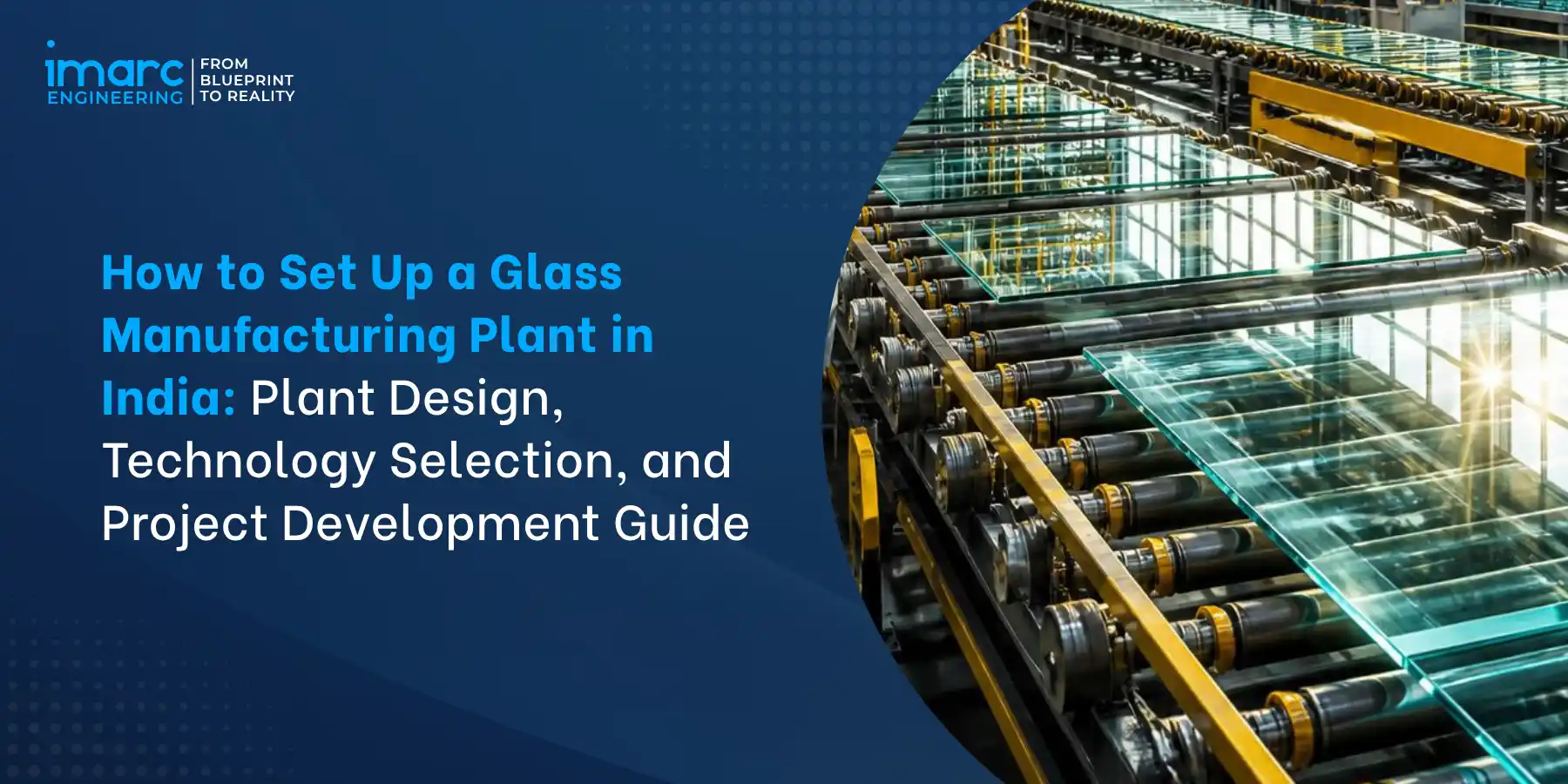
How to Set Up a Glass Manufacturing Plant in India: Plant Design, Technology Selection, and Project Development Guide
Introduction
For any investor or infrastructure developer planning a glass manufacturing plant in India in 2026, the project extends materially beyond selecting a production process or furnace technology. Successful projects require integrated planning across raw material sourcing, process technology, furnace selection, plant layout, utilities, environmental compliance, infrastructure development, automation, and engineering validation. India's growing construction sector, automotive expansion, packaging demand, and specialty glass needs collectively create attractive but capital-intensive sector opportunities.
Scope of this Guide
This guide answers the sponsor's set-up question directly. What should investors know about technology selection, plant design, engineering, regulatory approvals, infrastructure, and project execution before committing capital? It walks through the sector context, structured project development lifecycle, furnace and technology selection, raw materials strategy, product-specific plant design for float and container segments, statutory approvals, and the practices that separate structured glass manufacturing plant setup from projects that struggle with energy economics, product quality, or regulatory compliance.
Table of Contents
- Introduction
- Why Glass Manufacturing in India Matters in 2026
- How to Set Up a Glass Manufacturing Plant in India
- Furnace Selection and Glass Melting Technology in India
- Raw Materials and Batch Design for Glass Plants in India
- Float Glass Plant Design and Engineering in India
- Container Glass Manufacturing Plant Setup in India
- Glass Plant Regulatory Approvals and Licensing in India
- Common Mistakes and Best Practices
- Conclusion
1. Why Glass Manufacturing in India Matters in 2026
Four structural drivers make glass manufacturing an attractive sector opportunity for Indian investors in 2026.
1.1 End-User Demand Growth
India's expanding real estate and infrastructure sectors drive architectural float glass demand for windows, facades, doors, and interior applications. Automotive sector growth including passenger vehicles, commercial vehicles, and emerging electric vehicles requires automotive glass.
FMCG, beverages, pharmaceuticals, and cosmetics packaging demand supports container glass. Solar photovoltaic manufacturing under India's National Solar Mission requires solar glass. Structured end-user demand across multiple segments supports diversified glass manufacturing investment.
1.2 Import Substitution and Export Potential
India imports significant volumes of specialty glass including display glass, optical glass, and pharmaceutical glass. Structured glass manufacturing project development for specialty segments supports import substitution. Simultaneously, Indian float glass and container glass manufacturers have progressively expanded export markets particularly across South Asia, Middle East, and Africa. Structured plants combining domestic and export market servicing typically achieve superior capacity utilisation and economic performance.
1.3 Policy Support Framework
Production Linked Incentive (PLI) schemes, National Manufacturing Policy, Make in India initiatives, and specific state-level industrial incentives support manufacturing investment. GST framework post-2017 has simplified inter-state commerce supporting national distribution.
National Green Hydrogen Mission enables long-term energy transition planning for the energy-intensive glass sector. Structured policy engagement during project development supports incentive capture and simplifies regulatory pathways.
1.4 Energy Transition and Environmental Innovation
Glass manufacturing is materially energy intensive. Modern furnaces including oxy-fuel technology, hybrid electric-fuel furnaces, and waste heat recovery integration deliver both operating cost benefits and emissions reduction.
Structured integration of cullet (recycled glass) at 15-40 percent of batch further reduces energy consumption and raw material cost. Manufacturers combining energy-efficient technology with circular economy participation position for long-term competitiveness in both domestic and export markets.
2. How to Set Up a Glass Manufacturing Plant in India
Understanding how to set up a glass manufacturing plant in India helps sponsors sequence engineering and commercial decisions correctly. Structured glass manufacturing project development integrates feasibility, technology selection, engineering, statutory approvals, and construction into a coherent programme.
2.1 The Six-Stage Development Roadmap
| Stage | Activities | Typical Duration |
|---|---|---|
| Feasibility and DPR | Market, technology, raw material, financial | 4-8 months |
| Site and Technology Selection | Land, furnace pathway, licensing | 4-6 months |
| Detailed Engineering | Process design, MEP, civil, utilities | 12-18 months |
| Regulatory Approvals | EC, CTE, CTO, PESO, BIS, Factory | 12-18 months |
| Construction and Commissioning | Civil, installation, furnace heat-up, testing | 18-30 months |
| Commercial Operations | Ramp-up, product qualification, dispatch | Ongoing |
2.2 Glass Manufacturing Plant Capex and Financial Modelling
Structured glass manufacturing plant capex and financial modelling covers investment sizing, opex projections, and viability analysis. Small container glass plants (50-100 TPD) typically require INR 100-300 crore. Medium container plants (200-500 TPD) typically require INR 300-1,000 crore. Small float glass plants (300-500 TPD) typically require INR 400-1,000 crore. Medium float plants (500-1,000 TPD) typically require INR 1,000-3,000 crore. Large float glass plants (1,000-1,200 TPD) can exceed INR 3,000-6,000 crore. Energy typically represents 30-40 percent of glass production cost making energy strategy central to project viability.
2.3 Feasibility Study and DPR
Feasibility assessment covers market analysis (segment demand, competitor positioning, pricing dynamics), raw material sourcing strategy, technology pathway selection, energy strategy, site selection with infrastructure evaluation, regulatory pathway, and financial modelling.
The Detailed Project Report (DPR) consolidates findings supporting board approval, debt financing, and regulatory submissions. Well-structured DPRs typically take 4-6 months to develop for glass projects reflecting the multi-dimensional complexity.
3. Furnace Selection and Glass Melting Technology in India
Furnace selection and glass melting technology is the single most consequential technical decision in glass project development. Furnace choice determines capex, opex, product quality envelope, and lifecycle economics. The glass manufacturing process centres on melting glass at 1500-1600 degrees Celsius, the discipline defining the entire operation.
3.1 Furnace Types and Applications
| Furnace Type | Best For | Key Characteristics |
|---|---|---|
| Regenerative (cross-fired) | Large float glass | High capacity, heat recovery via regenerators |
| Regenerative (end-fired) | Container glass | Efficient for medium capacities |
| Recuperative | Smaller container glass | Continuous heat exchange, simpler |
| Oxy-fuel | Specialty and premium float | Higher capex, lower NOx, energy efficient |
| All-electric | Specialty and cullet-based | Zero direct emissions, higher energy cost |
| Hybrid (electric boost) | Modernised furnaces | Combines fuel and electric heating |
3.2 Glass Manufacturing Technology Selection Framework
Glass manufacturing technology selection for Indian manufacturers weighs product mix, capacity requirements, energy cost, environmental compliance, and lifecycle economics. Float glass projects typically require regenerative furnaces with 400-1,200 tonnes per day (TPD) capacity.
Container glass typically uses end-fired regenerative or recuperative furnaces at 200-500 TPD. Specialty glass often uses all-electric or oxy-fuel furnaces at 30-200 TPD. Furnace campaign life (typically 10-15 years for float) drives major periodic capex commitments. Structured glass manufacturing technology selection considers both initial capex and total lifecycle cost.
3.3 Forming Technology
Forming technology follows melting and shapes molten glass into finished products. Float bath forming produces flat glass with tin bath supporting uniform thickness. Individual Section (IS) machines produce container glass with blow-blow or press-blow processes.
Fusion draw produces display glass with superior surface quality. Rolled process produces patterned or wired glass. Draw process produces sheet glass at smaller scale. Forming technology selection matches product specifications and quality requirements.
3.4 Annealing and Downstream Processing
Annealing lehr controls cooling rate preventing residual stress that would compromise product integrity. Downstream processing including cutting, edging, tempering, laminating, and coating extends product portfolio and value. Float glass plants typically integrate lehr with cutting lines.
Container glass plants integrate annealing lehr with inspection and packaging. Specialty processing (toughening, laminating, coating, insulating glass unit assembly) may operate as integrated finishing lines or separate satellite facilities depending on scale and market strategy.
4. Raw Materials and Batch Design for Glass Plants in India
Raw materials and batch design for glass plants determine product characteristics, energy consumption, and operating cost. Structured raw material strategy typically shapes long-term project viability more than any downstream operating decision.
4.1 Standard Batch Composition
| Raw Material | Function | Typical Share of Batch |
|---|---|---|
| Silica sand | Glass former (SiO2) | 60-70 percent |
| Soda ash | Flux (reduces melt temperature) | 12-16 percent |
| Limestone | Stabiliser (chemical durability) | 8-12 percent |
| Dolomite | Stabiliser (adds MgO) | 3-5 percent |
| Feldspar | Alumina source for chemical durability | 1-3 percent |
| Cullet (recycled glass) | Energy reduction, glass former | 15-40 percent |
| Colorants and fining agents | Colour, degassing | less than 1 percent |
4.2 Silica Sand Sourcing
Silica sand is the primary raw material typically requiring 60-70 percent of batch weight. India has substantial silica sand deposits with Rajasthan, Gujarat, Andhra Pradesh, and Uttar Pradesh being major sources. Sand quality specifications include iron content, grain size distribution, and moisture content.
Structured supply contracts with mining operators securing quality and price stability materially reduce operating risk versus spot procurement. Beneficiation infrastructure at plant boundary may be required for lower-grade sources.
4.3 Cullet Integration
Cullet (recycled glass) integration typically at 15-40 percent of batch reduces both energy consumption (approximately 2.5 percent energy saving per 10 percent cullet substitution) and raw material cost. External cullet sourcing through structured collection networks supports higher substitution rates. Internal cullet (production defects, edge cuttings) provides consistent quality supply.
Cullet handling infrastructure including sorting, cleaning, crushing, and blending supports quality-consistent batch preparation. Structured cullet strategy typically supports 20-30 percent substitution in commercial float and container operations.
4.4 Batch Handling and Preparation
Batch handling infrastructure covers raw material receiving (rail siding for bulk sand and soda ash, road for smaller volumes), storage silos with structured moisture and contamination control, weighing systems with automation supporting batch consistency, mixing equipment ensuring homogeneous batch, and dust extraction throughout the handling network. Structured batch preparation with defined quality control at each stage prevents downstream quality issues that furnace operations cannot correct.
5. Float Glass Plant Design and Engineering in India
Float glass plant design and engineering reflect the specific requirements of the Pilkington-invented float process producing flat glass with parallel surfaces and uniform thickness. Glass manufacturing plant design for float applications differs materially from container glass reflecting different forming technology and product characteristics. Float glass manufacturing remains the dominant technology for architectural and automotive glass globally.
5.1 The Float Process Configuration
The float process passes molten glass from the furnace onto a bath of molten tin under a controlled atmosphere. Surface tension and gravity produce uniform thickness ribbon with fire-polished surfaces. The ribbon then passes through annealing lehr and continues to cutting and inspection.
Float glass plants typically integrate furnace (400-1,200 TPD), tin bath (typically 50-60 metres long), annealing lehr (typically 100-200 metres long), online coating stations where required, and cutting/inspection/warehousing sections. Total plant footprint typically requires 30-60 hectares.
5.2 Tin Bath and Ribbon Formation
Tin bath design maintains molten tin at controlled temperature (typically 600-1050 degrees Celsius across bath length) with hydrogen-nitrogen protective atmosphere preventing oxidation. Ribbon width control through edge machinery produces specified glass width.
Thickness control from 1.6 mm to 25 mm typically supports architectural, automotive, and mirror applications. Bath maintenance including tin quality monitoring and periodic bath repair drives long-term operating discipline.
5.3 Value-Added Downstream Processing
Value-added downstream processing significantly expands product portfolio and margins. Online CVD (Chemical Vapour Deposition) or offline sputter coating produces low-E, solar control, and self-cleaning glass. Toughening produces safety glass per IS 2553. Laminating produces safety and acoustic glass per IS 14899. Structured integration of downstream processing supports premium product positioning.
5.4 Quality Control Infrastructure
Quality control infrastructure includes automated online defect detection (bubbles, inclusions, distortion), offline laboratory testing (optical properties, chemical durability, thermal properties), dimensional inspection, and traceability systems linking batches to finished products.
BIS certification under IS 2835 (flat transparent sheet glass) and product-specific standards for toughened, laminated, and insulating glass supports commercial supply. Structured quality management under ISO 9001:2015 supports both regulatory compliance and buyer engagement.
6. Container Glass Manufacturing Plant Setup in India
Container glass manufacturing plant setup serves packaging demand from FMCG, beverages, pharmaceutical, and cosmetics industries. Container glass manufacturing economics differ materially from float glass reflecting different production processes, product characteristics, and market dynamics.
6.1 Container Glass Process
Container glass process passes molten glass from furnace through forehearth (conditioning zone) to Individual Section (IS) machines. IS machines form containers through blow-blow (for narrow-neck bottles) or press-blow (for wide-neck jars) processes.
Formed containers pass through annealing lehr, inspection, and packaging. Modern IS machines operate at typically 200-500 containers per minute per machine with multiple sections operating in parallel. Container glass plants typically integrate 200-500 TPD furnace with multiple IS machine lines.
6.2 Product Portfolio and Segmentation
- Beverage bottles (beer, soft drinks, spirits, wine)
- Food jars (pickles, sauces, jams, baby food)
- Pharmaceutical vials and bottles per IP Type I, II, III
- Cosmetics containers and premium bottles
- Perfume bottles requiring superior optical quality
- Coloured glass (amber, green, blue) using appropriate colorants
- Lightweight glass reducing material use per unit
6.3 Colour Change and Product Flexibility
Container glass operations typically manage colour transitions (flint or clear, amber, green) requiring structured campaigns. Colour changes involve furnace transition periods with mixed-colour output, cullet regeneration matched to target colour, and structured cullet segregation supporting future campaigns. Product change frequency versus campaign length is a strategic choice balancing responsiveness with efficiency. Structured campaign management materially outperforms ad-hoc colour switching.
6.4 Automation and Quality Systems
Automated inspection systems including sidewall inspection, base inspection, dimensional check, and pressure testing progressively become standard for container glass. Reject handling with automated segregation supports quality control. Camera-based inspection with machine learning image analysis materially improves defect detection.
BIS certification under IS 4592 (container glass) supports commercial supply particularly for pharmaceutical applications. Structured quality management supports both regulatory compliance and buyer confidence particularly for pharmaceutical and beverage customers with rigorous audit programmes.
7. Glass Plant Regulatory Approvals and Licensing in India
Glass plant regulatory approvals and licensing span central and state agencies covering environmental, safety, product certification, and operational dimensions. Structured approval sequencing at project outset materially compresses total timelines.
7.1 The Statutory Approvals Framework
| Approval | Authority | Purpose |
|---|---|---|
| Environmental Clearance | MoEFCC / SEIAA (per EIA 2006) | Pre-construction approval |
| Consent to Establish (CTE) | State Pollution Control Board | Pre-construction consent |
| Consent to Operate (CTO) | State Pollution Control Board | Pre-commissioning consent |
| PESO License | PESO under Explosives Act 1884 | Fuel storage (LPG, LNG, oil) |
| BIS License | Bureau of Indian Standards | Product certification |
| Factory License | State Directorate of Factories | OSH Code 2020 compliance |
| Fire NOC | State Fire Services | Fire safety compliance |
| CGWA NOC (where applicable) | Central Ground Water Authority | Groundwater withdrawal |
7.2 Environmental Clearance and Emissions Compliance
Glass manufacturing typically falls under Category A of EIA Notification 2006 requiring Environmental Clearance from MoEFCC. Application preparation covers Terms of Reference, EIA study, public consultation, and appraisal. CPCB emission standards for glass industry cover particulate matter, NOx, SOx, and fluorides with continuous emission monitoring systems (CEMS) requirements.
Air pollution control including electrostatic precipitators, bag filters, wet scrubbers, and selective catalytic reduction (SCR) supports compliance. Structured environmental engineering during basic design prevents post-commissioning retrofits.
7.3 BIS Product Certification
BIS product certifications relevant to glass manufacturing include IS 2835 (flat transparent sheet glass), IS 5437 (wired and figured glass), IS 14900 (toughened glass), IS 2553 Parts 1-2 (safety glass), IS 14899 (laminated glass), and IS 4592 (container glass).
Certification requires demonstrated product quality through structured testing. Pharmaceutical container glass follows Indian Pharmacopoeia Type I, II, and III classifications. Structured product certification workflow parallel with plant commissioning prevents post-commissioning delays to commercial supply.
7.4 Factory License and Ongoing Compliance
Factory License under the Occupational Safety Health and Working Conditions Code 2020 (in force from 21 November 2025) covers workplace safety, worker welfare, and operational compliance. Fire NOC under NBC 2016 Part 4 and State Fire Services requirements covers fire safety.
Ongoing compliance includes monthly analytical monitoring, annual returns filing, waste manifest documentation, corrective action tracking, and audit-ready records. Structured proactive compliance materially reduces both administrative burden and enforcement risk.
8. Common Mistakes and Best Practices
8.1 Under-Investment in Feasibility Discipline
Projects proceeding on optimistic assumptions rather than validated feasibility routinely encounter surprises.
Best practice: comprehensive market study covering demand, competition, and pricing; validated raw material sourcing with sample testing; energy strategy with defined fuel security; sensitivity analysis across capex, opex, and revenue drivers; independent third-party review of feasibility conclusions.
8.2 Weak Technology-Product Matching
Technology selection driven by vendor sales rather than product requirements produces suboptimal matches.
Best practice: product portfolio definition preceding technology selection; multi-technology evaluation with defined criteria; reference plant visits where feasible; performance guarantees with clear KPIs; techno-commercial evaluation before commitment; independent process engineering review.
8.3 Deferred Regulatory Engagement
Approvals treated as post-engineering formalities produce commissioning delays.
Best practice: parallel initiation of Environmental Clearance, CTE, PESO, and BIS applications with detailed engineering; pre-consultation with regulatory authorities during feasibility; structured documentation preparation matching approval requirements; regulatory advisory engagement at project outset.
8.4 Under-Investment in Energy Strategy
Energy costs typically consume 30-40 percent of glass production cost yet energy strategy is often treated as procurement decision rather than strategic choice.
Best practice: fuel security assessment across natural gas, LPG, oil, and electric options; waste heat recovery integration during design; cullet substitution strategy supporting energy reduction; long-term energy contracts where feasible; monitoring and continuous improvement post-commissioning.
8.5 Neglecting Furnace Campaign Planning
Furnace campaign life (typically 10-15 years for float) drives major periodic capex commitments that under-planning routinely produces.
Best practice: glass plant engineering that includes furnace campaign planning from initial design with reserve provision for periodic rebuild; refractory quality investment supporting extended campaigns; structured maintenance discipline extending campaign life; financial provisioning for periodic rebuilds; production planning around scheduled rebuild windows.
Conclusion
Setting up a glass manufacturing plant in India in 2026 is a multidisciplinary capital-intensive project spanning raw materials, technology, engineering, environmental compliance, safety, and commercial arrangements. India's growing architectural, automotive, packaging, and specialty glass demand supports diversified investment opportunities.
Successful glass manufacturing projects depend on aligning technology selection, energy strategy, engineering design, regulatory compliance, and commissioning planning to achieve consistent product quality, efficient operations, and long-term commercial viability.
PLANNING YOUR GLASS MANUFACTURING PROJECT?
IMARC Engineering's end-to-end glass manufacturing plant project development advisory team supports investors, manufacturers, and industrial developers across market and feasibility studies, technology pathway evaluation and licensing, DPR preparation, engineering design, raw material sourcing strategy, energy strategy, regulatory approvals coordination including Environmental Clearance, SPCB CTE and CTO, PESO licensing, BIS product certification, EPC or EPCM contractor evaluation, construction supervision, commissioning coordination including furnace heat-up, and commercial operations ramp-up for float glass, container glass, specialty glass, and downstream processing projects across small, medium, and large-scale developments in India.
→ Schedule a free glass plant project scoping consultation with an IMARC specialist
Frequently Asked Questions
A glass manufacturing plant in India is an industrial facility that produces glass products through melting silica-based raw materials at 1500-1600 degrees Celsius and forming them into finished products. Plants range from small container glass units to large integrated float glass operations with downstream processing including coating, toughening, laminating, and insulating glass unit assembly.
Indicative investment requirements vary with plant type and production capacity. Container glass plants with capacities of 50-100 TPD generally require capital investments of around INR 100-300 crore, while 200-500 TPD facilities typically involve INR 300-1,000 crore. For float glass manufacturing, plants with capacities of 300-500 TPD generally require INR 400-1,000 crore, whereas 500-1,000 TPD facilities usually involve investments of INR 1,000-3,000 crore. Large-scale float glass plants with capacities of 1,000-1,200 TPD can require capital expenditure exceeding INR 3,000-6,000 crore.
Common furnace types include cross-fired regenerative (large float), end-fired regenerative (container), recuperative (smaller container), oxy-fuel (specialty), all-electric (specialty and cullet-based), and hybrid electric-boost configurations. Selection matches product mix, capacity, and energy strategy. Structured furnace selection and glass melting technology in India requires product portfolio definition preceding furnace choice.
Major segments include float glass (architectural, automotive, mirror), container glass (beverages, food, pharmaceuticals, cosmetics), specialty glass (display, optical, borosilicate), tableware glass, fiberglass (insulation, reinforcement), and pharmaceutical glass. India remains dependent on imports for several specialty glass categories creating opportunities for import-substituting investment.
Key approvals include Environmental Clearance under EIA 2006, State Pollution Control Board Consent to Establish and Consent to Operate, PESO License for fuel storage, BIS certification (IS 2835 for flat glass; IS 4592 for container glass; sector-specific standards for toughened, laminated, insulating, and safety glass), Factory License under OSH Code 2020, Fire NOC, and CGWA NOC where applicable. Structured glass plant regulatory approvals and licensing in India should begin during detailed engineering.
Total project timeline typically extends 36-60 months from feasibility to commercial operations. Feasibility and DPR: 4-8 months. Design and engineering: 12-18 months. Approvals: 12-18 months (parallel). Construction: 18-30 months. Commissioning including furnace heat-up: 6-12 months. Structured parallel execution compresses total elapsed time.
Standard batch composition includes silica sand (60-70 percent), soda ash (12-16 percent), limestone (8-12 percent), dolomite (3-5 percent), feldspar (1-3 percent), cullet (15-40 percent), and small quantities of colorants and fining agents. Raw materials and batch design for glass plants in India determines both product characteristics and operating economics.
Energy typically represents 30-40 percent of glass production cost making glass manufacturing among the most energy-intensive industrial sectors. Modern regenerative furnaces achieve materially better energy efficiency than older designs. Oxy-fuel furnaces further reduce energy consumption. Cullet substitution at 15-40 percent of batch reduces energy consumption by approximately 2.5 percent per 10 percent cullet share. Waste heat recovery integration supports further efficiency.
Key BIS certifications include IS 2835 (flat glass), IS 4592 (container glass), IS 14900 (toughened glass), IS 2553 (safety glass), and IS 14899 (laminated glass). Pharmaceutical container glass follows Indian Pharmacopoeia Type I, II, and III classifications. ISO 9001:2015 quality management supports operational credibility. Export markets typically require additional international certifications matching destination requirements.
Recent Post



Trusted by Industry Leaders
We partner with global enterprises and ambitious businesses across sectors to deliver operational excellence, strategic insights, and sustainable growth through integrated solutions.











Success in Their Words
Real feedback from clients across industries. Discover how our solutions delivered measurable impact and operational excellence.

I wanted to express my sincere appreciation for your efforts in handling this matter. Your dedication and commitment have been truly commendable, and it is evident that you have put in tremendous hard work and expertise into resolving the issues at hand. We are greatly interested in continuing our collaboration with you in the future, as your professionalism and reliability have made you a trusted partner. Thank you once again for your invaluable contribution. We look forward to strengthening our partnership ahead.

It has been a pleasure working with the IMARC team. The insights provided were structured, clear, and highly valuable, helping us strengthen both our technical and financial planning with confidence. We deeply appreciate the team’s professionalism, responsiveness, and attention to detail throughout the engagement. Every requirement was well understood and effectively incorporated, resulting in a comprehensive and actionable output. Overall, our experience has been excellent, and I would gladly recommend IMARC to organizations seeking a reliable research partner.

Your service is truly exceptional. Working with the IMARC team has been a seamless and professional experience. The clarity of communication, responsiveness to queries, and consistent support at every stage made the entire engagement highly efficient. The insights shared were well-structured, practical, and perfectly aligned with our requirements, helping us make informed decisions with confidence. Overall, the dedication and professionalism demonstrated by your team stand out, and I would be glad to recommend IMARC as a reliable and trustworthy research partner.

IMARC did an outstanding job in preparing our study. They were punctual, precise, and consistently responsive throughout the entire process. The team delivered all the data we required in a clear, well-organized, and highly professional format. Their strong attention to detail, combined with their ability to meet every deadline without compromising quality, truly set them apart. Overall, their reliability and commitment made them an exceptional partner for our project, and we would gladly work with them again in the future.

IMARC made the whole process incredibly easy from start to finish. Everyone I interacted with via email was polite, professional, and straightforward to deal with, always keeping their promises regarding delivery timelines and remaining consistently solutions-focused. From my very first contact, I appreciated the professionalism and support shown by the entire IMARC team. I highly recommend IMARC to anyone seeking timely, affordable, and reliable information or advice. My experience with IMARC was excellent, and I truly cannot fault any aspect of it.

I’d like to express my sincere gratitude for the excellent work you accomplished with the study. Your ability to quickly understand our requirements and deliver high-quality results under tight timelines truly reflects your expertise, exceptional work ethic, and unwavering commitment to your customer’s success. The professionalism and responsiveness you demonstrated throughout the process made a significant difference. Our entire team and company are incredibly thankful for your dedication, reliability, and support. Once again, thank you for your outstanding contribution.