Manufacturing
June 04 2026
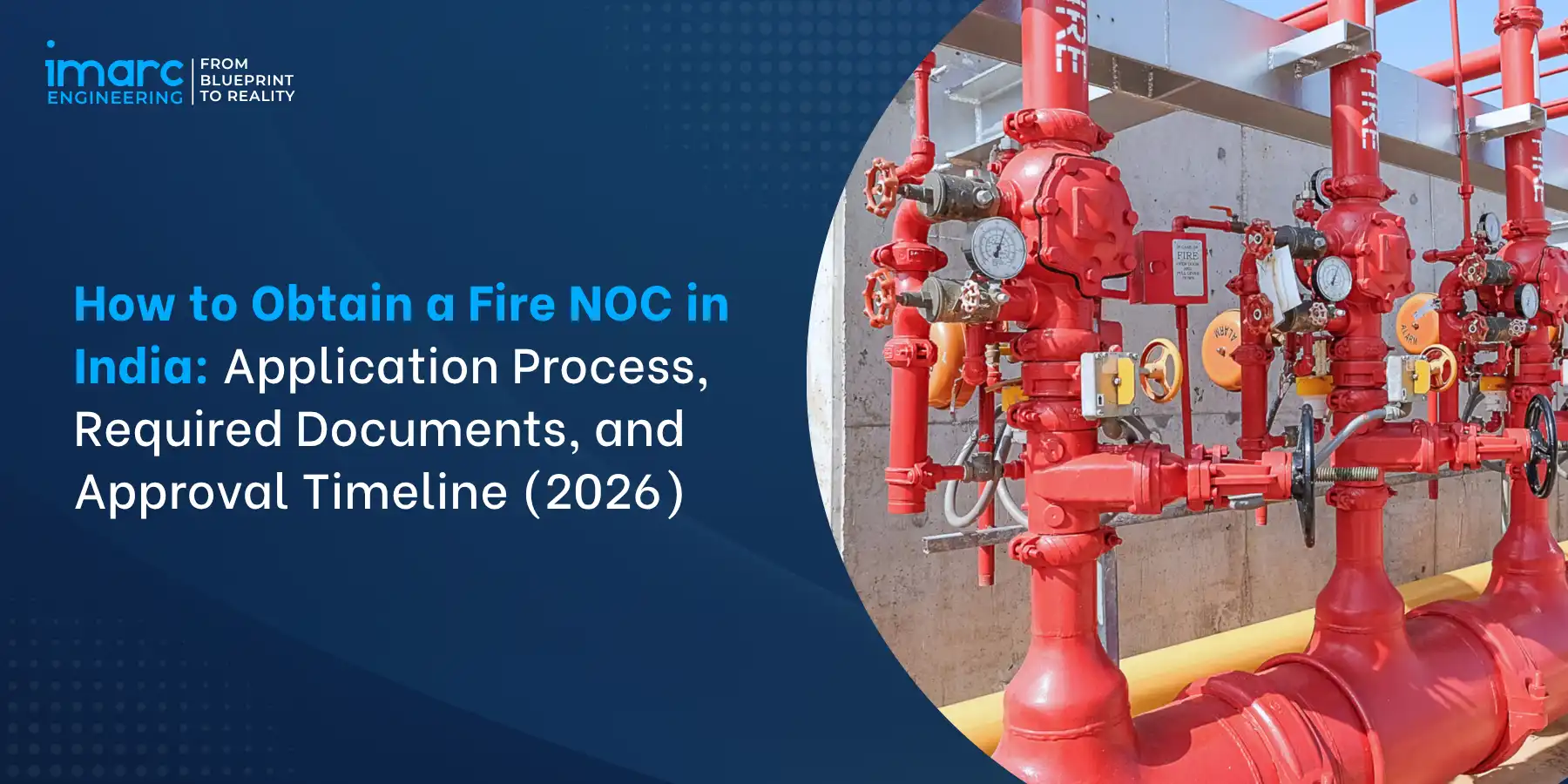
How to Obtain a Fire NOC in India: Application Process, Required Documents, and Approval Timeline (2026)
Introduction
For factories, commercial buildings, hospitals, hotels, malls, warehouses, high-rise residential projects, and institutional facilities, obtaining a fire NOC in India is one of the most important statutory approvals. Issued by the State Fire Services Department, it certifies compliance with prescribed fire-prevention and life-safety requirements.
A valid fire department NOC in India is often mandatory for occupancy certificates, factory licences, trade licences, insurance coverage, lender disbursements, and increasingly for ESG and operational-risk audits conducted by customers and investors.
The legal framework is established through state-specific Fire Services Acts, including those of Delhi, Maharashtra, Haryana, Gujarat, Karnataka, Tamil Nadu, and other states. These laws are supported by NBC 2016 Part 4, which sets technical standards for fire detection, firefighting systems, evacuation, structural safety, and compartmentation.
Additional obligations arise under the Disaster Management Act, 2005 and the Factories Act, 1948, making fire safety compliance in India both a legal and technical requirement for buildings with significant occupancy, height, or risk exposure.
Enforcement has become considerably stricter since 2019, driven by major fire incidents in coaching centres and hospitals. State authorities have expanded digital approval systems, accelerated inspections, and strengthened penalties, making timely fire NOC approval in India increasingly critical for uninterrupted operations.
Drawing on IMARC Engineering's experience supporting factory licensing, environmental clearance, building approvals, and integrated regulatory compliance programmes for Indian and international manufacturers and developers across multiple sectors and states, this guide lays out a structured, step-by-step approach to fire NOC approval in India in 2026.
You will find a clear view on why the certificate matters, the legal and regulatory framework, the buildings that require it, the documents required, the step-by-step application process for both Provisional and Final NOC, the required fire safety infrastructure and BIS standards, sector-specific overlays, common pitfalls, a checklist, and a frequently-asked-questions section. The objective is to make the fire NOC application process practical and predictable for your project, EHS, and operations teams.
Table of Contents
- Introduction
- Why a Fire NOC Is Critical in 2026
- The Legal and Regulatory Framework
- Buildings That Require a Fire NOC
- Documents Required for Fire NOC Application
- Step-by-Step Application Process - Provisional and Final NOC
- Required Fire Safety Infrastructure and BIS Standards
- Sector-Specific Considerations
- Common Mistakes and How to Avoid Them
- Fire NOC Application Checklist
- Conclusion
1. Why a Fire NOC Is Critical in 2026
Understanding why obtaining a fire clearance certificate in India has become non-negotiable in 2026 starts with five structural drivers that have raised the stakes of fire-safety compliance materially in the last 5-7 years.
1.1 The Legal Mandate Is Unambiguous
Under state Fire Services laws, a fire NOC in India is a mandatory requirement for most non-residential buildings and for residential buildings above specified height thresholds, typically 15 metres (or 12 metres in some states). Approval of the Fire Fighting Scheme is generally required before construction begins and must comply with NBC, the Disaster Management Act, and other applicable regulations.
Operating without a valid fire clearance certificate in India can result in penalties, occupancy restrictions, and legal liability. In serious cases involving fire incidents, operators may also face action under broader negligence provisions, making early fire NOC approval in India a critical compliance requirement.
1.2 Enforcement Has Intensified Materially After 2019
Several major fire incidents, including the 2019 Surat coaching-centre tragedy and multiple hospital and ICU fires during the COVID-19 period, have led to significantly stricter enforcement of fire safety compliance in India. Courts and regulators have responded with tighter oversight, particularly for high-risk occupancies such as healthcare facilities.
As a result, state Fire Services now conduct more inspections, issue more sealing notices, and pursue stronger enforcement actions. The trend is clear: obtaining and maintaining a valid fire NOC in India is far more important, and operating without one far riskier, than it was a few years ago.
1.3 The NOC Is a Commercial Gating Document
Beyond regulatory compliance, a fire NOC in India has become a critical commercial requirement. Municipal occupancy certificates, factory licences, trade licences, insurance coverage, lender due diligence, and customer audits often depend on valid fire-safety approvals.
As a result, operating without a valid fire clearance certificate in India can restrict access to financing, insurance, customer contracts, and regulatory approvals long before formal enforcement action is taken.
1.4 Digital Workflows Have Reshaped the Process
Most major state Fire Services Departments now operate online portals for NOC application, document upload, fee payment, and status tracking - the Delhi Fire Services portal, the Maharashtra Directorate of Fire Services e-fire approval system, the Haryana Urban Local Bodies (ULB) portal for Fire NOC, and equivalents in Tamil Nadu, Karnataka, West Bengal, Telangana, and Gujarat.
The Delhi Fire Service's reported average processing time of 15-30 working days for compliant applications reflects the productivity gains digital workflows have delivered. The trade-off: incomplete or inconsistent submissions are flagged automatically rather than corrected informally, raising the documentation discipline expectation.
1.5 The Cost of Non-Compliance Has Risen Sharply
The total cost of a fire-safety failure goes well beyond the immediate human and property harm. Direct cost includes penalties under the Fire Services Act, IPC Section 285 prosecutions, NGT proceedings, insurance claim rejection, building sealing, and forced shutdown. Indirect cost includes lender-covenant breach, customer-contract impact, ESG-rating downgrade, brand damage, and public-tender disqualification.
For a manufacturing operation, even a partial shutdown over fire-safety findings can cost lakhs to crores in lost production, PLI / scheme milestone slippage, and customer-commitment defaults. The cost ratio - compliance investment vs failure cost - makes structured fire-safety compliance one of the highest-return regulatory investments a manufacturer can make.
2. The Legal and Regulatory Framework
The Fire NOC operates within an interlocking framework of state Fire Services Acts (primary statutory authority), the National Building Code 2016 (technical foundation), parallel federal statutes (Disaster Management Act, Factories Act, IPC), and adjacent municipal and sectoral approvals. Mapping this architecture correctly at project planning is essential to a clean, efficient compliance programme.
2.1 The State Fire Services Acts
| State / Region | Authorising Statute | Issuing Authority |
|---|---|---|
| Delhi | Delhi Fire Service Act, 2007 | Delhi Fire Service (DFS), Govt. of NCT of Delhi |
| Maharashtra | Maharashtra Fire Prevention and Life Safety Measures Act, 2006 | Directorate of Maharashtra Fire Services |
| Tamil Nadu | Tamil Nadu Fire and Rescue Services Act, 1985 | Tamil Nadu Fire and Rescue Services |
| Karnataka | Karnataka State Fire Services Act, 1964 | Karnataka State Fire and Emergency Services (KSFES) |
| Haryana | Haryana Fire Service Act, 2009 | ULB Haryana / Fire Service Department |
| Gujarat | Gujarat Fire Prevention and Life Safety Measures Act, 2013 | Gujarat Fire Services |
| West Bengal | West Bengal Fire Services Act, 1950 (with later updates) | West Bengal Fire and Emergency Services |
| Andhra Pradesh / Telangana | AP Fire Services Act, 1999 / TS Fire Services Act | AP / TS Disaster Response and Fire Services |
2.2 The National Building Code 2016 - Part 4
The National Building Code (NBC) 2016 is the primary technical framework governing fire safety compliance in India. Adopted by most states through building bye-laws and Fire Services Rules, NBC Part 4 (Fire and Life Safety) covers occupancy classification, exits and evacuation, fire detection systems, firefighting installations, smoke management, fire lifts, emergency lighting, and other key safety requirements.
Since state Fire Services evaluate applications against NBC standards, compliance with NBC 2016 forms the foundation of fire NOC approval in India for industrial, commercial, institutional, and high-rise buildings.
2.3 Federal Statutes That Apply in Parallel
Three federal statutes overlay the state framework. The Disaster Management Act, 2005 establishes the national framework for disaster preparedness and response, including the National Disaster Management Authority (NDMA) guidelines that inform building safety. The Factories Act, 1948 mandates fire safety measures for factories - emergency exits, fire-fighting equipment, training, drills - with state Factory Rules adding specific requirements.
The Indian Penal Code, particularly Section 285 (negligent conduct with respect to fire or combustible matter), provides the criminal-liability layer where negligence leads to fire incidents. Together with state Fire Services Acts, these federal statutes form the complete legal envelope.
2.4 Adjacent Approvals That Interact with Fire NOC
Fire NOC is rarely a standalone approval - it sits within a cluster of building and operational approvals that need to be sequenced together. Building plan approval from the municipal corporation typically precedes or runs in parallel with the Provisional Fire NOC. Occupancy Certificate (OC) / Completion Certificate from the municipal corporation requires the Final Fire NOC. Factory licence under the Factories Act 1948 cross-references fire safety.
Health Trade Licence (HTL) for restaurants, food, healthcare, beauty businesses references fire compliance. Pollution Control Board CTE/CTO for manufacturing or processing facilities, PESO licensing for hazardous materials, AERB approval for radiation sources, and Shops and Establishments registration all sit alongside the Fire NOC in the broader compliance stack.
2.5 The Penalty Architecture
Operating without a valid Fire NOC, with a lapsed NOC, or in violation of NOC conditions exposes the occupier to fines under the applicable state Fire Services Act; sealing of the premises; rejection of insurance claims; lender-covenant default; prosecution under Section 285 IPC and other criminal-liability provisions in the event of fire incidents; and NGT or Supreme Court oversight.
State-specific penalty quanta vary, but the cumulative legal and commercial exposure is consistently high enough that no manufacturer or developer should rationalise non-compliance. The right framing is risk-adjusted: the cost of compliance is modest relative to the potential cost of failure.
3. Buildings That Require a Fire NOC
Not every building requires a Fire NOC - the requirement is triggered by combinations of height, occupancy classification, built-up area, and risk profile. Understanding the triggers correctly at the planning stage is essential to scoping the compliance programme.
3.1 The Height Threshold - The Most Common Trigger
Across most states, residential buildings above 15 metres in height (typically corresponding to ground + 4 or ground + 5 floors) require Fire NOC. The threshold is reduced in some states - Uttar Pradesh notably uses 12 metres as the high-rise threshold; Punjab applies the threshold also at 500 sqm built-up area for non-residential buildings; Rajasthan and Haryana apply 15 metres.
Non-residential buildings - factories, commercial offices, hospitals, schools, hotels, malls, theatres, warehouses, public assembly halls - typically require Fire NOC regardless of height for any meaningful built-up area, with state-specific minimum-area thresholds (typically a few hundred square metres) below which the requirement may not apply.
3.2 NBC 2016 Occupancy Classifications
| Group | Occupancy | Examples |
|---|---|---|
| A | Residential | Lodging, apartments, hotels, hostels (high-rise threshold applies) |
| B | Educational | Schools, colleges, training centres, day-care facilities |
| C | Institutional | Hospitals, nursing homes, sanatoria, mental institutions |
| D | Assembly | Theatres, cinema halls, places of worship, exhibition halls, stadiums |
| E | Business | Offices, banks, professional services, courthouses |
| F | Mercantile | Shops, retail stores, malls, department stores |
| G | Industrial | Factories, manufacturing units, processing plants |
| H | Storage | Warehouses, godowns, cold storage, parking buildings |
| I | Hazardous | Petroleum, chemicals, explosives, flammable storage, high-risk industrial |
3.3 Mandatory NOC Categories Across States
While requirements vary by state, a fire NOC in India is typically mandatory for high-rise residential buildings, factories, hospitals, schools, hotels, malls, warehouses, hazardous facilities, and large commercial or office buildings. These categories are considered higher-risk occupancies due to their size, usage, or occupant density.
The regulatory trend is toward broader coverage, with more building types and lower thresholds being brought under mandatory fire NOC approval in India and fire safety compliance requirements over time.
3.4 The Two Stages - Provisional and Final NOC
Most states follow a two-stage fire NOC application process. The first stage is the Provisional NOC, granted after review of the Fire Fighting Scheme before construction begins. The second stage is the Final NOC, issued after site inspection confirms that all approved fire-safety systems have been installed and are operational.
This approach ensures fire safety compliance in India is incorporated during the design phase rather than added later. Projects that delay fire-safety planning until completion often face costly modifications, approval delays, and challenges in obtaining fire NOC approval in India.
3.5 Validity and Renewal
Once issued, a fire NOC in India is typically valid for 1–3 years, depending on the building type and state regulations. Higher-risk occupancies such as hospitals, hazardous facilities, and high-rise buildings generally have shorter validity periods and stricter inspection requirements.
To maintain fire safety compliance in India, renewal applications should be submitted 30–60 days before expiry. Delayed renewals can lead to penalties, reinspection requirements, or even a fresh fire NOC approval process if the licence has lapsed for an extended period.
4. Documents Required for Fire NOC Application
Document discipline is the single most common cause of avoidable delay in Fire NOC applications. The working baseline list below covers the fire NOC documents required across most state Fire Services Departments. The exact set varies by state and stage — Provisional NOC focuses on design / drawing documents; Final NOC focuses on installation, testing, and operational documents.
4.1 Identity and Entity Documents
- PAN card and Aadhaar of the applicant
- Authorised signatory documentation (board resolution or Power of Attorney)
- Certificate of Incorporation, MoA, and AoA (for companies)
- Partnership Deed (for partnership firms)
- Photograph of applicant (where required)
4.2 Property and Site Documents
- Proof of land ownership or lease (sale deed, lease deed, allotment letter)
- Property tax receipt for the premises
- Approved building plan from the municipal corporation
- Building stability certificate from registered structural engineer
- Site location map with surrounding buildings, access roads, and fire-tender access
- Occupancy / completion certificate (for Final NOC, once construction is complete)
4.3 Fire Fighting Scheme Drawings (For Provisional NOC)
- Architectural drawings showing layout, occupancy, building height, and built-up area
- Fire Fighting Scheme drawings showing extinguisher locations, hydrant network, sprinkler layout, alarm and detection system, exit routes, staircases, refuge areas, fire lift, smoke management
- Water supply diagram - underground tank, overhead tank, jockey pump, main pump, standby pump
- Electrical layout for fire-safety systems with separate power supply provision
- Compartmentation and fire-rated partition details
- Means of egress drawings - travel distance, exit widths, exit signage
4.4 Installation and Compliance Documents (For Final NOC)
- Test certificates for fire extinguishers (per IS 2190)
- Hydrant system test certificate (per IS 13039 / IS 3844)
- Sprinkler system commissioning and test certificate (per IS 15105)
- Fire pump test certificate (per IS 12469)
- Fire detection and alarm system commissioning certificate
- Public address / voice evacuation system certificate (where applicable)
- Smoke management / pressurisation system test (for high-rise / institutional)
- Emergency lighting and exit signage installation certificate
- Fire lift commissioning certificate (for buildings above 15m)
- Earthing and lightning protection certificate
- Photographs of all installed systems
- Operational training and fire drill records
- Maintenance contract for fire-safety systems
4.5 Adjacent Approvals and Cross-Reference Documents
- Pollution Control Board CTE / CTO (for manufacturing / processing facilities)
- Factory licence under the Factories Act 1948 (for factories)
- PESO licence (for petroleum or explosive storage)
- GST registration
- Shops and Establishments registration
- Health Trade Licence (for food, healthcare, beauty businesses)
4.6 Document Discipline - High-Leverage Practices
Three practices significantly improve first-pass fire NOC approval in India. First, ensure complete consistency across all documents, including applicant details, building address, occupancy classification, height, and area. Even minor discrepancies can trigger queries and delays.
Second, ensure all test reports and certificates are valid, properly signed, and issued by BIS-compliant or NABL-accredited agencies. Third, review the latest state-specific fire NOC documents required checklist before submission, as Fire Service requirements and portal guidelines are updated periodically.
5. Step-by-Step Application Process - Provisional and Final NOC
The end-to-end fire NOC application process runs across two distinct stages — Provisional NOC obtained before construction commences, and Final NOC obtained after construction is complete and all fire-safety systems are installed and operational. The framework below works across major Indian state Fire Services — the specific form names, fees, and portal mechanics vary by state.
| Stage | Activity | Typical Timeline |
|---|---|---|
| A1. Project planning | Identify applicability, height, occupancy, state authority | 1-2 weeks |
| A2. Fire Fighting Scheme design | Architect / fire consultant prepares Fire Fighting Scheme drawings per NBC 2016 Part 4 | 2-6 weeks |
| A3. Provisional NOC application | Online portal submission with drawings, documents, fees | 1-2 days |
| A4. Provisional NOC review and inspection | Department review; site verification if required; query responses | 3-6 weeks |
| A5. Provisional NOC grant | Fire Fighting Scheme approval issued; construction can commence per approved scheme | 1-2 weeks |
| B1. Construction per approved scheme | Build to Provisional NOC; install all fire-safety systems | Project-dependent |
| B2. System testing and commissioning | All systems tested and certified; training and drills conducted | 2-6 weeks (may vary) |
| B3. Final NOC application | Online portal submission with test certificates, photos, installation evidence | 1-2 days |
| B4. Final NOC inspection | Fire department officer site inspection; functional verification | 2-4 weeks (may vary) |
| B5. Final NOC grant | Fire Safety Certificate / Final NOC issued; building can be occupied / operated | 1-2 weeks (may vary) |
5.1 Stage A1 - Project Planning and Applicability
Identify whether and how Fire NOC applies to the project. Verify the building height against the state height threshold (typically 15m, with state variations); the occupancy classification under NBC 2016 Part 4 (Groups A through I); the built-up area against state-specific minimum thresholds; and any state-specific overlays for the project type.
Identify the applicable State Fire Service authority and online portal (Delhi Fire Services, Maharashtra Directorate of Fire Services, Haryana ULB Fire NOC, Tamil Nadu Fire and Rescue Services, KSFES Karnataka, West Bengal Fire and Emergency Services, AP/TS Fire Services, Gujarat Fire Services). Confirm the fee structure and document checklist for the specific category.
5.2 Stage A2 - Fire Fighting Scheme Design
A qualified architect and fire-safety consultant should prepare the Fire Fighting Scheme in accordance with NBC 2016 Part 4. This scheme defines key fire safety compliance in India requirements, including exits and evacuation routes, fire detection and alarm systems, hydrants, sprinklers, fire pumps, water tanks, smoke management, emergency lighting, and fire-tender access.
The approved Fire Fighting Scheme is the foundation of the fire NOC application process and serves as the reference document for construction, inspection, and final fire NOC approval in India.
5.3 Stage A3 - Provisional NOC Application
The fire NOC application process in India typically begins through the relevant state Fire Service portal. Applicants must register, complete authentication, fill in building and occupancy details, upload the required drawings and documents, pay the prescribed fee, and submit the application for review.
For faster fire NOC approval in India, all submitted documents and Fire Fighting Scheme drawings should be clear, current, and fully consistent. Errors or mismatches in the application often trigger query notices and can significantly delay processing.
5.4 Stage A4 - Provisional NOC Review and Inspection
The state Fire Service reviews the application against NBC 2016 Part 4 and the state-specific Fire Services Rules. Larger or higher-risk applications may attract a site verification visit even at the provisional stage to confirm the proposed building layout aligns with the drawings. Deficiency notices or queries are issued through the portal; the applicant must respond within prescribed timelines, typically 15-45 days depending on state.
In Haryana, for instance, the application flows through the clerk for scrutiny, then to the ADFO / FSO (verifier), then to the Municipal Commissioner or Deputy Commissioner (approver), with a 60-day target after which appeals lie to the Director Urban Local Bodies under the Haryana Right to Service Act, 2014. Most states have similar review chains and timelines.
5.5 Stage A5 - Provisional NOC Grant
On satisfactory review, the Provisional NOC (Approval of Fire Fighting Scheme) is issued - typically as a digital approval downloadable from the portal. The Provisional NOC authorises construction to commence per the approved Fire Fighting Scheme; any material deviation during construction requires re-approval. The Provisional NOC is valid for a defined period (typically 1-3 years from grant, state-specific), within which construction and Final NOC must be completed; extensions are possible but require justification.
5.6 Stage B1 - Construction per Approved Scheme
During construction, all fire-safety systems approved under the fire NOC in India framework must be installed, including hydrants, sprinklers, fire alarms, emergency lighting, fire pumps, water tanks, exit signage, and fire-rated doors. All equipment should comply with applicable BIS standards and approved specifications.
To support fire NOC approval in India, businesses should maintain records of equipment purchases, compliance certificates, installation reports, and progress photographs throughout the project. Proper documentation helps streamline inspections and demonstrates ongoing fire safety compliance in India.
5.7 Stage B2 - System Testing and Commissioning
After installation, all fire-safety systems must be tested and commissioned. Hydrostatic pressure testing of hydrant and sprinkler systems; pump flow and pressure tests; fire alarm functional testing including manual call points and detectors; emergency lighting and exit signage functional check; smoke management and pressurisation system test (for high-rise); fire lift functional test.
Test certificates from qualified agencies or NABL-accredited laboratories form the documentary evidence. Building staff should be trained, and an evacuation drill conducted and recorded - the Fire NOC inspector typically asks about drill history at inspection.
5.8 Stage B3 - Final NOC Application
File the Final NOC application on the state Fire Service portal with all test certificates, installation evidence, photographs, training and drill records, and the building occupancy / completion certificate from the municipal corporation (where applicable). The application essentially demonstrates that the building has been built per the approved Provisional NOC scheme, that all systems are installed and operational, and that occupants will be trained and emergency procedures will be in place.
5.9 Stage B4 - Final NOC Inspection
As part of the fire NOC application process, Fire Service officials inspect the premises to verify that all installed fire-safety systems match the approved Fire Fighting Scheme. The inspection typically covers extinguishers, hydrants, sprinklers, alarm systems, emergency lighting, exits, maintenance records, and staff training documentation.
Any deficiencies identified during inspection must be corrected before fire NOC approval in India is granted. Conducting an internal mock inspection before the official visit can significantly improve first-pass approval rates and overall fire safety compliance.
5.10 Stage B5 - Final NOC Grant
On satisfactory inspection, the Final Fire NOC (Fire Safety Certificate) is granted - typically as a digital certificate from the portal. The NOC is valid for a defined period (typically 1-3 years depending on state and occupancy), renewable through a periodic reinspection process. The certificate authorises occupancy and operation of the building; without it, the Occupancy Certificate from the municipal corporation cannot be issued for buildings above the relevant thresholds, and operations cannot legally commence.
6. Required Fire Safety Infrastructure and BIS Standards
The Fire NOC is granted only when the building has the prescribed fire-safety infrastructure installed, tested, and operational. The infrastructure requirements scale with building height, occupancy, and area - a small low-rise commercial building requires modest provisions; a high-rise hospital or industrial complex requires substantially more. The framework below covers the main systems and the BIS standards that govern them.
6.1 Portable Fire Extinguishers
Portable fire extinguishers are the most fundamental requirement for obtaining a fire NOC in India and are mandatory across most building categories. Their selection, installation, and maintenance are governed by IS 2190, with extinguisher type determined by the specific fire risk—such as ABC powder, CO₂, foam, water-mist, or K-class systems.
IS 2190 and NBC 2016 Part 4 also specify requirements for extinguisher quantity, placement, mounting, and signage. Regular inspection, refilling, pressure testing, and replacement are essential to maintain ongoing fire safety compliance in India.
6.2 Hydrant Systems
Hydrant systems provide a high-capacity water supply for firefighting and are mandatory for many industrial, commercial, institutional, and high-rise buildings. Governed by IS 3844 and IS 13039, these systems typically include water storage tanks, fire pumps, hydrant networks, landing valves, hose cabinets, and fire-tender connections.
For effective fire safety compliance in India, hydrant systems must meet NBC 2016 and BIS standards for capacity and pressure. Regular testing of pumps, pipelines, and system pressure is essential to maintain readiness and support ongoing fire NOC approval and renewal requirements.
6.3 Automatic Sprinkler Systems
Automatic sprinkler systems are mandatory for many high-rise, commercial, institutional, industrial, and storage buildings. Governed by IS 15105, the system includes sprinkler heads, piping networks, control valves, alarm systems, dedicated pumps, and water storage designed to automatically suppress fires at an early stage.
Sprinkler design requirements vary by occupancy risk, with higher water application rates required for industrial and storage facilities. Regular testing, including hydrostatic and system-performance tests, is essential for maintaining fire safety compliance in India and supporting fire NOC approval and renewal.
6.4 Fire Detection and Alarm Systems
Fire detection and alarm systems are mandatory for most commercial, industrial, institutional, and high-rise residential buildings. These systems typically include smoke and heat detectors, manual call points, alarm sounders, visual strobes, and a fire alarm control panel with battery backup for early fire detection and occupant notification.
Large facilities often require addressable systems and Public Address/Voice Evacuation capabilities. Regular testing of detectors, alarms, batteries, and emergency-response procedures is essential to maintain fire safety compliance in India and support ongoing fire NOC approval requirements.
6.5 Fixed Firefighting Equipment - Pumps and Tanks
Dedicated firefighting systems rely on water storage and pump infrastructure designed to ensure continuous emergency water supply. Typical components include underground and overhead fire-water tanks, along with main electric pumps, standby diesel pumps, and jockey pumps that automatically maintain system pressure.
Governed by NBC 2016 Part 4 and IS 12469, these systems must meet specified capacity, pressure, and redundancy requirements. Properly designed pump rooms, backup power arrangements, and regular maintenance are essential for fire safety compliance in India and successful fire NOC approval.
6.6 Compartmentation, Exits, and Means of Egress
Passive fire safety forms the foundation of fire safety compliance in India by limiting fire and smoke spread within a building. Key measures include fire-rated walls, floors, and doors, along with enclosed fire-rated staircases that provide protected evacuation routes during emergencies.
NBC 2016 also mandates adequate exit widths, maximum travel-distance limits, refuge areas in high-rise buildings, and emergency lighting with illuminated exit signage. These features are critical components of fire NOC approval in India and overall building fire safety.
6.7 High-Rise Specific Provisions
For a fire NOC for high-rise buildings in India, additional requirements typically include fire lifts, refuge areas, pressurized staircases, wet riser systems, and advanced smoke-management systems. Some states also mandate rooftop helipads for very tall structures.
Because evacuation and firefighting are more complex in high-rise buildings, fire safety compliance in India is significantly more stringent than for low-rise developments. Early integration of fire-safety requirements into architectural design is essential for timely fire NOC approval in India.
7. Sector-Specific Considerations
Although the framework is common, the practical content of Fire NOC application differs by occupancy. The sections below highlight the most common patterns across the sectors where Fire NOC is most frequently sought - and where sector-specific overlays add complexity.
7.1 Fire NOC for Factories
A fire NOC for factories sits within the broader factory licensing framework under the Factories Act 1948. The industrial fire NOC application process for manufacturing covers occupancy Group G (industrial) under NBC 2016 Part 4, with sub-classification by process risk — light hazard (electronics, light assembly), ordinary hazard (general manufacturing), high hazard (chemical processing, foundries), and special / high-hazard (petroleum refining, hazardous chemicals under Group I).
Provisional NOC must be obtained before construction; the Final NOC is a prerequisite for the factory licence. Key sector-specific provisions: process-specific firefighting capability, higher water reserves for high-hazard occupancies; emergency response team and on-site fire crew for large or hazardous plants; integration with PESO licensing for petroleum / explosives.
7.2 Fire NOC for Commercial Buildings
A fire NOC for commercial buildings applies to office complexes, shopping centres, malls, and mixed-use developments. Key requirements include multiple exits, adequate staircase widths, refuge areas, fire-rated separations, sprinkler systems, and public-address evacuation systems to support safe occupant evacuation.
Malls and large commercial complexes face particularly stringent fire safety compliance in India due to high public occupancy. As a result, fire NOC approval in India for these buildings typically involves detailed scrutiny of fire-protection systems, evacuation planning, and emergency-response infrastructure.
7.3 Fire NOC for High-Rise Buildings
High-rise buildings face the most stringent fire safety compliance in India requirements due to the complexity of evacuation and emergency response. Mandatory provisions typically include pressurized staircases, refuge areas, fire lifts, wet riser systems, landing valves, sprinkler systems, and advanced fire-detection networks.
Additional requirements may include smoke-management systems, dedicated fire-tender access roads, and rooftop helipads for very tall buildings in certain states. As a result, obtaining a fire NOC for commercial buildings in the high-rise category is among the most demanding compliance processes in Indian construction.
7.4 Fire NOC for Hospitals
A fire NOC for hospitals in India covers occupancy Group C (institutional) under NBC 2016 Part 4, with the highest fire-safety scrutiny of any sector given the limited mobility of patients and the prevalence of medical-gas-related fires. Hospital fire safety requirements focus on protecting patients who may not be able to self-evacuate during an emergency. Key provisions include fire-rated separations, smoke compartments, addressable fire detection systems in critical areas, sprinkler coverage, oxygen safety measures, and protected refuge spaces.
Hospitals must also maintain horizontal evacuation routes, conduct regular patient-evacuation drills, and train staff in emergency response procedures. Following several major ICU fire incidents, state Fire Services and courts have significantly increased scrutiny of hospital fire NOC and fire safety compliance requirements.
7.5 Fire NOC for Restaurants and Hotels
A fire NOC for restaurants and hotels in India focuses heavily on kitchen and occupancy-related fire risks. Key requirements include K-class fire extinguishers, kitchen hood suppression systems, LPG safety measures, fire-rated separations between kitchens and public areas, sprinkler systems, and clearly marked emergency exits.
Hotels have additional requirements such as smoke detectors in guest rooms, emergency corridor lighting, evacuation instructions, and fire-rated guest-room doors. Due to high occupant density and cooking-related hazards, restaurants and hotels face some of the most comprehensive fire safety compliance requirements under NBC 2016.
7.6 Fire NOC for Warehouses
Understanding how to get fire NOC for warehouse in India covers Group H (storage) under NBC 2016 Part 4. Warehouse fire safety presents unique challenges due to large storage areas, combustible inventories, high stacking heights, and relatively low occupant density. As a result, fire detection and suppression systems are often more critical than evacuation planning, particularly in large logistics and distribution facilities.
Key requirements include in-rack and ceiling sprinkler systems for high-rack storage, adequate aisle widths for fire-tender access, roof smoke vents, fire-rated compartmentation, and segregation of incompatible materials. E-commerce fulfilment centres and modern logistics warehouses typically face the most stringent fire safety compliance requirements due to their storage density and operational scale.
7.7 Fire NOC for Schools and Educational Institutions
Schools and colleges (Group B) face fire-safety provisions shaped by the dependent-population evacuation challenge - children may not evacuate efficiently without staff coordination, and assembly areas (auditoriums, dining halls) can hold large numbers. Mandatory provisions include: multiple exits from every classroom and assembly area; staff trained for evacuation marshalling; regular fire drills with student participation; alarm systems audible across the campus; clear evacuation routes to designated assembly points outside the building; fire-rated separations between hostels (where present) and academic buildings. Post-Surat-2019, state Fire Services have applied heightened scrutiny to coaching centres and educational institutions, with periodic compliance drives.
8. Common Mistakes and How to Avoid Them
The mistakes below are the recurring patterns we see across Fire NOC engagements - and the ones most likely to cause delay, retrofit cost, or post-grant compliance findings. Each is paired with the discipline that prevents it.
8.1 Treating Fire Safety as a Post-Construction Retrofit
The most consequential failure mode is designing the building without integrating the Fire Fighting Scheme - and then attempting to retrofit fire-safety provisions afterwards. The pattern: staircase widths inadequate for occupant load; pump room too small to accommodate required pumps and tanks; underground tank capacity insufficient; fire-tender access road obstructed; compartmentation impossible to retrofit without major structural work. Retrofit costs can run 5-10x the cost of designing the same provisions into the original plan. Discipline: engage fire-safety consultants alongside the architect from initial planning; develop the Fire Fighting Scheme in parallel with architectural design; secure Provisional NOC before commencing construction.
8.2 Inadequate Document Discipline
Inconsistencies across the application form, building plan, Fire Fighting Scheme drawings, lease deed, and supporting certificates - building name, address, height, area, occupancy classification - routinely trigger query notices that add 4-8 weeks per round. Discipline: maintain a master document index ensuring identical details across every supporting document; review the application package as a complete set before final submission; cross-verify against the state Fire Service's published checklist.
8.3 Ignoring State-Specific Variations
Each state Fire Service operates under its own Act, rules, and portal. Applications built to one state's framework (height threshold, fee structure, form requirements, portal mechanics) submitted in a different state routinely face rejection. Uttar Pradesh's 12m threshold is materially different from the 15m threshold of most other states; Punjab's 500 sqm built-up trigger adds an area dimension; Haryana's review chain (clerk → ADFO/FSO → Commissioner/Deputy Commissioner) and 60-day appeal mechanism differ from Maharashtra's e-fire approval pathway. Discipline: verify the specific state's current rules, thresholds, document checklist, and portal procedures at the start of every engagement; do not generalise from prior state experience.
8.4 Buying Sub-Standard Fire-Safety Equipment
Equipment that doesn't conform to the relevant BIS standards (IS 2190 for extinguishers, IS 13039 / IS 3844 for hydrants, IS 15105 for sprinklers, IS 12469 for pumps) fails inspection and forces costly replacement. Common pattern: cost-driven procurement substitutes equipment without proper certification; the inspection-day check surfaces the gap; equipment must be replaced and the system re-tested. Discipline: specify BIS-compliant equipment from the design stage; verify test certificates and compliance markings before installation; engage BIS-recognised vendors and NABL-accredited testing agencies.
8.5 Missing the Provisional-Final NOC Sequencing
Some applicants attempt to skip the Provisional NOC and go directly to Final NOC after construction. The result: the building is built without departmental approval of the Fire Fighting Scheme; deficiencies surface only at Final NOC inspection; costly post-construction retrofit follows. Discipline: always obtain Provisional NOC before construction commences; treat the Provisional NOC drawings as the binding scheme for construction; raise any required changes through formal amendments rather than informal departures.
8.6 Inadequate Pre-Inspection Preparation
Final NOC inspection failures are typically traceable to inadequate pre-inspection preparation - test certificates not assembled, drills not conducted, exit routes obstructed by stored material, alarm system not functionally tested. Discipline: conduct an internal mock inspection 1-2 weeks before the official Final NOC inspection; close all identified observations; train escort and inspection-facing staff; ensure all test certificates and records are easily retrievable; clear all exit routes and verify all systems are functional.
8.7 Letting the NOC Renewal Lapse
Fire NOC validity is typically 1-3 years depending on state and occupancy; the fire NOC renewal process in India requires application 30-60 days before expiry. Lapse triggers penalties, fresh application requirements (rather than renewal), and possible building sealing. Discipline: institutionalise the renewal calendar at original grant; appoint a named compliance owner; build a 90-day pre-expiry alert; treat renewal as a recurring critical compliance event rather than an administrative footnote.
8.8 Choosing Lowest-Cost Consultants Without Sector Track Record
Fire-safety consulting and Fire NOC services have proliferated; quality varies materially. Consultants advertising low fees often deliver templated Fire Fighting Schemes that fail inspection, generic drawings not specific to the building, and weak follow-up on queries. Discipline: select consultants based on verifiable track record with the relevant state Fire Service, sector, and building type; ask for case references and portfolio of completed Fire NOC engagements; verify the consultant's familiarity with current NBC 2016 Part 4 requirements and any sector-specific overlays.
9. Fire NOC Application Checklist
The checklist below consolidates the operational decision points into a structured framework that project, EHS, regulatory, and operations teams can apply directly to their next Fire NOC application.
9.1 Pre-Application Phase
- State and applicable Fire Services Act identified (DFS, MFS, KSFES, etc.)
- Building height and occupancy classification confirmed against state threshold and NBC 2016 Part 4
- Online portal identified and pre-application registration completed
- Document checklist downloaded from state portal and reviewed
- Fire-safety consultant engaged alongside architect from design stage
- Adjacent approvals identified (building plan, factory licence, PCB, PESO, AERB)
- Provisional vs Final NOC sequencing planned with realistic timelines
9.2 Fire Fighting Scheme Design Phase
- Fire Fighting Scheme drawings developed per NBC 2016 Part 4
- Means of egress designed - exits, staircases, refuge areas, travel distances
- Hydrant system layout with tank, pump, network, landing valves
- Sprinkler system layout per IS 15105
- Fire alarm and detection system layout with addressable monitoring
- Compartmentation and fire-rated separation details
- Smoke management / pressurisation for high-rise
- Fire lift design for buildings above 15m
- Fire-tender access road around building footprint verified
9.3 Provisional NOC Application Phase
- Online portal application filed with all design documents
- Application fee paid through portal
- Application acknowledgement number recorded
- Department queries responded to within prescribed timelines
- Provisional NOC granted; construction can commence per approved scheme
9.4 Construction and Installation Phase
- Construction per approved Fire Fighting Scheme drawings
- BIS-compliant equipment procured with documented certificates
- Hydrant system installed and tested per IS 13039 / IS 3844
- Sprinkler system installed and tested per IS 15105
- Fire pumps installed and tested per IS 12469
- Fire alarm and detection system installed, commissioned, and functionally tested
- Emergency lighting and exit signage installed
- Fire lift commissioned (for high-rise)
- Smoke management / pressurisation system tested (for high-rise)
- Compartmentation verified and fire-rated doors installed
- All test certificates obtained from BIS-recognised / NABL-accredited bodies
9.5 Pre-Inspection Preparation Phase
- Internal mock inspection conducted 1-2 weeks before official inspection
- All identified observations closed before official inspection
- Test certificates, photographs, training records, drill records assembled
- Staff trained for inspection escort and Q&A
- Exit routes verified clear, signed, and illuminated
- All fire-safety systems verified operational
9.6 Final NOC Application and Grant Phase
- Final NOC application filed on portal with all installation evidence
- Building occupancy / completion certificate from municipal corporation obtained
- Inspection accommodated; queries responded to comprehensively
- Final NOC granted; certificate downloaded from portal
- Certificate displayed conspicuously per state rules
9.7 Post-Grant Compliance and Renewal Phase
- Renewal calendar set up with 90-day pre-expiry alert
- Named compliance owner appointed
- Periodic maintenance contracts for all fire-safety systems (typically annual)
- Monthly functional testing of alarm and pump systems
- Quarterly battery and detector testing
- Annual evacuation drill conducted and documented
- Continuous-compliance discipline maintained - exits clear, equipment functional, records current
Conclusion
Obtaining a fire NOC in India is now a structured process supported by clear regulations, established technical standards, and increasingly digital approval systems. Success depends on integrating fire safety compliance in India into project planning from the design stage, securing approvals in the correct sequence, and maintaining ongoing compliance after approval.
Three practices are critical: incorporate fire-safety requirements during architectural design, follow the prescribed fire NOC application process by obtaining provisional approval before construction and final approval after inspection, and establish a robust renewal and maintenance system. Businesses that adopt these disciplines typically achieve faster fire NOC approval in India and avoid costly retrofits, delays, and compliance risks.
PLANNING A FACTORY, COMMERCIAL BUILDING, OR HIGH-RISE PROJECT?
Get end-to-end Fire NOC and fire safety advisory from IMARC Engineering. Our team supports developers, manufacturers, and operators through Fire Fighting Scheme design, Provisional NOC, construction-stage supervision, Final NOC application and inspection, and ongoing renewal management — with deep expertise in NBC 2016 Part 4, BIS standards, and state-specific Fire Services frameworks across major Indian states.
→ Schedule a free Fire NOC scoping consultation with an IMARC Engineering specialist
Frequently Asked Questions
A fire NOC in India is generally required for factories, hospitals, schools, hotels, malls, warehouses, hazardous facilities, and most multi-storey commercial buildings. Requirements depend on building height, area, occupancy, and state-specific regulations.
The fire NOC application process typically takes 30–60 days for provisional approval and another 30–60 days for final approval after installation and inspection. Large or complex projects may take several months.
The cost of fire NOC approval in India includes government fees, fire-safety infrastructure costs, and consultant fees. Costs vary significantly based on building size, occupancy type, and the extent of required fire-protection systems.
A fire clearance certificate in India is typically valid for 1–3 years, depending on the state and occupancy category. Renewal should be initiated before expiry to maintain continuous compliance.
Operating without a valid fire department NOC in India can result in penalties, sealing of premises, insurance claim rejection, and regulatory action. It can also affect occupancy certificates, factory licences, and customer audits.
In most cases, a fire NOC in India is not automatically transferable. Ownership changes usually require a fresh application or formal approval process with the Fire Department.
IMARC Engineering provides end-to-end support for fire NOC for factories, fire NOC for commercial buildings, and other facilities, including applicability assessment, fire-system design, application management, inspection support, renewal, and ongoing fire safety compliance in India.
IMARC supports industrial fire NOC and fire-safety projects across major Indian states and sectors, including manufacturing, pharmaceuticals, EV batteries, chemicals, food processing, healthcare, hospitality, logistics, and commercial real estate.
Recent Post





Trusted by Industry Leaders
We partner with global enterprises and ambitious businesses across sectors to deliver operational excellence, strategic insights, and sustainable growth through integrated solutions.











Success in Their Words
Real feedback from clients across industries. Discover how our solutions delivered measurable impact and operational excellence.

I wanted to express my sincere appreciation for your efforts in handling this matter. Your dedication and commitment have been truly commendable, and it is evident that you have put in tremendous hard work and expertise into resolving the issues at hand. We are greatly interested in continuing our collaboration with you in the future, as your professionalism and reliability have made you a trusted partner. Thank you once again for your invaluable contribution. We look forward to strengthening our partnership ahead.

It has been a pleasure working with the IMARC team. The insights provided were structured, clear, and highly valuable, helping us strengthen both our technical and financial planning with confidence. We deeply appreciate the team’s professionalism, responsiveness, and attention to detail throughout the engagement. Every requirement was well understood and effectively incorporated, resulting in a comprehensive and actionable output. Overall, our experience has been excellent, and I would gladly recommend IMARC to organizations seeking a reliable research partner.

Your service is truly exceptional. Working with the IMARC team has been a seamless and professional experience. The clarity of communication, responsiveness to queries, and consistent support at every stage made the entire engagement highly efficient. The insights shared were well-structured, practical, and perfectly aligned with our requirements, helping us make informed decisions with confidence. Overall, the dedication and professionalism demonstrated by your team stand out, and I would be glad to recommend IMARC as a reliable and trustworthy research partner.

IMARC did an outstanding job in preparing our study. They were punctual, precise, and consistently responsive throughout the entire process. The team delivered all the data we required in a clear, well-organized, and highly professional format. Their strong attention to detail, combined with their ability to meet every deadline without compromising quality, truly set them apart. Overall, their reliability and commitment made them an exceptional partner for our project, and we would gladly work with them again in the future.

IMARC made the whole process incredibly easy from start to finish. Everyone I interacted with via email was polite, professional, and straightforward to deal with, always keeping their promises regarding delivery timelines and remaining consistently solutions-focused. From my very first contact, I appreciated the professionalism and support shown by the entire IMARC team. I highly recommend IMARC to anyone seeking timely, affordable, and reliable information or advice. My experience with IMARC was excellent, and I truly cannot fault any aspect of it.

I’d like to express my sincere gratitude for the excellent work you accomplished with the study. Your ability to quickly understand our requirements and deliver high-quality results under tight timelines truly reflects your expertise, exceptional work ethic, and unwavering commitment to your customer’s success. The professionalism and responsiveness you demonstrated throughout the process made a significant difference. Our entire team and company are incredibly thankful for your dedication, reliability, and support. Once again, thank you for your outstanding contribution.