Manufacturing
July 06 2026
How Risk Assessment and Mitigation Planning Reduce Project Risks and Improve Execution in India (2026)
Introduction
For any industrial project in India, a greenfield pharma or semiconductor facility, an EV battery gigafactory, a specialty chemicals complex, a steel or cement expansion, a data centre, or a large infrastructure asset, risk exposure is broad and consequential.
Technical, regulatory, financial, environmental, safety, community, contractor, cybersecurity, and geopolitical risks interact across the project lifecycle. Unmanaged, they cascade into cost overruns of 15-30 percent, schedule slippage of 30-50 percent, and occasional project abandonment. Structured risk assessment and mitigation planning in India helps organizations identify, evaluate, and manage project risks before they escalate, translating uncertainty into an actionable programme that preserves project value throughout the project lifecycle.
Scope of this Guide
This guide answers the sponsor's planning question directly. How do structured risk management for industrial projects frameworks reduce risks and improve execution outcomes for Indian project sponsors in 2026? It walks through the standards environment, the risk assessment methodology, mitigation strategy selection, quantitative analysis, environmental and safety-specific assessments, and the practices that distinguish disciplined project delivery from reactive firefighting.
Table of Contents
- Introduction
- Why Risk Assessment and Mitigation Planning in India Matters in 2026
- The Risk Management Framework - Standards and Statutory Context
- How Risk Assessment and Mitigation Planning Reduce Project Risks in India
- Industrial Project Risk Assessment Framework in India
- Project Risk Mitigation Strategies for Indian Manufacturers
- Quantitative Risk Analysis for Manufacturing Projects in India
- Environmental and Safety Risk Assessment for Industrial Projects in India
- Common Mistakes and Best Practices
- Conclusion
1. Why Risk Assessment and Mitigation Planning in India Matters in 2026
Four structural drivers make disciplined risk management a strategic imperative for Indian industrial project sponsors.
1.1 Industrial Investment Pipeline at Record Scale and Complexity
The PLI Scheme covering 14 sectors with combined outlay exceeding INR 1.97 lakh crore, semiconductor mission investments, EV battery gigafactory build-out, and infrastructure mega-projects have created an industrial pipeline of unprecedented scale and technical complexity. Many projects deploy first-of-kind technologies in India. Risk exposure is materially higher than for well-understood conventional facilities. Structured risk assessment converts unfamiliar technology into managed execution risk.
1.2 Statutory Risk Management Obligations Have Expanded
Companies Act 2013 Section 134(3)(n) requires companies to disclose their risk management framework. SEBI Listing Obligations and Disclosure Requirements Regulation 21 mandates a Risk Management Committee for the top 1000 listed companies. SEBI BRSR Core requires ESG risk disclosure with limited assurance. EIA Notification 2006 mandates Risk Assessment for Category A and specified Category B1 industrial projects. Manufacture, Storage and Import of Hazardous Chemicals Rules 1989 mandate Safety Reports for Major Accident Hazard installations. These obligations transform risk management from optional discipline to statutory requirement.
1.3 Lender and Investor Expectations
Financial institutions, private equity investors, sovereign wealth funds, and multilateral lenders (IFC, ADB, World Bank) increasingly require ISO 31000-aligned risk management frameworks alongside Equator Principles compliance and Environmental and Social Governance (ESG) risk assessment. Insurance placement for Contractor's All Risk (CAR), Erection All Risk (EAR), and Delay in Startup (DSU) cover requires structured risk assessment as underwriting input. Structured risk management materially affects both funding availability and insurance cost.
1.4 Rising Consequences of Failure
Project failure consequences have become more severe. Cost overruns on billion-dollar semiconductor or EV battery projects can exceed USD 100 million. Delayed COD affects committed supply agreements with penalty clauses. Environmental incidents trigger regulatory action and community opposition. Safety incidents draw regulatory investigations and lender scrutiny. Structured risk management provides the discipline that converts these severe potential outcomes into managed exposures with defined ownership and defined response protocols.
2. The Risk Management Framework - Standards and Statutory Context
Understanding the standards and statutory environment is the foundation of compliant industrial risk assessment. Modern practice combines international risk management standards with project-specific engineering reviews and Indian statutory obligations.
2.1 International Risk Management Standards
| Standard | Scope | Application |
|---|---|---|
| ISO 31000:2018 | Risk Management Guidelines | Overarching risk management framework |
| ISO 31010:2019 | Risk Assessment Techniques | Selection of assessment methods |
| PMBOK Guide (PMI) | Project management body of knowledge | Project risk management processes |
| COSO ERM 2017 | Enterprise Risk Management | Corporate-level risk integration |
| IEC 31010 | Risk Assessment Techniques | Alignment with ISO 31010 |
| API RP 754 | Process safety performance | Petrochemical and refining |
2.2 Indian Statutory Framework
- Companies Act 2013 Section 134(3)(n) - Risk Management Policy disclosure
- SEBI LODR Regulation 21 - Risk Management Committee for top 1000 listed companies
- SEBI BRSR Core - ESG risk disclosure with limited assurance
- Environment (Protection) Act 1986 - environmental risk
- EIA Notification 2006 - Risk Assessment for hazardous industrial projects
- MSIHC Rules 1989 - Safety Reports for Major Accident Hazard installations
- Chemical Accidents (EPPR) Rules 1996 - emergency preparedness
- Public Liability Insurance Act 1991 - liability for hazardous substances
- OSH Code 2020 (in force 21 Nov 2025) - occupational safety and health risks
2.3 Process Safety Standards
Process safety operates under specialised standards. IS 15656 covers hazard identification and risk analysis. IS 15683 covers fire and gas detection systems. Center for Chemical Process Safety (CCPS) publishes globally used guidelines for process hazard analysis, layers of protection, and process safety management. OSHA Process Safety Management framework with its 14 elements provides comprehensive PSM discipline. Seveso III Directive equivalent frameworks apply where European stakeholders are involved. Structured process safety assessment protects both people and asset.
2.4 Financial Reporting and Insurance Frameworks
Financial reporting on risk operates through several instruments. Indian Accounting Standards (Ind AS) require disclosure of financial risks. Insurance placement uses risk assessment as underwriting basis. Contractor's All Risk (CAR) and Erection All Risk (EAR) policies cover construction and erection risks.
Delay in Startup (DSU) and Advance Loss of Profits (ALOP) protect against schedule and revenue impacts. Public Liability and Third-Party Liability cover public exposure. Effective risk management typically reduces insurance premium 10-25 percent versus baseline underwriting.
3. How Risk Assessment and Mitigation Planning Reduce Project Risks in India
Understanding how risk assessment and mitigation planning reduce project risks requires appreciating the mechanism by which structured practices convert uncertainty into managed exposure. Improvements operate across identification, prioritisation, response, and monitoring dimensions.
3.1 The Five-Stage Risk Management Process
| Stage | Activity | Deliverable |
|---|---|---|
| 1. Establish Context | Objectives, scope, criteria definition | Risk management plan |
| 2. Identify Risks | Structured identification across categories | Risk register (initial) |
| 3. Assess Risks | Likelihood, consequence, prioritisation | Prioritised risk register |
| 4. Treat Risks | Response strategy per risk | Mitigation action plan |
| 5. Monitor and Review | Ongoing tracking and update | Updated risk register (living) |
3.2 Systematic Risk Identification
Ad-hoc identification misses material risks. Structured identification uses multiple complementary techniques - brainstorming workshops with cross-functional participation, structured checklists based on prior projects, technique-specific analyses (HAZID, HAZOP, FMEA), historical data reviews, expert interviews, and site inspections. Category-based identification (technical, regulatory, financial, environmental, safety, contractor, cybersecurity, geopolitical) ensures coverage. Assumption-based identification challenges the planning assumptions that create hidden risk. Combined identification produces materially more complete risk inventories than any single technique.
3.3 Prioritisation Through Structured Assessment
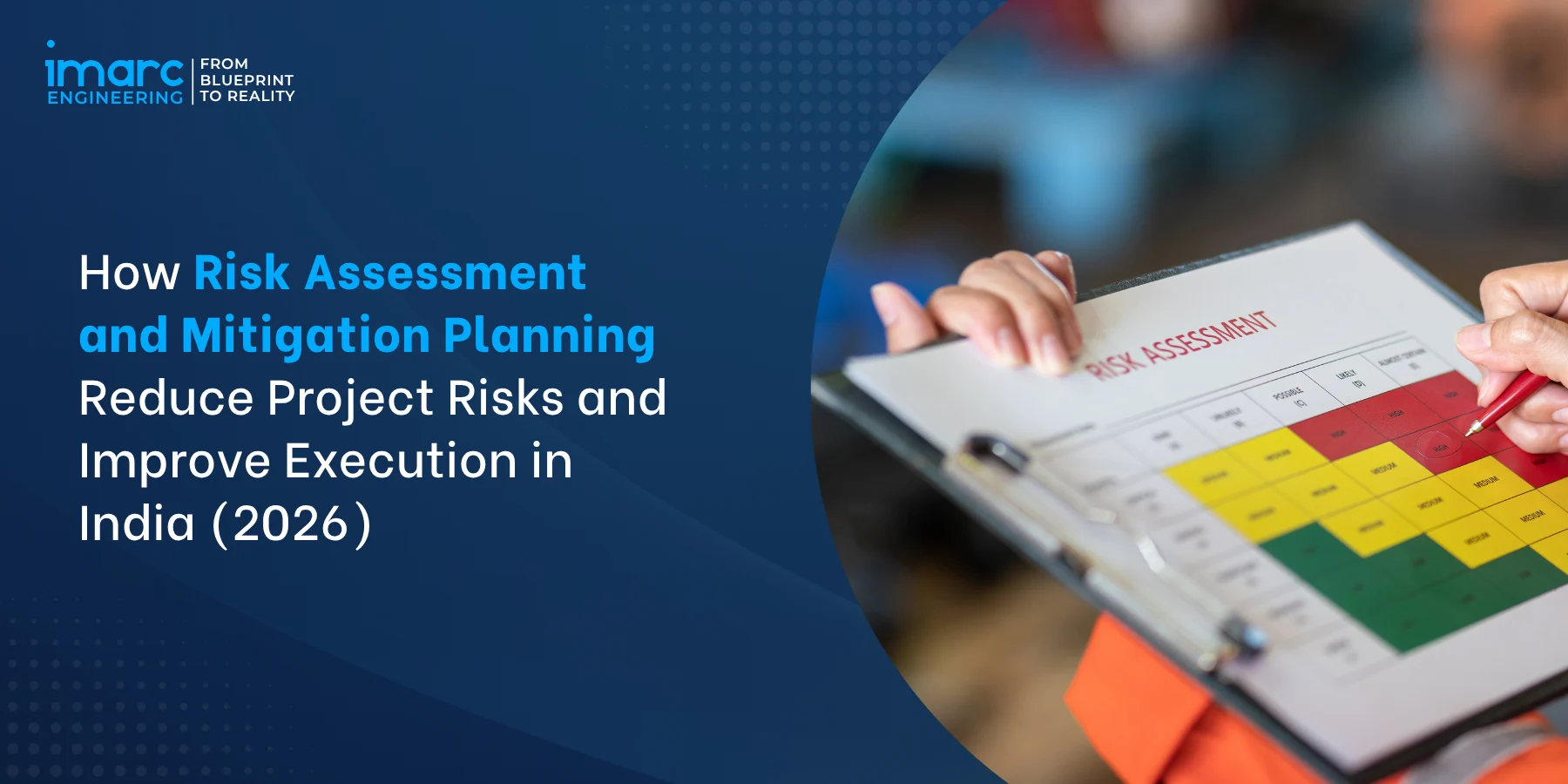
Not all risks warrant equal attention. Structured prioritisation uses likelihood-consequence matrices - typically 5x5 grids scoring probability against impact. Qualitative assessment uses defined descriptors (very high through very low) for both dimensions. Quantitative assessment converts to numerical values supporting cost-benefit analysis. Risk Priority Numbers (RPN) support ranking. Heat map visualisation identifies high-priority risks. Prioritised registers focus mitigation effort on risks that matter most - avoiding the resource dilution that comprehensive-but-unprioritised registers produce.
3.4 Response Strategy Selection
Effective project risk mitigation uses the classical four response strategies. Avoid (terminate) — eliminate the risk by changing plans (choose alternate technology, site, or scope). Transfer, shift risk to third parties (insurance, contractual, hedging). Mitigate (treat), reduce likelihood or consequence through structured controls. Accept (tolerate), acknowledge and prepare contingency without active mitigation. Strategy selection depends on risk profile, cost of mitigation, and residual risk appetite. Structured selection avoids the default-to-mitigate pattern that consumes disproportionate resources on low-value risks.
4. Industrial Project Risk Assessment Framework in India
An effective industrial project risk assessment framework covers all major risk categories with appropriate depth per category. Framework structure ensures nothing material is missed while avoiding assessment paralysis.
4.1 The Risk Category Landscape
| Category | Typical Risks | Assessment Technique |
|---|---|---|
| Technical | Technology readiness, engineering gaps | FMEA, HAZOP, technology reviews |
| Regulatory | Approval delays, non-compliance | Compliance register, statutory reviews |
| Financial | Currency, funding, escalation | Sensitivity, Monte Carlo, scenarios |
| Environmental | Emissions, discharge, biodiversity | EIA, EMP, environmental audits |
| Safety | Injuries, process safety, fire | HAZID, HAZOP, LOPA, QRA |
| Contractor | Delays, quality, financial | Due diligence, performance history |
| Community and Social | Land, employment, R&R | Social impact assessment, engagement |
| Cybersecurity | OT/IT security incidents | IEC 62443-aligned assessments |
4.2 Risk Register Development
Structured risk register development for industrial projects captures identified risks with defined attributes. Standard fields include risk description, category, cause and consequence, likelihood and impact ratings, current controls, additional actions, action owner, target date, status, and residual risk. The register operates as a living document updated throughout project lifecycle, not a one-time deliverable filed after initial assessment. Digital risk management platforms increasingly replace spreadsheet registers with structured databases supporting integration with project schedules, budgets, and reporting.
4.3 Risk Assessment Workshop Discipline
Effective risk assessment workshops follow disciplined methodology. Cross-functional participation ensures multi-perspective input. Structured facilitation by experienced practitioners prevents workshop drift. Category-by-category coverage ensures no dimension is skipped. Time-boxed sessions maintain participant engagement. Structured recording captures rationale alongside conclusions. Post-workshop validation by non-participating reviewers challenges group-think. Best practice combines 2-3 day intensive workshops with subsequent focused deep-dives on high-priority risks.
4.4 Integration with Project Planning
Risk assessment separated from project planning produces documents without operational impact. Integration mechanisms include schedule impact analysis where risks trigger contingency buffer calculations; cost impact integration where risks contribute to contingency provisioning; procurement integration where risk exposure informs supplier selection and contract terms; safety plan integration where safety risks drive JSA and permit systems. Integrated risk management transforms assessment from compliance exercise into execution tool.
5. Project Risk Mitigation Strategies for Indian Manufacturers
Effective project risk mitigation strategies for Indian manufacturers combine multiple response types tailored to specific risk categories. Structured mitigation planning translates identified risks into actionable mitigation programmes with defined owners, timelines, and measurable actions. Well-designed risk mitigation strategies for industrial projects layer technical, financial, contractual, and operational controls to address risks at multiple protection levels rather than depending on a single mechanism.
5.1 Technical Risk Mitigation
Technical risks are addressed through structured engineering discipline - technology readiness assessment before selection, licensor references and performance guarantees, third-party design reviews, structured commissioning protocols, and phased scale-up from pilot through commercial. First-of-kind installations benefit from vendor performance guarantees, extended commissioning support, and technology risk insurance where available. Structured Design for Safety, Design for Manufacturability, and Design for Maintainability practices reduce downstream operational risk.
5.2 Financial Risk Mitigation
Financial risk mitigation for industrial projects uses several instruments. Currency exposure hedging through forwards, options, and natural hedging. Interest rate management through fixed-rate borrowing or interest rate swaps. Escalation clause discipline in contracts tied to appropriate indices. Structured contingency provisioning at 5-15 percent of project cost based on risk profile. Insurance placement covering CAR, EAR, DSU, ALOP, and Third Party Liability. Structured cash flow management with milestone-linked disbursements matching project stage risks.
5.3 Contractor and Supply Chain Risk Mitigation
Contractor risk mitigation combines pre-award and execution-stage discipline. Pre-award: financial due diligence including balance sheet review and bank guarantees; performance history verification through reference checks; capability assessment through recent project reviews; safety record verification. Execution-stage: structured performance monitoring, financial health tracking, phased milestone payments, retention money, performance bank guarantees, parent company guarantees where applicable. Supply chain diversification for critical materials reduces concentration risk.
5.4 Regulatory and Community Risk Mitigation
Regulatory risk mitigation starts with structured compliance mapping - identifying every applicable statute and approval. Proactive engagement with regulators through pre-application meetings, structured EMP compliance, and transparent communication builds working relationships. Community risk mitigation uses EIA-aligned public consultation as engagement platform rather than compliance formality. Local employment commitments, structured CSR programmes, and grievance redressal mechanisms build community goodwill that sustains through operational lifecycle.
6. Quantitative Risk Analysis for Manufacturing Projects in India
Complex projects benefit from quantitative risk analysis for manufacturing projects that supplements qualitative assessment with numerical modelling. Quantitative techniques support informed decisions on contingency, sequencing, and risk response.
6.1 Quantitative Analysis Techniques
| Technique | Purpose | Common Application |
|---|---|---|
| Monte Carlo Simulation | Distributional cost/schedule outcomes | Contingency provisioning |
| Sensitivity Analysis | Impact of individual variables | Identify high-leverage risks |
| Decision Tree Analysis | Sequential decision valuation | Go/no-go and phasing decisions |
| Fault Tree Analysis (FTA) | Failure logic decomposition | Safety-critical system reliability |
| Event Tree Analysis (ETA) | Consequence sequence analysis | Post-initiating-event outcomes |
| LOPA | Layer of Protection Analysis | Independent protection layer count |
| QRA | Quantitative Risk Assessment | Major hazard installation risk |
6.2 Monte Carlo Cost and Schedule Risk Analysis
Monte Carlo simulation runs thousands of project iterations with probabilistic cost and duration inputs. Output distributions show P50 (median), P70, P80, and P90 outcomes. Sponsors typically fund projects at P70-P80 confidence level with residual risk retained for unlikely tail outcomes. Analysis identifies which schedule activities and cost items drive uncertainty. Primavera Risk Analysis (formerly Pertmaster), Palisade @Risk, and Safran Risk are common tools. Effective Monte Carlo requires realistic input distributions - not artificially narrow ranges that produce false confidence.
6.3 Sensitivity Analysis and Scenario Planning
Sensitivity analysis varies individual inputs to identify high-impact variables. Tornado diagrams visually rank input impact. Sponsors focus mitigation effort on high-sensitivity inputs. Scenario analysis explores structured combinations of inputs - best case, base case, worst case, and stress scenarios. Stress scenarios reveal exposure to correlated shocks (commodity spike combined with rupee depreciation, for example) that individual-variable sensitivity misses. Combined use of sensitivity and scenario approaches produces richer decision context than either alone.
6.4 Process Safety Quantitative Analysis
Process safety quantitative analysis operates through specialised techniques. Layer of Protection Analysis (LOPA) verifies whether protection layers are sufficient for identified process hazards. Quantitative Risk Assessment (QRA) calculates individual and societal risk contours around Major Accident Hazard installations. Fault Tree Analysis maps how basic failures combine to produce top-event risks. Event Tree Analysis maps how initiating events cascade through protection layers to potential consequences. Bow-tie analysis integrates preventive and protective barriers around central events. These techniques are mandatory for major hazardous installations under Indian and international frameworks.
7. Environmental and Safety Risk Assessment for Industrial Projects in India
Environmental and safety risk assessment for industrial projects operates under specialised methodologies and statutory obligations. These assessments materially affect project approval, insurance placement, and operational continuity.
7.1 Environmental Risk Assessment
Environmental Impact Assessment (EIA) under EIA Notification 2006 requires structured environmental risk assessment for Category A and specified Category B1 projects. Elements include baseline environmental studies, impact prediction, alternatives analysis, environmental management plan (EMP), and public consultation. Specific risk assessments cover air emissions, effluent discharge, hazardous waste, noise, biodiversity, and social impacts. Environmental clearance conditions become binding operational obligations. Ongoing monitoring under CPCB and SPCB frameworks tracks compliance.
7.2 HAZID and HAZOP Studies
HAZOP and HAZID risk assessment services form the cornerstone of process safety analysis for industrial and process facilities. Hazard Identification (HAZID) conducted early in engineering identifies major hazards for risk-based decisions on layout, technology, and infrastructure. Hazard and Operability Study (HAZOP) conducted during detailed engineering systematically applies guidewords (no, more, less, as well as, other than, reverse) to process parameters, identifying deviations that could produce hazardous consequences. Both studies use multi-disciplinary teams over 3-15 days depending on facility complexity. Findings drive engineering modifications, procedural safeguards, and residual risk acceptance.
7.3 Operational Risk Assessment
Operational risk assessment during design supports downstream reliability. Failure Mode and Effects Analysis (FMEA) applied to critical equipment identifies failure modes, effects, and detection methods. Layer of Protection Analysis (LOPA) verifies protection adequacy for identified process hazards. Bow-tie analysis maps preventive and protective barriers around central events. Reliability-Centered Maintenance (RCM) analysis identifies appropriate maintenance strategies. These assessments performed during design cost materially less than post-commissioning remediation.
7.4 Safety Management System Integration
Individual assessments deliver full value only when integrated into a Safety Management System. Elements include process safety management (14-element OSHA framework or Indian equivalents), management of change protocols, structured incident investigation with root cause analysis, mechanical integrity programmes, emergency response planning, and structured safety training. ISO 45001:2018 provides the overarching OHSMS framework. Integrated systems convert individual assessment findings into sustained operational discipline rather than one-time documentation.
8. Common Mistakes and Best Practices
8.1 Treating Risk Assessment as One-Time Deliverable
Risk assessments performed once and filed produce false confidence.
Best practice: risk register as living document updated weekly or monthly through project execution; structured review at each project stage gate; formal reassessment at major scope or context changes; ownership assignment for register maintenance.
8.2 Comprehensive but Unprioritised Registers
Registers with hundreds of undifferentiated risks dilute attention.
Best practice: structured prioritisation using likelihood-consequence rating; top 10-20 risks receive management focus; category-level rollup for senior review; automated escalation of aging or increasing risks.
8.3 Weak Ownership and Accountability
Risks without named owners drift without action.
Best practice: every risk has single accountable owner; owners report progress at defined intervals; failure to act triggers escalation; incentives aligned with mitigation delivery; owner changes tracked during personnel transitions.
8.4 Ignoring Correlated Risks
Individual risk assessment misses correlations between risks.
Best practice: scenario analysis exploring combined outcomes; structured stress testing; explicit correlation modelling in Monte Carlo simulations; challenge sessions probing assumption independence.
8.5 Over-Reliance on Insurance
Insurance transfers financial impact but does not prevent occurrence or operational disruption.
Best practice: insurance as one component of layered response; primary reliance on prevention and mitigation; policy conditions and exclusions understood in detail; claims management capability tested through simulations.
Conclusion
Risk assessment and mitigation planning has moved from a compliance formality to a strategic execution discipline for industrial project sponsors. With PLI-driven investment pipeline complexity, expanded statutory obligations under Companies Act and SEBI frameworks, lender expectations aligned with international ESG standards, and rising consequences of project failure, sponsors that build structured risk management into project planning and execution consistently outperform peers on cost, schedule, safety, and stakeholder outcomes.
Effective project execution risk management through ISO 31000-aligned frameworks, appropriate assessment techniques, structured mitigation strategies, and living risk registers delivers the predictability that project economics and stakeholder confidence depend upon.
Three closing reminders for project sponsors. First, integrate risk management into project planning from earliest stages rather than treating assessment as approval-stage exercise - early-stage risk insights shape technology, site, contractor, and delivery model choices that dominate downstream outcomes.
Second, maintain risk registers as living operational documents with named owners, weekly updates, and structured escalation - the register is a decision-support tool, not archived documentation.
Third, layer risk responses across the four strategies (avoid, transfer, mitigate, accept) rather than defaulting to mitigation for every risk - disciplined strategy selection preserves resources for risks where mitigation delivers highest value.
PLANNING YOUR PROJECT RISK MANAGEMENT PROGRAMME?
IMARC Engineering's project risk advisory team supports industrial project sponsors, EPC contractors, financial investors, and plant operators with ISO 31000-aligned risk management framework development, structured risk assessment workshops (HAZID, HAZOP, FMEA, LOPA, QRA), quantitative Monte Carlo analysis, mitigation strategy design, insurance placement support, and ongoing risk register management across sectors and project lifecycle stages.
→ Schedule a free project risk scoping consultation with an IMARC specialist
Frequently Asked Questions
ISO 31000:2018 is the international standard for Risk Management Guidelines. It provides an overarching framework applicable to any organisation and project type. Project risk assessment increasingly aligns with ISO 31000 principles alongside sector-specific and statutory requirements.
HAZID (Hazard Identification) is conducted early in engineering to identify major hazards for high-level decisions. HAZOP (Hazard and Operability Study) is conducted during detailed engineering using guidewords applied to process parameters. HAZID is broader and earlier; HAZOP is detailed and later. Both typically use multi-disciplinary teams.
Risk registers should be updated at defined intervals, weekly for high-activity execution phases, monthly during steady stages, and formally reassessed at each stage gate. Manufacturing project risk management treats the register as a living operational document, not archived documentation.
Costs vary by scope and complexity. Basic project risk assessment typically ranges INR 3-15 lakh. HAZOP for medium plant ranges INR 10-40 lakh. Comprehensive project risk assessment programmes range INR 15-75 lakh. Quantitative Risk Assessment (QRA) for major hazard installations ranges INR 25 lakh to INR 1 crore. Insurance premium savings often offset assessment costs.
EIA Notification 2006 mandates Risk Assessment for Category A and specified Category B1 industrial projects. MSIHC Rules 1989 mandate Safety Reports for Major Accident Hazard installations. Chemical Accidents (EPPR) Rules 1996 add emergency preparedness. Companies Act 2013 and SEBI LODR add corporate-level risk disclosure obligations.
The classical four strategies are Avoid (terminate the risk by changing plans), Transfer (shift to third parties through insurance or contracts), Mitigate (reduce likelihood or consequence through controls), and Accept (tolerate with contingency preparation). Strategy selection depends on risk profile, mitigation cost, and residual risk appetite.
Qualitative uses descriptors (very high, high, medium, low, very low) for likelihood and consequence. Quantitative uses numerical values supporting cost-benefit analysis. Project planning and risk analysis typically combines both, qualitative for broad prioritisation and quantitative for high-priority risks and contingency provisioning.
Owner leads overall project risk management supported by qualified PMC or industrial project consulting advisors. Contractors manage their own execution risks under contract. Owner and contractor perspectives may differ, shared registers with clear ownership prevent gaps and duplications.
Recent Post




Trusted by Industry Leaders
We partner with global enterprises and ambitious businesses across sectors to deliver operational excellence, strategic insights, and sustainable growth through integrated solutions.










Success in Their Words
Real feedback from clients across industries. Discover how our solutions delivered measurable impact and operational excellence.

I wanted to express my sincere appreciation for your efforts in handling this matter. Your dedication and commitment have been truly commendable, and it is evident that you have put in tremendous hard work and expertise into resolving the issues at hand. We are greatly interested in continuing our collaboration with you in the future, as your professionalism and reliability have made you a trusted partner. Thank you once again for your invaluable contribution. We look forward to strengthening our partnership ahead.

It has been a pleasure working with the IMARC team. The insights provided were structured, clear, and highly valuable, helping us strengthen both our technical and financial planning with confidence. We deeply appreciate the team’s professionalism, responsiveness, and attention to detail throughout the engagement. Every requirement was well understood and effectively incorporated, resulting in a comprehensive and actionable output. Overall, our experience has been excellent, and I would gladly recommend IMARC to organizations seeking a reliable research partner.

Your service is truly exceptional. Working with the IMARC team has been a seamless and professional experience. The clarity of communication, responsiveness to queries, and consistent support at every stage made the entire engagement highly efficient. The insights shared were well-structured, practical, and perfectly aligned with our requirements, helping us make informed decisions with confidence. Overall, the dedication and professionalism demonstrated by your team stand out, and I would be glad to recommend IMARC as a reliable and trustworthy research partner.

IMARC did an outstanding job in preparing our study. They were punctual, precise, and consistently responsive throughout the entire process. The team delivered all the data we required in a clear, well-organized, and highly professional format. Their strong attention to detail, combined with their ability to meet every deadline without compromising quality, truly set them apart. Overall, their reliability and commitment made them an exceptional partner for our project, and we would gladly work with them again in the future.

IMARC made the whole process incredibly easy from start to finish. Everyone I interacted with via email was polite, professional, and straightforward to deal with, always keeping their promises regarding delivery timelines and remaining consistently solutions-focused. From my very first contact, I appreciated the professionalism and support shown by the entire IMARC team. I highly recommend IMARC to anyone seeking timely, affordable, and reliable information or advice. My experience with IMARC was excellent, and I truly cannot fault any aspect of it.

I’d like to express my sincere gratitude for the excellent work you accomplished with the study. Your ability to quickly understand our requirements and deliver high-quality results under tight timelines truly reflects your expertise, exceptional work ethic, and unwavering commitment to your customer’s success. The professionalism and responsiveness you demonstrated throughout the process made a significant difference. Our entire team and company are incredibly thankful for your dedication, reliability, and support. Once again, thank you for your outstanding contribution.