Manufacturing
August 07 2026
How Equipment Relocation and Reinstallation in India Minimize Downtime and Protect Manufacturing Assets
Introduction
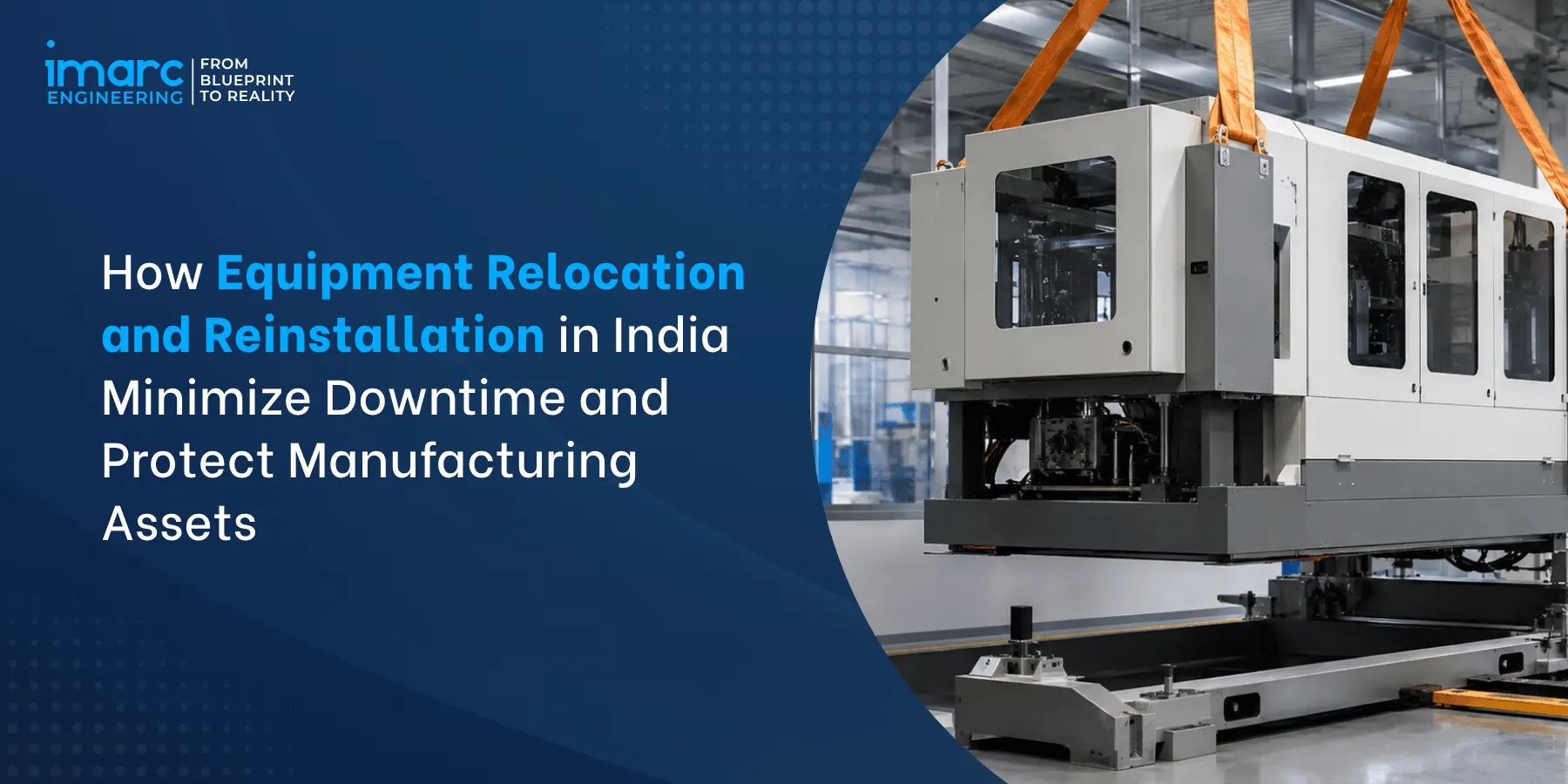
For any Indian manufacturer moving critical production machinery in 2026, disciplined Equipment Relocation and Reinstallation in India requires materially more than physically moving machinery from one point to another. Successful projects require engineering-led planning across equipment assessment, dismantling, preservation packaging, transportation, foundation readiness, precision alignment, utility integration, calibration, and structured commissioning. Engineering-led equipment relocation services help protect asset performance, minimise downtime, and support reliable recommissioning.
Scope of this Guide
This guide answers the engineering sponsor's relocation question directly. How can manufacturers safely relocate and reinstall industrial equipment while minimising downtime, protecting machinery, and ensuring reliable recommissioning? It walks through structured planning, dismantling and packaging discipline, rigging and heavy lift engineering, foundation and utility readiness, precision alignment, commissioning validation, and the practices that distinguish structured equipment dismantling and reinstallation from ad-hoc moves that consistently damage equipment and extend downtime.
Table of Contents
- Introduction
- Why Structured Equipment Relocation Matters in Indian Manufacturing
- How to Safely Relocate Industrial Equipment in India
- Equipment Dismantling and Packaging Best Practices in India
- Rigging and Heavy Lift Engineering for Equipment Relocation in India
- Foundation and Utility Readiness for Equipment Reinstallation in India
- Precision Alignment and Calibration for Reinstalled Machinery in India
- Equipment Commissioning and Performance Validation in India
- Common Mistakes and Best Practices
- Conclusion
1. Why Structured Equipment Relocation Matters in Indian Manufacturing
Four structural drivers make disciplined equipment relocation discipline a strategic priority for Indian manufacturers in 2026.
1.1 Equipment Value and Downtime Economics
Critical production equipment values range from INR 1 crore for medium-sized machinery to INR 25-500 crore for large process equipment and integrated production cells. Damage or performance loss during relocation materially affects asset returns.
Unplanned downtime during relocation typically extends 30-50 percent beyond structured programmes given rushed dismantling, damaged components, and commissioning surprises. Engineering-led planning consistently delivers better asset protection and schedule performance ad-hoc equipment moves across both asset protection and schedule dimensions.
1.2 Precision Manufacturing Requirements
Modern manufacturing equipment progressively requires precision installation to deliver rated performance. CNC machinery, injection moulding, precision presses, robotic cells, and process equipment all require alignment tolerances materially tighter than legacy equipment.
Post-relocation performance restoration to pre-relocation baseline requires structured machine alignment services using laser alignment tools and calibrated instrumentation. Ad-hoc reinstallation typically produces performance degradation that surface later as quality issues, energy inefficiency, or premature failures.
1.3 Warranty and OEM Support Continuity
Original Equipment Manufacturer (OEM) warranties and service agreements progressively require structured relocation discipline. OEM-approved rigging and reinstallation protocols preserve warranty coverage. Documented dismantling and reinstallation supporting OEM service continuity.
Structured disciplines including chain-of-custody documentation, foundation certification, and commissioning per OEM protocols protect long-term OEM support relationships. Ad-hoc relocations frequently void warranties and complicate service arrangements materially reducing lifecycle equipment value.
1.4 Insurance and Risk Management
Marine transit insurance, Contractors All Risk (CAR), and Erection All Risk (EAR) coverage progressively require documented engineering discipline for premium coverage. Insurance premiums typically range 0.5-2 percent of insured value for structured programmes with certified rigging contractors.
Ad-hoc arrangements typically face 20-40 percent premium loading or coverage exclusions. Documented engineering discipline supports both coverage economics and claim settlement in adverse events.
2. How to Safely Relocate Industrial Equipment in India
Understanding how to safely relocate industrial equipment in India helps engineering sponsors sequence programme decisions correctly. Structured machinery relocation integrates assessment, planning, and phased execution supporting both asset protection and downtime minimisation.
2.1 The Eight-Stage Relocation Roadmap
| Stage | Activities | Typical Duration |
|---|---|---|
| Assessment and Planning | Equipment condition, method statement, risk assessment | 2-6 weeks |
| Preparation and Verification | OEM engagement, drawing update, spare planning | 2-4 weeks |
| Dismantling | Systematic dismantling with tagging and preservation | 1-4 weeks per equipment |
| Transportation | Route planning, ODC permits, safe transit | 1-3 weeks |
| Foundation Preparation | Civil readiness, utility routing, dimensional verification | 4-12 weeks (parallel) |
| Reinstallation | Sequential placement, alignment, connections | 2-8 weeks |
| Alignment and Calibration | Precision alignment, instrument calibration | 1-3 weeks |
| Commissioning and Validation | Cold and hot commissioning, performance testing | 2-6 weeks |
2.2 Minimising Production Downtime During Equipment Relocation
Minimizing production downtime during equipment relocation India combines multiple techniques. Foundation preparation parallel with dismantling reduces sequential dependencies. Pre-qualified rigging contractors and pre-arranged transportation shorten mobilisation. Detailed pre-work drawings and photographic documentation eliminate reassembly surprises.
Structured spare parts availability during commissioning prevents supply-driven delays. Pre-trained operators reduce learning curve during ramp-up. Structured techniques typically reduce effective downtime 30-50 percent versus unstructured execution.
2.3 Equipment Categories and Complexity
Different equipment categories require differentiated relocation approaches. Small equipment (pumps, small motors, standard tools) typically involves straightforward handling with structured packaging. Medium equipment (CNC machines, compressors, mid-size presses, injection moulding) requires structured rigging with foundation matching.
Large equipment (reactors, turbines, integrated production cells, boilers) requires specialist heavy lift engineering, ODC transportation, and extensive commissioning. Very large custom-engineered equipment may require partial dismantling for transport with structured reassembly. Approach selection matches equipment characteristics.
3. Equipment Dismantling and Packaging Best Practices in India
Equipment dismantling and packaging best practices determine both reassembly success and transportation integrity. Structured dismantling discipline materially prevents both immediate transportation damage and downstream reinstallation surprises.
3.1 Pre-Dismantling Documentation
- Comprehensive photographic documentation from multiple angles
- Video documentation of complex assemblies and connections
- Match-marking of matched components before separation
- Fluid drainage records including quantities and disposal routing
- Cable, pipe, and hose termination documentation
- Instrument calibration records preserved for reinstallation
- Baseline condition assessment supporting insurance claims
- Structured tagging system covering every disconnected component
3.2 Systematic Dismantling Discipline
Dismantling follows structured sequence typically reversing installation logic. OEM engagement for critical equipment dismantling protocols supports both preservation and warranty continuity. Torque records for fasteners inform reassembly. Bearing removal using proper pullers prevents shaft damage.
Structured cable and pipe disconnection with capping prevents contamination. Working platforms and fall protection per applicable safety standards. Systematic dismantling typically extends 1-4 weeks per major equipment supporting downstream reassembly discipline.
3.3 Preservation Packaging
Preservation packaging prevents corrosion, moisture damage, mechanical damage, and contamination during transit and storage. Volatile Corrosion Inhibitor (VCI) papers and films for metallic surfaces. Silica gel or molecular sieves for moisture control in sealed enclosures. Vacuum sealing for sensitive electronic and optical components.
Wooden crating with structural reinforcement for heavy items. Shock-absorbing packaging for precision components. Climate-controlled containers where warranted. Structured packaging materially extends effective shelf life during multi-week transportation and storage cycles.
3.4 Chain of Custody Documentation
Chain of custody documentation tracks every component from dismantling through delivery. Packing lists with unique identifiers, weights, dimensions, and destinations. Receiving verification at destination site confirming complete delivery. Structured discrepancy reporting supporting rapid resolution.
Insurance-supporting documentation preserving claim rights. Digital documentation systems increasingly support structured chain-of-custody discipline replacing paper-based approaches. Structured discipline materially reduces both component loss and disputes during multi-party projects.
4. Rigging and Heavy Lift Engineering for Equipment Relocation in India
Rigging and heavy lift engineering for equipment relocation require specialist competence given both safety consequences and equipment protection stakes. Structured rigging engineering materially outperforms informal lifting arrangements that produce both damage and safety incidents.
4.1 Rigging Engineering Discipline
Structured rigging engineering covers detailed load calculations, lifting point identification per OEM specifications, sling and shackle sizing with safety factors, crane and hydraulic jack sizing per Society of Automotive Engineers (SAE) J1063 or equivalent standards, structural capacity verification of existing floors and lifting points, rigging arrangement design, and detailed method statements.
Multi-crane lifts for heavy or awkwardly shaped equipment require synchronised operation planning. Structured engineering by qualified specialists prevents catastrophic incidents that ad-hoc arrangements risk.
4.2 Heavy Lift Equipment Selection
| Equipment Type | Application |
|---|---|
| Mobile crawler cranes | Site-based lifts requiring flexible positioning |
| Tower cranes | Confined site conditions with elevated placement |
| Hydraulic jacks and skidding systems | Precision positioning of heavy equipment |
| Gantry cranes | Structured lifts within existing facility structures |
| Chain hoists and lever hoists | Small to medium components and fine positioning |
| Hydraulic modular trailers | Very heavy equipment on-site movement |
| Air bearings | Precision positioning of ultra-precise equipment |
4.3 Route Planning Within Facility
Route planning within facility during dismantling and at destination during reinstallation supports safe movement. Structural clearance verification (doorways, ceiling heights, structural obstructions). Floor loading capacity verification through structural analysis. Utility routing conflicts including overhead cables, HVAC, and piping.
Temporary structural modifications where clearance requires. Route markings and safety exclusion zones during actual movement. Structured route planning materially reduces both damage risk and safety incidents versus ad-hoc navigation.
4.4 Transportation and Logistics for Machinery Relocation
Transportation and logistics for machinery relocation combine specialist expertise across route surveys, permits, and coordination. Route surveys evaluating bridge load ratings, height clearances, turning radii, and road conditions. Over Dimensional Cargo (ODC) permits from State Regional Transport Offices per Motor Vehicles Act 1988.
Multi-axle trailers, hydraulic modular trailers, or standard trailers matched to load. Police coordination for movement timing avoiding traffic disruption. Escort vehicles for ODC movement. Weather planning avoiding monsoon exposure for sensitive equipment. Structured transportation coordination materially reduces transit damage and delays.
5. Foundation and Utility Readiness for Equipment Reinstallation in India
Foundation and utility readiness for equipment reinstallation precede equipment arrival supporting immediate reinstallation without site-driven delays. Structured industrial equipment commissioning begins with foundation and utility discipline that lagging site work routinely undermines.
5.1 Foundation Design and Preparation
Foundation design per IS 2974 (Design and Construction of Machine Foundations) and equipment OEM specifications supports structured preparation. Foundation dimensions precisely matching equipment mounting arrangements. Load-bearing capacity supporting equipment weight, operating loads, and dynamic forces.
Anchor bolt locations, projections, and grouting per manufacturer requirements. Levelling tolerances typically specified within 0.1-0.5 mm per metre. Grouting per ACI 351 or equivalent standards ensuring uniform load transfer. Foundation cure time (typically 21-28 days for structural grout) before equipment installation prevents settlement issues.
5.2 Utility Routing and Termination
- Electrical power connections matching equipment specifications and updated single-line diagrams
- Instrumentation and control cabling supporting DCS and PLC connectivity
- Compressed air with structured filtration and drying
- Cooling water supply and return matching heat load
- Process fluid connections per updated piping isometrics
- Steam and condensate systems where applicable
- Ventilation and exhaust matching equipment thermal loads
- Waste and effluent routing to treatment infrastructure
5.3 Utility Testing Prior to Equipment Arrival
Structured testing and handover of civil and utility works prior to equipment arrival supports smooth reinstallation. Foundation dimensional verification against OEM drawings. Electrical continuity, insulation resistance, and load testing. Utility pressure and flow testing matched to equipment requirements.
Instrument loop checking. HVAC commissioning where applicable. Fire protection commissioning. Documented handover with structured signoffs materially reduces reinstallation phase surprises supporting scheduled equipment placement without site-driven delays.
5.4 Environmental and Safety Preparation
Environmental controls including HVAC, dust extraction, and containment matching equipment operational requirements. Safety systems including emergency stop circuits, safety interlocks, gas detection, and fire suppression. Structured Lockout-Tagout (LOTO) procedures for equipment isolation.
Personal Protective Equipment (PPE) availability for installation workforce. Structured safety documentation supporting Factory Licence conditions under Occupational Safety Health and Working Conditions Code 2020. Preparation prevents late-stage compliance issues that delay commissioning.
6. Precision Alignment and Calibration for Reinstalled Machinery in India
Precision alignment and calibration for reinstalled machinery restore equipment to pre-relocation performance baseline. Poor alignment materially reduces both equipment life and operational performance producing consequences that emerge later as quality, energy, or reliability problems.
6.1 Alignment Standards and Tolerances
Alignment tolerances derived from OEM specifications, API 686 Recommended Practices for Machinery Installation, ISO 10816 machinery vibration standards, and ISO 21940 balance quality requirements. Coupling alignment tolerances typically specified in thousandths of an inch or hundredths of a millimetre depending on operating speed.
Higher rotational speeds require progressively tighter tolerances. Structured tolerance specification prevents both over-engineering and under-specification that produces downstream reliability issues.
6.2 Alignment Techniques
- Laser alignment systems (Fixturlaser, Rotalign, Easy-Laser) for precision shaft alignment
- Optical alignment for large-scale and rotational equipment
- Dial indicator method for legacy and small equipment
- Straight-edge and feeler gauge for basic checks
- Reverse indicator method for double-coupled systems
- Face and rim method as alternative approach
- Live monitoring during initial operation
- Post-run alignment verification checking thermal growth effects
6.3 Levelling and Baseplate Preparation
Levelling precedes coupling alignment on multi-component equipment. Precision leveling using precision spirit levels, laser levels, or electronic tilt sensors. Baseplate preparation with structured surface preparation, anchor bolt tensioning per specifications, and grout injection ensuring uniform load transfer.
Epoxy grouting typically preferred for critical equipment given superior mechanical properties. Sole plate levelling within 0.05-0.1 mm per metre typical for precision equipment. Structured baseplate discipline prevents both immediate operational issues and long-term settlement problems.
6.4 Calibration and Instrumentation Verification
Calibration and instrumentation verification restore measurement accuracy across relocated equipment. Instrumentation calibration per ISO 17025 traceable standards. Loop calibration verifying signal path integrity from sensor through control system. Safety system function testing verifying interlock operation.
Vibration monitoring baseline establishment supporting long-term condition monitoring. Structured calibration typically extends 1-3 weeks for medium-sized equipment supporting both operational accuracy and regulatory compliance in measurement-critical applications.
7. Equipment Commissioning and Performance Validation in India
Equipment commissioning and performance validation transform reinstalled equipment into productive operations. Structured machinery commissioning systematically progresses from cold checks through hot commissioning and performance validation.
7.1 Pre-Commissioning Verification
- Mechanical completeness verification against drawings and specifications
- Electrical continuity, insulation resistance, and interlock verification
- Piping pressure testing, cleaning, and passivation where applicable
- Instrumentation loop checking and setpoint verification
- Safety system function testing including emergency shutdown
- Utility system readiness confirmation at operating conditions
- Documentation completeness including as-built drawings
- Operator training completion prior to first operation
7.2 Cold Commissioning Sequence
Cold commissioning verifies equipment integrity without process fluids or full operating conditions. Motor bump tests verifying rotation direction. Individual equipment startup at reduced conditions. Interlock verification through simulated conditions. Vibration baseline recording.
Bearing temperature monitoring during initial rotation. Structured cold commissioning progressively verifies subsystem readiness before hot commissioning risk exposure. Discovered issues addressed at cold commissioning stage prevent both damage and safety incidents during hot commissioning.
7.3 Hot Commissioning and Performance Testing
Hot commissioning brings equipment online with actual process fluids and operating conditions. Sequential equipment startup following defined procedures. Process parameter monitoring during ramp-up. Interlock and safety system verification during actual operations. Progressive rate increase toward full capacity.
Performance testing at rated conditions demonstrating throughput, quality, energy consumption, and stability. Site Acceptance Test (SAT) documented against specifications supporting OEM and buyer engagement. Structured hot commissioning typically requires 2-6 weeks for medium-sized equipment.
7.4 Performance Validation and Handover
Performance validation demonstrates that reinstalled equipment meets pre-relocation performance parameters. Throughput verification at target rates. Quality validation demonstrating specifications maintained. Yield verification confirming material efficiency preserved.
Energy performance validation. For regulated products, Installation Qualification (IQ), Operational Qualification (OQ), and Performance Qualification (PQ) protocols document reinstalled equipment fitness for purpose. Structured handover with documented performance evidence supports both operational sustainment and stakeholder confidence in relocated equipment.
8. Common Mistakes and Best Practices
8.1 Under-Investment in Pre-Dismantling Documentation
Dismantling without structured documentation produces reinstallation errors and OEM warranty complications.
Best practice: comprehensive photographic and video documentation before any disconnection; match-marking of matched components; torque records for fasteners; fluid drainage records; cable and pipe termination documentation; structured tagging with unique identifiers; digital documentation systems supporting chain-of-custody discipline.
8.2 Foundation and Utility Work Lagging Equipment Arrival
Foundation and utility works completing after equipment arrival routinely produce expensive equipment idle time and rushed installation.
Best practice: foundation design during planning phase with dimensional verification against OEM drawings; foundation preparation and cure time (typically 21-28 days) completing 2-4 weeks before equipment arrival; utility routing and testing preceding equipment placement; structured handover of civil and utility works with documented signoffs.
8.3 Ad-Hoc Rigging Without Engineering Discipline
Rigging arrangements without structured engineering produce both safety incidents and equipment damage.
Best practice: qualified rigging engineering with load calculations, sling and shackle sizing, structural verification, and detailed method statements; certified rigging contractors with proven track record; OEM engagement for lifting point identification; multi-crane synchronised operation planning for complex lifts; safety exclusion zones during actual movement.
8.4 Skipping Precision Alignment
Alignment based on visual inspection or basic techniques produces long-term reliability degradation invisible at commissioning.
Best practice: laser alignment with tolerances derived from OEM specifications and API 686; levelling preceding coupling alignment; baseplate preparation with epoxy grouting for critical equipment; post-run alignment verification checking thermal growth; structured alignment documentation supporting both immediate handover and long-term condition monitoring.
8.5 Weak Commissioning Discipline
Commissioning treated as rapid startup rather than structured verification produces both immediate reliability problems and long-term performance degradation.
Best practice: pre-commissioning verification of mechanical completeness, electrical readiness, and safety systems; sequential cold commissioning before hot commissioning; hot commissioning with progressive rate increase; documented performance testing against specifications; structured handover with documented performance evidence; Site Acceptance Test (SAT) documentation preserving OEM and buyer relationships.
Conclusion
Equipment relocation and reinstallation in India in 2026 combine engineering assessment, disciplined dismantling, preservation packaging, rigging engineering, transportation logistics, foundation readiness, precision alignment, and systematic commissioning into a comprehensive project delivery framework.
Three closing reminders for engineering sponsors. First, treat equipment relocation as a structured engineering programme, not just a physical move. Coordinated planning across dismantling, rigging, foundations, alignment, and commissioning reduces cost, damage, and schedule risks. Second, complete thorough pre-dismantling documentation, including photographs, matchmarking, torque records, and equipment tagging, to support accurate reassembly. Third, finish foundation and utility works before equipment arrival to avoid idle time and installation delays.
PLANNING YOUR EQUIPMENT RELOCATION AND REINSTALLATION?
IMARC Engineering's equipment relocation and reinstallation advisory team supports plant sponsors, engineering heads, and project managers across equipment condition assessment, pre-relocation planning with method statements and risk assessment, systematic dismantling supervision with structured tagging and preservation packaging, chain of custody documentation, rigging engineering with load calculations and lifting arrangement design, foundation design, utility routing coordination, precision alignment services using laser tools per API 686, calibration and instrumentation verification per ISO 17025, cold and hot commissioning supervision, Site Acceptance Test (SAT) documentation, insurance and risk management coordination, and structured project governance for industrial equipment relocation and reinstallation across sectors in India.
→ Schedule a free equipment relocation scoping consultation with an IMARC specialist
Frequently Asked Questions
Equipment relocation and reinstallation in India is the structured engineering exercise of moving industrial machinery from one location to another with structured discipline preserving equipment integrity and performance. Successful relocation extends materially beyond physical movement covering assessment, dismantling with documentation, preservation packaging, transportation, foundation preparation, precision alignment, calibration, and structured commissioning.
Safe machinery moving services combine structured engineering assessment, OEM engagement for critical equipment, qualified rigging engineering with load calculations and lifting arrangement design, certified rigging contractors, comprehensive method statements and risk assessment, safety exclusion zones during actual movement, and structured chain-of-custody documentation. Ad-hoc arrangements produce both safety incidents and equipment damage that structured discipline prevents.
Structured relocation typically follows eight stages: assessment and planning (2-6 weeks), preparation and verification (2-4 weeks), dismantling (1-4 weeks per equipment), transportation (1-3 weeks), foundation preparation (4-12 weeks, typically parallel), reinstallation (2-8 weeks), alignment and calibration (1-3 weeks), and commissioning and performance validation (2-6 weeks). Total programmes typically extend 3-9 months for single major equipment with parallel execution compressing elapsed time.
Structured equipment dismantling and reinstallation requires comprehensive pre-dismantling documentation (photographic, video, match-marking, torque records), OEM engagement for critical equipment protocols, preservation packaging with VCI and moisture control, chain of custody documentation, route surveys with ODC permits, appropriate trailer selection, foundation verification against OEM drawings, sequential reinstallation with precision alignment, and structured commissioning. Structured discipline preserves both equipment integrity and OEM warranty coverage.
Downtime minimisation combines foundation preparation parallel with dismantling, pre-qualified rigging contractors, detailed pre-work drawings preventing reassembly surprises, structured spare parts availability during commissioning, pre-trained operators reducing learning curve, and structured commissioning discipline supporting rapid ramp-up. Structured techniques typically reduce effective downtime 30-50 percent versus unstructured execution.
Precision alignment and calibration for reinstalled machinery restore equipment to pre-relocation performance baseline. Poor alignment materially reduces both equipment life and operational performance producing consequences that emerge later as quality issues, energy inefficiency, or premature failures. Alignment per OEM specifications and API 686; calibration per ISO 17025 traceable standards; structured commissioning progressing from cold checks through performance validation collectively preserve equipment value.
Equipment relocation consultants support equipment condition assessment, pre-relocation planning, OEM engagement, pre-dismantling documentation, systematic dismantling supervision, rigging engineering, transportation planning including ODC permits, foundation and utility coordination, precision alignment services, calibration and instrumentation verification, cold and hot commissioning supervision, performance validation, and structured project governance. An integrated engineering approach typically delivers better project outcomes than fragmented single-discipline support.
Comprehensive coverage includes marine transit insurance for transportation, Contractors All Risk (CAR) for construction activities, Erection All Risk (EAR) for equipment installation, machinery breakdown covering commissioning and initial operations, and business interruption insurance where applicable. Premiums typically range 0.5-2 percent of insured value for structured programmes with certified rigging contractors versus 20-40 percent premium loading for ad-hoc arrangements.
Foundation design per IS 2974 (Design and Construction of Machine Foundations) provides Indian baseline framework. OEM specifications provide equipment-specific requirements. ACI 351 governs machinery grouting practices. Foundation cure time typically 21-28 days for structural grout before equipment installation prevents settlement. Levelling tolerances typically within 0.1-0.5 mm per metre for standard equipment and 0.05-0.1 mm per metre for precision equipment.
Recent Post


Trusted by Industry Leaders
We partner with global enterprises and ambitious businesses across sectors to deliver operational excellence, strategic insights, and sustainable growth through integrated solutions.












Success in Their Words
Real feedback from clients across industries. Discover how our solutions delivered measurable impact and operational excellence.

I wanted to express my sincere appreciation for your efforts in handling this matter. Your dedication and commitment have been truly commendable, and it is evident that you have put in tremendous hard work and expertise into resolving the issues at hand. We are greatly interested in continuing our collaboration with you in the future, as your professionalism and reliability have made you a trusted partner. Thank you once again for your invaluable contribution. We look forward to strengthening our partnership ahead.

It has been a pleasure working with the IMARC team. The insights provided were structured, clear, and highly valuable, helping us strengthen both our technical and financial planning with confidence. We deeply appreciate the team’s professionalism, responsiveness, and attention to detail throughout the engagement. Every requirement was well understood and effectively incorporated, resulting in a comprehensive and actionable output. Overall, our experience has been excellent, and I would gladly recommend IMARC to organizations seeking a reliable research partner.

Your service is truly exceptional. Working with the IMARC team has been a seamless and professional experience. The clarity of communication, responsiveness to queries, and consistent support at every stage made the entire engagement highly efficient. The insights shared were well-structured, practical, and perfectly aligned with our requirements, helping us make informed decisions with confidence. Overall, the dedication and professionalism demonstrated by your team stand out, and I would be glad to recommend IMARC as a reliable and trustworthy research partner.

IMARC did an outstanding job in preparing our study. They were punctual, precise, and consistently responsive throughout the entire process. The team delivered all the data we required in a clear, well-organized, and highly professional format. Their strong attention to detail, combined with their ability to meet every deadline without compromising quality, truly set them apart. Overall, their reliability and commitment made them an exceptional partner for our project, and we would gladly work with them again in the future.

IMARC made the whole process incredibly easy from start to finish. Everyone I interacted with via email was polite, professional, and straightforward to deal with, always keeping their promises regarding delivery timelines and remaining consistently solutions-focused. From my very first contact, I appreciated the professionalism and support shown by the entire IMARC team. I highly recommend IMARC to anyone seeking timely, affordable, and reliable information or advice. My experience with IMARC was excellent, and I truly cannot fault any aspect of it.

I’d like to express my sincere gratitude for the excellent work you accomplished with the study. Your ability to quickly understand our requirements and deliver high-quality results under tight timelines truly reflects your expertise, exceptional work ethic, and unwavering commitment to your customer’s success. The professionalism and responsiveness you demonstrated throughout the process made a significant difference. Our entire team and company are incredibly thankful for your dedication, reliability, and support. Once again, thank you for your outstanding contribution.